At a glance
Our Sixglobetruckers cross Iran. Discover their adventures and top tips.
Here's the third article from our Sixglobetruckers. On their journey from Brussels to New Zealand, they've now arrived at the gates of Iran.
Read on below to discover the rest of their adventure.
Cappadocia: land of cave dwellings
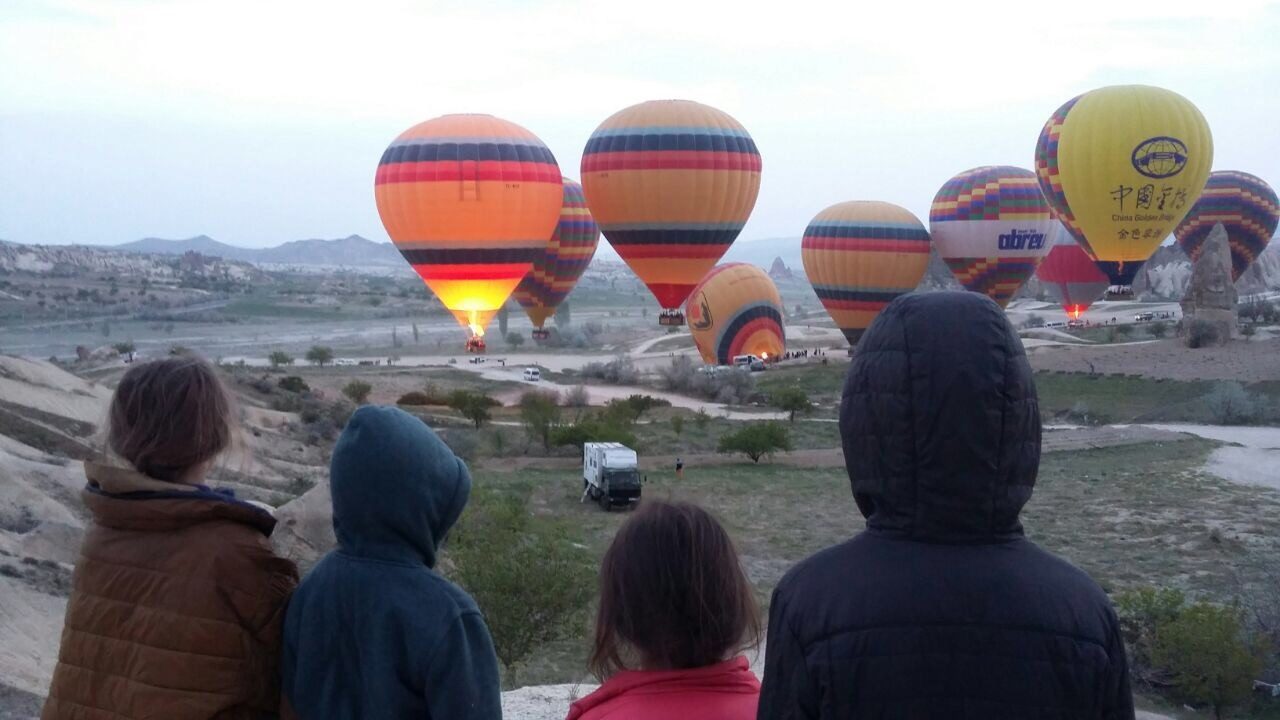
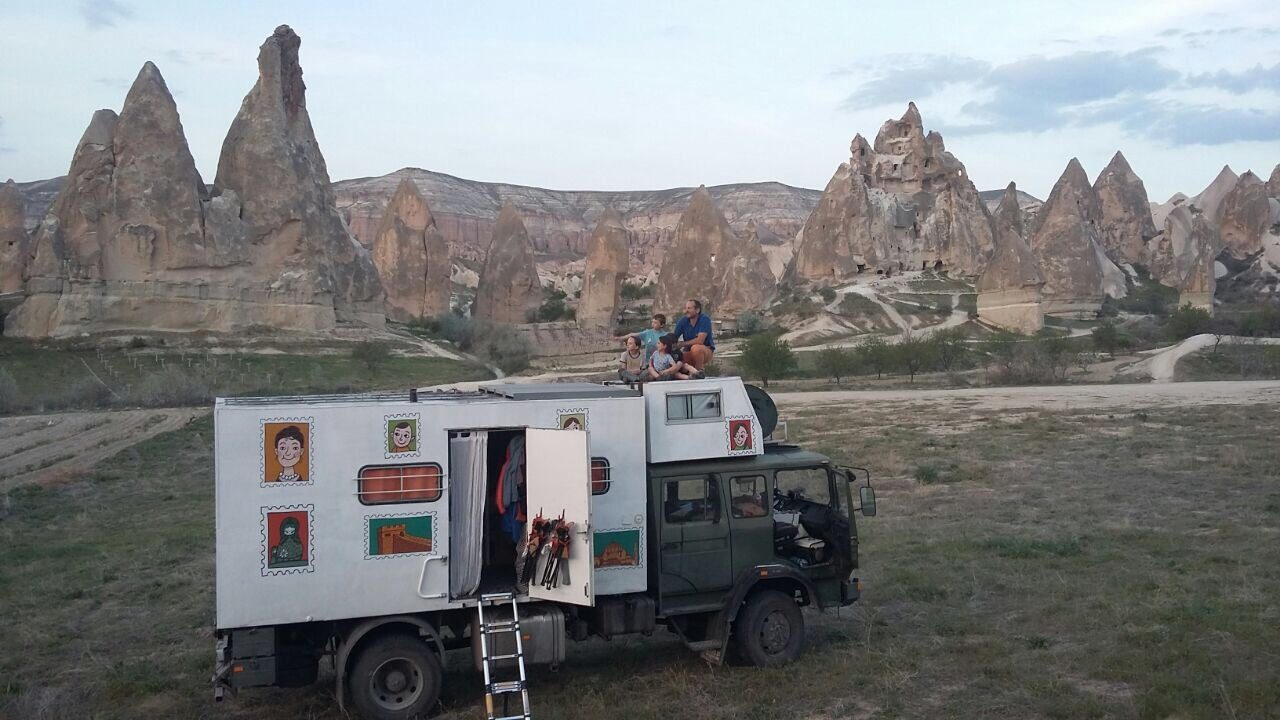 We left you at the gates of Cappadocia, which kept us busy for a few days. The children played at being explorers, searching for old frescoed churches in the cave dwellings dotted across the valleys. A real highlight was watching 80 hot air balloons take off from right where we were parked!
Hammams and hot baths
We also took the opportunity to soak in the region's hot springs, in water at 35 degrees… In the thermal baths of the Balkans, as in the hammams of Turkey, the facilities are mixed, so on top of our quick, cold showers in the truck, we were able to enjoy a few real hot baths as a family.
Eastern Turkey
Heading east across Turkey is already an adventure in itself… 20 of the 500 pages in our guidebook are devoted to it. And that's even after we left Mount Nemrut off our route, too close to Syria for our liking. What struck us most there was the scenery offered by crossing the great Anatolian plateau and the few Seljuk buildings found near the Iranian border. A few kilometres from the border, we spotted, through a shop window, some workers repainting a taxi yellow. Without much haggling, we got them to repaint the front cab of our truck (its khaki colour still gave away too much of its military past) for a price nothing like the quotes we'd had until then. And while these men were working, their wives invited us for dinner and breakfast… and even took us round the local bazaar!
Getting ready to enter Iran
Our checklist
- Passports and visas (not hard to get, a bit slow but it's improving year on year)
- A "carnet de passage" for the truck
- International driving permits
- Apps to get around web censorship (VPN), to download before entering the country (as all Iranians do)
- As much cash as we'll need in Iran, in euros or dollars (absolutely impossible to withdraw money in the country with anything other than a domestic card).
- Legally compliant clothing (sober, plain colours, loose-fitting clothes, a "tunic" reaching mid-thigh, ankles covered, sleeves to mid-arm, obviously no low necklines, and the headscarf).
- A precise itinerary to give at the border (in the end, the customs officers barely asked more than the entry and exit points)
- Emptying out any alcohol (they search the vehicle)
- Making sure to arrive with empty fuel tanks (on the other side, it's practically free: 0.13 euros a litre!)
First kilometres in Iran
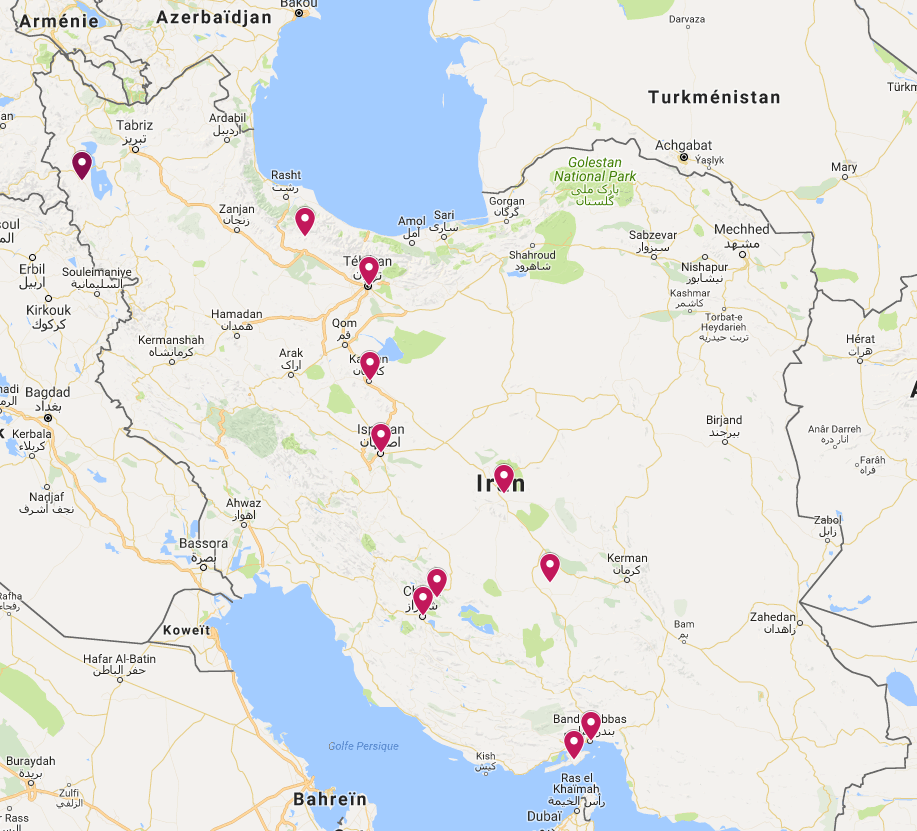 We crossed the border without any trouble, in a few hours… to which you need to add a few more hours to take out local insurance for the truck as well as a local SIM card (forms to fill in, fingerprints taken, and even your father's name!). Once ready, we started by following the border with Armenia and Azerbaijan to the north. A magnificent Aras valley, where you come across silkworm breeders, villagers still living as they did a hundred years ago, beekeepers, and the rice paddies that produce Iran's delicious rice.
A festive encounter
We went to see the salt-dried lake of Orumiyeh and tasted yellow watermelon, which was in season. Leaving the Azeri province, we reached the Kurdish province… an unusually large number of cars parked along the road, men in traditional dress, women all dressed up… we stop to ask what's going on, and are immediately handed a plate of food and invited in: a wedding!
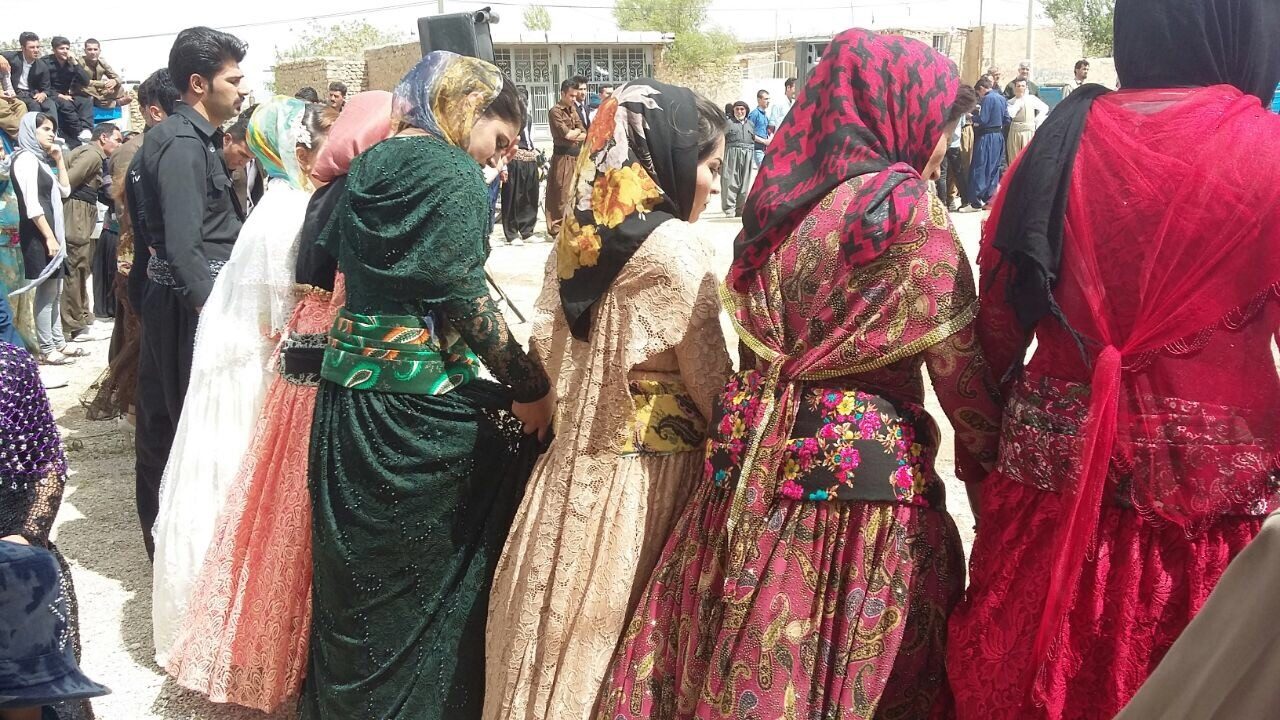
We set off again a few hours later, leaving behind the traditional dances, without ever seeing the bride appear (she only shows herself to a small group of women right at the end of the ceremony)!
Qazvin
Last stop before the capital, in the city of Qazvin, where in turn we met: the caretaker of a park who insisted on showing us around the city and gave us several of his books praising Iran's virtues, a very devout woman who gave us pastries and was proud to open the door to a nursery classroom where little veiled girls recited the Quran on one side while the boys sat on the other, and two English students who, while showing us the local bazaar, explained to us how the morality police worked when it came to women's clothing, as well as their own hopes of continuing their studies with a doctorate abroad.
Tehran
Tehran has a reputation for being a congested, polluted city… so, playing it safe, we skirted round the city and parked in the south, in the huge park surrounding the mausoleum of Ayatollah Khomeini. Two mullahs on pilgrimage had fun exploring the truck and gave us their small prayer beads.
First stop for us: the Turkmenistan embassy, where we learned that our visas had been accepted!
Then we visited the Shahs' palaces and their impressive jewellery collection. Heading south, we stopped in Kashan, a charming town with some fine old houses, a pleasant bazaar, and which produces rosewater. Parked next to a park, we set up for a picnic – as all Iranians do, picnicking in large numbers, all the time, everywhere – and within ten minutes the family next to us brings us over a dish. We thank them, chat a bit… and before long they're inviting us to stay at their home for the night and take a proper shower. In the end we stayed two days with this family, who serve cardamom tea at breakfast and who own Mina, a bird that can say nearly 1,000 words!
Places of history and religion
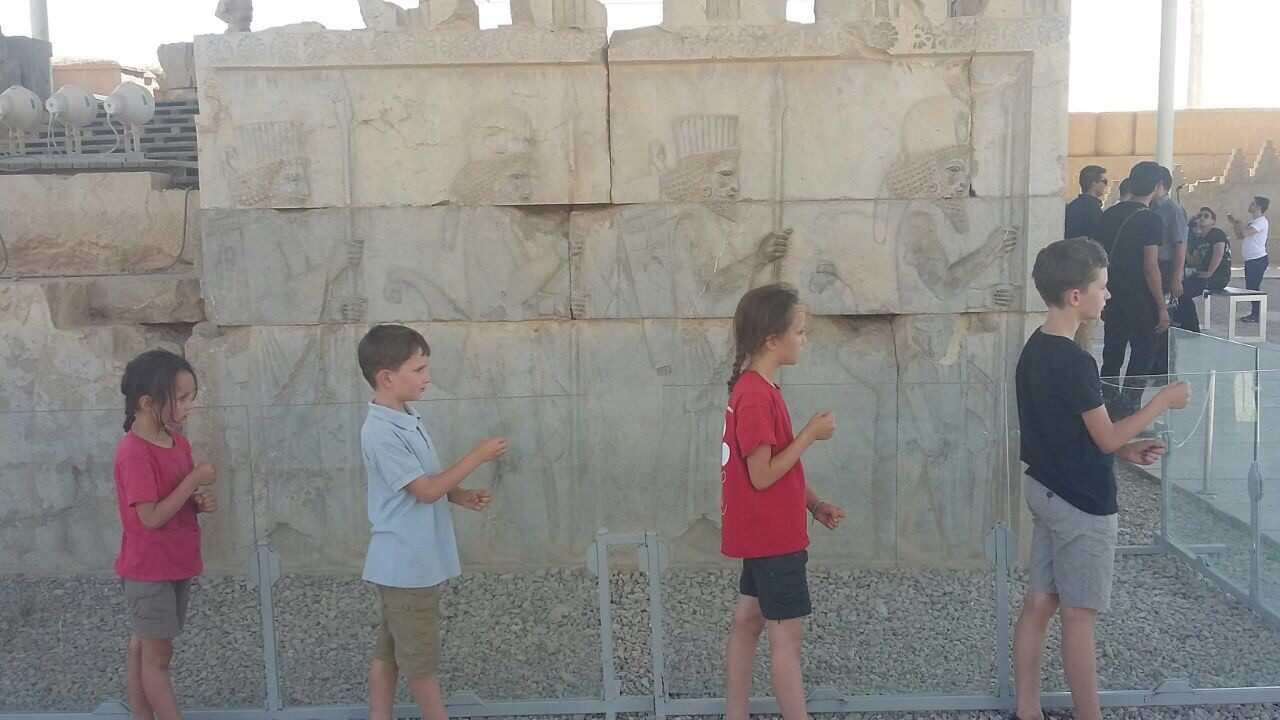
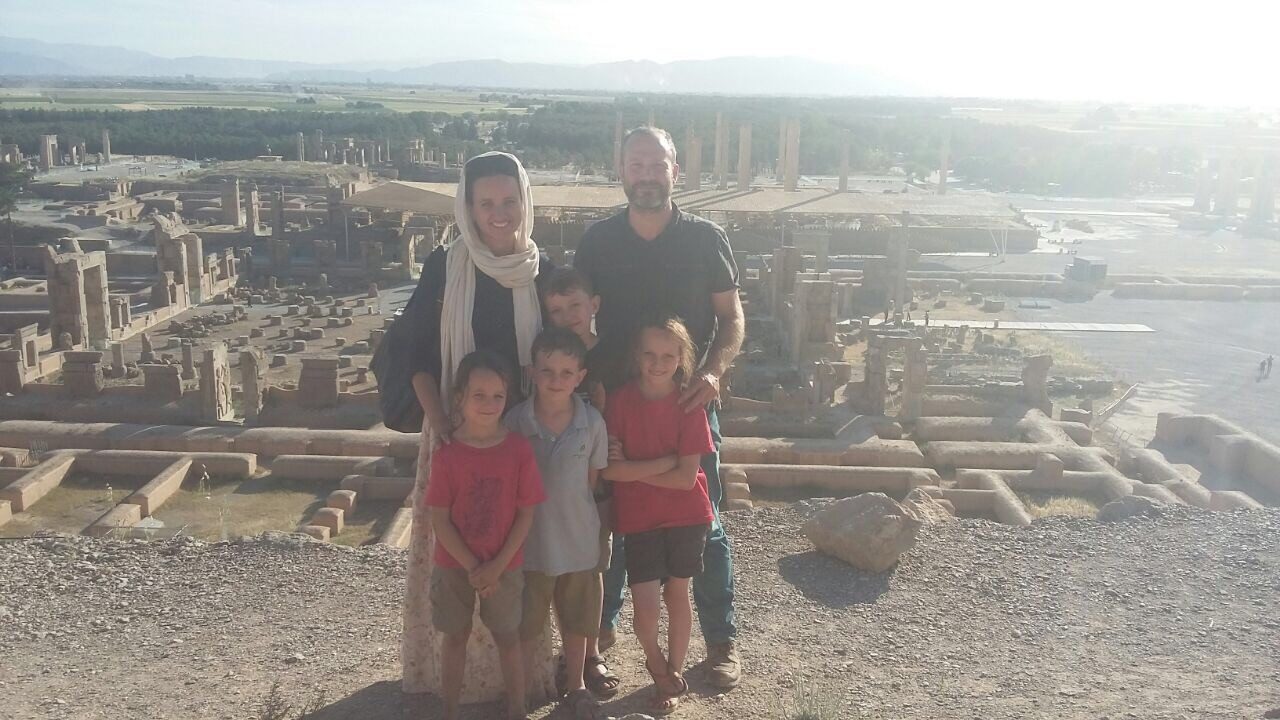 We arrive at night in Isfahan to discover the 2nd largest square in the world… In this calm city we did a bit of sightseeing, tasted pomegranate chicken, and the children made the most of the many fountains! Then we arrived at Persepolis, a visit the children had been eagerly awaiting, and they were hugely impressed, taking the chance to catch up on their ancient history lessons. The city was ultimately burned down by Alexander the Great, who carried off the treasure using 3,000 camels…! The last of the great legendary cities of the southern route: Shiraz, city of poets and scholars. It's home to some beautiful palaces, as well as the tomb of the poet adored by Iranians: Hafez, a place that's never short of local visitors reciting verses, one hand resting on the white marble coffin engraved with poetry.
Communication not always easy
In these few more touristy towns, we occasionally ran into groups of French tourists, whom the children would rush over to in order to exchange a few words in their own language! The level of English in Iran is very low, and those who do speak it constantly approach tourists for the chance of a conversation. We often used Google Translate, with the Farsi keyboard downloaded and voice mode enabled (we also regularly came across illiterate people), to have basic conversations. But the app was useless outside the big cities, where the internet network isn't well developed.
Speaking of the internet, our VPN wasn't enough to get around the filter applied to Overblog, which hosts our travel blog… so it was impossible to update it from Iran.
In these towns, we were able to find street parking fairly easily, often near parks or centres, and the water is drinkable almost everywhere, so refilling our jerrycans wasn't a problem. On the other hand, we started regularly buying bottled water to have it nice and cold.
Nature and a heatstroke scare
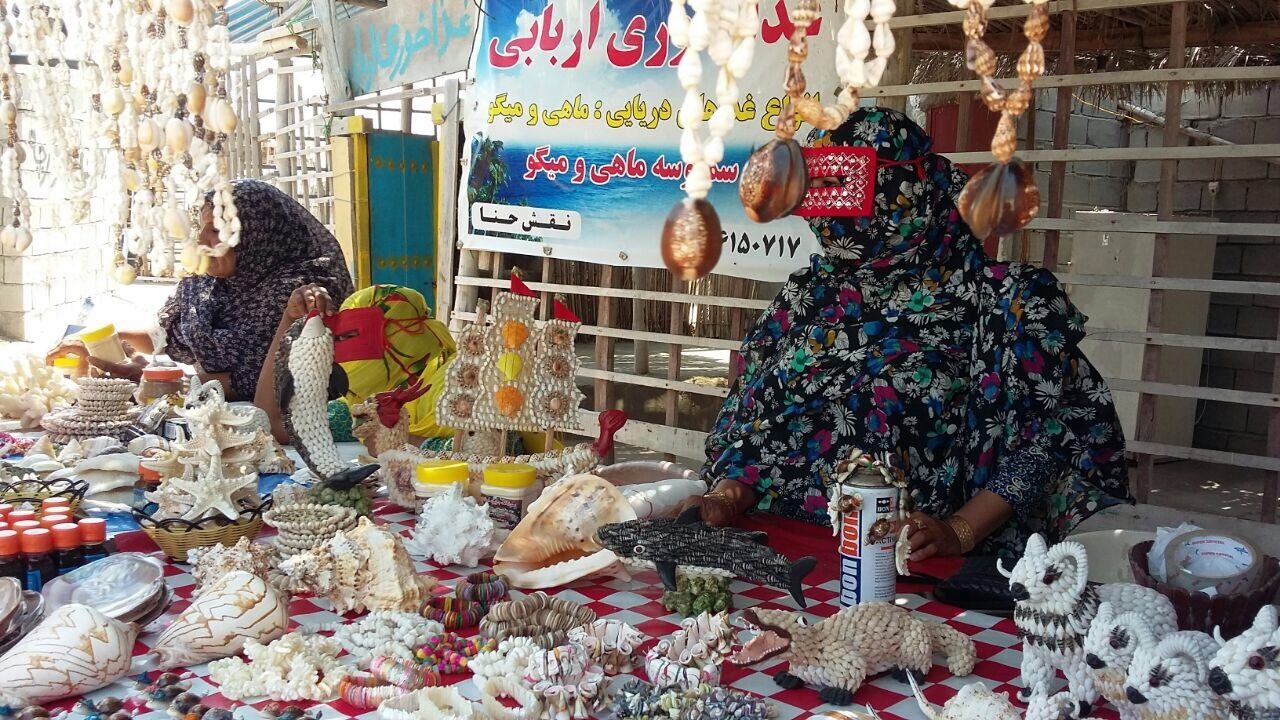
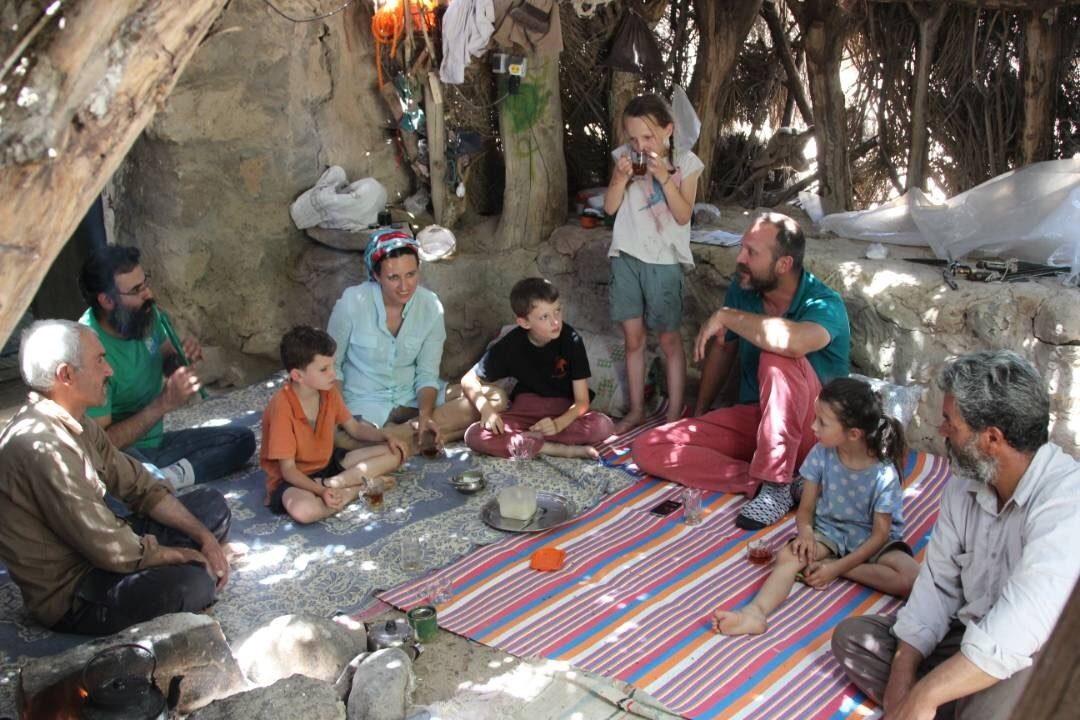
Doing a quick calculation of time left versus kilometres to go, we worked out we had the chance to make a detour to Qeshm Island in the Persian Gulf. The island is known for its unspoiled nature, and we even got to see turtles hatching there! Back in Bandar Abbas, we suffered from the stifling humid heat (45° with high humidity), the only place where we broke from our daily schoolwork routine: it was impossible to work in that heatwave! We fled to Maymand, a troglodyte village where we spent two days with the nomads who live there in winter and move to the surrounding pastures in spring.
Crossing the desert
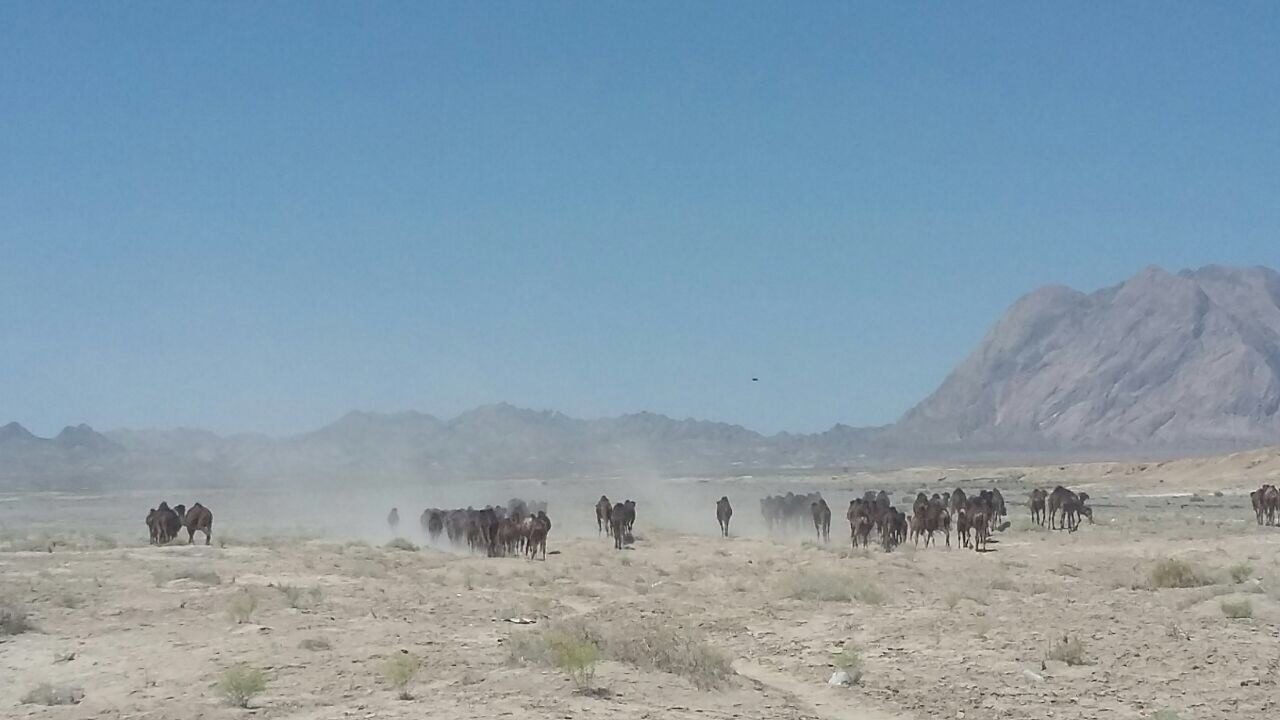 A stop in the ochre-coloured city of Yazd to request an extension of our visas (no trouble at all getting an extra 30 days), and to prepare for crossing the desert. In a single day we serviced the truck, bought more data, did our shopping, filled up on water and petrol, changed dollars into rials, and loaded a big block of ice into a cooler (like the Iranian truckers who stock up on the roadside) – this system keeps drinking water nice and cool for 24 hours.
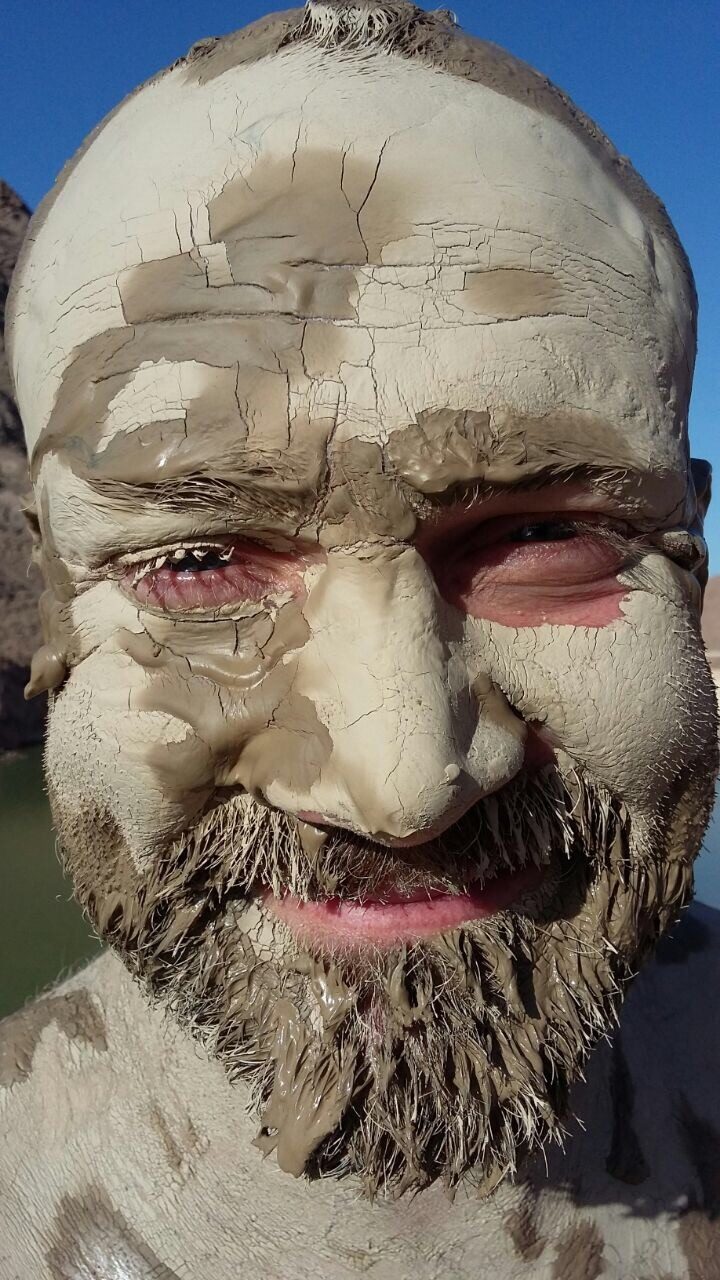
After a few hours' drive through a lunar landscape, we stopped at an oasis, and the owner took us and his son off… to the beach! A lake, formed for a few months each year thanks to a dam, lets locals go swimming and take a clay bath that's good for the skin! With the few days we had left, we headed on to Mashhad, a "holy" city in Iran that draws large numbers of grieving pilgrims to the tomb of an important Shia Imam.
Iran, a land of hospitality
This country is defined by its hospitality; we're invited over very regularly, and Iranians sometimes queue up just to talk to us. People stop us to give us 2 melons, a watermelon, 1 kg of apricots, eggs, bread, all sorts of things… Many travel all over Iran, but few travel abroad, so those who come across us are a chance to discover the world… Iranians love tourists and are endlessly curious about our way of life and what we think of their country. The question we've been asked most often is, without a doubt: "What do you think of Iran?"
To be continued...