At a glance
Spending a family holiday on a boat is possible – even without a boating licence. Here's how it works.
Do you love boating, or would you like to try it? You don't have a boating licence and you don't want to share a boat with other holidaymakers?
In that case, renting a (small) motorboat on a river or canal could be a fun and workable alternative. Below, our blogger Lisa shares a few explanations.
Where to rent a boat in Belgium or abroad?
There are countless types of holiday boats and many ways to find one. On websites where private individuals offer their boats (such as Click&Boat and Nautal), you can choose between sailing boats, catamarans, speedboats, motor cruisers and other barges. Travel agencies offering pre-set itineraries, such as Le Boat or RiverYachts, sometimes have sailing boats too. In France, for example, there's the site www.francefluviale.fr.
A quick search online will therefore quickly turn up plenty of options.
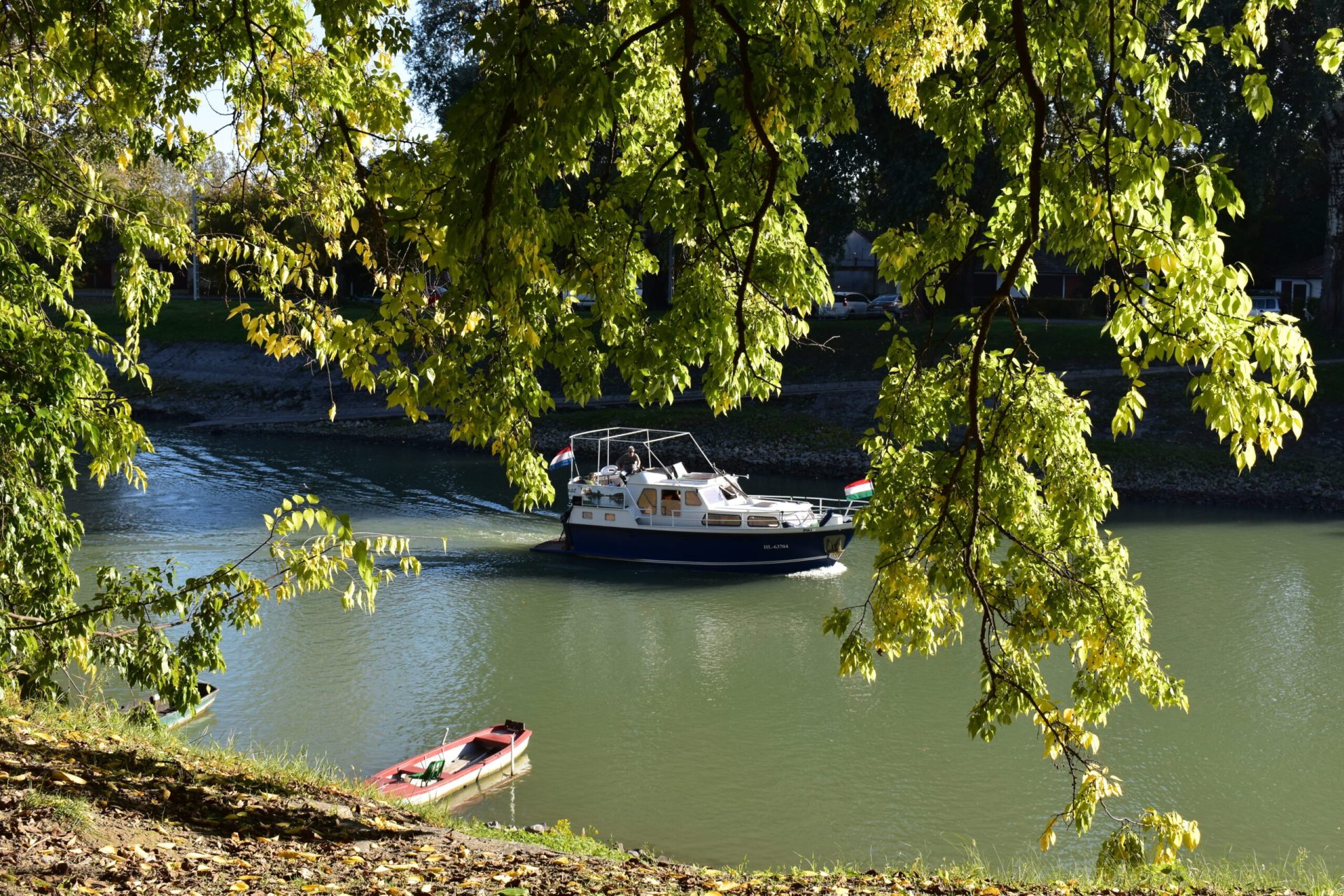
However, if you don't have a boating licence, it's best to go for the most popular option: the motorboat. In Belgium and the Netherlands, "motor yachts" no longer than 15 metres and with a top speed of no more than 20 km/h do not require a licence. In most other European countries, after a boating introduction session with a rental company, a temporary boating licence is issued for the duration of the rental. This isn't always the case with private rental companies. So always check with the private owner or tour operator what the licence situation is before booking.
Although a boating licence isn't compulsory in some cases, boating experience is of course an asset. Many travel organisations also take the time to run an introduction session or brief training. If you're renting from a private individual, it's best to ask them to explain the boat's handling thoroughly.
Equipment on the rental boat
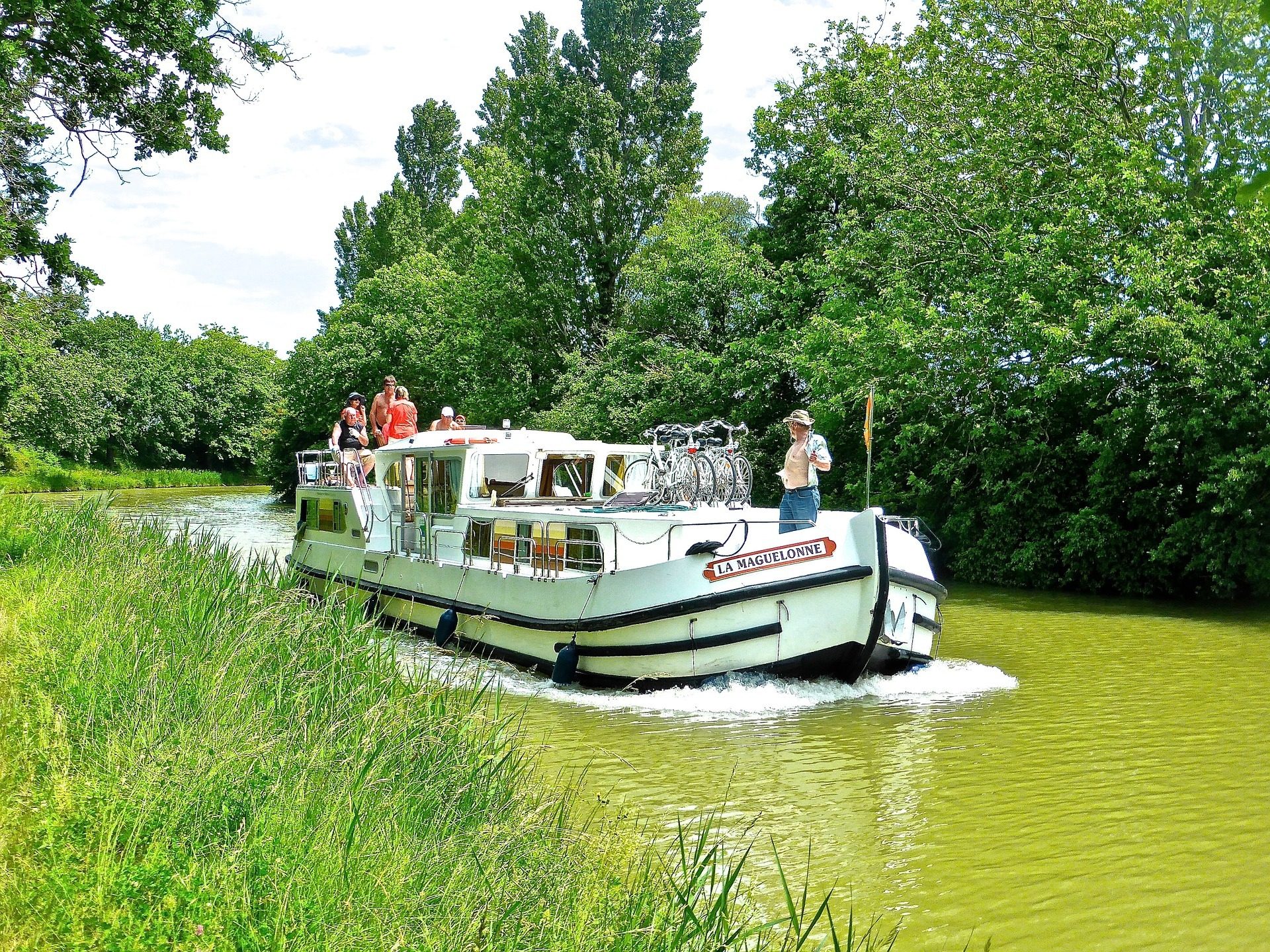
A motorboat suitable for overnight stays is generally fitted with one or more bedrooms, a bathroom, a lounge area and a kitchen. Even though it's sometimes possible to sleep as many as 8 people (!), you'll often need to get used to tight spaces.
A water supply is usually provided so you can shower as easily as at home, but it's advisable to use water sparingly. Electricity on board is normally generated by the boat's engine or by connecting to shore power, for example at a paid mooring. To keep the boat's batteries in good condition, the owner may ask you to run the engine for a minimum number of hours per day.
The cabin's fittings will largely depend on the organisation or person you're booking with. Check what basic equipment (such as bath towels, duvet covers, toilet paper…) is provided. You'll need to buy your own food and drinks, but you'll have a small kitchen generally equipped with basic utensils.
What else should you bring? Everything you'd normally take on a trip. Don't forget water-based activities: swimming gear and an inflatable mattress shouldn't be missing. Don't bring too many valuables, as the last thing you want is your jewellery or electronics accidentally falling overboard. Also, to avoid damaging the deck and for safety reasons, your boat's owner may ask you to wear only boat shoes or trainers.
How to rent a boat for your holidays?
In general, it's best to book a boat from a travel organisation at least 2 months in advance. But on websites run by private boat owners, you can often find last-minute bookings.
The price of renting from a private owner can start from under €200 per day. Sometimes that already gets you a boat that can accommodate up to 6 people. Renting from a specialised travel organisation is generally a little cheaper, since sailing packages are put together in advance. For example, expect a minimum price of around €400 for a boat where 2 adults and 2 children can sleep for 3 nights.
This type of rental isn't therefore very expensive, but the boat rental isn't your only cost. Factor in cleaning and maintenance fees, fuel and mooring charges. As for insurance, most travel companies offer their own option. On the most common websites where private individuals offer their boats, the person renting out the boat has often already insured it, with the amount included in the price.
As with hotels and holiday homes, handing over the keys follows a check-in and check-out schedule. Normally, you inform the person or organisation of your expected arrival time, after which you're shown around the boat. Compared to a standard rental, a boat obviously requires much more explanation, especially if you have little or no boating experience. During the owner's walk-through, make sure everything is in order. Have any visible damage noted in advance and check that the expected equipment is present.
How to plan your sailing route?
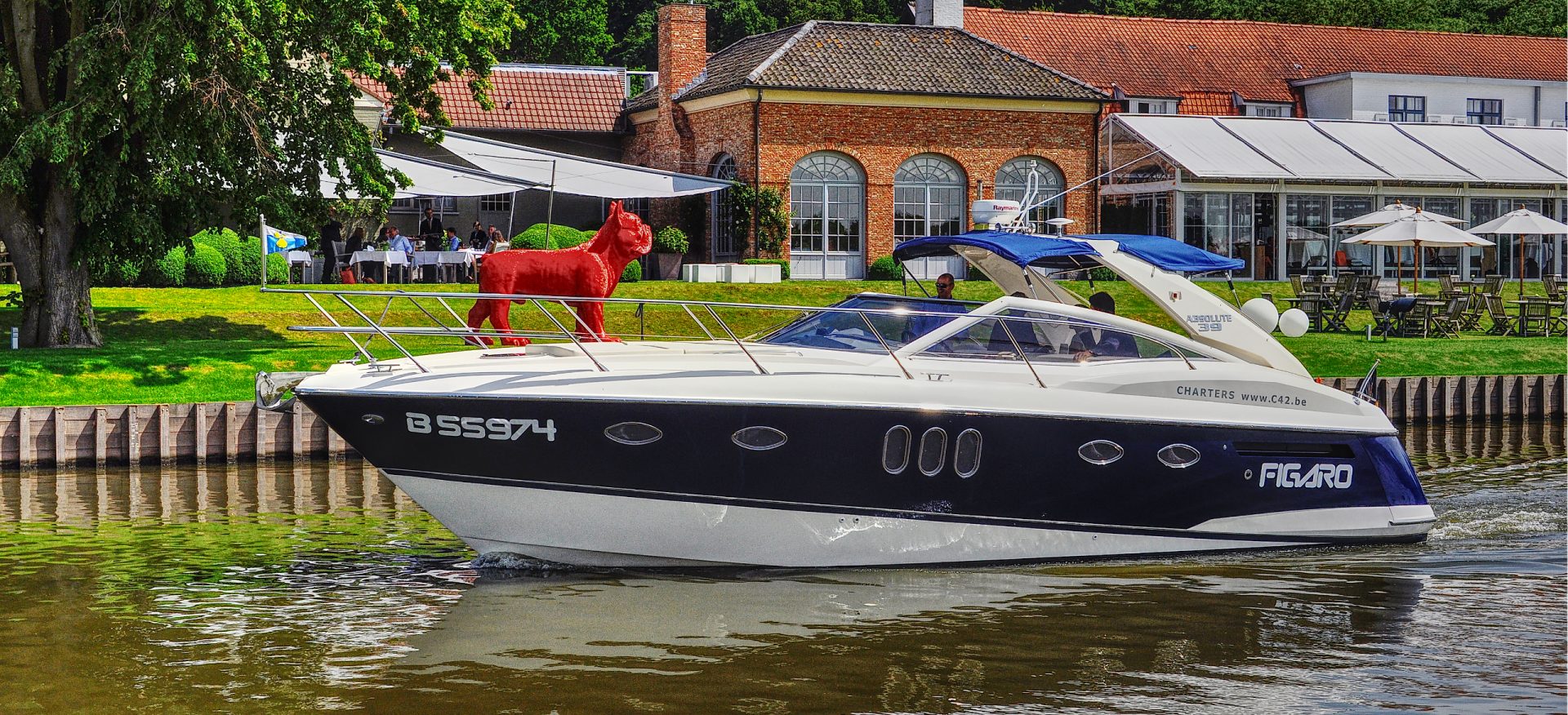 Many travel organisations specialising in boat rental provide a logbook. This contains information on possible routes and the area in which the organisation allows you to sail. Discuss your route in advance with the organisation or the rental company. This will help you better estimate how many hours a day you'll need to complete your route. A good pace that lets you see plenty while staying sufficiently relaxed is between 3 and 5 hours of sailing per day, depending on how much time you have to reach your destination. Some organisations also give you the option of returning the boat to a different destination from where you started.
Where to moor?
You can choose between different mooring spots depending on how long you want to stay in the same place and what facilities you need. In Belgium, there are many mooring spots where you can stay for free for up to 24 hours. There are also jetties at bridges and locks with limited mooring time, or paid marinas offering facilities with electricity, water, sanitation and the option to dispose of waste.
In France, you can moor freely in many places, as long as you don't obstruct traffic. In the Netherlands too, mooring is allowed in many places, unless signs indicate otherwise. Ask the boat owner to find out more about potential mooring spots along your route. It's obviously also a good idea to ask for an explanation of the most common navigation signs.
Stopping somewhere sometimes gives you the chance to go for a swim. Of course, only do so if the area is sufficiently safe (and clean) and if there's no strong current or heavy boat traffic.
You can also explore the area by leaving the boat.
While it's not always possible to bring a car on a boat, it's often possible to bring your bike!
Convinced and want to give it a go?
Don't hesitate, and enjoy wonderful moments of relaxation on the waterways.
 Our blogger Lisa:
Lisa is a freelance blogger who just spent a year exploring Australia alone in a Jeep. When she's not travelling, you'll often find her at home, on her sofa with her rabbit Nelson on her lap and a language course in hand. You'll find her articles on Greek mythology and Bali on her site lisasvividwriting.com.