At a glance
What is geocaching? How can you take part? What are the rules? Are there caches in Belgium?
"Treasure hunts" have always stirred up passions.
Is that why "geocaching" has become a worldwide success, bringing so much enjoyment to children and adults alike for more than twenty years now?
But what exactly is geocaching?
Our blogger Alain Dierckx explains it in this post.
What is geocaching?
In a nutshell, it means that objects are hidden all over the world, and you have to try to find them using GPS technology.
How did geocaching come about?
Geocaching appeared in the year 2000, when the technological accuracy of GPS suddenly increased tenfold.
American IT consultant Dave Ulmer wanted to test the accuracy of these systems. He hid a small black container in a forest, placed a logbook inside it, and gave its coordinates to a small group of GPS users via the Internet. This initiative quickly became a great success and inspired other people to start hiding objects too.
That same year, the website www.geocaching.com was created, bringing together the 75 "geocaches" that existed at the time. The media soon got wind of this very unusual site, and a "Geocaching Community" was born. Since then, the number of enthusiasts has kept growing.
Today, millions of "geocaches" are hidden all over the world: in parks, cities, deserts, underwater… and around 400 volunteers work every day to support the concept. In Belgium alone, there are said to be more than 31,000 caches!
How does geocaching work?
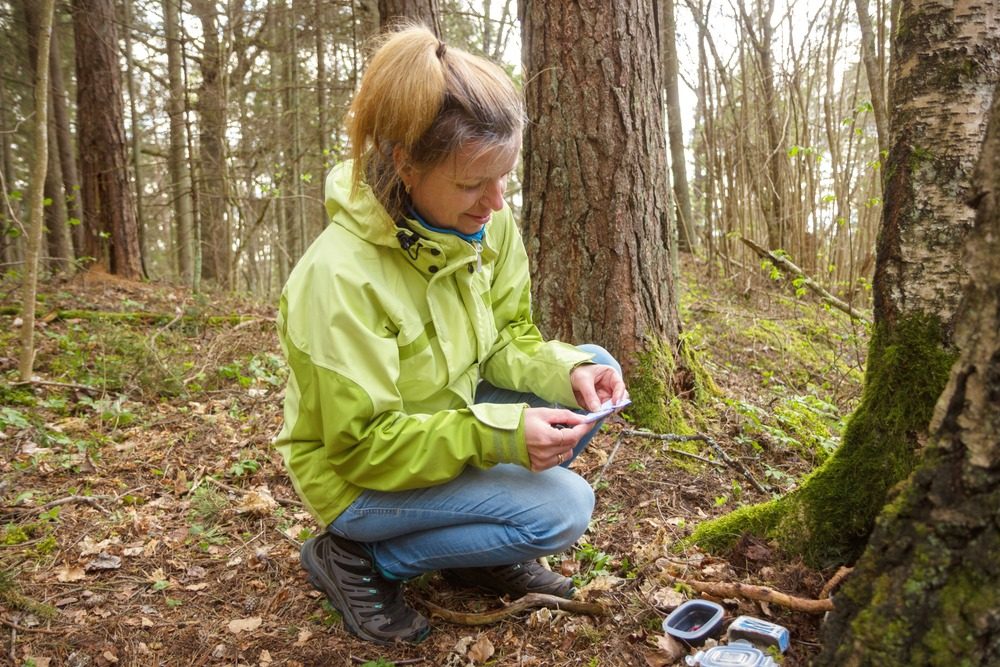
Searching for a geocache is done via a (free) app on your smartphone or with a GPS application. In the app, you select the cache you want to look for and set off on your adventure. With a GPS device, you need to download the coordinates from www.geocaching.com.
Once you've found the hiding spot, you sign the logbook and put everything back in place. You can then share your discoveries and experiences online.
Some caches contain items you can take out and replace with others. In other caches, you'll find "trackables" left there by the owner. These are objects (for example, fake coins) that can be bought from various websites, and their purpose is to let finders carry them from geocache to geocache as they travel.
What does a geocache look like?
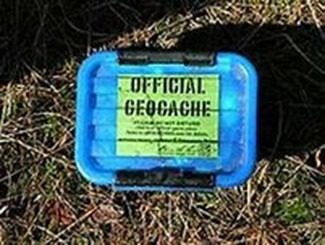 The shape and size of what you're looking for depend on the type of geocache:
- Micro: for example, a tube the size of an (old) film canister.
- Small: for example, a plastic container of up to one litre.
- Regular: the size of a shoebox.
- Large: the size of a bucket.
What if you can't find the geocache?
If this is your first search, it's a good idea to look for a "beginner's geocache". These caches are larger than average and located in easily accessible areas.
If you can't find the geocache, you can turn to different kinds of help. Each cache has its own page on www.geocaching.com. Besides interesting information about the location, you can also find one or more hints that can be decoded using a decryption key. In addition, photos taken by other geocachers can sometimes give you an idea of the location. And finally, you can read the comments left online by people who have found the hiding spot.
Would you like to create a geocache yourself?
It's possible! But there are conditions, e.g. the owner of the location must agree, your geocache must be far enough away from other caches, etc. You can read all these rules at www.geocaching.be (site in Dutch).
10 tips for successful geocaching
- Always carry a pen or something to write with (you'll need to sign the logbook)!
- Think and act like a detective during your search.
- Caches aren't always visible at a glance — sometimes you'll need to use your hands.
- Caches are never "buried", but they aren't always at ground level either.
- Put everything back in place after finding the cache.
- If the coordinates aren't quite right, report it via geocaching.com.
- If you want more search options, consider a Premium account (€29.99 per year).
- Always be respectful of the environment and nature during your search.
- If you leave something in the cache, avoid food or anything with a smell, as it may attract animals.
- Thank the cache owner in the logbook.