At a glance
How do you organise a short cycling trip with your children? What's the ideal distance to cover? How do you make the ride enjoyable?
.
Travelling by bike takes more preparation than travelling by car. In particular, you need to work out the ideal distance to cover by bike to reach your destination based on everyone's abilities, and how to make the trip as enjoyable as possible for the children.
Our blogger Lisa explains how to organise such a cycling trip with the members of your "bubble".
Feel like getting away for a weekend not too far from home? Leave the car in the garage and set off by bike. Going away for a cycling weekend isn't just a way to enjoy the scenery along the route, it's also a healthy, environmentally friendly way to travel. And above all, it's a project that's achievable for all ages, as long as you factor in your own pace and travel conditions.
Good preparation guarantees a trouble-free trip, whatever the length of your getaway.
A realistic distance to cover by bike
The general rule for any occasional cyclist, meaning someone in decent physical shape, is to cover a maximum of 70 km per day, or around 3 to 4 hours of cycling per day. And that's on a mostly flat route! So don't plan too long a route each day, and make sure you have an itinerary without too many climbs and descents. If you'd rather have more time to relax along the way or at your destination, plan for a shorter distance.
Whether you're travelling in a group, with family or with loved ones, always take into account the least experienced cyclist or the one in the poorest physical shape when planning your stages. The more seasoned cyclists can take on more of a challenge by, for example, carrying more luggage on their bike.
How do you prepare for your cycling weekend?
Study and plan your route in advance. Are the roads suitable for cycling? Does the route go through a road that could be dangerous for (young) cyclists? If you're unsure about which road to take, you can check it in detail using Google Street View. Online route planners such as RouteYou or Komoot also let you plan your route.
Before setting off, it's a good idea to check the condition of your bike. The following article on bike maintenance shows the points you can check yourself. Go through this checklist before hitting the road. Remember your bike pump and tyre repair kit. Also make sure you have good bike assistance cover so you can set off with peace of mind.
Do you have an electric bike? Plan somewhere you'll be able to recharge your battery.
Set off in the morning or early afternoon and plan a few pleasant stops. A (beginner) cyclist would rather arrive at the destination earlier than expected than have to rush. As a rule, it's best not to cycle in the dark. In spring and summer, the days are long enough to ride in daylight. If you do have to ride in the dark, make sure you have the right lighting, even on the bike trailer.
Take plenty of breaks and pack drinks and snacks (such as a protein bar or a banana). Of course, you can save on the weight of your luggage by buying food along the way. So think about passing through villages or near supermarkets.
Also take the weather into account and postpone your weekend if conditions are unfavourable. A wet road can be dangerous.
Stay careful: don't take unnecessary risks on the road and follow the highway code. Make sure all your travel companions arrive safely.
What luggage should you bring?
Camping is fun, especially when the weather is good. But if you want to avoid extra luggage, it's a good idea to book an overnight stay at your destination. Put your luggage in a bag, a bike basket or on your bike rack. A lightweight, sturdy backpack is also an option. There are even bike trailers with a folding tent!
Remember that you'll have to carry everything you need for the whole trip. Even though it's important to dress appropriately, there's no need to bring your entire wardrobe. An extra pair of sturdy, closed shoes and a spare pair of socks are a good idea for the weekend. And to avoid chafing on the saddle, you should wear trousers that stay comfortable after a few hours of effort.
These items will certainly come in handy:
- A smartphone charger. That way, your battery will stay charged while you're on the road.
- An app or GPS will save you from having to stop regularly to check on your smartphone whether you're still on the right road. A phone mount fixed to the bike can be very useful. A (paper) map of the area is another option.
- A light raincoat. Always stay visible. Make sure you have fluorescent clothing.
- Even if it's cloudy, it's worth applying high-factor sunscreen to your face, shoulders and arms.
- Don't forget minor mishaps: painkillers for headaches, plasters for blisters... as with any trip, it's best to bring a small first-aid kit.
A cycling trip with children
Children under five don't normally cycle long distances. Make sure to use a child seat or a bike trailer at the back. Child seats are the cheaper option and require less effort from the cyclist than a trailer. They're suitable for children up to 20 kg. Make sure you have a solid double bike stand when fitting the seat or trailer. Don't let your child sit in it alone unless you're firmly holding your bike.
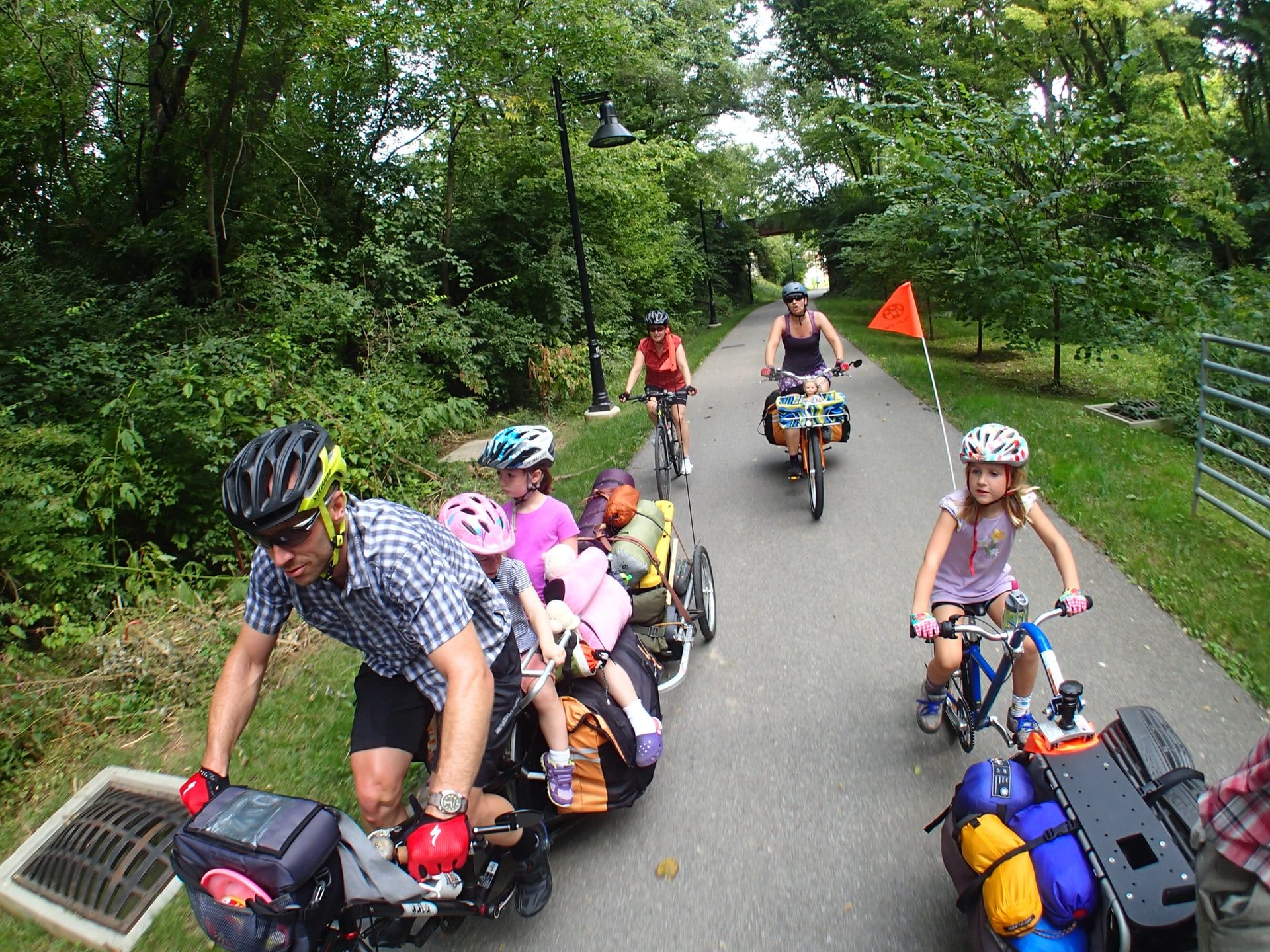
The advantage of a bike with a trailer is that you can use it not only for children, but also for your luggage. You can also put a child's bike in it so your child can pedal on their own for short distances. Of course, a trailer is only recommended for those in good physical shape. A good way to calculate the maximum weight of your luggage is as follows: your luggage and small passenger(s) combined should not weigh more than half your own body weight.
From the age of six, a child who can already ride a bike on their own can cover around 10 km per day. For ten-year-olds, that's already 17 km per day. Keep this in mind if your children are making the trip under their own steam.
A few points to watch out for when cycling with children
- If you choose a bike with a trailer, it's best to fit a mudguard on your rear tyre so that mud or dust can't be splashed onto your back or your passengers.
- Children who aren't cycling themselves should be dressed more warmly than the cyclists, as they can get cold more quickly.
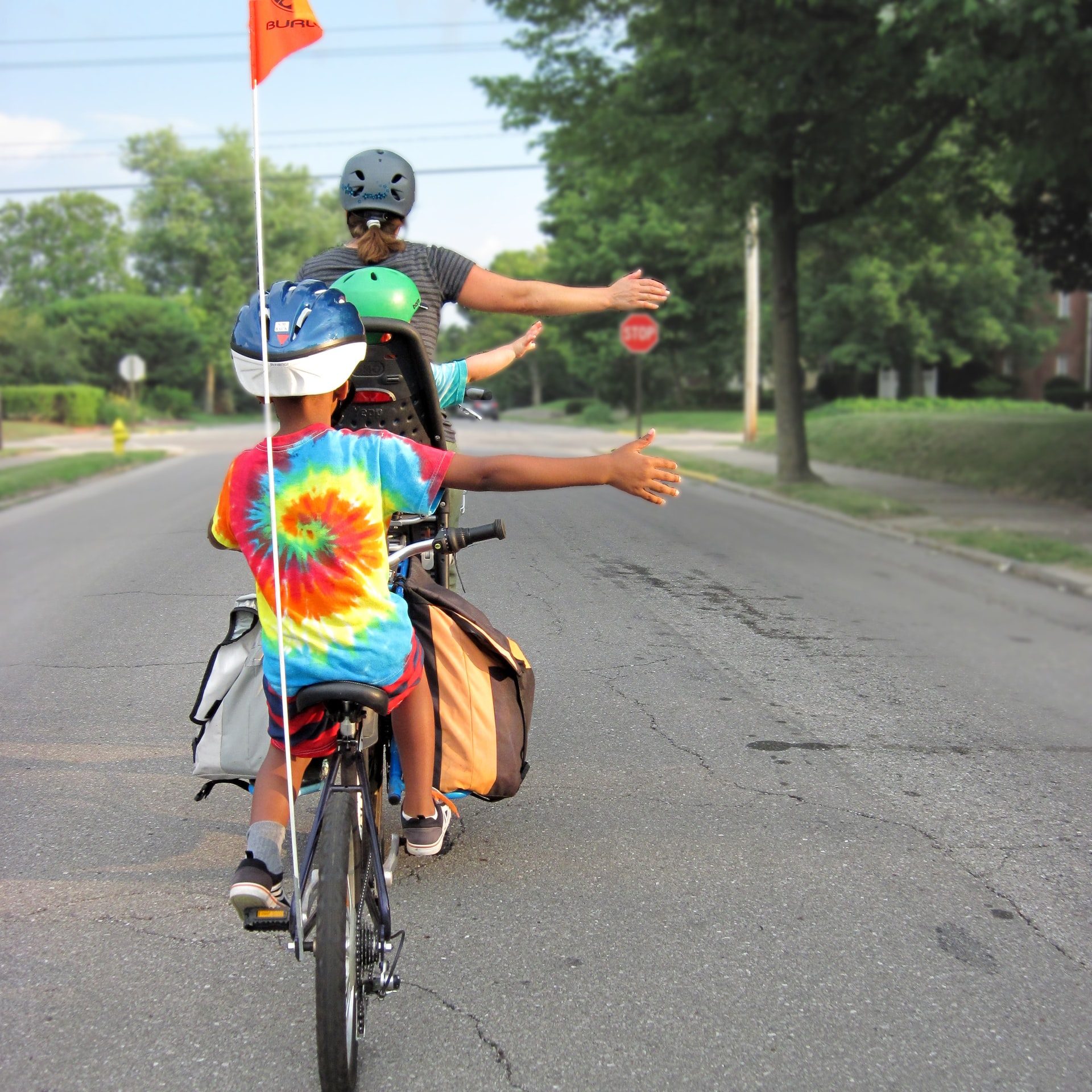
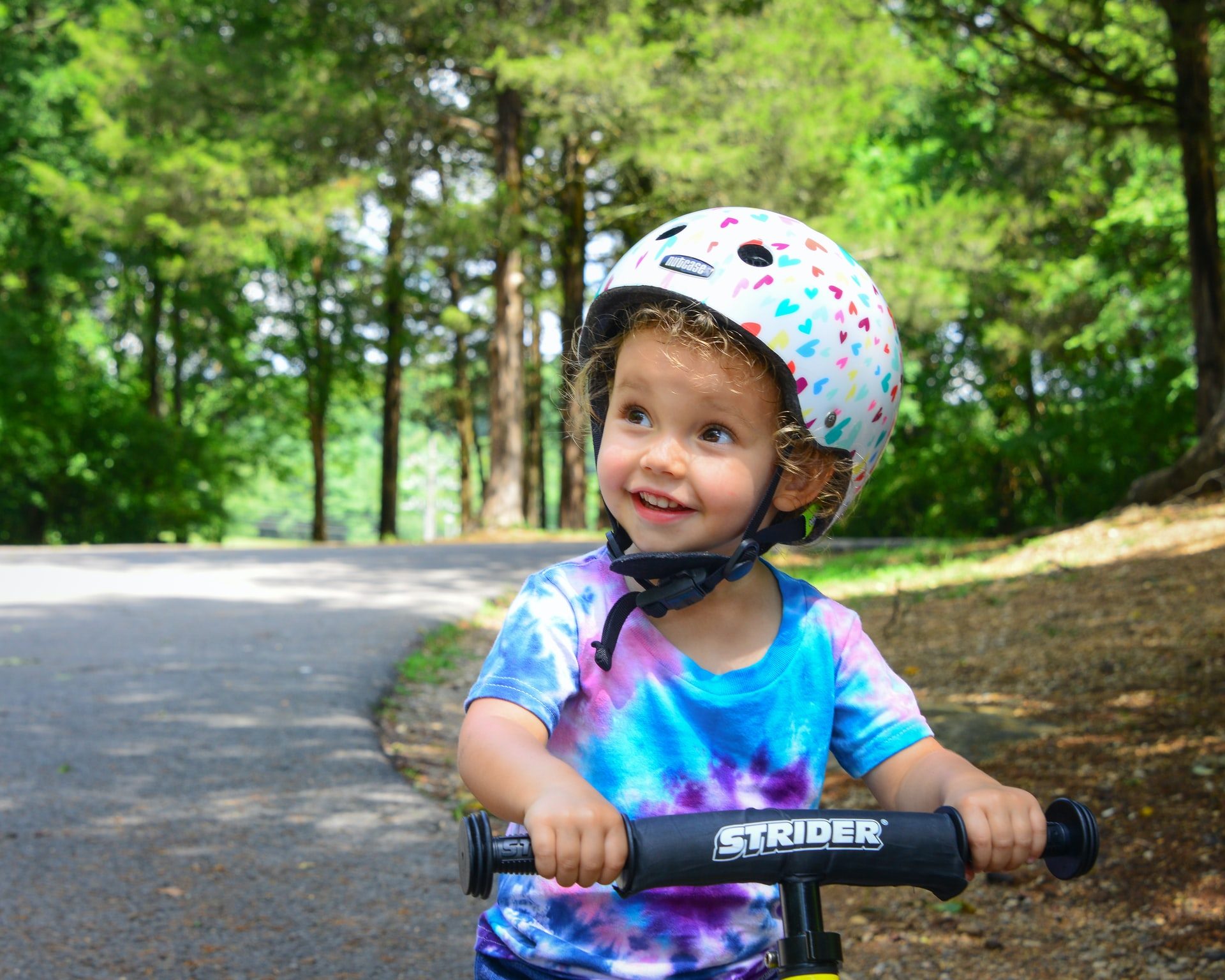
- And probably the most important piece of advice: whether they're cycling, sitting in a seat or in a trailer, always make sure your children wear a helmet. The same advice applies to adults. A fall can cause serious head injuries.
 Our blogger Lisa:
Lisa is a freelance blogger who has just spent a year exploring Australia alone, in a Jeep. When she's not travelling, you'll often find her at home, on her sofa with her rabbit Nelson on her lap and a language course in hand. You'll find her articles on Greek mythology and Bali on her website lisasvividwriting.com.