At a glance
Booking a trip online without getting caught out. How do you go about it?
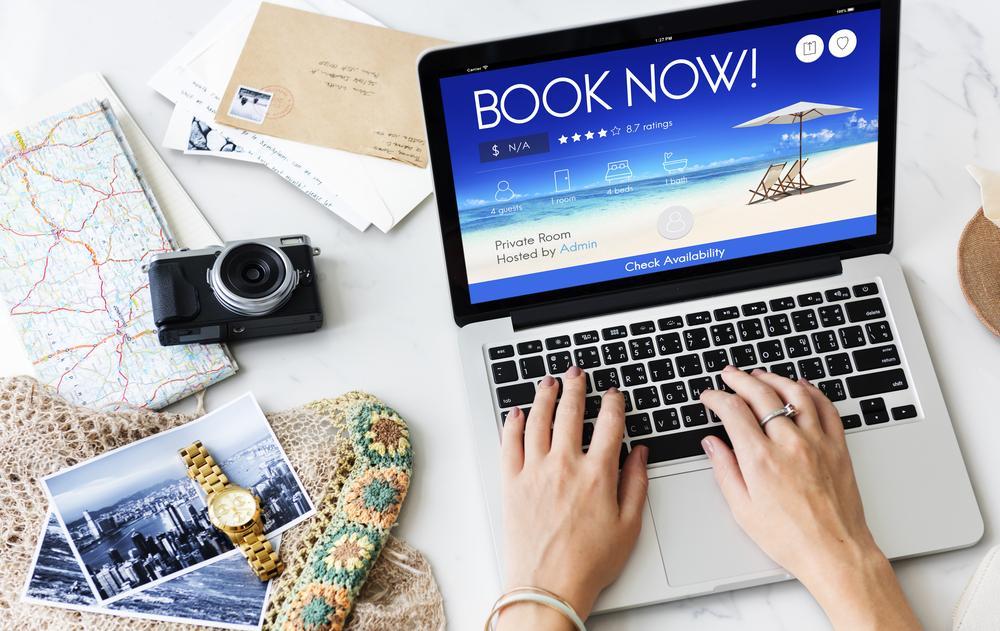
More and more holidaymakers (+60%) are searching for, booking and paying for their transport and holiday accommodation online.
Often, they expose themselves to online traps or scams: unreliable websites, offers and rates that vary, an unsecured payment system, a lack of transparency, no recourse, etc.
How do you book a trip online safely?
6 important questions
1. Have you compared the offers?
Before making your choice, it's important to compare offers from different sites.
Many sites compete with each other by offering tempting deals or making great promises, reinforced by beautiful photos that make you dream.
So it's essential to take the time to compare. Check general booking sites as well as private or specialised sites. Take the time to analyse every aspect of the accommodation you want to book (the price, the size, the conditions, the options, the reviews, …). Also take time to think it over.
2. Is the site or tour operator you're choosing reliable?
- Don't trust just anyone. If the tour operator has an address ending in .be, .fr or another domain, this doesn't necessarily mean it's based in that country and therefore has to comply with its regulations. A .be site could very well have been created by an organisation headquartered on the other side of the world.
- Be wary if the site is unknown, poorly referenced or gets little traffic online; choose instead a (well-)known brand with a proven track record. It's not uncommon for an unreliable site to appear briefly online to attract customers and then disappear just as quickly, leaving no recourse for those who trusted it.
3. Does the accommodation you've chosen actually exist?
Found your dream accommodation? Compare the details across different sites. Use tools like Google Street View to check it actually exists. You could also call the reception or the local contact person to verify the description of the accommodation.
Check certain important details using online mapping, such as the distance from the accommodation to … the beach, a busy road, the nearest shopping centre, etc.
4. Are the prices on offer correct?
- Prices offered by general hotel booking sites are often attractive, but not always. Booking directly with the hotel can be cheaper!
Read the article “Hotel booking sites: what you need to know” on this topic.
- Watch out for price supplements that could be charged for specific requests (single room, room orientation or view, breakfast, parking, any type of service, etc)
- Booking activities or excursions in advance can quickly push up the bill. Stay alert.
- Is payment made on a secure site? Only trust sites that offer payment via a secure system (digital signature or encrypted credit card).
- Make sure you don't have to pay handling fees.
- Some low-cost airlines reserve the right to change the flight or booking with simple notice to their customers. You're then left with only the choice to accept or cancel your booking, which could have a significant impact on your holiday plans.
5. Did you fill in the booking form carefully?
Too many travellers get caught out because they only partially filled in, or made mistakes in, the booking forms.
- Make sure you know the deadline you have to make any changes.
- If possible, favour a booking by email, which gives you a written record in case of a dispute.
- Check every detail carefully as you enter it in the form, because correcting it later (e.g. following an error in the name, address, email, date of birth, stay dates, etc.) can be complicated or come with a fee.
- Be aware that you have no right of withdrawal when you make a travel booking online.
6. Did you pay attention to the extra charges?
- Go through the form before sending it, and make a copy of it (screenshot or printout).
- Pay particular attention to any extra charges that could be added without you realising it. These are often pre-ticked options that you didn't notice.
For example, the insurance option (cancellation or assistance) may be unnecessary if you're already covered, or may only offer limited cover compared with what you could take out with an insurance company.
One last tip
Keep all proof and supporting documents safe in case of a dispute over the price, the accommodation or the payment.
Also read: A dispute at your holiday destination
Useful link: http://economie.fgov.be/fr/themes/protection-des-consommateurs/voyages\