At a glance
Interested in South Korea, or simply curious about new countries? This article takes you on a journey of discovery through South Korea, based on a student's experience.
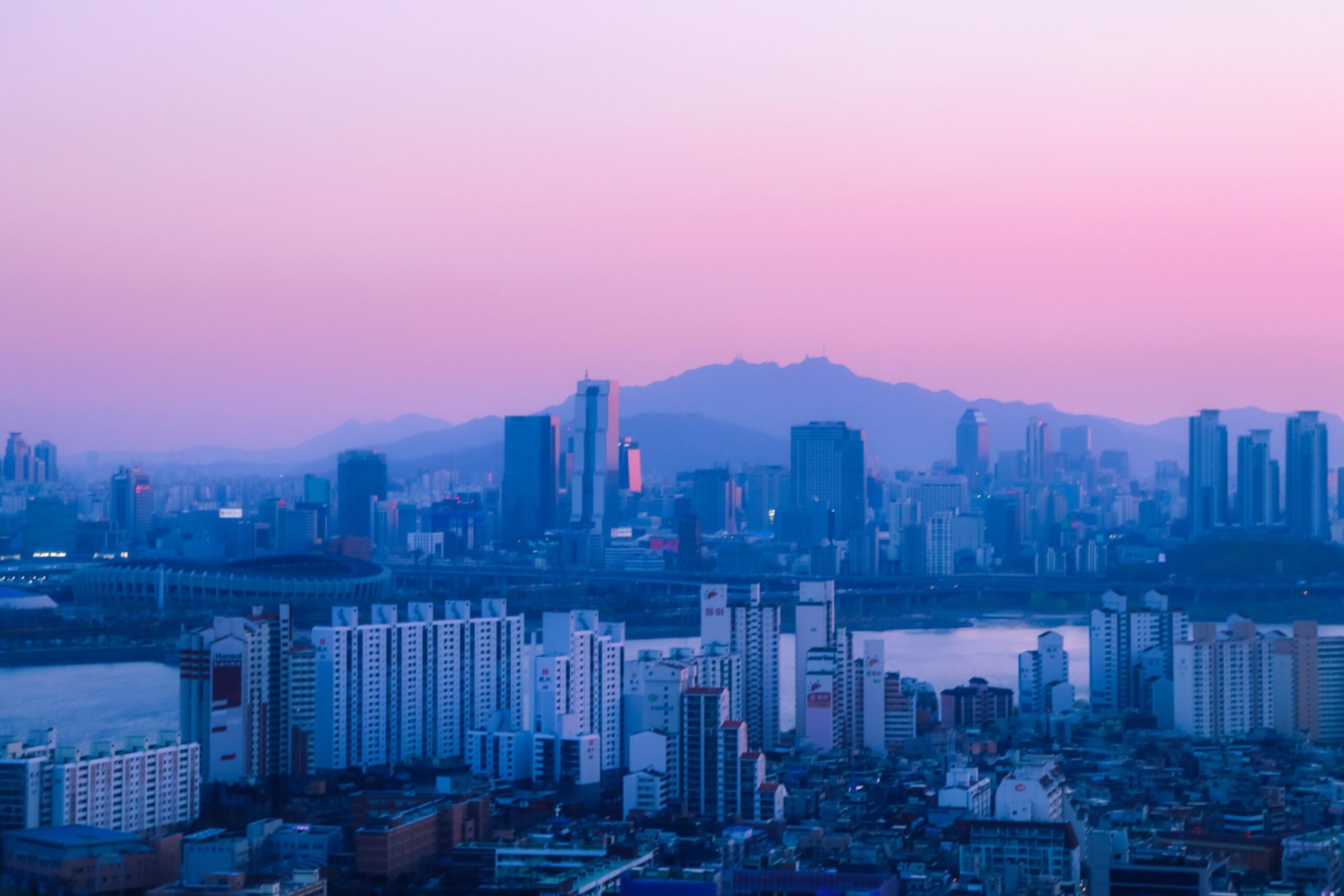
View of Seoul
Hi, my name is Jeremy and I'm an intern student at Redion. As part of my studies, I went to South Korea to study international business at Myongji University in Seoul. I lived there for a few months and travelled a lot during that time. In this article, I'll take you on a journey to discover South Korea, a country full of lesser-known riches that is gradually opening up to the world.
Visa and passport
Before heading to South Korea, you need to take care of a few formalities.
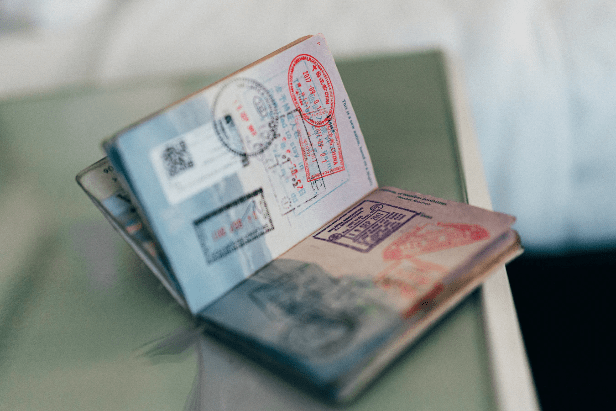
Usually, a tourist trip of less than 90 days doesn't require a visa, but an international passport is essential.
Today, given the health situation, it's harder to enter Korean territory. A visa is essential and can only be obtained for specific reasons. Work and study are the main reasons that will allow you to go there.
For more information on this, you can visit the website of the Federal Public Service for Foreign Affairs. You'll also find information there about mandatory (hepatitis A) or recommended (tetanus, polio and diphtheria) vaccinations.
Whether or not a COVID test is required depends on the country you're travelling from and your layovers. A layover in Turkey on your way back to Belgium will require a test before departure, whereas the outbound trip didn't involve a test. For more details on this, please contact your airline.
COVID-19 in South Korea
On arrival, you'll need a contact person on 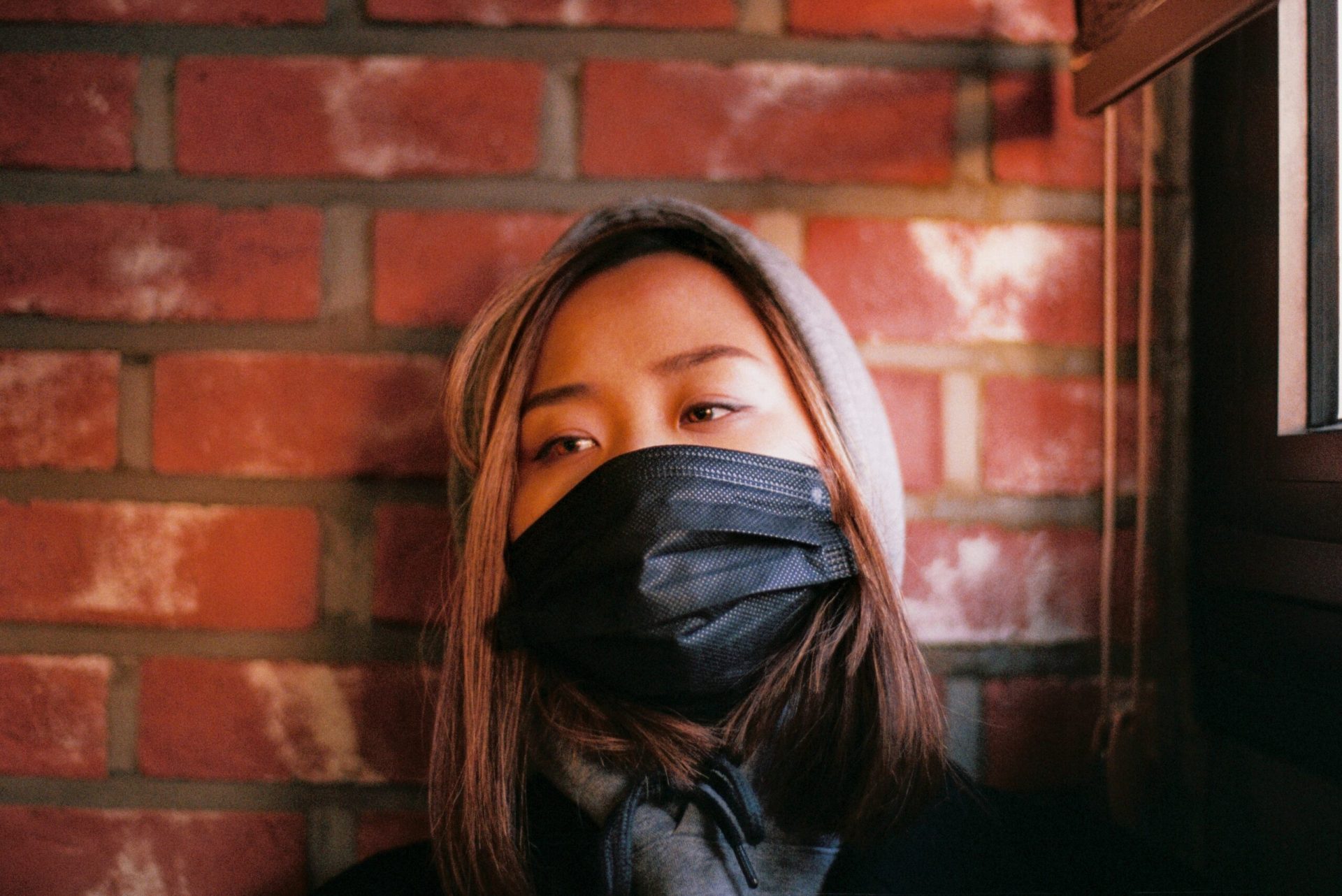 Korean territory to confirm the reasons for your stay. Due to the COVID-19 health crisis, a 14-day quarantine is mandatory, with heavy financial penalties or even imprisonment if this quarantine isn't respected. A test will also be mandatory 1 or 2 days after your arrival, and quarantine is maintained even if the result is negative.
This quarantine can be done at a hotel, at a friend's place, or elsewhere. You'll need to provide the address of your quarantine location, use an app to report your symptoms or lack thereof, and take your temperature daily. This app will track your location, and your contact in Korea will be notified if your behaviour suggests you're not respecting quarantine. A personal example: I fell asleep at the time I usually take my temperature. The next day, my contact received a message asking me to take my temperature at the right time, or risk a visit to my room if I forgot again...
If you don't have a quarantine location arranged, the Korean government provides hotel rooms for this purpose, but it will probably cost you more than €1,500.
To reach your accommodation during this period, paid buses and taxis are available to take you to your destination, whether in Seoul or another city.
As you can tell, they don't take COVID-19 lightly. This explains the low number of infections in the country and helps avoid lockdowns like the ones we know in Europe.
Travel insurance?
For a stay of more than 90 days, suitable insurance (medical care, repatriation and legal assistance) will be necessary. The insurance provided by your health fund probably won't cover all risks. It also probably won't cover you for a trip of more than 90 days.
For my studies in Seoul, insurance covering the entirety of my stay was mandatory. Since this stay was longer than 90 days, I took out Long Trip insurance with Redion and was able to leave with peace of mind.
The best travel season
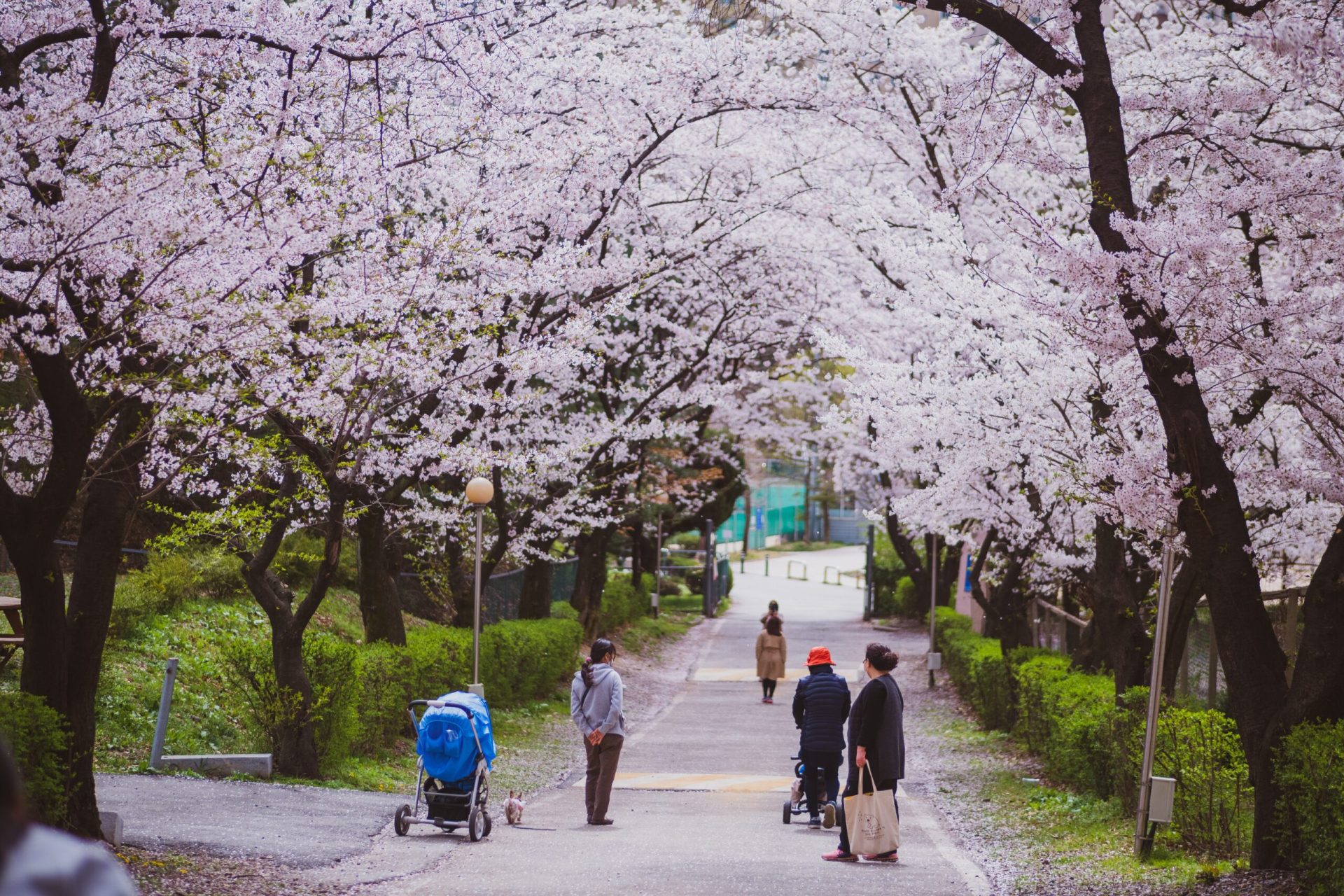
Korea's climate is radically different depending on the season: winter is dry and cold (average of -10°C), while summer is hot (average of 30 to 35°C) and humid, sometimes with very heavy rain.
Autumn and spring are the best seasons to visit the country, as temperatures are milder and the trees change colour. Cherry blossoms aren't only found in Japan; Korea is also magnificent in spring for this, and many places let you see this phenomenon across the country.
Communication
English
In Korea, it's better to know a few basics of Korean. It might seem obvious, but South Korea's nickname is "the United States of Asia", which leads many people to mistakenly think the population speaks English. Unfortunately, Koreans don't speak much English. There's a difference between generations and between cities. 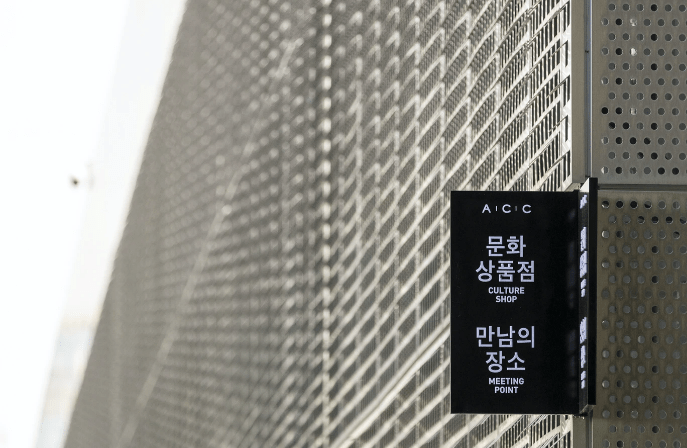
Young people learn English at school, but it's a language very different from Korean, requiring more effort than learning a language closer to their own. The reverse is also true for us: learning English requires less effort than learning Korean.
There's also a difference between cities. Seoul is the Korean city with the largest foreign population, and most things are written in both Korean and English there. The situation is much less easy in less touristy cities, where the population doesn't speak English and everything is in hangeul, the Korean alphabet.
Learning hangeul
Learning the language itself will take you months or years before you can master it, but you can still make your stay easier. Contrary to what you might think, hangeul isn't hard to learn, and its characters can be learned in less than 2 hours. They'll sometimes let you read what's on certain products, as the name is sometimes actually written in English, but using the local alphabet.
This trick won't be enough for conversations or asking for information. Mobile apps, such as Google Translate or Naver Papago, will let you write or speak sentences in English and instantly translate them into Korean, and vice versa. These apps require an internet connection, but South Korea is largely covered by free Wi-Fi connections. Temporary subscription offers are also available at low prices and are accessible as soon as you arrive at Incheon airport.
Local culture
Apart from the language, are there other differences from our culture? The answer is a resounding yes.
A few key differences
Individualism, for example, isn't looked upon very favourably in South Korea. Where we make decisions based on ourselves, in Korea the group comes first.
Hierarchy and age are also very important; you should never contradict your boss, and you owe respect to anyone older than you, even for a one-year difference.
Being polite is important pretty much everywhere in the world, but even more so in South Korea. You need to respect your elders, but also everyone else. Taking or giving an object to someone is done with both hands, you take off your shoes before entering someone's home, and you bow to greet each other.
Here are a few more examples of things to avoid in Korea: blowing your nose in public, maintaining eye contact during a conversation, being loud in public places (particularly public transport), or showing your emotions too much.
Clothing
Do be careful, though, for your own safety, not to wear clothing that's too light in sacred places or during sports activities, such as mountain hikes. Access to certain places could be refused if your gear isn't suitable – for example, if you wear heels, sandals or slippery shoes instead of proper walking shoes. Also, low necklines and shorts are becoming more common in young districts like Hongdae and are increasingly less of an issue for the population.
Religion
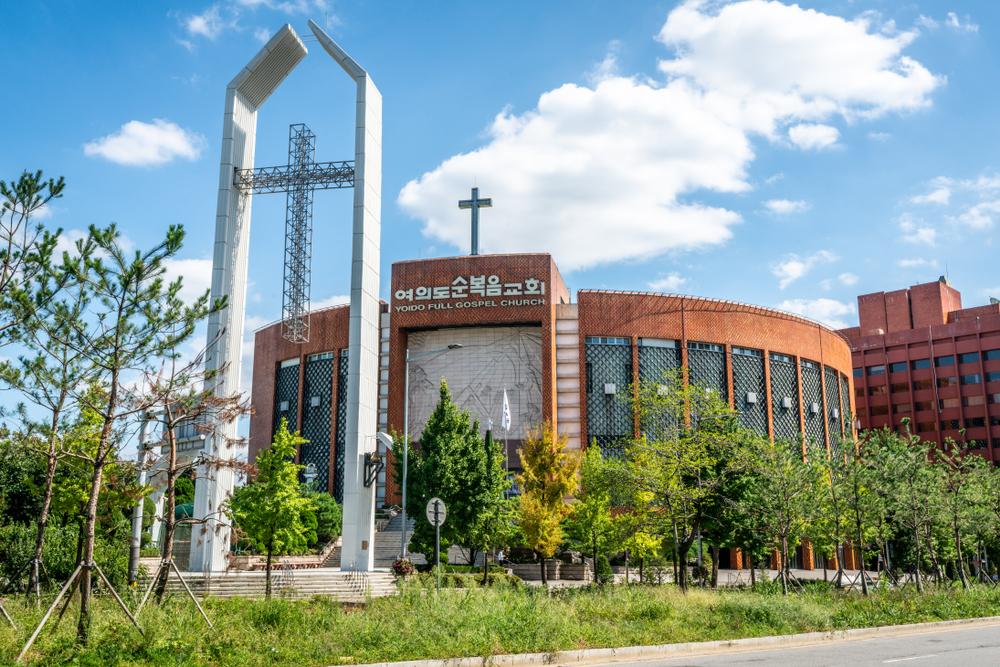
Buddhism and Protestantism are the two most widespread religions in South Korea, with Catholicism in third place.
You might be surprised to see a large number of churches and cathedrals in major cities.
Relationship with foreigners
Despite this religious closeness with the West, Koreans (particularly older people) aren't very used to foreigners. You might find yourself being stared at or looked up and down, but most of the time it's simply curiosity. Some people will even dare to ask you why you're in Korea, what attracts you there and whether you're enjoying it, whether on public transport, at a restaurant or in the street.
There are still many other interesting cultural traits to discover, such as the importance of physical appearance or the political system. But I'll let you discover them for yourself during your trip.
South Korea: a safe country?
South Korea is a very safe country. Assaults and thefts are rare there; you could even leave your phone or laptop on a café table to go to the bathroom and find it in the same spot when you return.
Transport and getting around in South Korea
Taking public transport in South Korea is very easy and inexpensive, under certain conditions.
Getting around a city
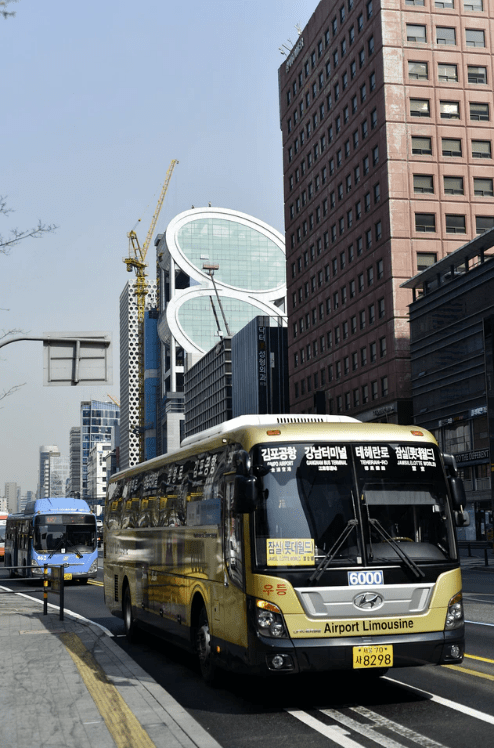 The best means of transport in Korea are the bus and the metro. The situation isn't the same as in Belgium, with multiple companies offering these services (STIB, TEC, De Lijn). In Korea, a T-money card, a rechargeable transport card, lets you take the bus and metro in any city in the country for around €1. This card can be topped up at metro stations or in many shops open 24/7. Traffic is fairly similar to ours, with few people during off-peak hours and crowds during peak hours. But I've never experienced traffic as excessive as you can see in some stations in Japan.
Taxis can also be an option. It's a quick means of transport and much less expensive than in Belgium. If you don't speak Korean, you can install the Kakao T app, which lets you order a taxi from your location, select your destination and get a set price to avoid any issues. Payment can be made in cash, and sometimes with your T-money card if the driver has a card reader. A 10-minute ride will cost you around €5.
Getting around between cities
To travel between cities, I'd recommend the intercity bus and the train. There are a large number of stations and terminals across the country, making it easy to travel from one city to another.
The bus will be significantly slower than the train, but speed comes at a certain price, so the train will be more expensive than the bus. The choice will depend on what benefits you're looking for.
A Seoul-Busan trip (the major city furthest from Seoul) will cost you a little under €20 by bus and around €40 by express train.
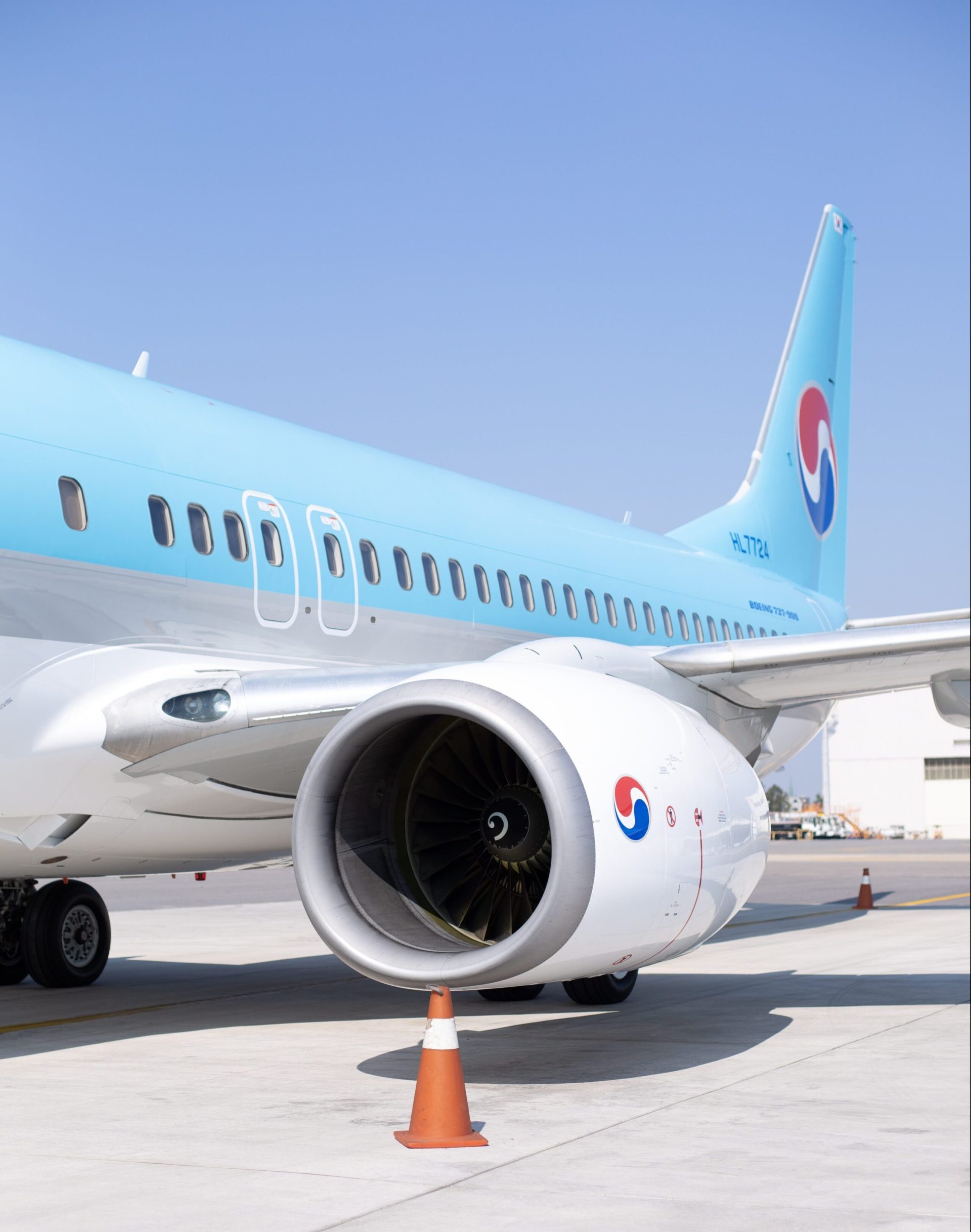
Domestic flights are also an option, but are mainly used for the islands, such as Jeju, located south of the country. A trip from Seoul to Busan will cost you around €30, and about half that to Jeju.
To help you get around, apps can make things easier. Since Google Maps doesn't work the same way as in Europe due to government restrictions on Google (recently relaxed somewhat), I'd recommend Naver Map or Kakao Map.
Eating and drinking
Eating out in Korea often costs as much as cooking at home, sometimes even less. You 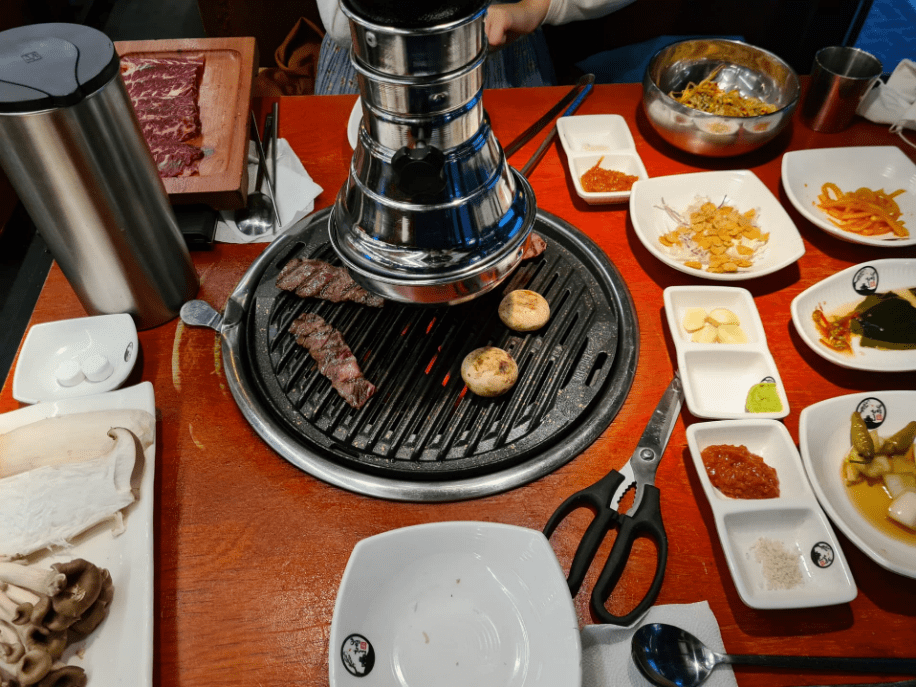 can easily get a bibimbap or a gimbap for €5 or less. Tteokbokki or a bulgogi with banchan and some kimchi are slightly pricier options, but usually still come to under €15 per person. You'll often eat there with Korean chopsticks, which are rectangular. So you'll need to get used to these if you're not already.
If you like sweet things, Korea is full of small cafés and bakeries offering a wide choice of pastries. Do be careful, though: dishes don't always taste the way you'd expect. I've been surprised before by a hotdog that tasted sweet, or pastries that were oddly salty.
Also, Korean food can be very spicy... I unfortunately learned that the hard way. The red colour of a dish will often tell you a food is spicy.
If you'd like to order food, like an Uber Eats or Deliveroo, that's also possible in Korea. Unfortunately, most apps only exist in Korean. The only English-language app I was able to use during my stay is only available in Seoul: Shuttle.
Accommodation
South Korea has accommodation at every price point. "Classic" hotels and motels are found everywhere in the country and can easily be booked on booking sites such as Booking.com or Trip.com, often between €30 and €100 a night. For a different experience, guesthouses, B&B-style with shared rooms or houses, are an inexpensive option, often between €10 and €40 a night.
If you're staying for several months, you can rent an apartment within a few days by contacting a local agency. Rent will be around €300-500. Another interesting option for students: a "kot" system is available almost everywhere in Korea, with a room, bathroom and shared kitchen. If this kind of accommodation in Seoul interests you, StayForU could be worth considering.
Payment methods in South Korea
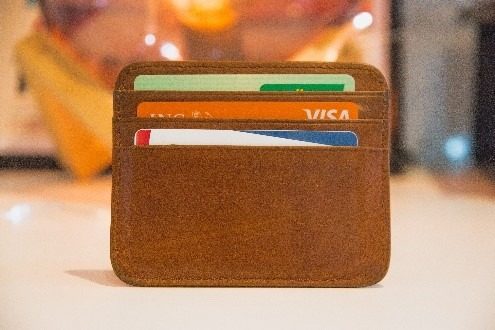 A Maestro card won't let you make payments or withdrawals at a bank. A Mastercard or Visa will let you do so most of the time. I'd recommend checking with your bank what is or isn't possible with your card, and buying Won (Korean currency) before you leave. This will let you pay locally if there's an issue with your bank card, without having to look for an open currency exchange office.
I had a Visa card that didn't work in every shop or bank. That's why I withdrew large amounts of cash at KB Bank or Standard Chartered, as these banks always let me withdraw money. You'll find these banks everywhere in the country, and you can locate them on navigation apps such as Naver Map or Kakao Map.
Many smartphone apps are used by Koreans to make payments. Many use Samsung's apps.
What to see... outside Seoul
Since Seoul is South Korea's flagship and most popular destination, as well as being 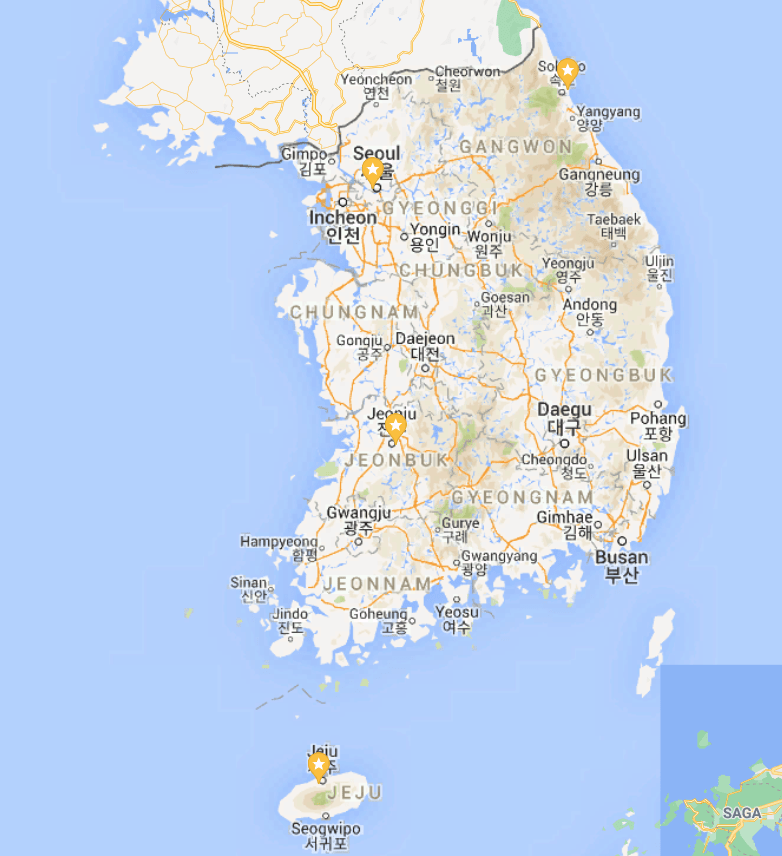 the most documented online, you might be interested in different and more unusual destinations. Here are a few to help you out. These places are also marked with a star on this map.
You can click on it to enlarge it.
Jeonju
Jeonju is one of my favourite destinations in South Korea, and it isn't nicknamed "the perfect region" for nothing. Museums and temples are plentiful, and this destination is very well known for the "Jeonju Hanok Village". You'll find beautiful traditional houses there with many restaurants and souvenir shops. Wander through these streets in a hanbok, the traditional Korean garment. You can capture this moment with a photo taken during a photoshoot offered by a few local shops.
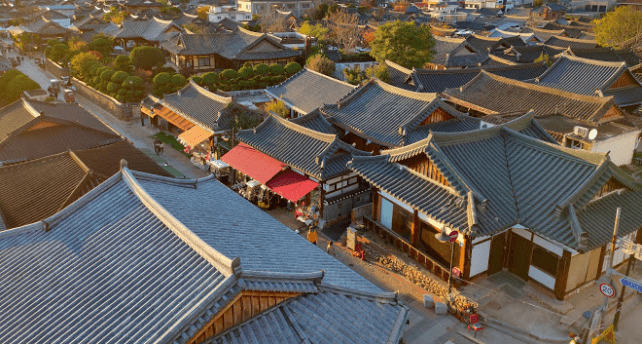
Transport Seoul-Jeonju: 2h40 by bus, between €11 and €15
Time needed to visit Jeonju: 1-2 days
Jeju
Jeju is South Korea's largest island, located south of the country and accessible by plane or boat. There are 2 major cities on Jeju: Jeju City and Seogwipo. Seogwipo is located in the south of the island and has a larger number of interesting attractions than Jeju City, which is why I'd recommend booking a hotel or room there rather than in Jeju City.
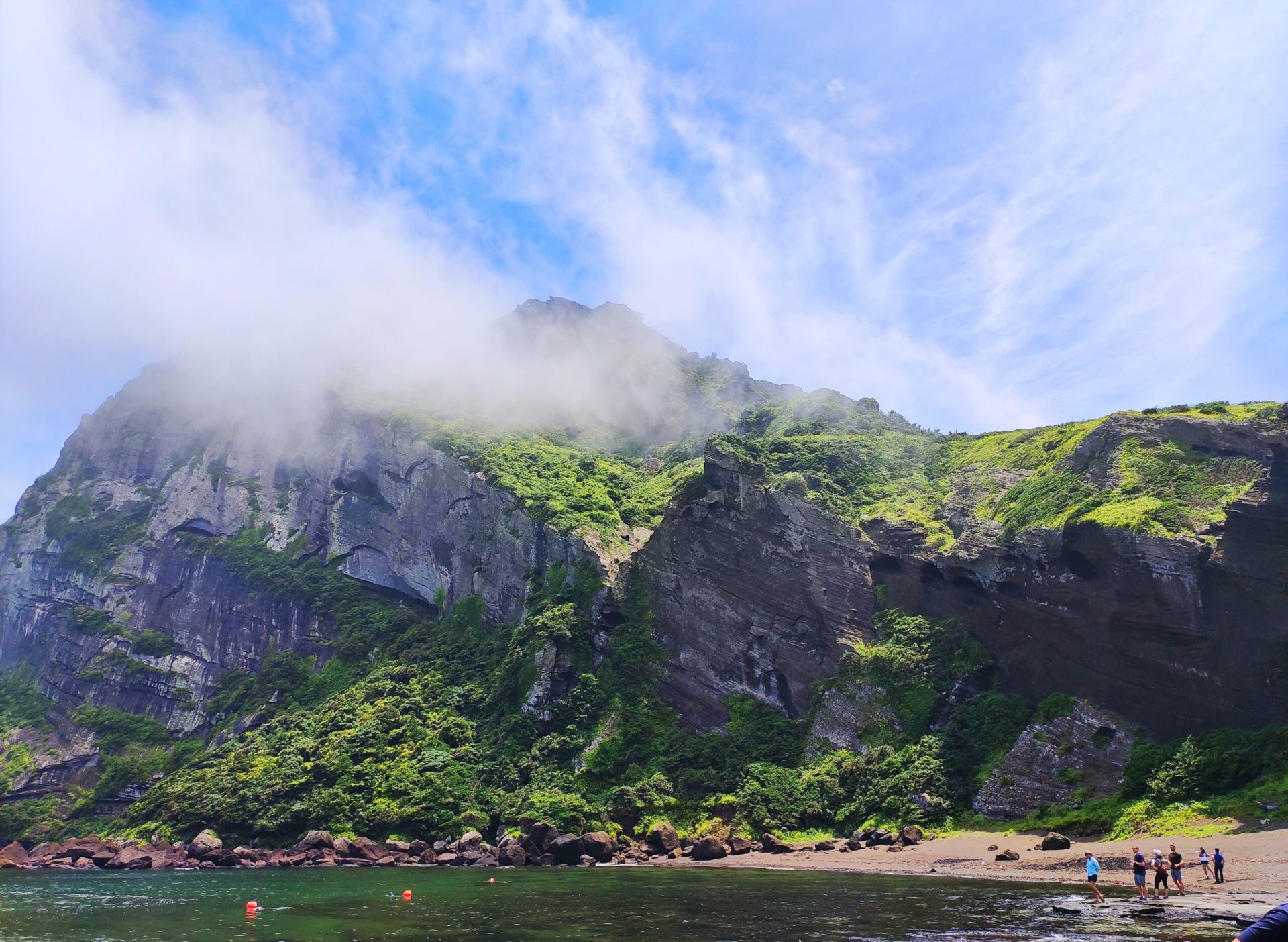 If I had to recommend just one attraction on the whole island, it would be Seongsan Ilchulbong, a volcanic cone on the east of the island. From there, you'll get a view over a large part of the island.
The island is known for its volcanoes and volcanic rocks, waterfalls, beaches and oranges. Its staircases deserve an honourable mention, as there are so many of them and they're sometimes required to reach certain attractions, including Seongsan Ilchulbong.
Jeju has a bit of a Hawaii feel that might appeal to you, and it's a top destination, especially in winter when it's cold on mainland Korea.
Transport Seoul-Jeju: 2h28 by plane, between €8 and €55
Time needed to visit Jeju island: 4-6 days
The DMZ
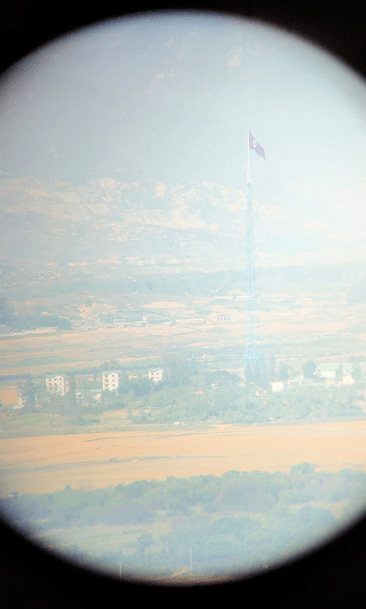
The demilitarised zone is a very popular tourist attraction for organised tours. Strong security is ensured through frequent checks on every bus at several points. Your identity will also be thoroughly checked, so bring your passport, ID card and Alien Card (provisional Korean ID card) if possible.
Different tours offer visits to the DMZ along with other extras. In my case, it was a 3-hour tour including transport from Seoul. Our visit began with a discovery of a tunnel dug by North Korea to invade the south. We then continued with a visit to the observatory: binoculars let us get a better view of North Korea, a ghost village and the North Korean flag. The tour ended with a visit to a village near the border, for a total of €55 per person.
Sokcho and surrounding area
The last destination I'll recommend in this article, even though there are many others worth dwelling on, is Sokcho and its surrounding area.
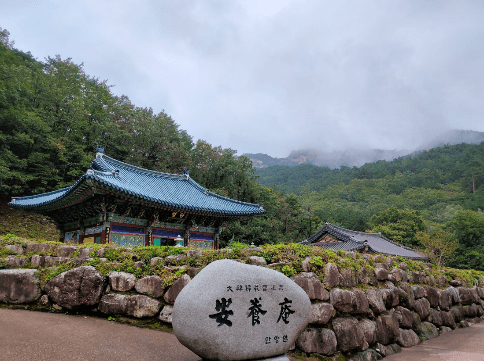 Sokcho is a city in the north-east of the country that was part of North Korea until the end of the Second World War. The city is known for its mountain range, Seoraksan, whose national park needs a full day to properly explore this incredible place.
The districts of Goseong and Yangyang are close to Sokcho and are interesting places if you're passing through Sokcho. You'll find an observatory focused on unification with North Korea near Goseong. In Yangyang, the Naksansa temple complex is one of the flagship attractions and is well worth the detour.
Transport Seoul-Sokcho: 2h10 by bus, between €11 and €16
Time needed to visit Sokcho and its surrounding area: 3-5 days
Of course, there are plenty of other places to visit, such as Boseong, Busan, Andong, Suwon or Gyeongju. This country is full of places to discover, for your greatest enjoyment.
I hope I've made you want to visit South Korea, or helped you plan your future trip.
Thank you for reading this article all the way through.