At a glance
How can you eat properly when sailing solo? Tom de Dorlodot shares his valuable tips with us.
***The life of an adventurer often requires vigilance and caution, for example by paying close attention to what you drink and eat.Tom de Dorlodot shares his dietary advice with us and reveals a few good practices to stay healthy when sailing alone or being confined on a boat far from inhabited areas.
Drinking water
Our motto on the Search Projects is to be as self-sufficient as possible, whether we are during a transatlantic crossing or experiencing more unusual situations. That is one of the reasons why the boat is equipped with a desalinator, allowing us to have a constant supply of drinking water on board.
Fresh food supplies
To maintain this autonomy, whenever we stop over or need to go ashore somewhere, we generally stock up on large quantities of supplies, prioritizing non-perishable food that can be stored for long periods. But of course, every time we shop, it is also an opportunity to buy fresh fruit and vegetables. In this respect, we follow the same approach and philosophy as when shopping in Belgium: buy local produce. This already helps avoid many risks linked to possible chemical treatments, freezing and refreezing, and so on.
Inspect fruit and vegetables
When choosing our fruit and vegetables, we always apply, almost automatically now, this three-step test: touch (with the usual precautions), smell, and sight. We carry out our own inspection. It may take a little more time, but it is the only way to be fully satisfied with what you buy! For some fruit, such as bananas, we always choose the greenest ones because the boat is the perfect place to let them ripen. The same applies to avocados, citrus fruits, and squash, which keep exceptionally well over time. Once back on the boat, we soak certain fruits and vegetables in a bucket of seawater, which can help destroy any parasites present on their surface. As for foods such as pasta, cereals, and similar products, you always need to stay vigilant, especially regarding packaging, because you are never completely safe from finding a small worm that could quickly reproduce and contaminate your supplies! !
Meat and fish
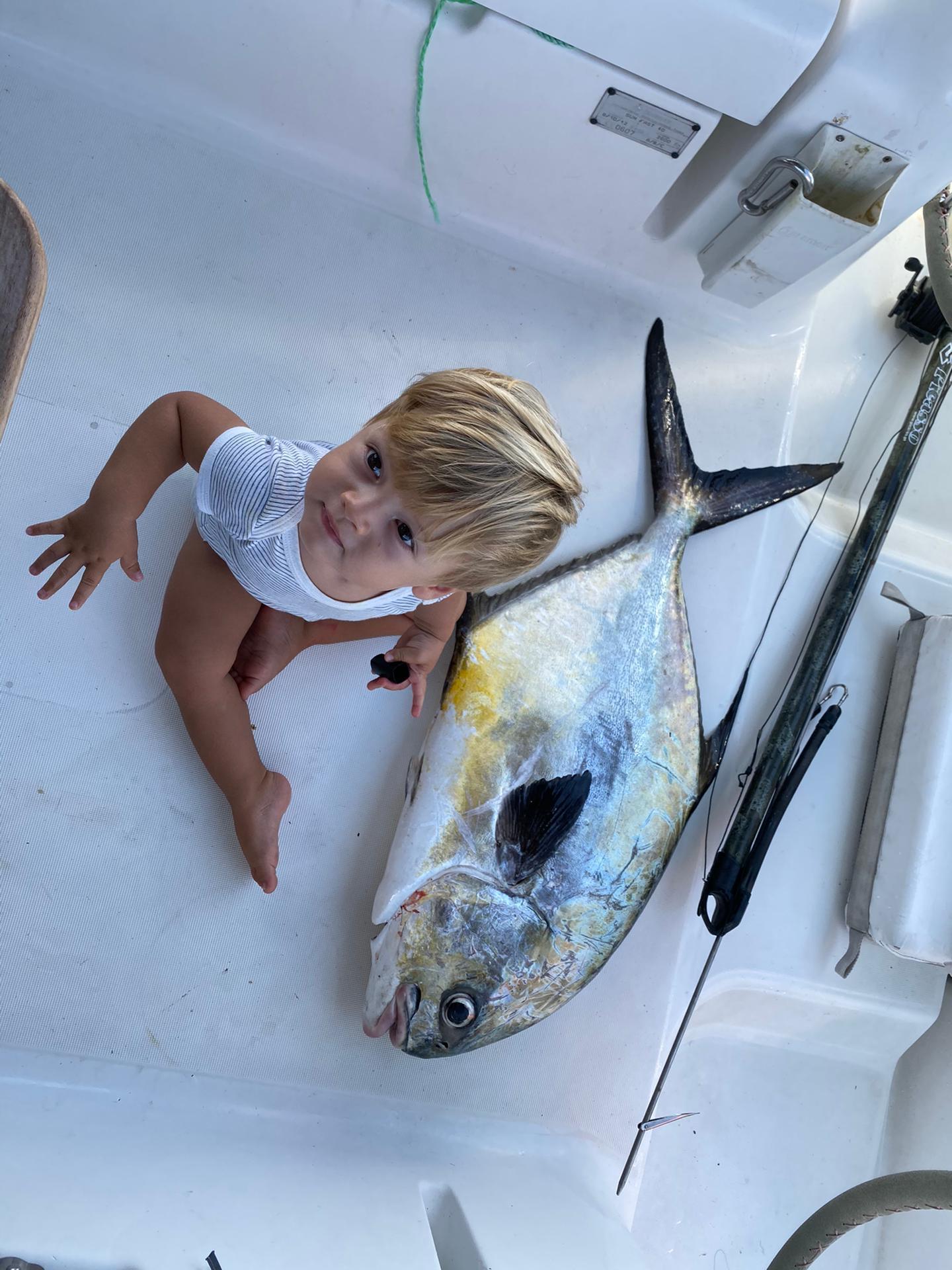
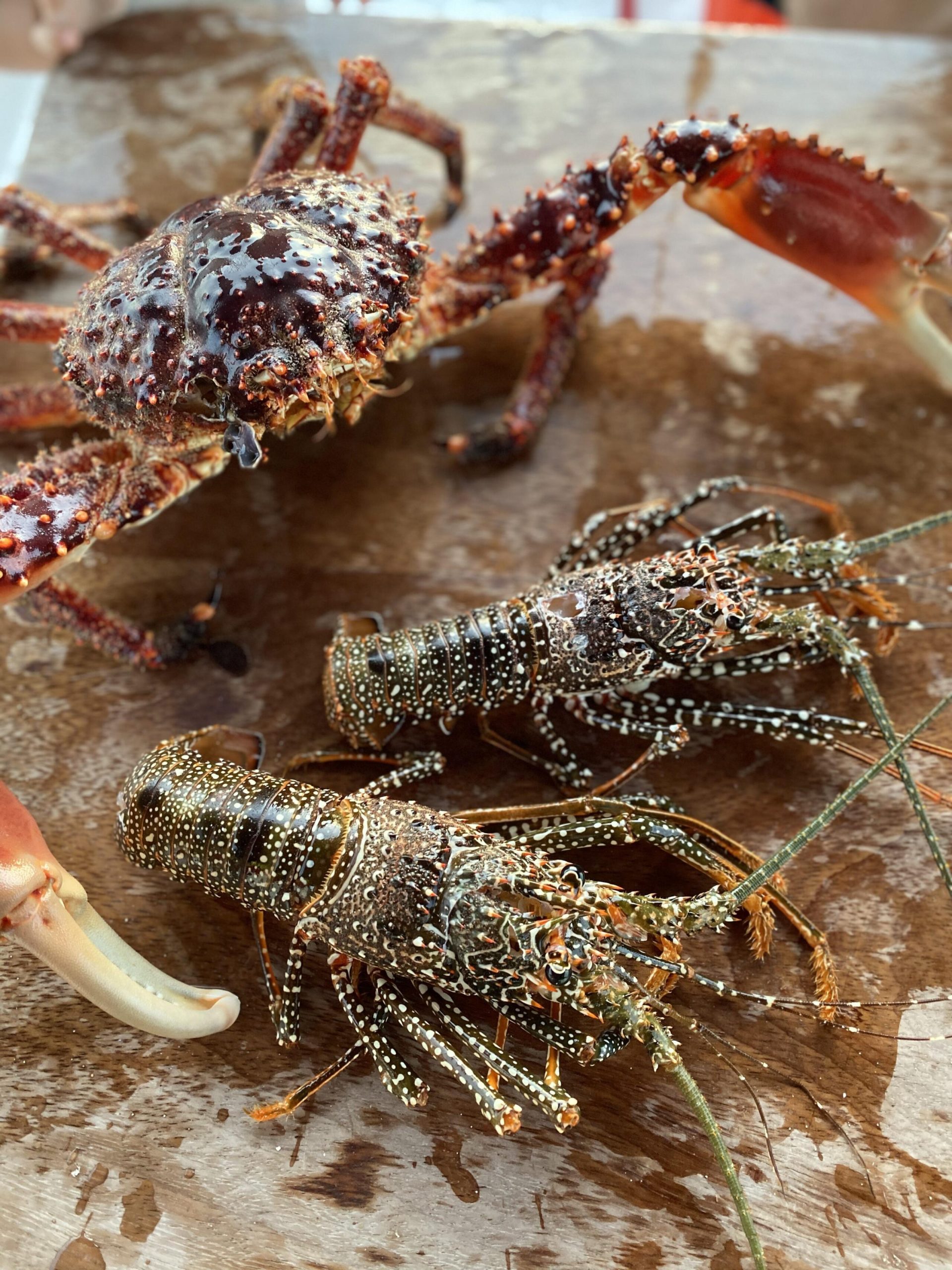
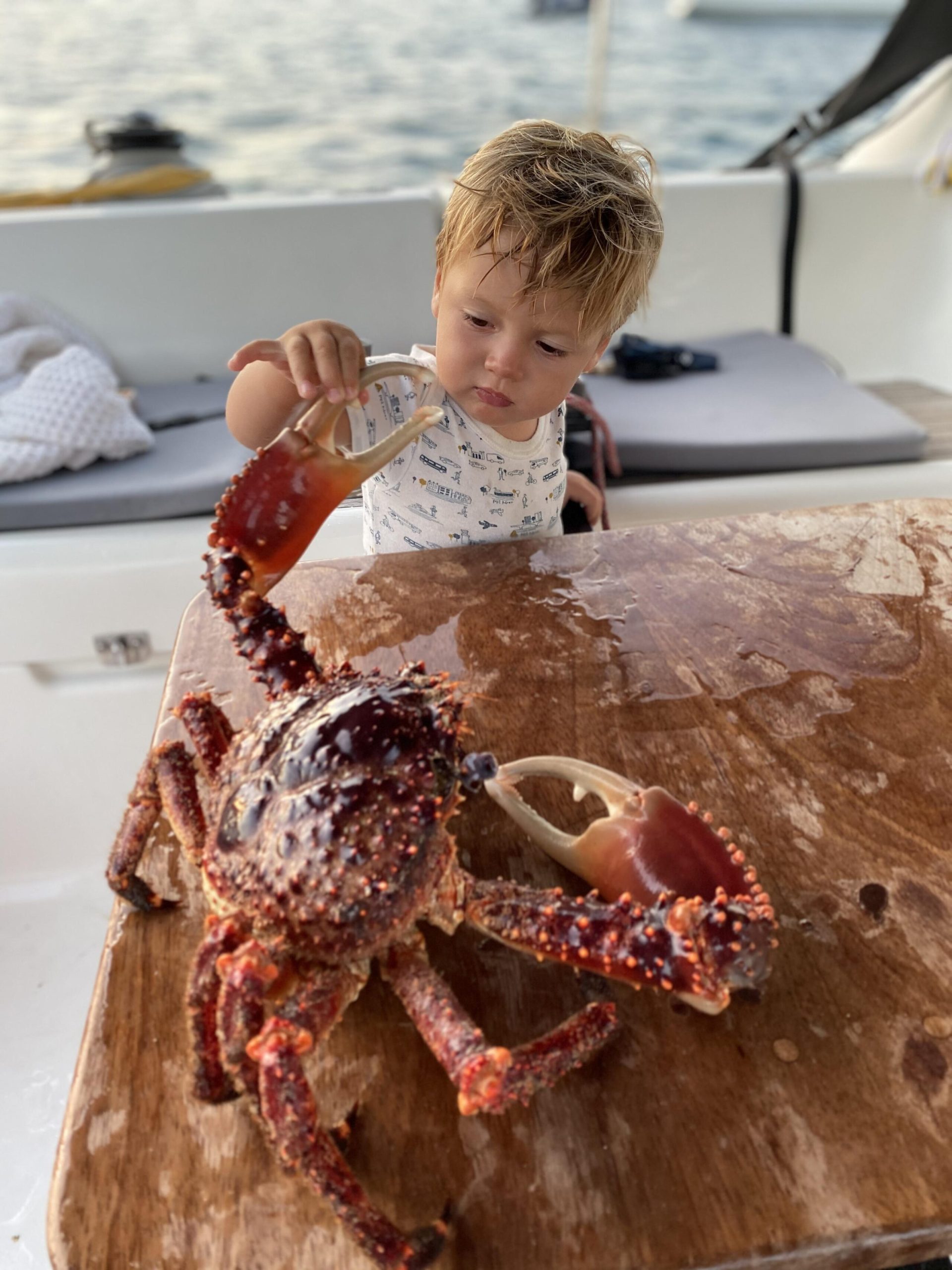
Our protein resources are mostly found beneath the boat! And fishing is both a hobby that I really enjoy and a great solution for having fresh food every day, even when we have to stay on board for an extended period. I catch spiny lobsters with a lasso. It may sound surprising and unusual, but this technique helps avoid making mistakes. At the moment, it is their breeding season. If I catch a female, there is a good chance she will be carrying eggs, so I release her. Spiny lobsters and crabs often make their way onto our menu. There are many ways to cook them: on the grill, with garlic and a drizzle of olive oil, or in a pasta sauce.
Not all fish are edible!
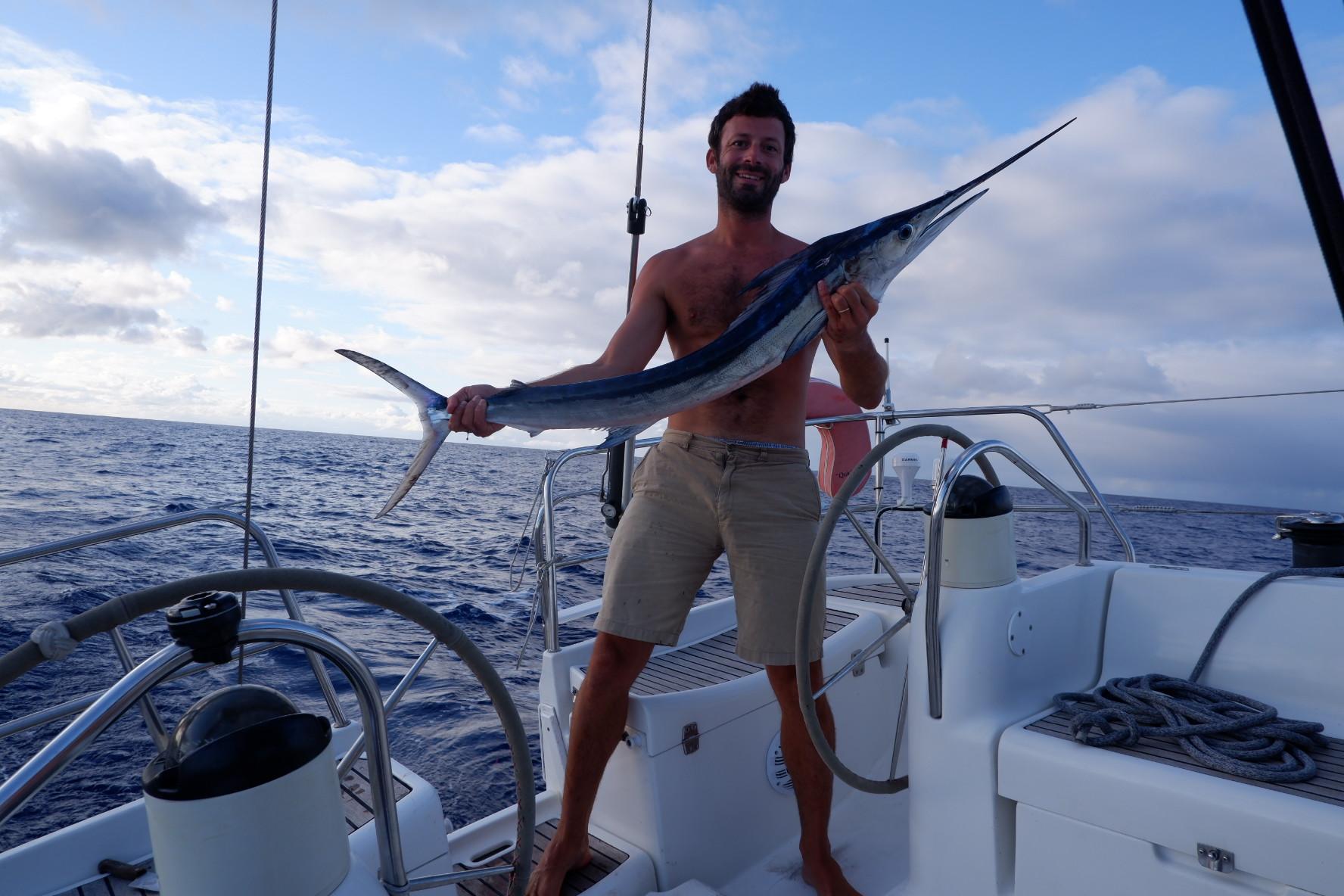
When fishing in tropical waters, you really need to be careful. Some fish feed on algae found on coral reefs, and these algae can be toxic. If a fish eats them, it can become toxic as well. The food poisoning caused by this toxin is called ciguatera. This toxin also accumulates throughout the food chain. A barracuda caught near a coral reef has a high risk of carrying ciguatera. It can have very unpleasant effects on the human body. Further offshore, it is much easier to catch other types of fish, such as tuna. We love tuna because it can be prepared in many different ways. You can even eat it raw and make sushi! But here too, precautions are necessary. Before eating it raw, we always freeze the fish for 48 hours to avoid any unpleasant surprises. The freezer on board is tiny, but in situations like this, it proves incredibly useful.
Ask questions
In fact, the most important advice, especially when you are abroad and in an environment you do not fully master, is to ask questions and gather information. Never hesitate to approach local people, seek their advice, listen to their recommendations, and take them into account. This is something I have done since my very first paragliding adventures. If you can naturally ask local people for directions or information, you should do exactly the same regarding food. And do not hesitate to ask twice so that you can compare answers and increase your chances of making the right decision.
Take time to discover
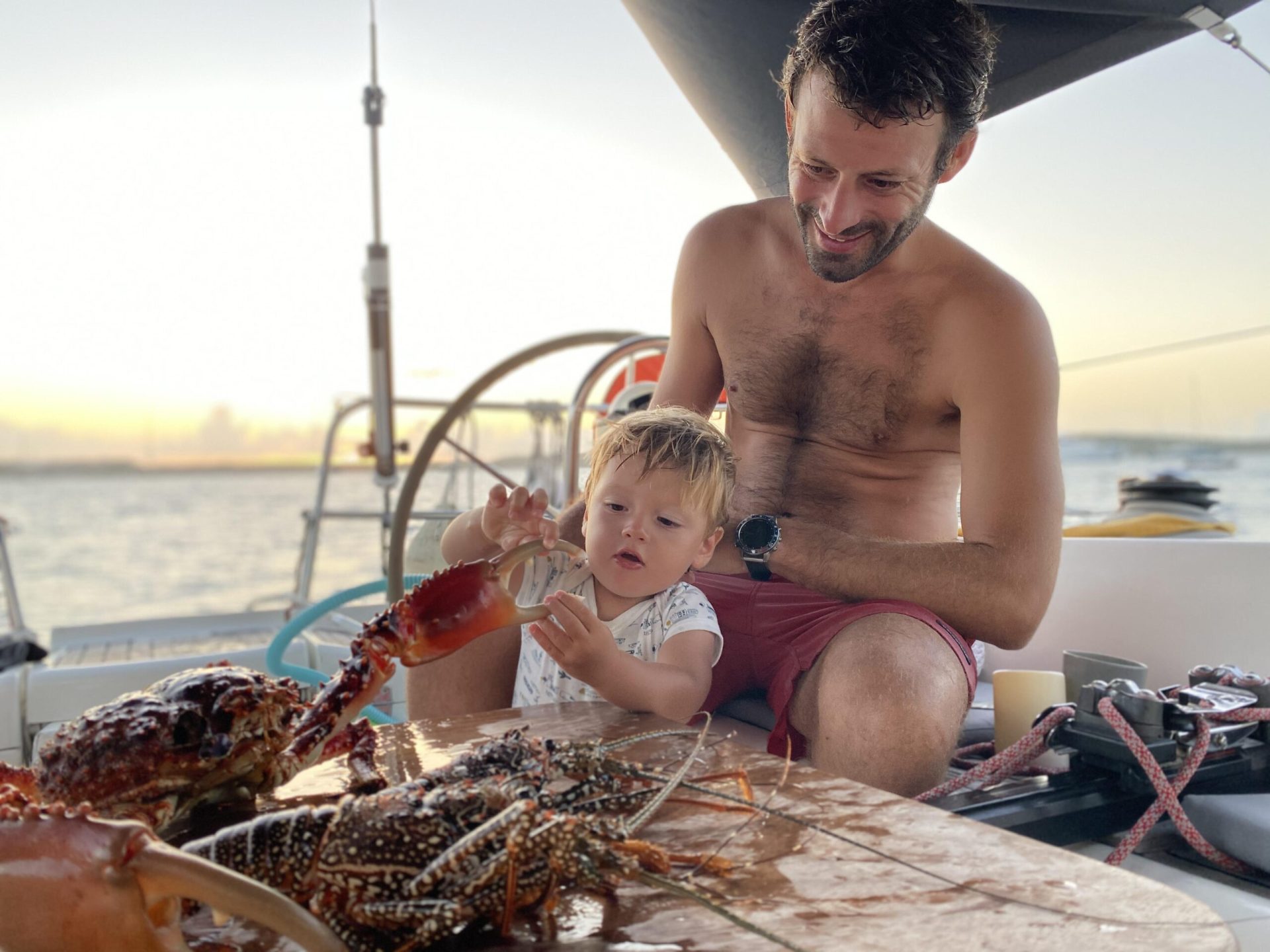
Another extremely important aspect, whether you are on the other side of the world or at home, is to have and take the time. Time to discover, time to learn, time to think. The same time that allows you to experiment, improve, and grow. It is one of the key lessons I have learned from travelling so much. And of course, this does not only apply to food and cooking. To get the boat back in the water and ensure we arrived safely where we are today, I had to develop skills, particularly in mechanics, that I did not have at all in the beginning. Once again, listening, learning, and being willing to absorb new knowledge are always the key factors. As for practical DIY tips and resourcefulness, that will probably be the subject of a future article on the Redion blog. Feel free to send us your questions and comments. It is always a pleasure for me.
My most unusual culinary experience
During an expedition in Pakistan, I was invited to dinner by shepherds spending the summer high in the mountains with their flock. We ate sheep tripe. There, nothing goes to waste. Everything is eaten. I was so hungry after spending long days in the mountains that I actually found it pretty good. But be warned, the flavour is very strong!
Two of Tom's eecipes
Ceviche
First of all, here is a raw fish recipe that I absolutely love: ceviche. We used to eat it with local people in Polynesia. For this recipe, I use parrotfish. It is found in large numbers on most coral reefs and is easy to catch or spear. Once out of the water, I gut it and remove the fillets. I cut them into small cubes and set them aside. I squeeze half a glass of lime juice and half a glass of lemon juice. I finely chop half a red onion and one tomato. Then I mix everything together. The citrus juice is what "cooks" the fish. I add the onion, salt, parsley, a little Tabasco, and possibly some avocado pieces. I place everything in the fridge for 30 minutes, and it is ready. A true delight!
Grilled Spiny Lobster
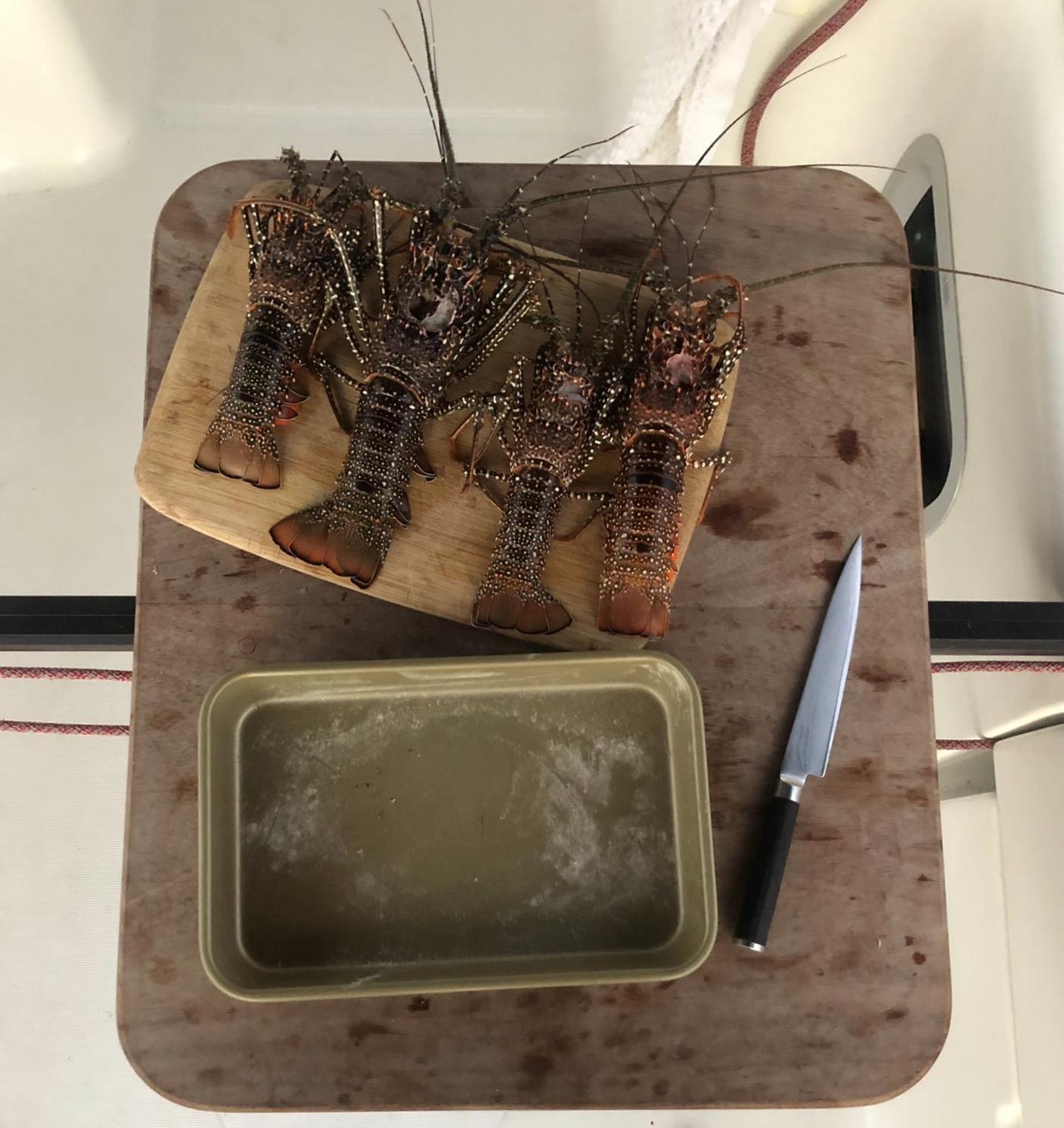 This is an incredibly simple and delicious recipe!
One spiny lobster is enough for two people. I cut it lengthwise down the middle and clean it thoroughly, removing everything that is not white or transparent. Then I simply add a drizzle of olive oil, small pieces of garlic, salt, and pepper. I place it on a charcoal grill and turn it regularly. Enjoy it with your hands... and do not forget the antennae. There is delicious meat inside them.
As for vegetables, I love steaming them. I simply place a steaming basket above a pot of boiling water. I cut the vegetables into pieces and cook them for 20 minutes.
It is always safer to eat vegetables cooked.
Take care of yourselves, and stay curious about everything! See you soon, Tom
Photos: © Tom de Dorlodot