At a glance
Car journeys are stressful situations for a dog or cat. How can you transport a pet properly? How can you avoid the stress?
What could be more enjoyable than taking your dog hiking on a weekend in the Ardennes, or giving your cat a holiday at the house you visit every summer?
Yet car trips are extremely stressful situations for some animals. The goal is therefore to reassure your pet during the journey while transporting it safely and in line with the law. Lisa, our blogger, gives us some good tips.
The Highway Code and transporting pets
First of all, it's useful to know what the Belgian Highway Code says. The Highway Code doesn't include any specific rules on how you should transport a dog or other pets in a car. The only thing Article 8.3 states is that the driver must "maintain permanent control of their vehicle or their animals". It's therefore up to the driver to decide how to exercise and guarantee this control while driving.
It's obvious that your dog or cat shouldn't get in the way while driving and shouldn't pose a danger to you or your passengers. However, the law doesn't require the animal to be restrained or enclosed. A fine for a dog loose on the back seat will therefore depend on the assessment made by the officer regarding the danger this situation poses to the driver, passengers and other road users alike. But be careful: the driver can be held liable for any accident caused by an animal loose inside the vehicle.
The best way to transport a pet
Transporting your dog on your lap or loose on the seats isn't a good idea. In the event of a collision, the animal would become a flying projectile, which could not only kill it but also pose a serious danger to you and your passengers. Letting your dog stick its head out of the window can make it choke, or even decapitate it if you have to brake suddenly.
Fortunately, there are all kinds of systems that can help you transport your dog. Some are considerably better than others in terms of safety. The price of crates can vary enormously depending on the brand, quality and size. Small ones will cost around 20 euros, while a larger model can easily cost several hundred euros.
The general rule is: the bigger the dog, the more dangerous a projectile it can become in a collision. That said, it's also advisable to keep small dogs and cats safely contained in the vehicle.
Here are the products most commonly used to transport our four-legged companions, ranked by order of safety. Redion recommends that each of the devices listed below preferably be installed in the boot, rather than on the seats, and properly secured. The boot, possibly closed off with a partition or a net, provides extra safety in the event of an accident, preventing the animal from being thrown towards the front of the cabin.
- Harnesses that secure your dog in the boot can protect occupants by keeping the animal in the boot, but offer little support for your dog in the event of sudden braking.
- Crates with thick bars allow good airflow and a clear view, but the risk of injury to the dog in a collision is fairly high. Such crates aren't designed to be placed in a car, but rather at home.
- Folding crates made of plastic or soft material are often too fragile to withstand the impact and movement of the animal in a collision.
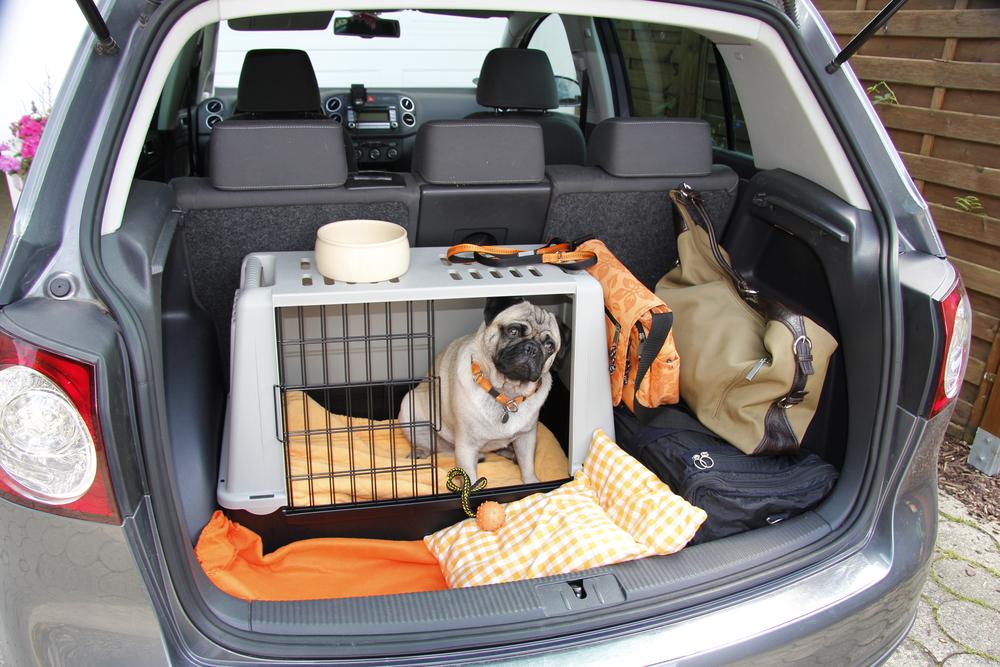
- Metal crates with thin bars offer the best protection for your dog in the car. Such a crate can be easily fixed to the boot and holds your dog in place in the event of an accident. Make sure the crate can't move.
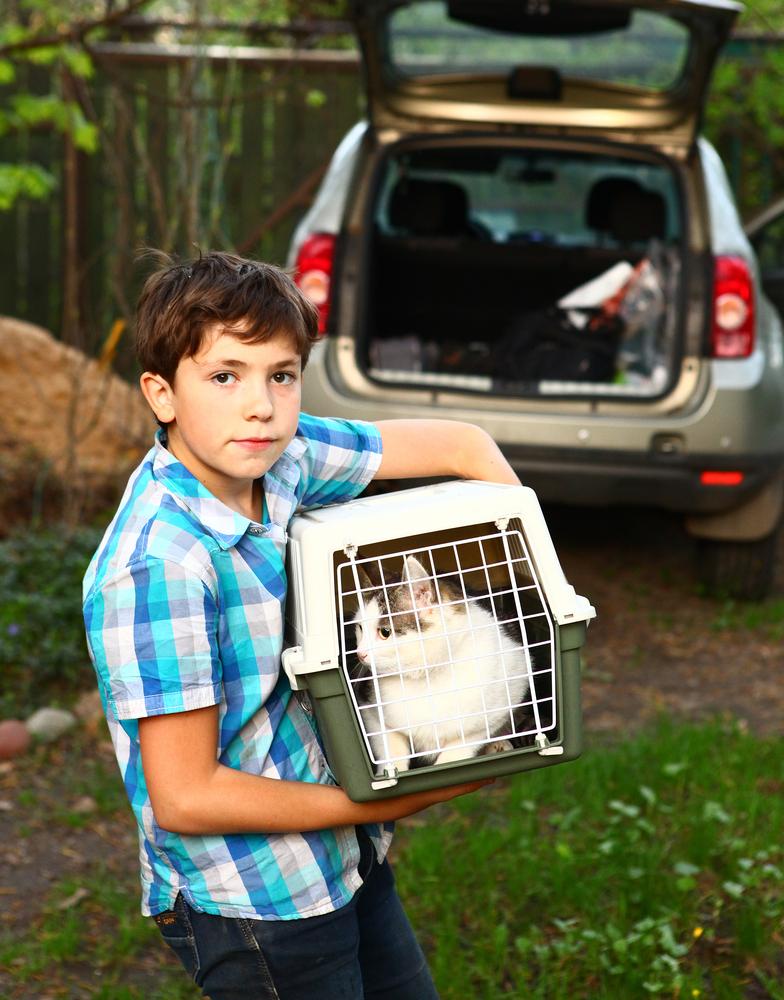
The same transport tips apply to cats: make sure your cat is in a well-closed carrier or crate in the boot, preventing it from jumping onto the seats. Even though it's nice to have your pet loose beside you, this could cost it its life in a collision. The driver could also lose control of the vehicle if the cat suddenly jumps onto their lap or between their legs.
How to avoid stressing your pet during the journey?
Many animals love travelling by car, but a crate can nonetheless trigger fear. Animals are also easily prone to motion sickness. As an owner, you'll quickly notice whether your dog is comfortable or not. Many signs indicate that your pet is stressed:
- constant scratching
- frequent yawning
- licking itself
- looking away and turning its back
- sweaty paws
- trembling
- growling
- biting
- trying to escape
The best thing you can do is help your dog relax. When applying the following tips, it's important that you yourself appear calm and reassured. Don't get your pet excited before setting off. Don't panic when your dog shows one of the signs of stress, but show it that there's no reason to feel uncomfortable.
Before leaving, make sure your dog is familiar with the car and its crate. Let it inspect the inside of the car as it pleases and jump in and out of the car by itself a few times (if your dog is able to). Take it on short distances first rather than planning a first long trip.
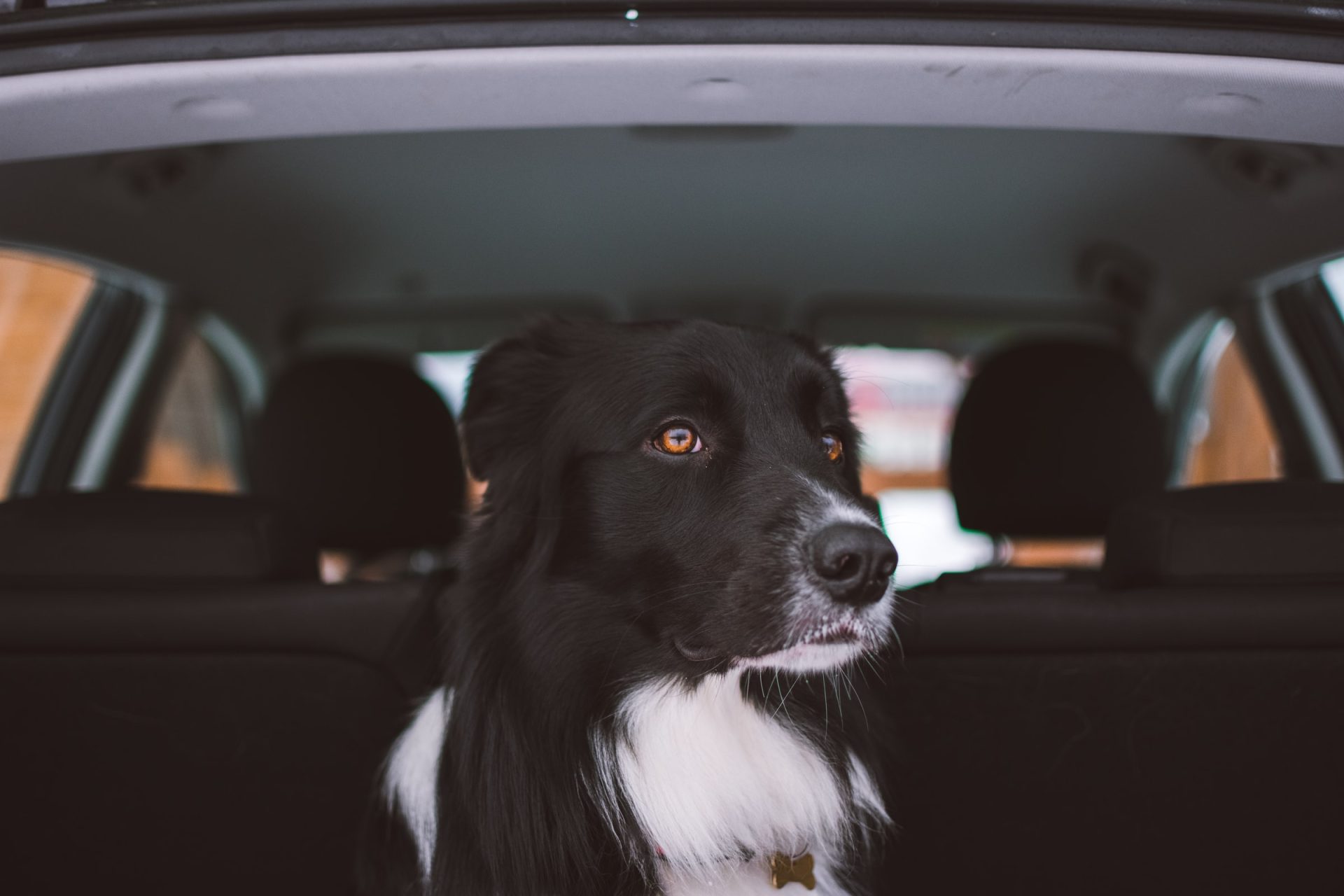
Letting your dog sniff around the place can make all the difference. By becoming familiar with the vehicle, it will produce endorphins, dopamine and oxytocin. Endorphins are a hormone that reduces stress, while dopamine and oxytocin create a feeling of happiness. Spraying a pheromone spray in your car can have an additional positive effect on your dog, as the scent communicates safety and security.
Take plenty of breaks to play with your dog for 15 minutes, preferably every hour and a half. Walking, playing fetch or letting it run around has a relaxing effect and will help it burn off energy. A chew toy or a dry snack during the journey can also be a welcome distraction.
Giving your dog a sedative to help it cope with a stressful car journey is possible, provided the product is applied correctly. Some tranquillisers are prescribed by behavioural therapists and vets, but you can also find them online or in pet shops. Anti-stress remedies vary widely, from capsules to relaxing dietary supplements. Appropriate medication can also make the trip more pleasant for dogs prone to motion sickness. Always consult your vet if you decide to administer medication.
As a last resort, you can of course call on a dog coach who will put your pet through tailored therapy or training. But if your dog is constantly terrified in the car, ask yourself whether your pet really needs to come along on an outing or trip. It might be more comfortable staying with your parents for the weekend, or alone in the garden it knows, during your day trip.
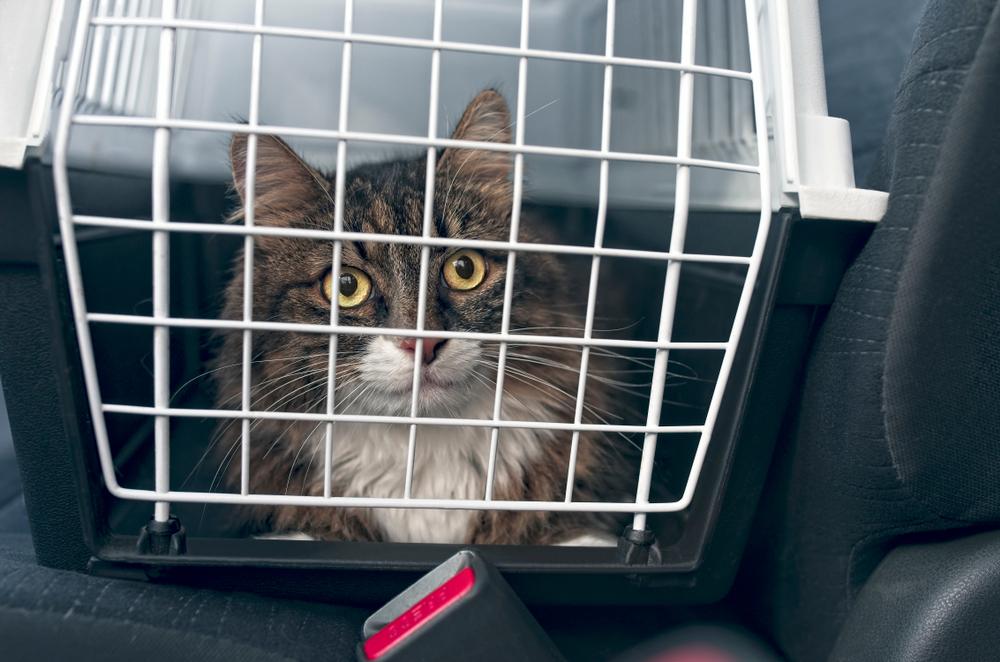
There are also tricks to make a car journey more pleasant for a cat. A few tips: reassure your pet, keep the radio volume low, as your cat could get agitated by the noise. Always open and close your car door carefully. A cat will very quickly be frightened by any sudden behaviour or event it's not familiar with. It's also best to avoid transporting your cat in the morning or evening. During the day, animals with nocturnal habits are calmer.
Is your cat too stressed? Cover its carrier or crate; darkness or dim light will calm it down. Give it water during breaks, but avoid giving it food while on the road, as this could upset its stomach. And don't forget the litter tray. Fortunately, there are travel litter trays you can put in the carrier or crate.
More tips for travelling with your four-legged companion
Take a look at the following article for flying with your dog.
When driving abroad, you'll always need to take into account the health requirements, such as vaccinations and quarantine, imposed by the country you're travelling to or through. You'll find more information on this in the following article.
 Our blogger Lisa:
Lisa is a freelance blogger who just spent a year exploring Australia alone in a Jeep. When she's not travelling, you'll often find her at home, on her sofa with her rabbit Nelson on her lap and a language course in hand. You'll find her articles on Greek mythology and Bali on her site lisasvividwriting.com.