At a glance
Dashcams, Waze or Coyote: in this article, we review 3 of the most common driver assistance systems.
What are the most well-known driving assistance systems for cars (or motorcycles), and to what extent are they legally permitted?
In this article, our blogger Alain Dierckx reviews 3 of the most common driver assistance systems.
Most new cars come with numerous built-in tools to help drivers limit their speed, choose their route or carry out manoeuvres.
However, other devices or software that aren't always pre-installed by carmakers also appeal to many drivers. Here are a few examples:
The dashcam to film your journey
A "dashcam", short for "dashboard camera", is simply a camera mounted on the car's windscreen. Models for motorcycles also exist. The dashcam films everything happening in front of the driver and records the footage. If you opt for a wide-angle camera, you get a broader view without having to turn or handle your device. The angle can go up to 190°. Filming your journey can be useful in the event of a road accident, reckless manoeuvres by other drivers, or simply to record (and later share) footage of a beautiful landscape you're driving through.
The price of a dashcam varies widely. The cheapest costs around €20, while the most expensive can cost around €1,000. The price difference is mainly due to recording quality and built-in features such as a parking mode, WiFi and image stabilisation.
Using a dashcam is legal in Belgium, but you may not make public any footage in which people are recognisable or identifiable. So sharing it on social media, for example, is out of the question. If you intend to use recorded footage as evidence, for instance after an accident, the court is not obliged to take it into account.
Waze to avoid traffic jams
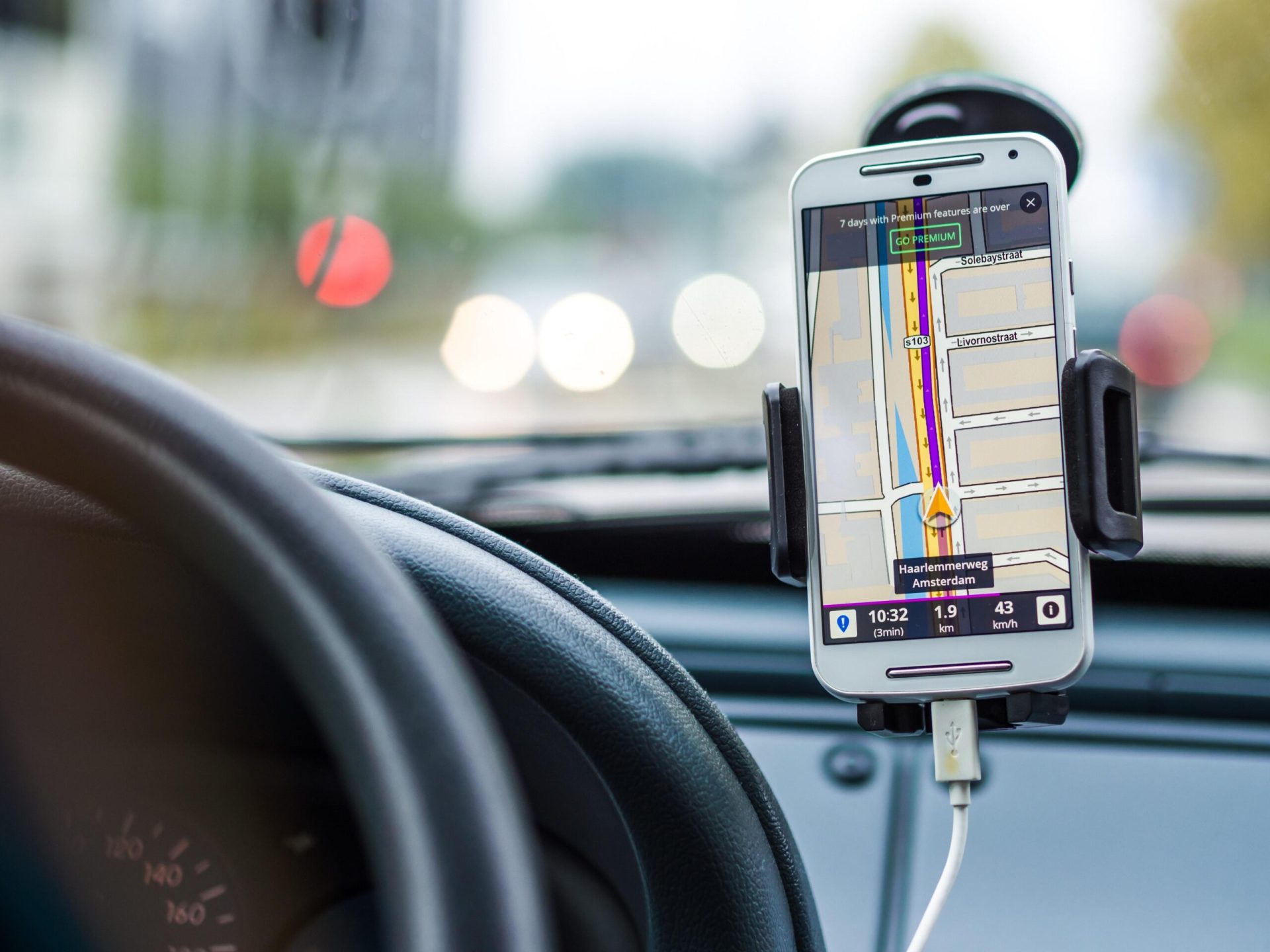
Waze is an app you can install on your smartphone. Its main advantage is selecting a route to avoid traffic jams. Just like the Coyote system, the proposed route is based on input from the "Waze community", which today numbers more than 130 million people worldwide. You can use the app to plan the best route while taking other drivers' input into account. The downside of constantly searching for jam-free roads is that you sometimes end up on small local roads that quickly become regular shortcuts, much to the dismay of local residents. Waze is free, but its notifications are less precise than those of its paid competitors.
Coyote to spot traffic jams, speed cameras and road hazards
Drivers who aren't satisfied with their vehicle's built-in GPS may consider supplementing it with a system such as Coyote. Depending on the version and model, they can use various features such as speed camera alerts, hazard alerts (dangerous roads and spots) and parking space detectors. Traffic jams can also easily be avoided here thanks to notifications from the "Coyote community" — drivers who own the same device and share traffic information for the benefit of other community members. Together, the Coyote community shares more than 26 million alerts per year covering European roads.
Joining the system usually involves a small subscription fee of a few euros. Motorcycle models also exist. Some of them can even connect to the motorcycle helmet via Bluetooth (provided the helmet is compatible). The small Coyote model costs around €150, while the larger model, with more features, costs roughly twice as much. There is also a Coyote app you can install on a smartphone.
Using a Coyote device is permitted in Belgium, but regulations may vary from country to country. Some countries ban the use of devices that indicate the presence of speed cameras.
You can find out more about the use of speed camera detectors and warning devices by reading this article.
10 tips to avoid trouble
- Always check whether using the navigation device or this type of software is permitted in Belgium before buying it.
- Check whether it is legally allowed in the country(ies) you're travelling through.
- If your purchase comes with a temporary free subscription, check the cost of the subscription once the free period ends.
- Compare the price and features of the device or software you want to buy with the system offered by your car or motorcycle manufacturer.
- Don't handle the device while driving.
- Use voice recognition if available.
- Respect the privacy of other drivers on the road.
- Don't share on social media any footage in which other people are recognisable.
- Delete the recorded footage from your dashcam if you sell it or lend it to someone else.
- Don't break traffic rules by blindly following the system's instructions.
Do you know of other interesting driving assistance systems? Share them by leaving a comment at the bottom of this article.