At a glance
Adventurer Tom de Dorlodot shares his advice and experience with those who want to sail solo.
Adventurer Tom de Dorlodot experienced solo sailing aboard his sailboat. He shares his advice and experience with those who would like to embark on such an adventure.
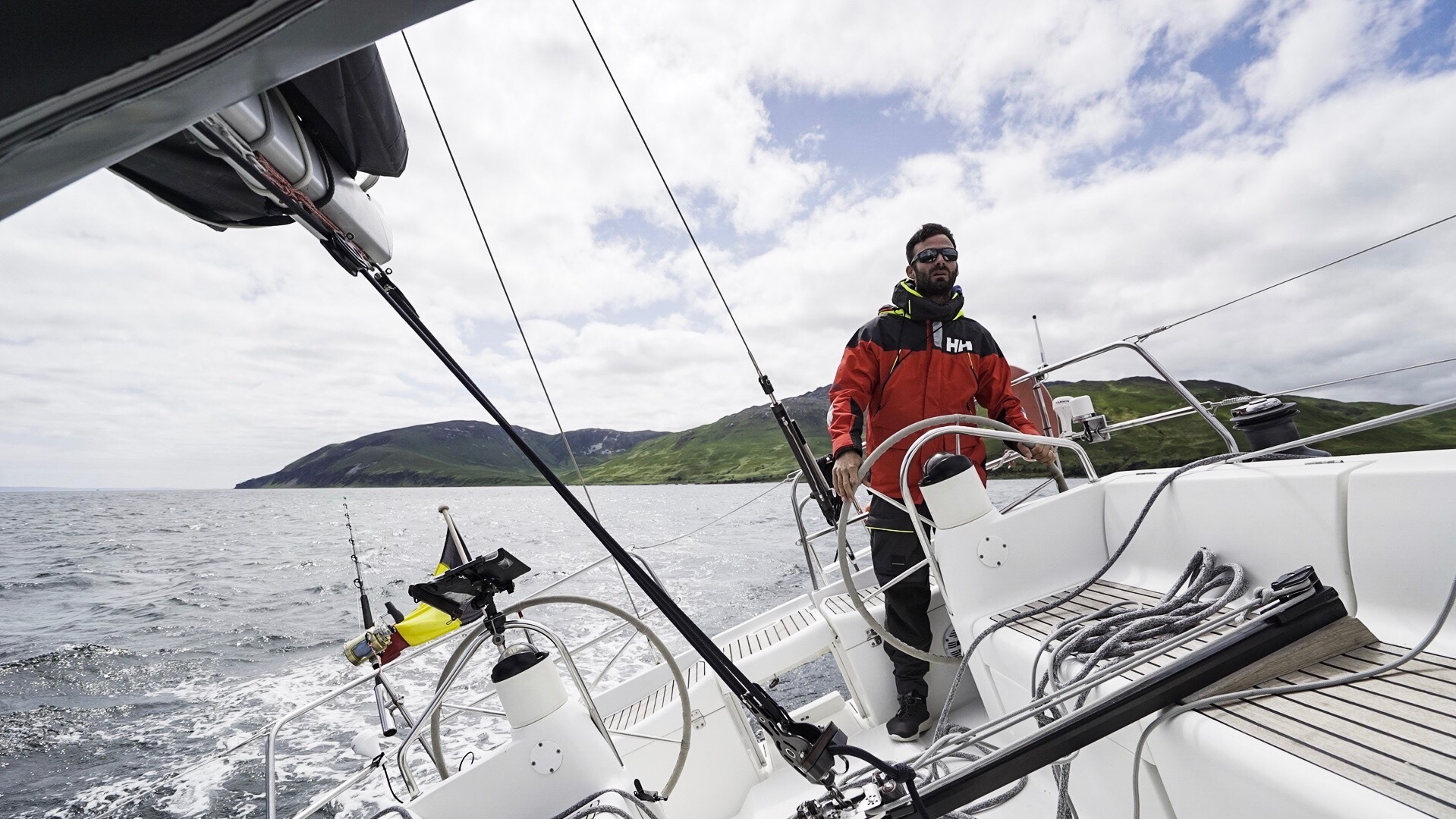
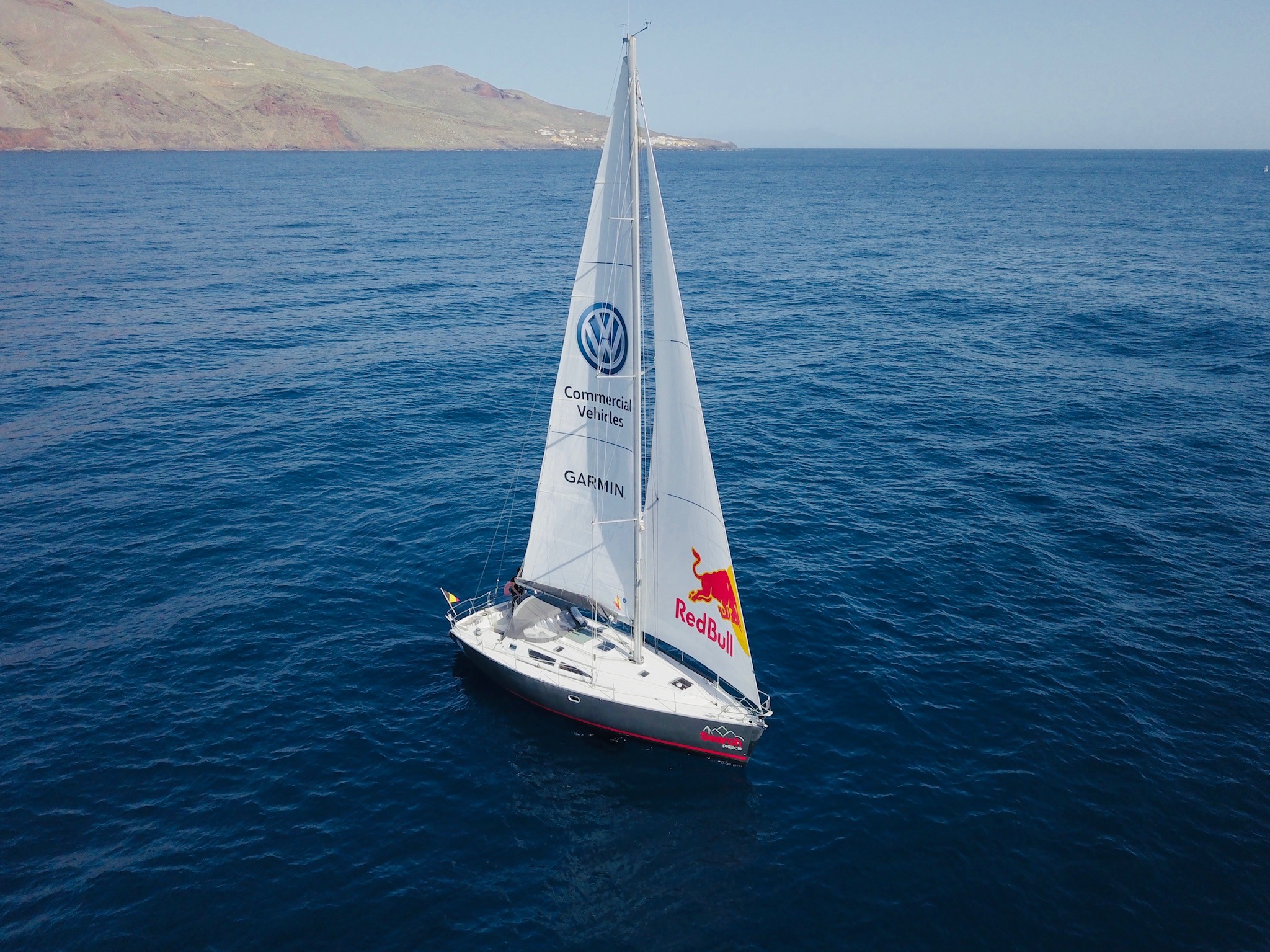
"This year, after dreaming about it for months, I set off alone between the Canary Islands and the Azores. I spent six days at sea managing my 12-meter sailboat entirely on my own. It was my first solo experience and certainly not my last."
Why sail solo?
The sea is one of the most beautiful and one of the last true spaces of freedom. Sailing provides fantastic sensations. Exploring the world by boat is an incredible way to travel across our magnificent planet, which is covered by 80% water. I always prefer sharing adventures at sea with teammates or with my young family, but I must admit that sailing alone, face to face with the elements, is an unforgettable experience. That said, the ocean tolerates us on its surface, but it can also be dangerous. That is why you need to know exactly what you are getting into before heading offshore.
The Greatest risks
Solo sailing is not something you improvise. A moment of inattention, an injury, falling overboard, a failed maneuver, or equipment damage on board can have dramatic consequences. What would be a minor issue with a crew can quickly become a serious emergency when sailing alone.
Essential Training
First of all, you need to train thoroughly. Many sailing schools teach the fundamentals required to sail alone or with a reduced crew. Solo sailing requires a complete technical understanding of your vessel. I strongly recommend gaining in-depth knowledge in a variety of areas.
For my part, I first learned all the different sailing maneuvers, both as part of a team and then alone. I also took mechanics courses to learn how to troubleshoot my engine, meteorology courses to better understand weather systems, obtained my radio licenses to communicate at sea or call for help, and even completed a survival course and first-aid training.
You never stop learning, and at sea, perhaps more than anywhere else, knowledge means autonomy and safety.
I think the courses offered by the BRYC in Brussels are excellent I also recommend the training courses run by Sylvie and Alexis Guillaume from theSAIL AWAY sailing school, also based in Brussels. They organize outings on a variety of sailboats, allowing students to sail both monohulls and catamarans. The ideal experience is to spend a full week on an onboard training course.
Prepare well and gain experience
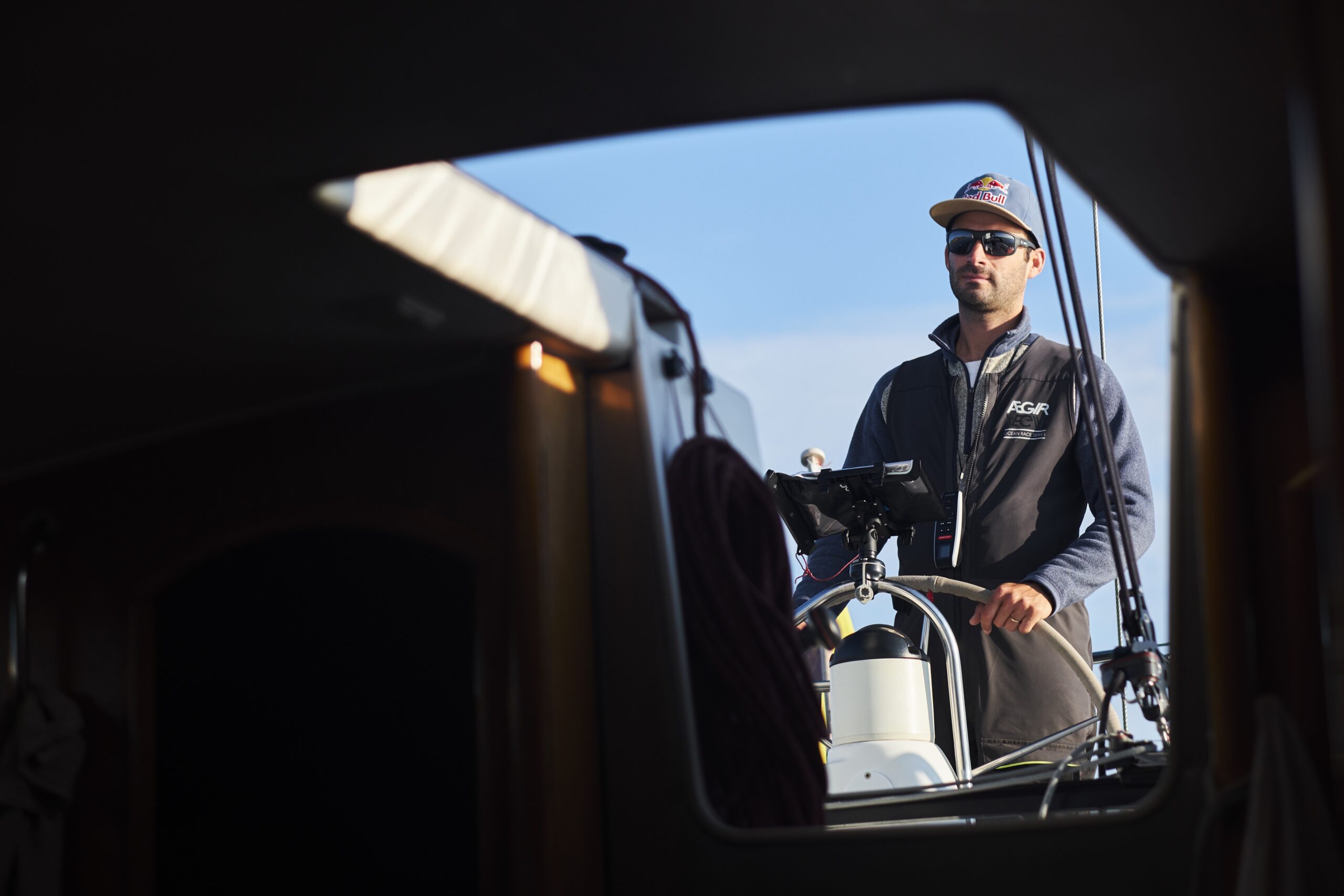
I often say it: preparation is the key to success. The best approach is to start with short sailing trips and in very calm conditions. I recommend beginning with daytime sailing in light winds and calm seas, then gradually increasing the level of difficulty. Start with a first night sail, then a two-day trip, and so on.
The boat
Of course, the boat must be in perfect working condition, and it is also a good idea to adapt it for solo sailing. It must carry all the required safety equipment. An easily accessible liferaft, an emergency bag containing food supplies, a survival blanket, water, fishing gear, distress flares, a foghorn, a compass, and more. As you can see, before leaving port, it is essential to thoroughly inspect both the boat and the equipment. As for costs, there are options for every budget. In the Azores, I met a man who had received an almost abandoned boat. After a great deal of work and determination, he eventually set off alone and crossed the Atlantic. A sailboat should be adapted for solo navigation. On my own sailboat, we modified the deck layout so all maneuvers can be carried out from within the cockpit. Physically, you need to be able to hoist sails or install an electric winch if necessary. A reliable autopilot is indispensable. Personally, I even carry a spare one on board in case of technical problems. In addition to safety equipment, I also take repair tools so I can handle emergencies at sea. For example, if an accident causes a leak that threatens to sink the boat, I carry a drill, boards, expanding foam, and marine sealant for temporary repairs. I also keep a hacksaw on board in case the mast breaks and I need to cut through the shrouds, backstay, or forestays.
SOS
Before leaving, I inform my loved ones of my departure time, exact route, and estimated arrival date. They can also track me live using my InReach Mini satellite beacon. This device allows me to send messages as well. I usually send updates every two to three days. Sylvie Guillaume, a meteorology expert, regularly sends me weather information and alerts me if conditions become dangerous. We also have a doctor friend who keeps her phone on day and night. If we encounter a serious medical problem, we can contact her for guidance. We also carry a very complete medical kit on board. Each country has its own rescue services, so it is essential to know the emergency contact numbers. In France, the CROSS can be reached on 196, and the SNSM is highly effective. All vessels must also maintain a constant watch on VHF channel 16. In an emergency, you can call for assistance and provide your GPS coordinates. At sea, we are legally obligated to help anyone in danger. During an Atlantic crossing, another sailboat, a fishing vessel, or a cargo ship could potentially come to our rescue. The key word on board should always be safety. That is why you should always stay tethered while sailing. Personally, I always wear an automatic inflation life jacket connected to a lifeline whenever I move around on deck. At night, I never go outside without a waterproof headlamp. I also carry a personal AIS beacon and a Garmin InReach Mini, which transmit my GPS position and can send an SOS via satellite if needed. However, you should avoid falling into the water at all costs. Falling overboard while sailing solo in cold water and difficult conditions leaves very little chance of survival. Survival time is estimated at 2 to 7 hours in water at 20°C, and less than 15 minutes in water between 0 and 4°C. A moment of carelessness can happen quickly. Whenever moving around the boat, use one hand to hold on and the other to work.
The weather
 Before departure, it is crucial to carefully assess the weather. Forecasting software has improved enormously, and models are becoming increasingly accurate.
I use SQUID, which allows me to analyze the conditions I am likely to encounter along my route. The free application Windy also works very well. It provides information such as wind strength, wave height, sunshine, weather systems, and much more.
You should always research the best season for your trip and study the weather carefully. Jimmy Cornell's book World Cruising Routes is full of useful advice.
Stay alert... 24 Hours a day
One of the greatest challenges faced by solo sailors is managing fatigue. A nearly constant watch is required. I sleep in 15-minute intervals when sailing alone. Every quarter of an hour, I go on deck to make sure conditions have not deteriorated, that the sails are properly trimmed, and that no other vessel, such as a cargo ship, is approaching dangerously. The first few days are generally difficult, but the body adapts surprisingly quickly. The secret is taking micro-naps, even during the day. The famous sailor Florence Arthaud once shared a valuable tip: "If, in the middle of the night, I wake up because of an unusual noise, flapping sails, or a problem on deck, I count to ten before leaving my cabin and taking action. It allows me to wake up fully and avoid making matters worse." Personally, when sailing alone at night, I reduce sail area slightly and sail below the boat's maximum performance. That way, if the wind increases, I have some room to react
Final advice
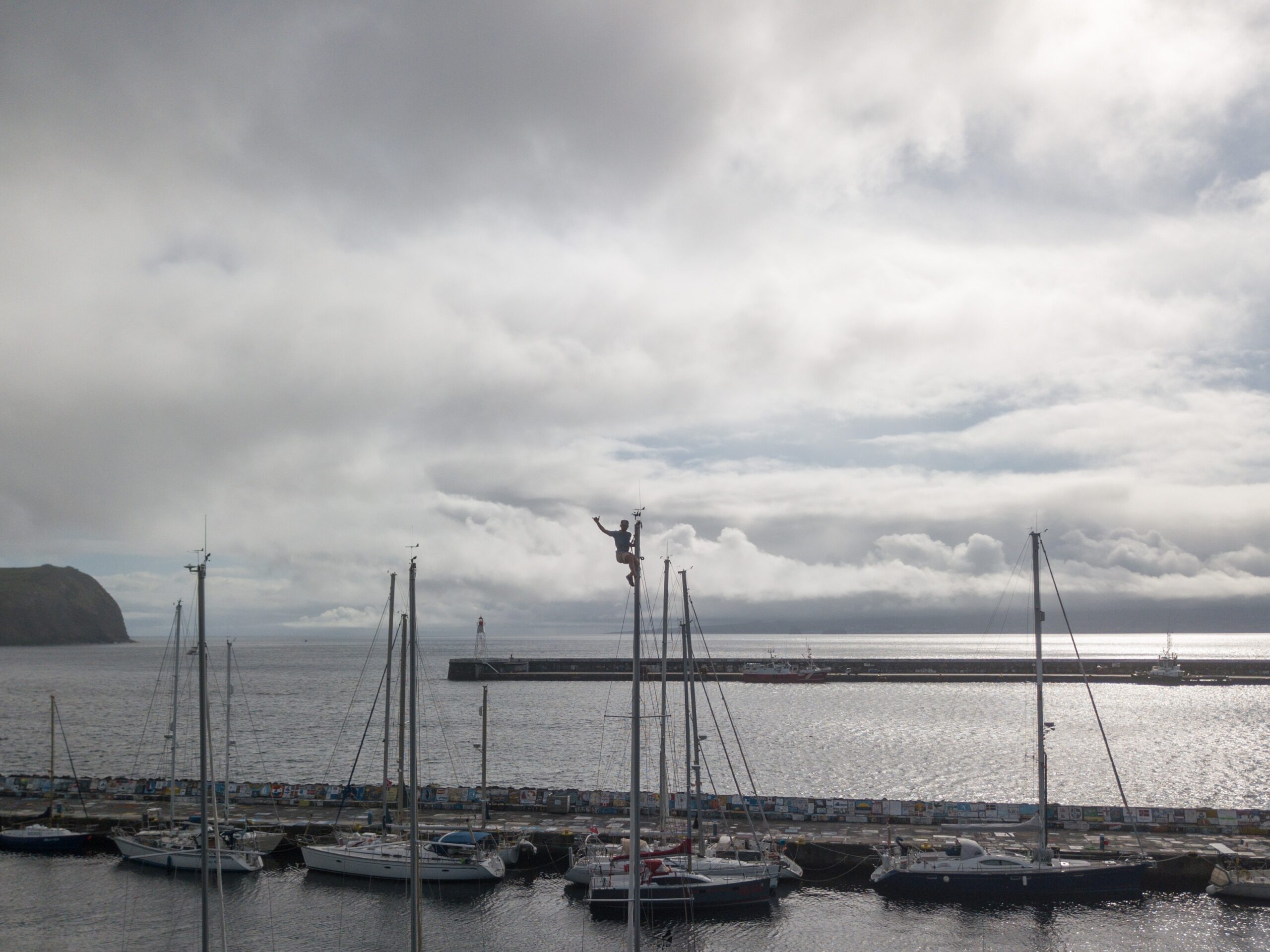
I recommend preparing a few meals before departure. This prevents you from having to focus too much on cooking during the first few days while you are adjusting. And of course, no alcohol on board. Sailing requires your full attention and judgment. Use common sense and stay cautious. A good sailor is an old sailor... ;-)
And don't forget your travel insurance. It may not be useful while you are in international waters, but if you experience a medical issue, you can contact your assistance provider as soon as you reach shore.
Smooth winds and following seas.
Tom de Dorlodot "
© Photos : Tom de Dorlodot et John Stapels