At a glance
Sarah, a Redion customer, was bitten in Southeast Asia and caught dengue fever. She shares her story with us.
… when a mosquito becomes as menacing as an elephant…
Sarah and Cédric from the travel website Coordinotes have just returned from a long trip to Bali. Unfortunately, an infection suddenly turned their travel plans upside down. In this article, Sarah tells us what she went through and how she was able to continue her trip.
Finding out properly about certain health risks and getting vaccinated are two very important elements when preparing for a trip. During our preparations, we went to the Institute of Tropical Medicine to find out about all the mandatory and recommended vaccines, as well as to learn about other health risks in the regions where we wanted to travel. Despite these preparations and the necessary precautions, we unfortunately couldn't avoid catching dengue fever. We want to share our experience with this disease, which really spoiled our trip abroad, as well as the effective support we received from Redion.
What is dengue fever?
Dengue fever is a disease caused by a virus. It is transmitted by the bite of a mosquito carrying the virus, in particular the Aedes Aegypti mosquito or the Asian tiger mosquito, Aedes albopictus. What's typical of these mosquitoes is that they are more active during the day and bite more than other species, which are often more active at night. As a result, the risk of catching dengue fever is higher during the day.
Since I'm often bitten by mosquitoes, it's hard to know exactly where and when I caught the virus. However, we suspect it happened in Kuala Lumpur, Malaysia, where we went on a daytime hike in the KL Eco Forest.
My fight against dengue fever

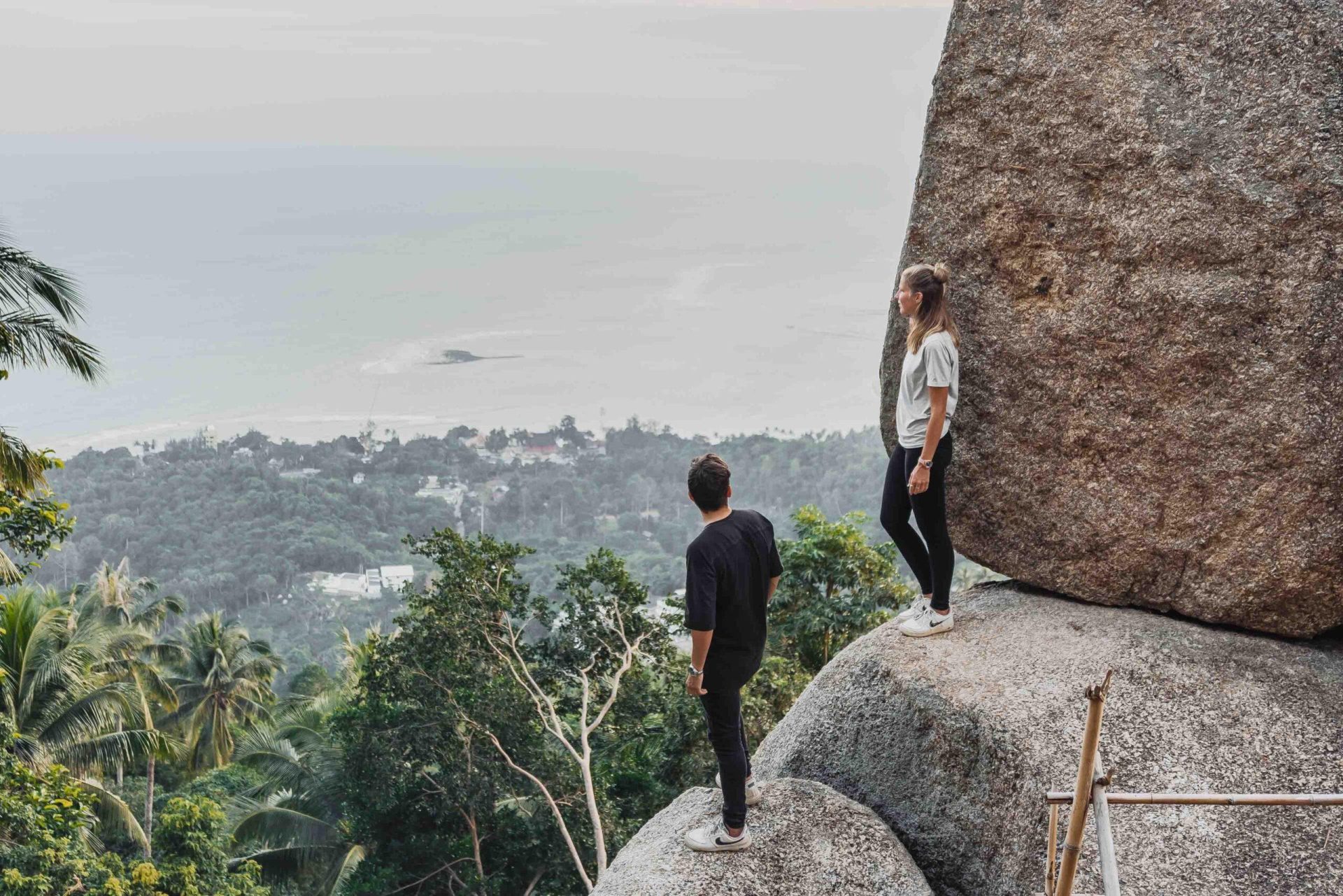
28 December 2023 was a day that started like any other during our long trip through Southeast Asia. We were in Koh Samui, Thailand, and set off to explore the island by scooter. We visited some interesting temples, a mummified monk, a waterfall, a viewpoint… For the whole day, I felt 100% fine, until our last stop at Overlap Stone 2. We admired a beautiful sunset there, but on the way back, I suddenly felt nauseous. I told Cédric I felt like I'd eaten something that "didn't agree with me".
That evening at the hotel, I was struck by a violent migraine. You know, the kind of migraine that feels like there's a stone rattling around in your head. That night, I barely slept a wink because of this oppressive migraine, and the rest of my body was restless. I had a very uncomfortable burning sensation in my upper legs that made it impossible for me to stay still, and Cédric couldn't sleep either.
The next morning, the same migraine hadn't gone away, but I also had a general feeling of being unwell, bouts of fever and chills. At 9am, we had to be at the port to catch our boat to Koh Tao. In the previous days, a storm had swept across the islands of Thailand and seven ferries had sunk. Fortunately, the worst of the storm had passed, but the crossing wasn't calm either. For the rest of the day, all we could do on Koh Tao was rest in bed.
Seeking medical help and support from Redion
The following night was just as gruelling as the one before. Because of the burning sensation in my legs, I couldn't stay still. I couldn't find a comfortable position, and my oppressive migraine made me very restless. After another sleepless night, all sorts of thoughts began to torment me: "What if I had malaria? Or something else requiring urgent medical attention?" I told Cédric this couldn't go on, that I just wanted to be able to sleep without feeling pain. These are the moments when you're grateful to have good travel insurance and be able to see a doctor. Maybe it was just something to wait out, but you can't leave anything to chance.
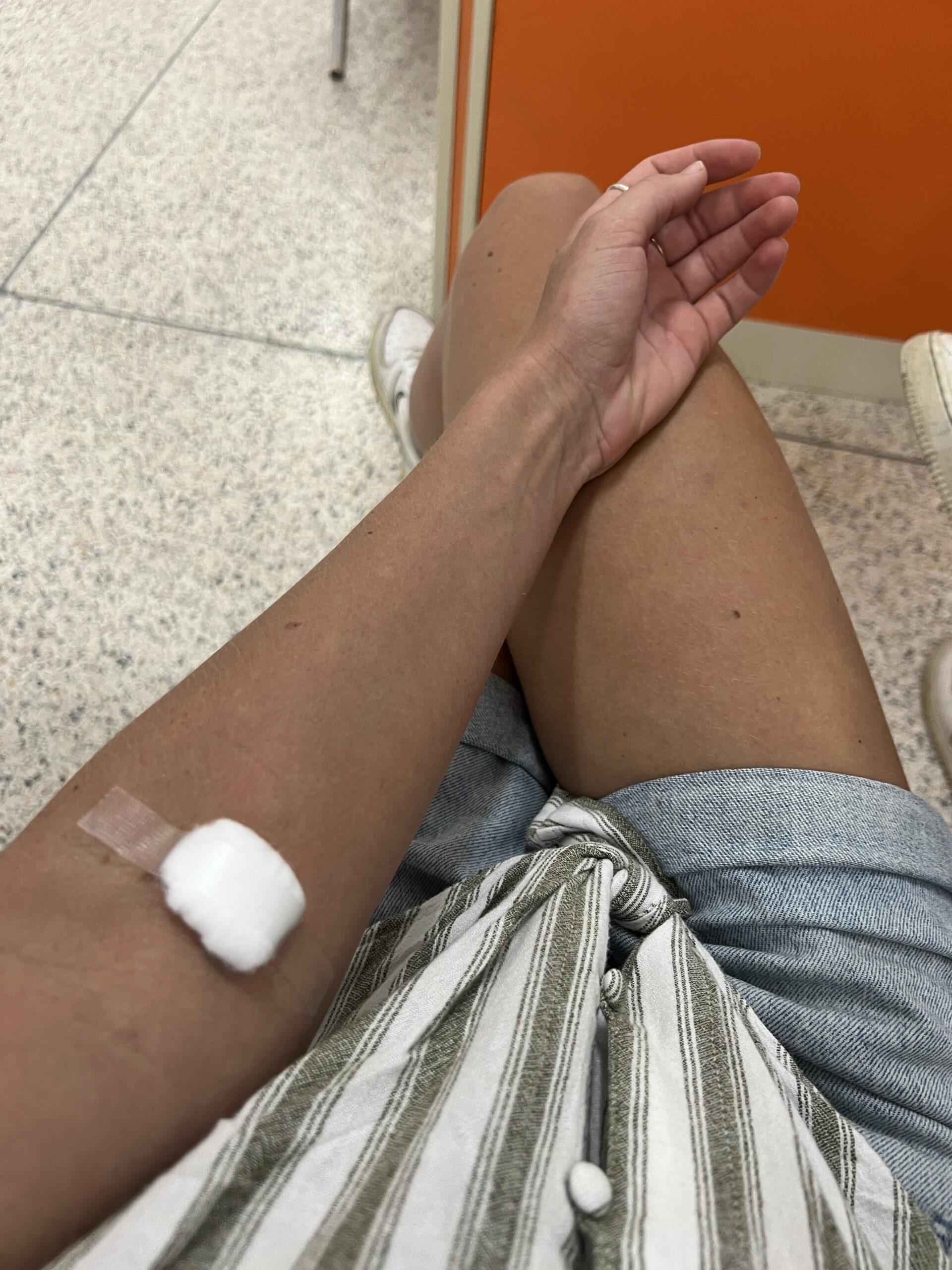 We went to the emergency department of the hospital in Koh Tao, right next to our hotel, where they decided to run blood tests based on my symptoms. The diagnosis: dengue fever.
There isn't much you can do about dengue fever. You just have to wait for it to pass. Medication is prescribed to relieve the symptoms. Two days later, on 1 January, I had to go back for further blood tests.
Right after our first visit to the hospital, we informed Redion, and shortly afterwards, the assistance provider opened a file in my name so that I could get all my medical expenses reimbursed. They also told us that if there was no improvement, I should go back to the hospital as soon as possible. It's reassuring to know that your condition is being monitored from afar and that you can continue your trip with peace of mind.
We had imagined our New Year's Eve abroad a little differently. We briefly went to see the fireworks on the beach, then went straight to bed. The next morning, we went back for a medical check-up, and it turned out my blood values had dropped sharply. This was a normal progression of the illness, but the medical staff still asked me to have my blood checked every day from then on. The next day, we went back to the mainland. As soon as we had the chance, we went to the nearest hospital for a check-up. A few days later, my blood values were back to normal, and I felt about 80% back to my usual self. I still had stomach problems, which stopped me from eating. Fortunately, a few days later, I had recovered all my strength. Redion also called me to find out how I was doing and whether I was recovering or already recovered. It's always nice to know you're being looked after medically!
All's well that ends well
The main reason we had taken out good travel insurance for our trip to Southeast Asia was because we planned to do a lot of scooter rides, hikes to waterfalls and viewpoints along sometimes slippery and steep paths… so more insurance in case of an accident during extreme activities. And then, in the end, we got seriously ill because of… a mosquito!
This shows just how important travel insurance is for any type of trip. Anything can happen to you, and you don't want to spend your entire travel budget paying for or reimbursing medical expenses (or other unexpected costs) abroad. In my case, Redion didn't need to intervene medically on the spot, but the medical expenses incurred are covered by the travel insurance.
Did you know that on the day we left for Asia, we almost didn't make it because of a worldwide outage of the airline's check-in system? Fortunately, everything was sorted out at the last minute. And even in that case, we would have dealt with the situation calmly, without too much stress, knowing we were well insured. So even before setting off on our trip, we nearly needed Redion!
You can follow Sarah and Cédric's adventures on their website Coordinotes or on social media.