At a glance
What are the current advantages and disadvantages of travelling abroad in an electric car? Are there charging points everywhere?
Our writer Alain Dierckx loves travelling to sunny or snowy destinations. In his articles, he shares his experience and tips with those for whom travel is also a real passion!
The article below gives a few tips for travellers who want to go abroad on holiday with their electric car.
Would you like to explore neighbouring countries in your electric car?
That's a good idea, since this type of car emits practically no CO2 or particulates and is therefore much better for the environment than a fossil-fuel car.
But be careful, the range of electric cars is generally limited and it takes a long time to recharge the battery.
So is it actually worth travelling with an electric car? In this article, we give you some pointers on charging options in the most visited European countries, the costs involved, and the points to watch out for.
Not many electric cars in Belgium
Let's start with a few figures: in 2019, a total of 550,003 new cars were registered in Belgium (across all fuel types). The proportion of fully electric cars was only 1.6% (8,892 units). This figure is rising every year but remains very low. The same trend can be seen in the number of charging facilities in Europe for electric car batteries. They are growing in number, but remain quite limited.
How many public charging points are there abroad?
At the end of 2019, there were around 170,000 charging points available in Europe. Generally, they are found in major cities and their surrounding areas.
Here is an estimate of the number of charging stations in certain countries (2019 data):
- Luxembourg: 930 charging points (for a road network of ± 3,000 km, an average of 0.3 charging points/km).
- Italy: 3,800 charging points (for a road network of ± 488,000 km, an average of 0.008 charging points/km)
- Austria: 4,000 charging points (for a road network of ± 125,000 km, an average of 0.03 charging points/km)
- Belgium: 5,800 charging points (for a road network of ± 154,000 km, an average of 0.04 charging points/km)
- Spain: 8,000 charging points (for a road network of ± 683,000 km, an average of 0.011 charging points/km)
- France: 29,000 charging points (for a road network of ± 966,000 km, an average of 0.03 charging points/km)
- Germany: 32,000 charging points (for a road network of ± 645,000 km, an average of 0.05 charging points/km)
- The Netherlands: 48,000 charging points (for a road network of ± 141,000 km, or 0.3 charging points/km)
Of these 170,000 publicly accessible charging points, only 20,000 are what are known as "fast chargers". Their advantage is that they let you charge 80% of your battery in around 30 minutes. In Belgium, there are currently around fifty of them, mainly along motorways.
The "Total" brand has installed fast chargers at around forty of its service stations (you'll find them here). Elsewhere in Europe too, you'll find plenty of fast chargers along motorways.
Be careful, it's often impossible to fully recharge an electric car at a fast-charging station. Generally, an 80% or 90% charge is the maximum. These fast-charging stations also aren't suited to every electric car, and prices can vary considerably from one to another. Check in advance!
More and more route planners now show charging stations, for example Chargemap (for the whole of Europe), the French motorways website, and goingelectric (also for the whole of Europe, but only available in German).
 Charging points in every language
Do you know the different translations of "charging point"? Here are a few:
Dutch: laadpaal
German: Stromtankstelle
Italian: colonnina di ricarica
Spanish: estación de carga eléctrica
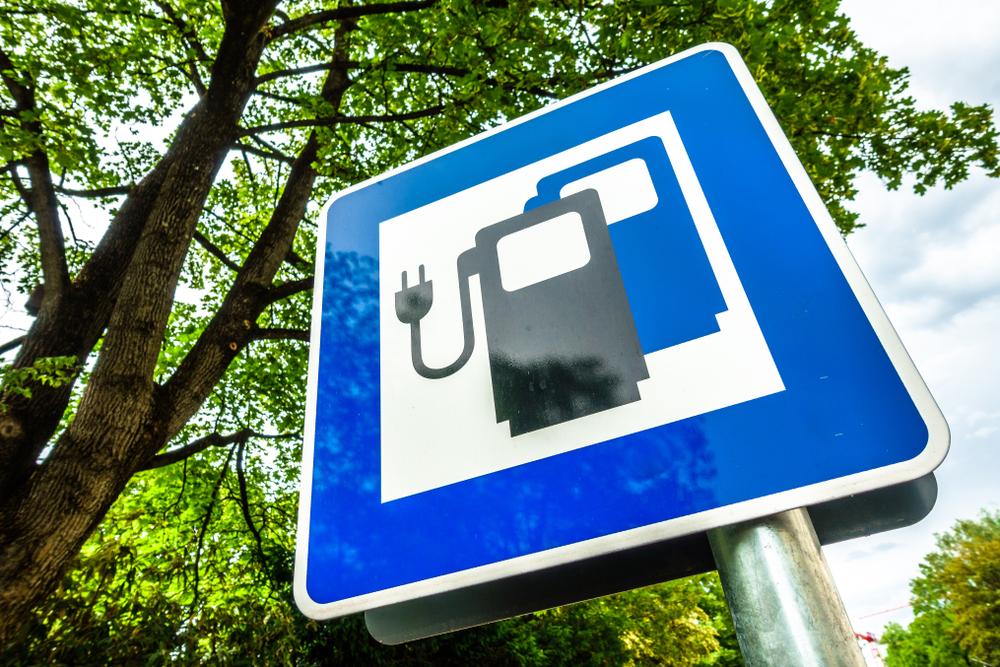
Charging points are usually also marked with a pictogram. There are many variants, here are a few:
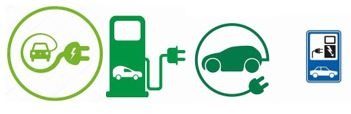
Private charging points
For Tesla cars, there are currently over 400 charging points in Europe. These are only accessible to Tesla drivers.
More and more companies are starting to equip their private (but sometimes publicly accessible) car parks with charging areas for all brands (except Tesla). For example, in the Netherlands, the Albert Heijn supermarket chain has launched a pilot project, and in Germany, the REWE supermarket chain is doing the same. In Belgium, Delhaize and McDonald's already have more than ten each, and IKEA, Lidl and Interparking also provide them.
How do you pay at a charging point?
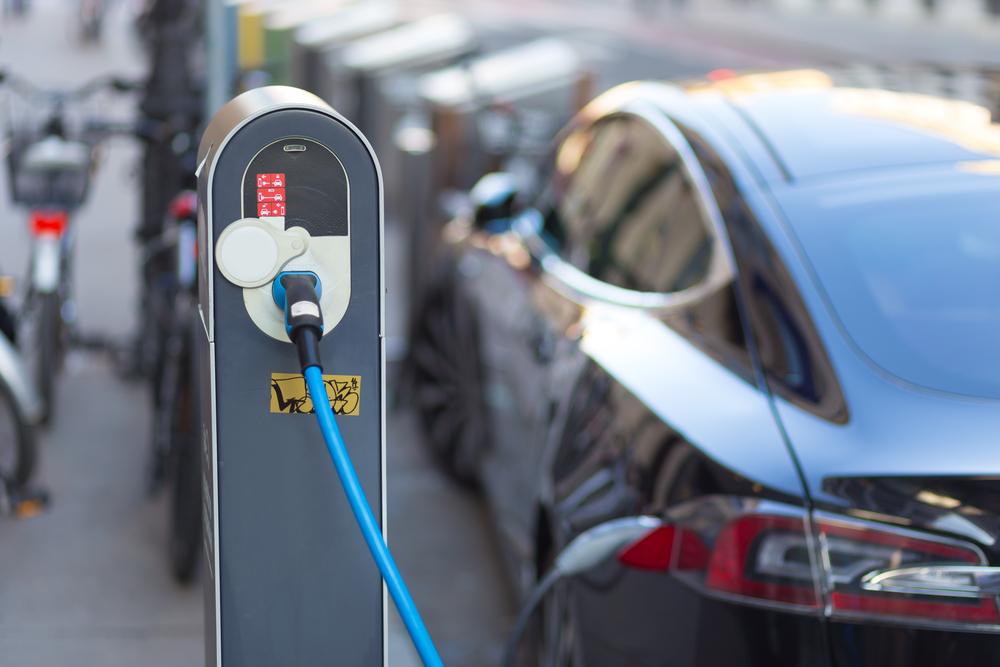
Payment can be made with a charging card or via an app linked to the network's brand.
Several companies issue charging cards, such as Chargemap, Chargetrip and The New Motion. You'll easily find all the providers online.
For Tesla drivers, the current price in Belgium is €0.28/kWh.
For other brands, here are a few indicative prices:
Charging at home: between €0.19 and €0.23 per kWh
Charging at a public charging station: between €0.25 and €0.60 per kWh
Fast charger: €0.60 per kWh on average.
The Mobilityplus website also gives an overview of rates by provider.
Going on holiday in an electric car: a good idea?
Is it currently worthwhile to drive long distances across Europe in a fully electric car?
To be honest, it's not yet easy to answer that question. The number of charging stations is steadily increasing but remains, for now, limited. Ideally, we'd like to see a significant increase in the number of fast chargers so you can set off with complete peace of mind.
We therefore recommend gathering plenty of information before you leave and planning your route down to the smallest detail. Always make sure you have a "plan B", especially if you're travelling at peak times. On busy days, queues (and therefore long waiting times) at charging stations become commonplace. Hybrid cars therefore remain a safe option.
But on the other hand, driving an electric car is of course a very good choice for the environment, and the cost per kilometre can be very attractive if you choose the right plan.
Some countries, such as Norway, are doing everything they can to discourage the use of fossil-fuel vehicles. The number of petrol stations where you can fill up "the classic way" is therefore steadily falling, in favour of electric charging stations.
Knowing your car's range and carefully planning your route are the keys to an enjoyable electric car journey across Europe. And besides, if something were to go wrong, you know who to call! :-)
A few tips:
- Plan your trip carefully and locate the places where there are charging points.
- Avoid travelling on peak departure days. Charging spots will be very/too busy.
- Plan alternative charging spots in case the planned one is occupied or unreachable.
- As there are several charging networks, pre-register (via their app) so you can connect your vehicle there.
- Only charge up to 80% capacity. This will help extend your battery's lifespan.
- Set off with a full battery and adapt your driving. Avoid anything that drains the battery quickly, such as air conditioning.
- Planning several stages with an overnight stay lets you choose places where your car can charge overnight. This lets you rest and relax, and your car will be ready to continue the journey the next day.
Also read: Breakdown assistance for electric cars
\