At a glance
Bed bugs are a species "on the rise" again around the world, particularly in hotels. Find out how to spot them.
Bed bugs are a species that is "making a comeback" around the world. According to some sources, their numbers may even have quadrupled in recent years.
The globalisation of travel and the growing number of travellers visiting increasingly diverse places are helping these pests spread. They can be found not only in lower-category hotels or accommodation, but also (and increasingly) in higher-rated hotels!
In the United States, New York is one of the most infested cities.
More and more tourists are bringing these insects home with them when they return from a trip. That's why, even in our own country, the number of cases is also on the rise. So be very careful, because getting rid of these little creatures isn't easy!
How to inspect your room
Most tourists first inspect the condition and cleanliness of the bathroom. That's a good and useful thing to do. But they forget that inspecting the bed, the carpet and the furniture around the bed is just as essential.
As bed bugs are mainly active in the dark, you'll have the best "chance" of spotting them at night or in a dark room just after you've turned on the light. You may want to use a torch during your inspection.
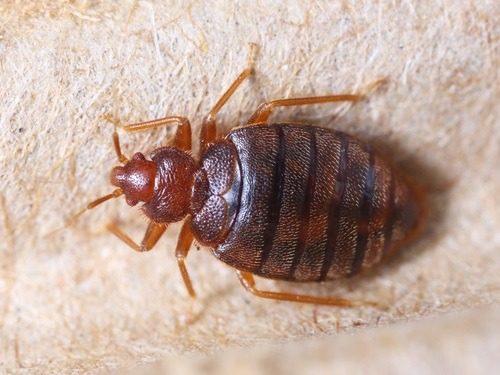
An adult bed bug is (reddish-)brown, oval-shaped and 4 to 7 mm long. The eggs are white and about the size of a pinhead.
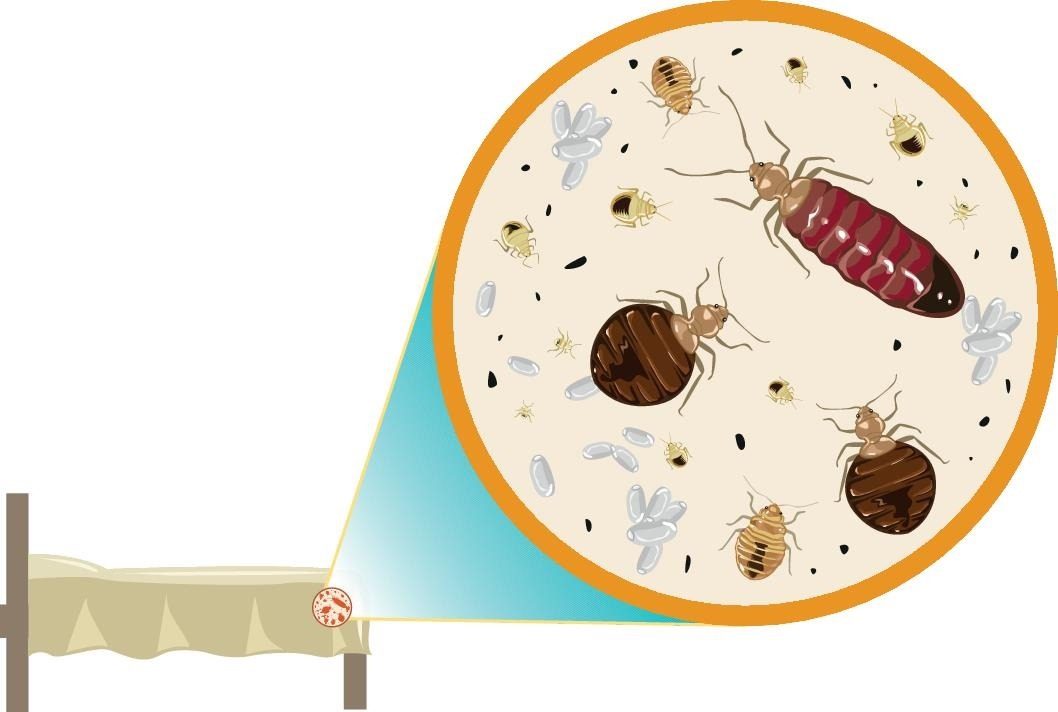 Under the mattress: look for dark stains or marks (black or brown). These come from bed bug droppings. Inspect the folds of the mattress, the lining, the mattress label, the headboard, the pillows, pillowcases, bolsters, etc. If you find small red spots, these could be tiny bloodstains from bites.
Furniture: carry out the same inspection on all the furniture in the room that could hide a nest: armchairs, sofas, any leather or fabric decoration (cushions, drapes, etc.). Be aware that bed bugs may have built their nest several metres away from the bed.
Walls: many nests are found in small cracks in the walls, behind wallpaper or behind picture frames (paintings, photos). Also inspect these areas for dark stains.
What should you do if your hotel room is infested?
Don't hesitate!
At the slightest doubt or the slightest sign of their presence, ask for another room (although if one room is infested, there's a good chance nearby rooms are too) or leave the establishment altogether, informing reception of the reason and asking for a refund.
Prevention is better…
How can you protect yourself?
Have you inspected the room and found nothing? Do you still have some doubt?
- Sleeping in a sheet or sleeping bag that you bring with you can offer some protection. Wash this sheet or sleeping bag at a high temperature as soon as possible.
- Bring a few airtight plastic bags with you to put any potentially contaminated clothing in.
- Also watch out for your luggage: bags or clothes left on the floor or placed on the bed run the risk of getting unwanted visitors. This is in fact how bed bugs travel from one hotel to another and spread all over the world. Tip: light-coloured suitcases attract fewer bed bugs and make them easier to spot.
- Don't store anything under the bed. Store your shoes somewhere raised and protected.
… than cure
Have you been bitten?
- First make sure it really is a bed bug bite, and not a mosquito bite or a flea bite, so you don't panic for nothing. (A mosquito bite looks very similar to a bed bug bite.)
- Inspect your luggage thoroughly.
- Bed bug bites cause itching but are generally harmless. If you nevertheless have several bites or notice an allergic reaction, disinfect the skin and see a doctor.
- Bed bugs can survive temperatures of 40 to 50°C and can live for 10 to 18 months! You can therefore get rid of adult bugs by washing (all!) your laundry at a temperature above 60°C, preferably for several hours. Repeat the process three weeks later, after the eggs' incubation period. If you're bringing potentially infested laundry home, keep it in a sealed bag to avoid infesting the rest of your luggage... and your home.
- According to some, storing non-washable items for a few days in a very cold place such as a freezer (-20°C) can also destroy these unwanted pests.
- You can use chemical products, but these are quite expensive and not always as effective.
It's therefore very difficult to get rid of this type of insect. If your home is infested, call in a specialist company.
Everything about bed bugs
You'll find further information about bed bugs online, including via the following links:
https://fr.wikipedia.org/wiki/Punaise_des_lits