At a glance
When travelling abroad, encounters with wild or semi-domesticated animals can quickly turn into an incident if you don't know the right way to react. This article helps you understand how to behave in order to avoid risky situations and respect local wildlife. Always keep your distance, never feed animals, and avoid sudden movements: discover our tips for travelling safely and respectfully.
Common cases of wild animal attacks
« Tourists attacked by monkeys in Thailand»,
« Swimmer attacked by a crocodile in a lake in Rwanda»,
« Hikers chased by a bull in a meadow in the Austrian Alps»,
« Walker bitten on the ankle by an aggressive dog in Guadeloupe»,
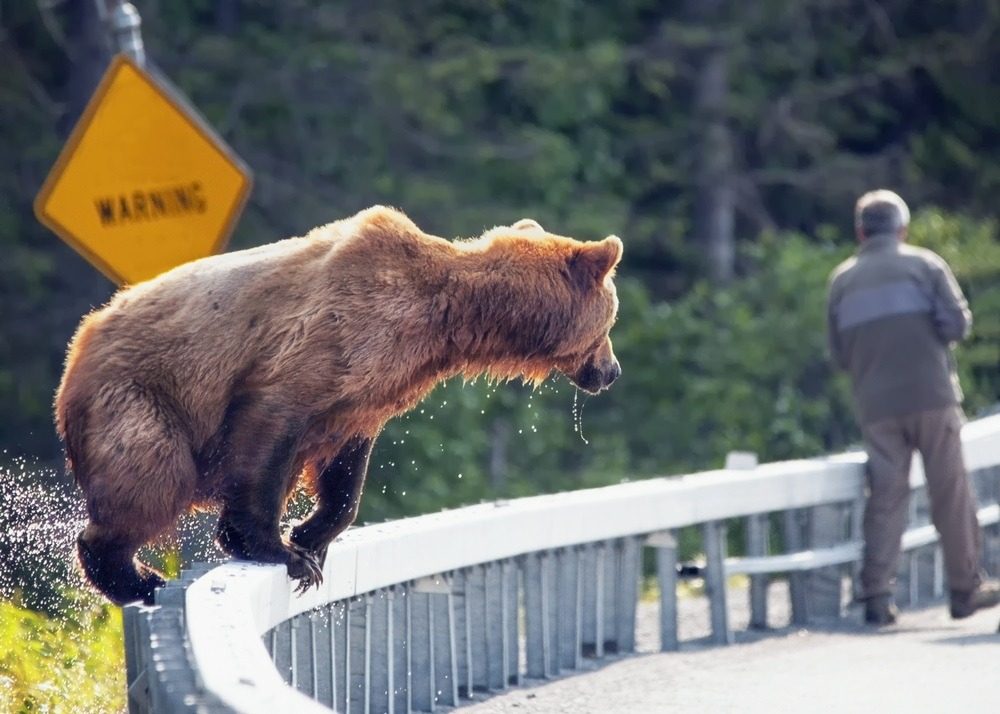
« Campers attacked by a grizzly bear in an American park»,
…
These cases aren't figments of our imagination — they come straight from medical files opened by Redion!
What should you do if you encounter a wild animal?
When travelling abroad, many holidaymakers come into direct contact with (semi-)domesticated and/or wild animals. Often, they don't really know how to behave. Some tend to treat these animals like real "pets" (i.e. harmless and docile like their own dog or cat, and therefore "too cute"), while others tend to be afraid of them and want to flee.
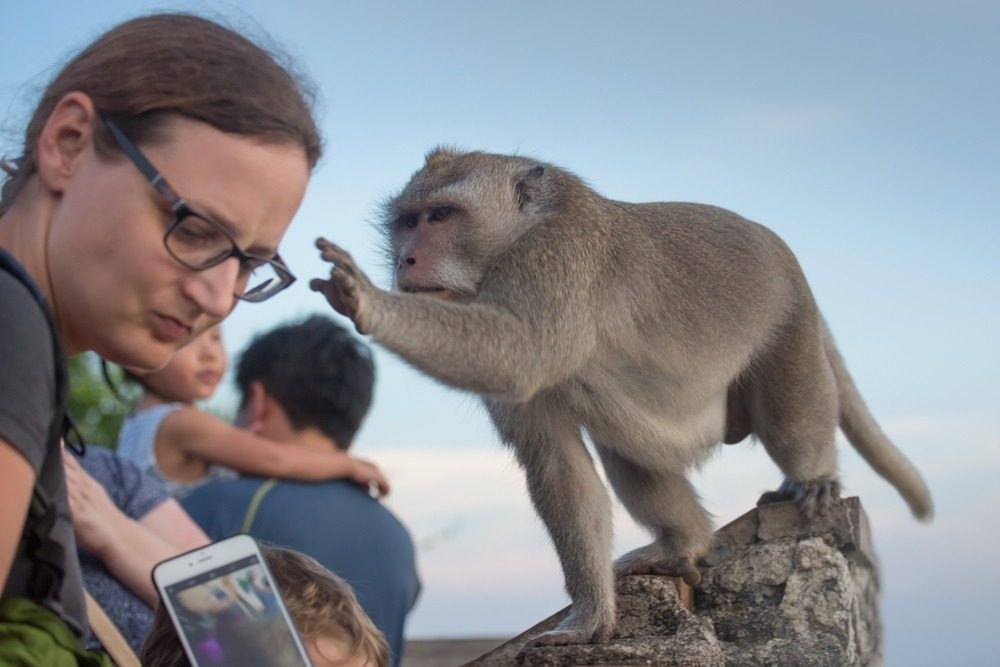 Some animals display fairly aggressive behaviour or are very forward around tourists. Think of monkeys that roam freely in cities or near temples in certain Asian countries, and come begging for food or stealing it out of tourists' bags.
Faced with such situations, it's therefore useful to know how to behave and react.
A few basic rules for encountering a wild animal
Don't provoke the animal
- Don't approach an animal in an intrusive or aggressive way. Don't make big gestures, don't shout, don't disturb it. Stay calm if the animal approaches or threatens you, and quietly back away.
 Be particularly careful with groups of animals that have young. Females (or dominant males) will do everything they can to protect their offspring.
- If you're travelling with children, keep an eye on them. Many children aren't able to anticipate the risk, and may try to provoke or "tease" the animal. It may then feel threatened and react violently.
- If you're travelling with your dog, make sure it doesn't behave aggressively or dominantly towards other animals. Keep it on a lead and put a muzzle on it if necessary.
- Don't provoke the animal indirectly, e.g. with certain animals (monkeys, bears, birds...) by offering them food or eating in front of them.
Don't feed (wild) animals
… unless the people responsible for their care or protection allow you to. If that's the case, don't give them just anything to eat, but rather food that's suitable for them.
Don't approach wild animals and don't touch them
Keep your distance. An animal can feel threatened if approached by one or more people. It may then become aggressive.
It's better to use (the zoom on) your camera to get a close-up view rather than physically approaching it.
Make sure the location is safe
Don't head out on a walk in places where you might encounter potentially dangerous (or venomous) animals. Don't swim in rivers or lakes where your safety isn't guaranteed. Wear clothing that protects you.
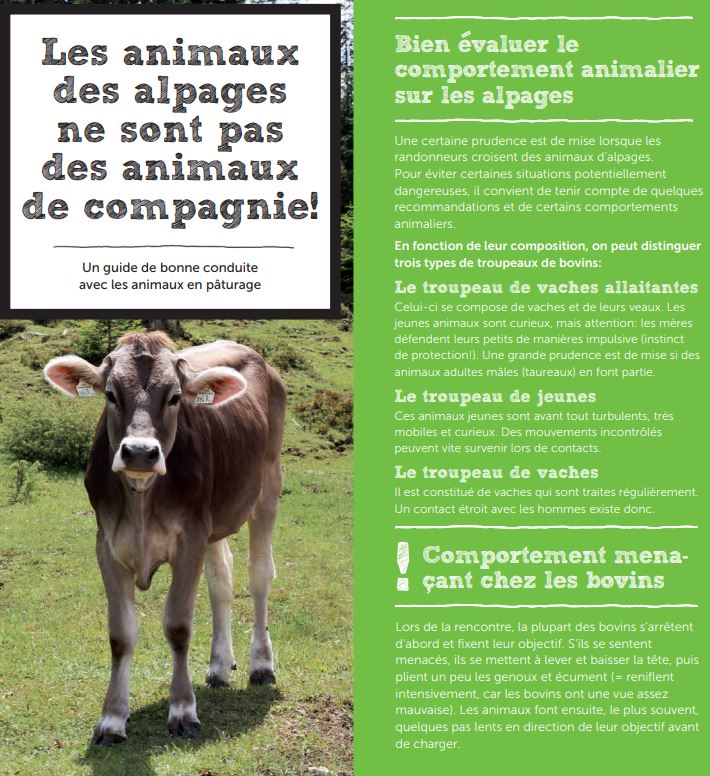 Animals in alpine pastures
Following recurring issues, Austria has published a brochure explaining to hikers how they should behave when crossing alpine pastures where herds of cows (with or without a bull) are grazing.
It explains what to do, and what not to do, to avoid any problems.
Read the recommendations by clicking here.
What should you do if you're injured following an animal attack?
Wounds caused by bites or scratches can become infected and leave deep marks. Get treatment (a doctor, a hospital, and let your assistance provider know if your condition requires hospitalisation).
Don't forget to get vaccinated against tetanus as a precaution (a booster every 10 years!).
How can you have a holiday that respects animals?
These few points to keep in mind will help you enjoy your holiday while respecting local wildlife: 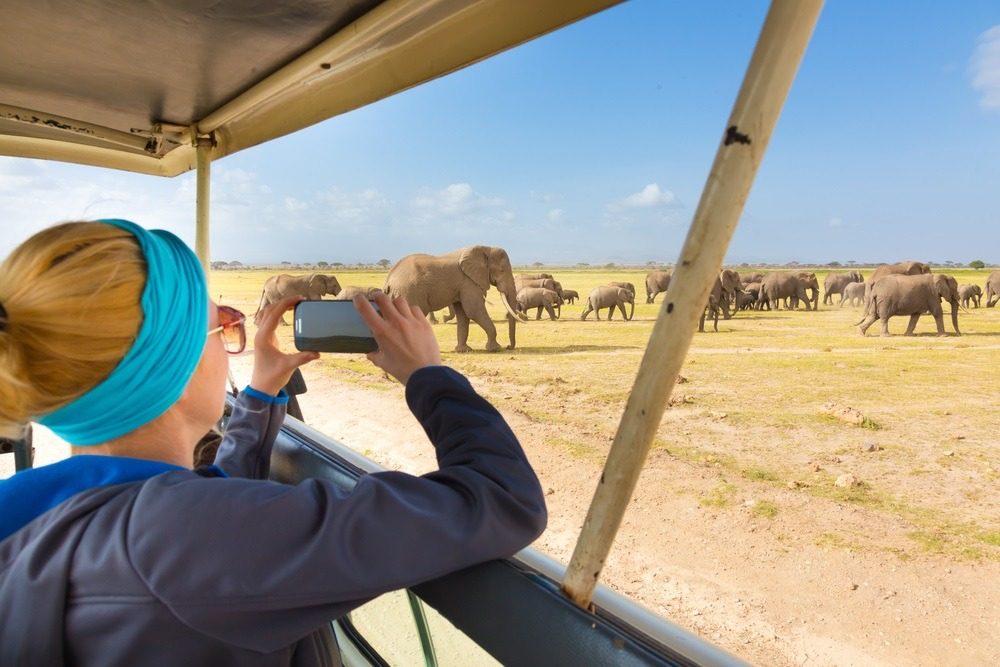
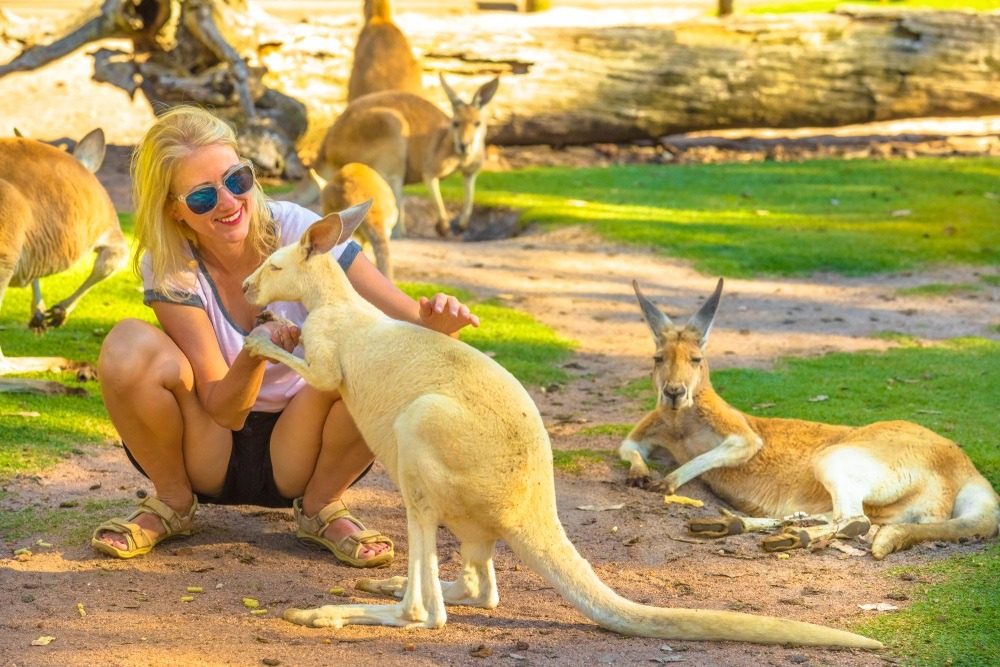
- Choose animal parks that respect their inhabitants' natural habitat, rather than those that invite you to mingle with the animals for photos. Very often, the animals in these parks have been harshly "trained" or "forced" to accept the constant presence of tourists. Parks where you can observe the animals from a distance are far more respectful.
- Choose safaris according to the same principles, i.e. those that respect both your safety and that of the animals.
- While a donkey or camel ride (domesticated animals) is of course perfectly acceptable (provided these animals are well treated), riding on the back of wilder animals (such as an elephant) is not advisable. The same goes for visiting certain tourist shows involving (semi-)wild animals.
- It should go without saying that you should avoid buying souvenirs or items made from the skin or bones of protected animals, such as ivory jewellery, a crocodile-skin bag, or coral necklaces. The export of some of these products is, in fact, banned or strictly regulated, and you risk being penalised by customs.
Also read the article: Protecting yourself against an aggressive dog
First published: 07/2018 - Updated: 10/2025