At a glance
Is a jellyfish sting dangerous? How should you react if you're stung?
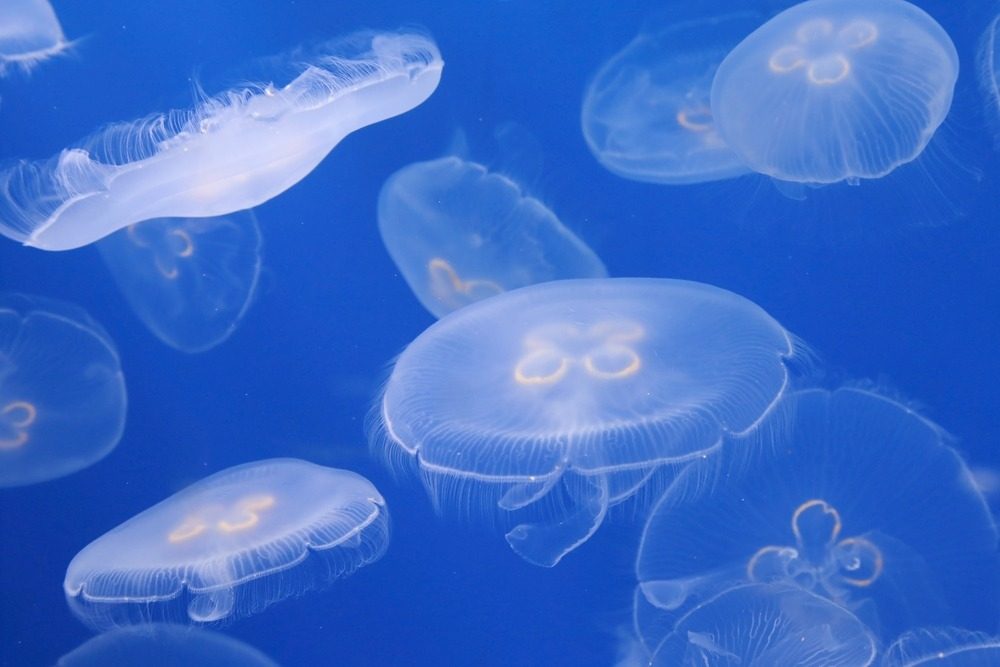
Jellyfish: a phobia for many tourists enjoying sea swims and beaches. Yet the majority of jellyfish stings are harmless.
Still, you need to know how to react when you're stung.
Increasingly numerous gelatinous animals along the coastline
According to some observers, global warming (and therefore the rise in sea water temperature) favours the proliferation of jellyfish. The same is true of overfishing, which decimates their natural predators, and pollution, which encourages the growth of the zooplankton that jellyfish feed on.
Those found in the North Sea are harmless, even though their stings are very unpleasant. On the other hand, some (giant) or related species found in warmer seas can prove very dangerous (Portuguese man o' war (physalia), Irukandji, Australian box jellyfish, ...).
Stings that are often harmless but painful
Jellyfish tentacles have stinging filaments. The stinging cells contain a substance that causes a sharp pain resembling a burn or an electric shock, which persists or increases in intensity for more than half an hour after the sting. The skin reaction shows up as itching, redness (erythema) and blisters. In the vast majority of cases, these stings are fortunately harmless.
However, more serious stings can cause allergic reactions, vomiting, respiratory failure, headaches, fainting or coma.
Prevention
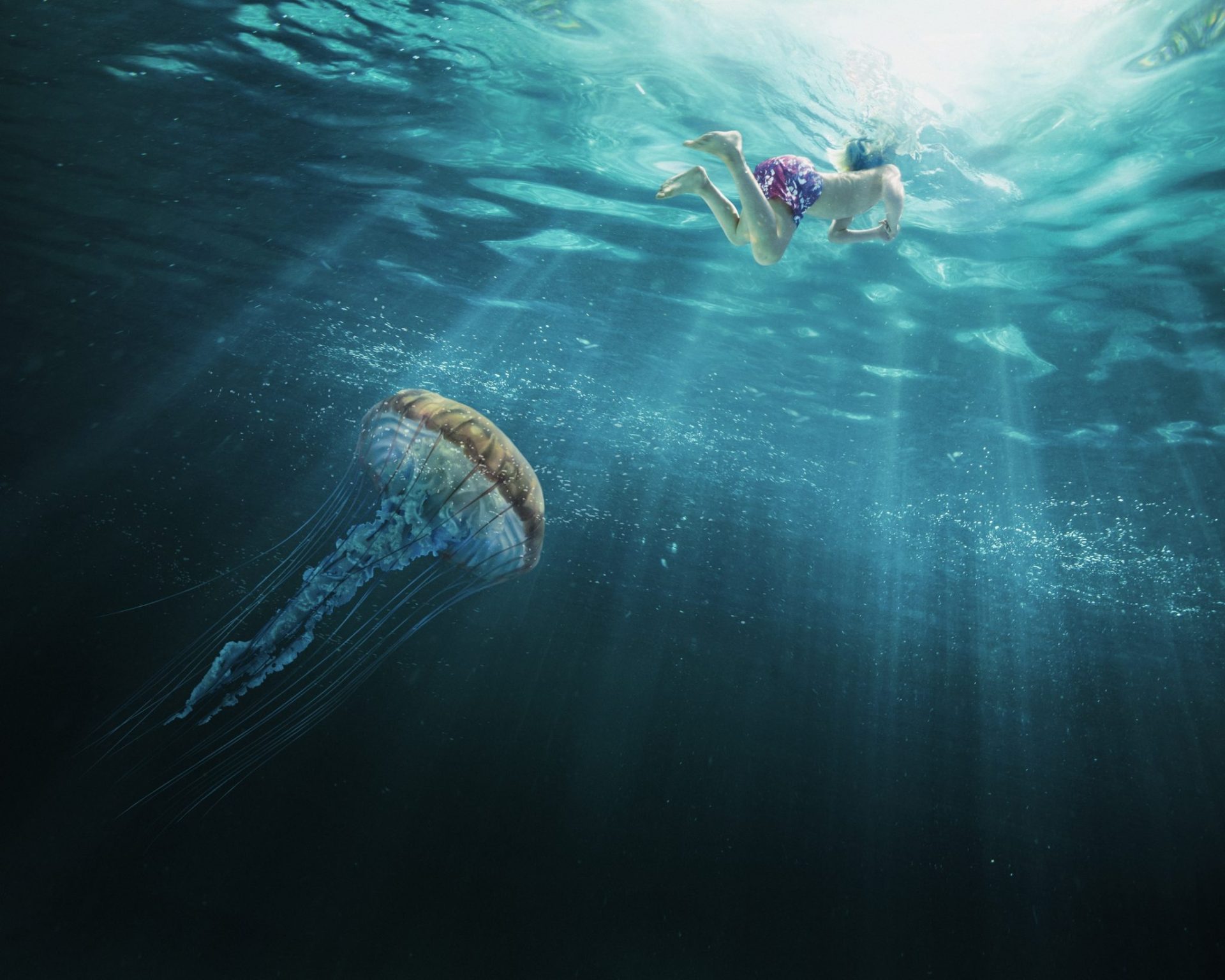
- Obviously, you should avoid swimming in areas where you notice jellyfish. If you see one or more jellyfish floating around you while swimming, it's best to leave the area as quickly as possible.
- Find out about affected areas: there are websites (sometimes weather websites) that give information on their location. For the south of France: http://meduse.acri.fr/carte/carte.php
- Do not touch jellyfish washed up on the beach. Even dead, their tentacles can still cause stings.
What to do if you're stung?
- Get out of the water as quickly as possible, but don't panic. It is not uncommon for a swimmer to drown due to the combined effect of panic and pain.
- Rinse the wound with seawater, if possible slightly warmed seawater (above 40°C, the venom loses its effectiveness). Never use fresh water, as this will trigger the release of venom. Make sure the water applied to the skin is not too hot, so as not to cause a burn.
- If the victim is a young child, or if the sting is to the face, immediately call emergency services.
- After rinsing with seawater, cover the wound with sand without rubbing and let it dry. The sand will set the tentacle fragments still present on the skin. Then wash the wound with seawater. Remove the remaining tentacle fragments from the skin using tweezers. You can also use the flat side of a knife or a rigid card (such as a credit card) to scrape the skin and remove any remaining venom sacs.
- After treating the wound, apply an antiseptic lotion or a disinfectant.
- If the pain persists or if the affected area is significantly swollen, see a doctor as soon as possible. Medical teams present on staffed beaches can also help you.
Notes:\
- If it's a sting from a tropical sea jellyfish, vinegar can soothe the pain. The same is not true for stings from jellyfish found on our coasts.\
- Some claim that urine has the same effect, but there is no evidence for this.
What not to do
- Do not rinse the wound with fresh water
- Do not make an incision
- Do not suck the wound to remove the venom
- Do not use alcohol to disinfect the wound
- Do not rub the wound.
Also read the article "Jellyfish on the Belgian coast" from the Poison Control Centre.
.
First published: 05/2015 - Updated: 08/2022