At a glance
This article explains what can cause a dental problem during a flight or while diving, and how to protect yourself (a check-up with your dentist and good travel insurance). Because it's better to be well covered and take a few precautions before you leave.
A toothache can seriously disrupt your trip. A dental problem is often unpredictable or can be caused by an accident.
Dental problems abroad
At Redion, cases opened for acute dental problems abroad usually rank 6th among cases opened due to a medical intervention (see end of article).
The number of medical cases opened for this type of problem thus reaches several dozen during the summer months, the period when the largest number of Belgians are on holiday. The risk is therefore not negligible!
What causes toothache on a plane?
During air travel, it's not uncommon to experience toothache, caused by pressure differences during take-off and landing.
A small air pocket can form under a filling or in a cavity and expand under the effect of the change in air pressure, compressing the tooth's nerve and causing (severe) pain.
This pain occurs during take-off and gradually disappears after arrival.
On landing, the same phenomenon can create an under-pressure problem in the tooth.
Tips:
- If you're planning air travel, take advantage of your regular dentist visit to have any fillings and dentures checked, or to treat any cavities.
- Visit your dentist for a check-up before your holiday departure if your last visit was more than 6 months ago.
For another recurring medical problem on planes, read: "Flying with an ear infection, a bad idea"
Toothache while diving: barodontalgia
Do you go diving? In that case, pressure variations can also affect filled teeth or cavities. Consult your dentist or oral specialist.
Very high medical costs in certain countries
Even a minor medical visit can be very expensive in certain countries (including the USA). Moreover, your European Health Insurance Card (health insurance) does not cover every destination.
Toothache and travel insurance: what coverage?
It is therefore advisable, on the one hand, to schedule a check-up with your dentist before departure and, on the other hand, to have good travel insurance. This will cover medical or surgical costs up to a certain amount, based on your medical file and in accordance with the type of assistance contract taken out.
Do be aware, however, that the amount reimbursed for less serious but urgent dental care (e.g. a new filling, treating an abscess...) following an acute crisis is often limited. Check the details.
The travel assistance contract also provides, if necessary, for the on-site delivery of dentures that you would need and that have been prescribed by a practitioner.
Dental care while traveling
- Don't forget to pack what you need for daily dental care (toothbrush, toothpaste, floss…).
- Use bottled (mineral) water to brush your teeth if the tap water is not safe to drink.
- In case of an urgent problem, get treated by a professional or go to a medical center or hospital, and contact your assistance company right away.
___________________________________
(*) The "Top 6" medical cases opened abroad in summer by Redion Belgium
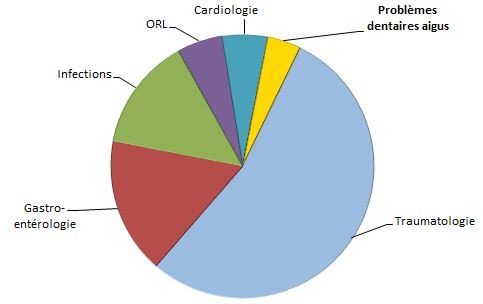
- Trauma (injuries, fractures, wounds): ± 39%
- Gastroenterology: ± 12%
- Infections: ± 10%
- ENT: ± 4%
- Cardiovascular problems: ± 4%
- Acute dental problems: ± 3%