At a glance
"Boat-hitchhiking" is an excellent way to discover the seas. Tom de Dorlodot shares his best tips for those who want to try the adventure.
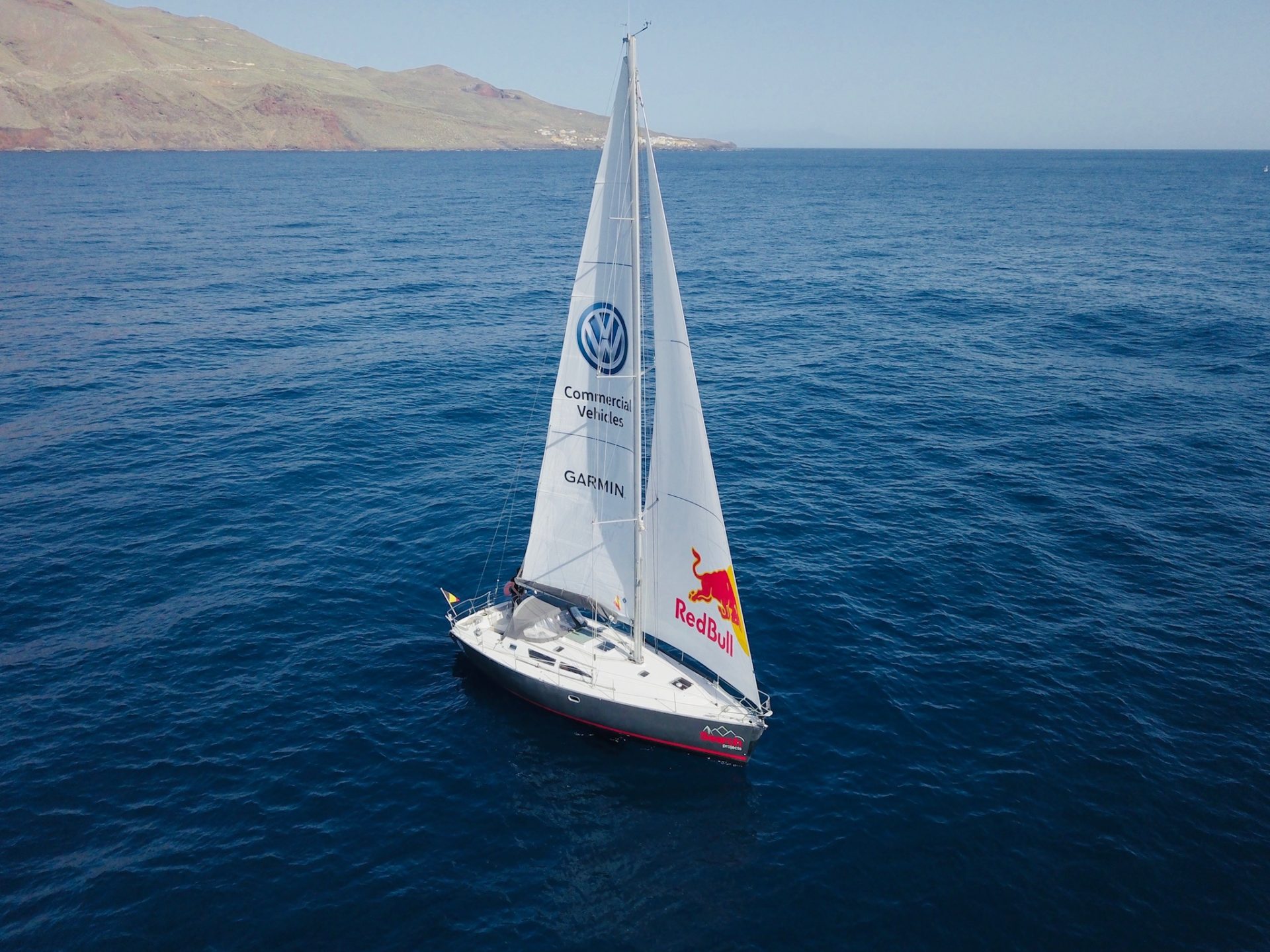
Tom de Dorlodot is crossing the Atlantic with his family aboard his 12-metre sailboat, SEARCH Projects. He shares his experience with those who would one day like to try boat-hitchhiking, or "co-boating" (the equivalent of carpooling, but on a sailboat).
"Boat-hitchhiking"
Boat-hitchhiking is a fairly little-known practice that can seem complicated at first glance. Personally, I think it's a wonderful way to cross oceans and meet great people. It's also an economical way to travel and a very good way to limit your ecological footprint.
I've come across many boat-hitchhikers in the Canary Islands and Cape Verde who were looking to get aboard a sailboat to cross the ocean. They're generally young people between 20 and 30 who offer their services as crew in exchange for a (free) place on board.
We've had the chance to welcome young boat-hitchhikers aboard for short crossings. For example, between islands in the Canaries. It was always a great experience. Our sailboat is comfortable for up to 4 people on board.
For our transatlantic crossing, we welcomed two friends on board. Julien is a filmmaker (for our TV show EXPLORE) and Aurian is an osteopath (great in case of a minor health issue).
Shared benefits
Boat-hitchhiking isn't that complicated, but you need to know what you're getting into and prepare well. Nowadays, most sailboats are very well equipped for long crossings. They're fitted with satellite navigation tools, radar and an automatic alert system. However, these tools aren't foolproof. Making sure there's always someone outside, in the cockpit, even in the middle of the night, is a basic safety factor at sea.
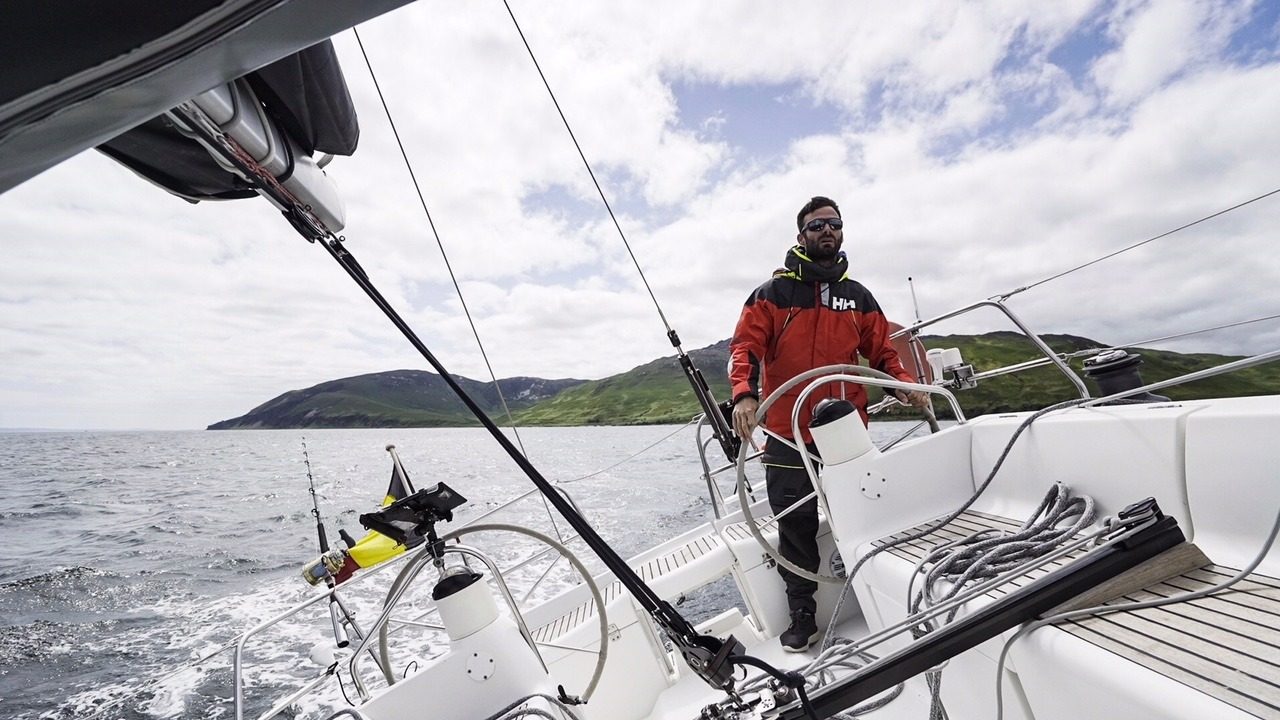 If there are several people on board, it's possible to organise shifts on deck. While the others sleep, rest or cook, there's always someone keeping watch. This is mainly why sailboat owners take on crew members. When I travel solo, I sleep in 15-minute stretches to keep watch. It's honestly exhausting. So taking on crew can really improve quality of life on board.
As for the boat-hitchhikers, they take advantage of the trip to get to their next port of call and they share an unforgettable experience.
What every boat-hitchhiker should know
Available space and teamwork
On a sailboat, space is limited. How a boat runs relies on teamwork. Ocean crossings take several weeks, and you can't get off whenever you like. The most important thing is how well the crew members get along, otherwise the experience can turn into a nightmare. A good crew member stays positive in tough moments and is able to smooth things over. You need to be open-minded and have good people skills. I recommend spending a bit of time with the captain to get to know them before setting off on an adventure that will probably last several weeks.
Helping out on the boat
Experience isn't absolutely essential to come aboard as a crew member on a sailboat. The tasks given to an inexperienced crew member are fairly simple. Still, it's essential to know a few basic knots: mooring knots, the bowline and the clove hitch.
Basic vocabulary
It's important to know the basic vocabulary. Everything on board has a specific name. Learning the technical terms is an excellent idea. It allows the crew member to understand the captain's precise instructions. Here are the most commonly used ones: starboard, port, hoist, haul taut, luff, bear away, the mainsail, the jib, the backstay, the halyard, the boom…
Click here to check a sailing glossary in French, and here for the glossary in English.
Seasickness
Seasickness can sometimes be hard to manage. You may be more or less prone to it, and it generally passes after three or four days at sea. Before setting off on a big crossing, it's best to do a bit of sailing to see how you react. If you already get sick in a car or a bus, you're likely to get seasick too. Ask your doctor for advice so they can prescribe seasickness medication if you're sensitive to it.
The boat-hitchhiker's equipment
You need to come aboard with the essential equipment. Plan for at least:
- Light deck shoes or, better still, deck boots (sea boots). You absolutely must wear shoes on board. There are plenty of obstacles on deck, and you can quickly injure yourself moving around barefoot.
- Waterproof trousers.
- A waterproof jacket. Ideally with a bright-coloured hood and reflectors, which will be essential in case of a fall overboard.
- Sunglasses.
- A cap.
- Sunscreen (ideally a cream that doesn't harm marine life).
- A sleeping bag.
- A head torch and spare batteries.
- Warm clothing.
- Good books.
Safety
Crossing the ocean by sail is a serious adventure. You need to make sure the journey will be completely safe. For that, you need to find out about the general condition of the boat, its equipment, and make sure of the captain's professionalism.
Questions to ask the captain
 Here are a few precautions to take and some questions to ask the captain before coming aboard.
- What experience does the skipper have? Have they already done a crossing like this?
- Ask to see the boat. Is it clean and in good condition? Is it well maintained? Does everything work?
- What safety equipment is there? Has it been checked?
- Is there an autopilot on board?
- Does the skipper have first-aid experience, and is there a well-stocked first-aid kit on board?
Choosing your boat-hitchhiker carefully
Are you the captain? Here are a few rules not to forget before welcoming a boat-hitchhiker on board.
The captain is responsible for their crew, which is why it's essential to choose carefully who comes aboard. Generally, the captain goes by feeling. You need to be careful, and for long crossings make sure the guest will behave well and knows what they're getting into. The captain can be held liable in the event of an accident or negligence (civil liability). They must therefore be properly insured. That's why they'll need to make sure the crew member follows all instructions. Accompanied minors can be accepted on board. There's no aptitude test to pass, but it's worth doing a first one-day trip to make sure things will go well.
Equipment on board
© John Stapels
Even on a well-prepared boat, and although the risk is low, things sometimes break or fail. A sailboat must therefore be equipped with repair kits and spare parts to deal with this.
In the event of serious damage or shipwreck, and in accordance with the law, complete and very specific safety equipment must be on board.
There must be a lifeboat, a survival kit, a fixed VHF radio and a portable one, and a locator beacon such as a Garmin Inreach. We also have personal AIS beacons on our life jackets. I strongly recommend it.
We've also prepared a "grab bag" to take into the lifeboat with a solar panel, water, a survival blanket, a fishing kit, food, sunscreen, and flares.
One of the worst situations is a man overboard. Any skipper must be trained for this eventuality, and the crew must be briefed before departure. This type of accident is almost always due to negligence. There are clear rules to follow.
Sailboats and catamarans are fitted with safety lines, but also with a "lifeline", onto which you clip a tether connected to your life jacket. With this system you're attached to the boat and the risk of falling overboard is much lower. Ideally, you should be constantly clipped on when you go out on deck. I advise my crew members to use the boat's toilet rather than leaning over the side. In most cases, that's how people fall into the water!
Boat-hitchhiking: a great adventure
As you'll have gathered, boat-hitchhiking is a great experience, but one that needs to be approached seriously and with good preparation. The experience will be all the more enjoyable for it.
And don't forget to set off with good travel insurance. ;-)
You can find captains looking for crew members on the following sites:
- https:// www.bourse-aux-equipiers.com
- https://www.findacrew.net/
- https://www.crewseekers.net/ (paid, however).
Be careful, fair winds and calm seas!
Tom de Dorlodot
Discover Tom and Sofia's other tips in the "Travel and adventures" feature
© Photos: Tom de Dorlodot and John Stapels