At a glance
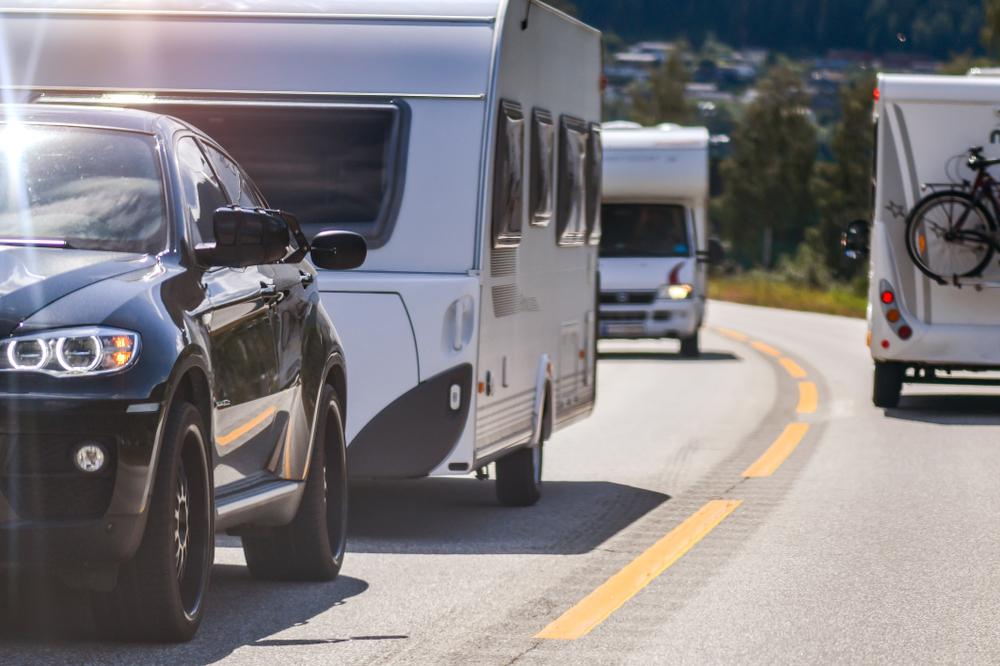
Every year, many travellers set off with their caravan or motorhome. Here are a few key points to bear in mind.
Every year, a great many travellers hit the road with their caravan or motorhome. This trend has grown since the coronavirus pandemic, as a caravan or motorhome lets you travel within your own bubble, in a "self-contained" means of transport and accommodation.
Here are a few points to bear in mind.
The load
Poor loading or overloading of the caravan (or motorhome) is the cause of a large number of incidents and accidents on the road.
It's therefore very important to bear a few basic rules in mind:
- Don't exceed the maximum authorised load of your caravan (or motorhome). See the indications given in the technical manual on this. Also check the technical specifications of your towing vehicle.
- Ideally, the caravan's load shouldn't exceed 80% of the total weight of the towing vehicle. It's therefore advisable to weigh the caravan before loading it so you know its loading capacity well.
- Estimate the weight of the items and equipment you're bringing in your caravan (or weigh them) and note this data in a notebook. This information will help you calculate the total weight of the items you're bringing. The same applies to heavy items you add to your caravan during your trip.
- Distribute items evenly across the available space: store the heaviest items as low as possible. Placing heavy items at the top of cupboards can unbalance the caravan while driving.
- Where possible, transport bicycles inside the caravan (or motorhome). Bicycles attached to the back of the caravan can potentially destabilise it or cause it to sway.
- Make sure all items are properly secured and firmly fastened and that cupboards are correctly locked while driving. Close all windows, doors and shutters.
- Never transport passengers or animals inside the caravan while driving.
Poor loading of the caravan is not only a risk while driving (braking, vehicle control, tyre wear, etc.), but also a risk to the caravan's structure itself.
Tyres
As with your car, the condition and pressure of your caravan's tyres are of vital importance for your safety.
For a caravan, tyre pressure is usually higher than that of the towing vehicle's tyres. Check your caravan's technical manual on this point.
Coupling and connecting
- Have the tow hitch, hook and coupling ball of your vehicle checked by a professional centre.
- Make sure the caravan is properly hitched.
- Check the wiring and the electrical connection.
- Check that the lights work properly and make sure the car's lights don't dazzle other drivers.
- Check the positioning of the mirrors.
- Release the caravan's handbrake.
- Bring wheel chocks in case your caravan needs to be detached from your vehicle on a sloping road.
Planning your route
Before setting off, check the following points:
- places where you want to stop and rest areas with facilities to restock (water, waste disposal, toilets, etc.);
- tolls;
- roads suitable for caravans and motorhomes (watch out for narrow country or mountain roads – a GPS doesn't always take these into account!).
Bear in mind the traffic density calendar and traffic information.
Don't forget your vehicle documents and taking out good travel assistance cover.
Driving
- Observe speed limits.
- Pay attention to weather conditions (bad weather, crosswinds, etc.).
- Also pay attention to the layout and condition of the road (bends, mountain roads, steep climbs and descents).
- On descents, brake by using engine braking.
- Keep a safe braking distance (at least 50 m from the vehicle in front of you). The same applies to drivers following the caravan.
- Know how to react properly if the caravan starts to sway.
- Follow the recommendations for a long trip without any problems (stops, rest, food, etc.).
- Don't forget that your caravan or motorhome doesn't have the same height as the vehicle you usually drive, which can cause problems in certain places, such as low tunnels!
And finally: watch out for theft and break-ins. Every year, hundreds of caravan and motorhome owners fall victim to them. Discover a few tips here to avoid it.
First published: 05/2015 - Updated: 07/2021