At a glance
- Electric vehicles emit up to 73% less greenhouse gas over their entire life cycle, but battery production remains very energy-intensive and polluting.
- Sustainability is improving thanks to longer battery lifespans, their reuse, stricter European recycling rules, and a growing share of green electricity.
- Future outlook: fully electric vehicles will replace hybrids, and investment in cleaner production and sustainable charging solutions is essential.
Are electric vehicles (EVs) really sustainable?
In Belgium, sales of hybrid, plug-in hybrid and fully electric vehicles are growing slowly but surely. Their main advantage is well known: a reduced environmental impact. But can they really be called sustainable, once you factor in the intensive production process and the limited lifespan of the batteries?
Our blogger Alain Dierckx brings us some useful information.
In what way is an electric vehicle sustainable?
According to Redion's 2025 Mobility Barometer, around 30% of Belgians say they're sceptical about the sustainability of electric vehicles. It's therefore worth examining just how sustainable an EV really is throughout its life cycle, for both people and the environment.
Electric vehicles sold in Europe emit 73% less greenhouse gas over their life cycle compared with fossil-fuel vehicles, according to a study by the International Council on Clean Transportation (ICCT)(1).
What's more, an EV uses three times less energy to travel the same distance as a combustion-engine vehicle.
However, there are downsides too, such as energy-intensive production, a limited battery lifespan, costly and complex recycling, and charging that isn't always done with green electricity.
Negative impact on sustainability:
- Very energy-intensive production process
- Producing the vehicle and charging points generates a lot of emissions
- Limited battery lifespan
- Costly and complex recycling
- Charging not always done with green electricity
Positive impact on sustainability:
- Zero emissions while driving
- Production-related emissions are offset after two years of use
- Batteries can later be reused in homes or businesses
Is the EV production process becoming more sustainable?
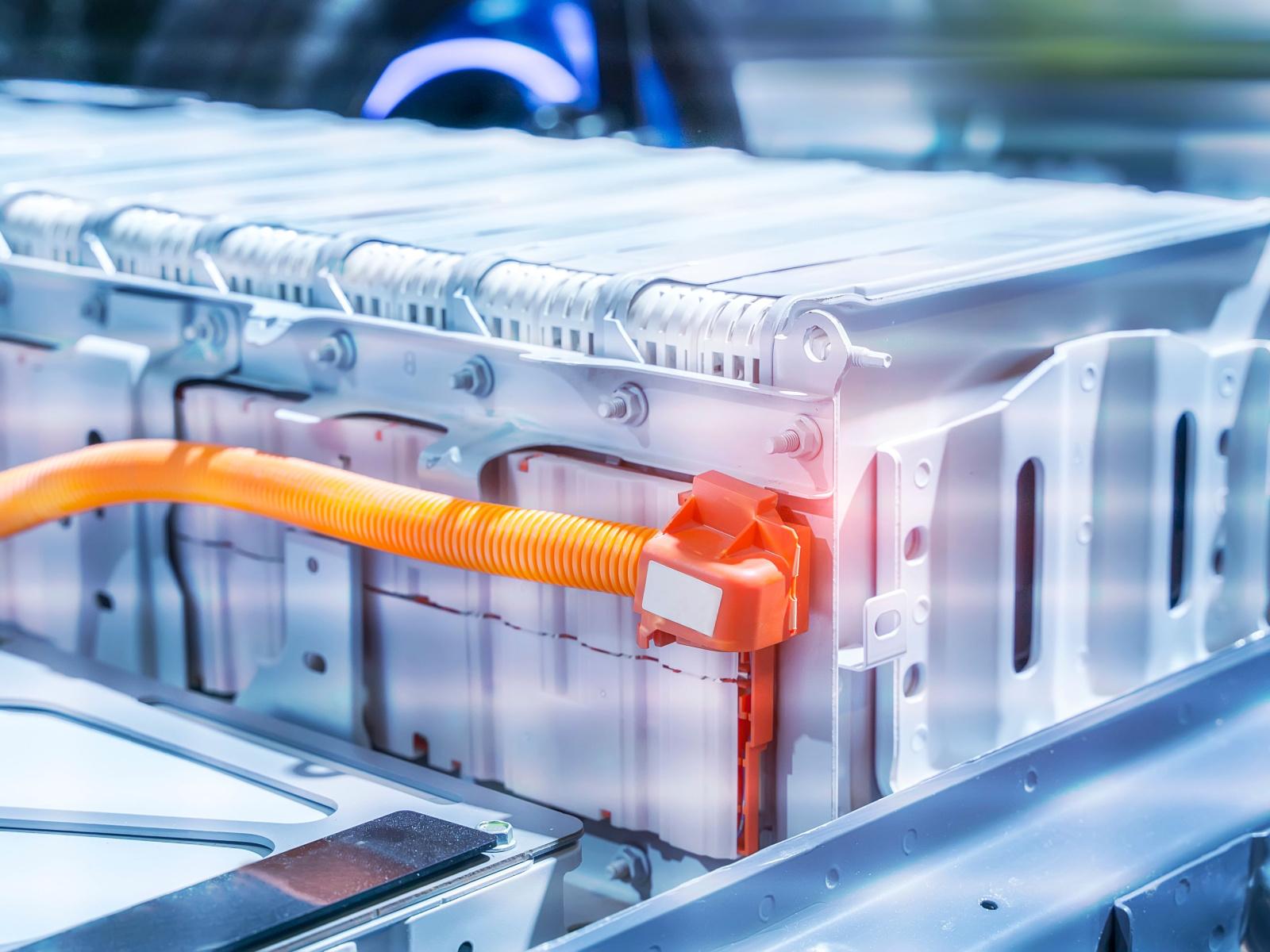
Manufacturing electric vehicle batteries isn't very sustainable in itself. Producing a battery requires extracting raw materials such as cobalt, lithium and nickel. This extraction is done through mining, an intensive process that consumes huge amounts of energy. As a result, production-related emissions are much higher than for a fossil-fuel vehicle.
Manufacturers are now working to make battery production more sustainable. They're exploring alternatives such as sodium-ion batteries, designing models that use fewer materials, and seeking to use more renewable energy in manufacturing vehicles and batteries. Finally, they're aiming for greater efficiency to reduce the overall energy consumption of the process.
For now, production remains a weak point when it comes to EV sustainability. However, a study by Duke University (USA)(2) shows that after two years of use, the negative impact is offset by low emissions during use.
Are car batteries becoming more sustainable?
Good news: EV batteries last longer than expected. According to a study by Stanford University (December 2024)(3), they last up to 40% longer than originally estimated.
Today, the average lifespan is between 8 and 10 years. After this period, and thousands of kilometres, the remaining capacity is far higher than expected.
What's more, batteries no longer suited to powering a car are increasingly being reused for energy storage in homes and businesses. This delays recycling and improves overall sustainability.
Is battery recycling becoming more sustainable?
Recycling EV batteries involves several steps: discharging, dismantling, separating the metals and shredding. It's a costly but necessary process to avoid the risks associated with this type of waste.
The EU adopted Regulation 2023/1542 on batteries(4) in 2023, which requires member states to collect and recycle batteries sustainably. It sets ambitious targets: 65% collection by 2025, 70% by 2030, as well as a minimum recycling rate for critical materials.
Today, the process remains complex, particularly when it comes to recovering precious metals. In Belgium, several projects and partnerships (for example with Umicore) aim to make recycling more efficient and sustainable.
Is the charging process becoming more sustainable?
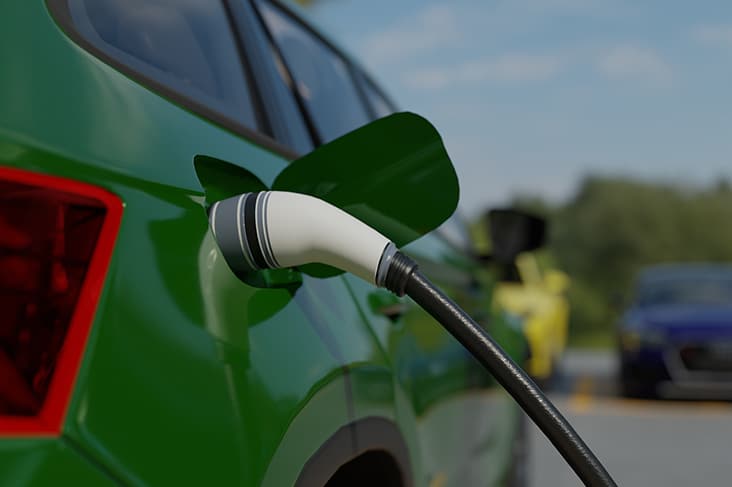
Charging an electric vehicle is only sustainable if the electricity used comes from renewable sources (solar, wind). Charging your car at home with electricity produced by your own solar panels is of course 100% sustainable. Likewise, if you've signed up with a 100% green energy supplier, charging at home is done sustainably.
Unfortunately, green electricity isn't always available at public charging points. In 2024, the proportion was around 40–45% renewable/nuclear (green) energy versus 55–60% fossil (grey) energy. Some companies now offer charging points powered exclusively by green electricity, but these remain a minority.
Fluvius points out that bidirectional (V2G) charging points can also help promote green charging by feeding solar energy from home networks back into the grid.
Do second-hand electric vehicles contribute to sustainability?
In Belgium, EVs today are mainly company cars. After the leasing period (usually 4 or 5 years), they enter the second-hand market. Since second-hand EVs have recently become cheaper than their combustion-engine equivalents, and their batteries are still in good condition, sales should increase, which extends their lifespan and improves their sustainability.
Are hybrid vehicles sustainable?
Hybrids have both an electric motor and a combustion engine, which in principle makes them more sustainable than purely combustion-engine vehicles. Full hybrids and plug-in hybrids can travel a limited distance in fully electric mode, so with no emissions.
In practice, the picture is less favourable, according to a study by Transport & Environment(5): drivers of plug-in hybrids don't recharge them often enough, and the combustion engine takes over at higher speeds or over long distances. The result: CO₂ emissions are close to those of a petrol car.
This is why hybrids are considered a transitional technology, and should be replaced within a few years by fully electric vehicles.
Are heavy electric vehicles sustainable?
Electric vans, buses and trucks require heavier batteries and more powerful charging stations, but they remain, in principle, more sustainable than their fossil-fuel equivalents.
In Europe, regulations aim to reduce CO₂ emissions and boost sales of these types of vehicles. With the introduction of zero-emission zones in cities, vans and buses will increasingly need to be electric.
What does the future hold for electric vehicles?
According to a study by consulting firm McKinsey (6), in the coming years, traffic in large, densely populated cities will be mostly electric, and therefore more sustainable. In many European cities, fossil-fuel vehicles will gradually be banned once EV sales are sufficiently developed.
The overall sustainability of EVs will continue to improve as long as manufacturers keep investing in the following areas:
- More environmentally friendly production processes
- New battery compositions
- Battery reuse and recycling
Finally, thanks to the growing share of renewable energy in the energy mix, charging EVs will also become more sustainable in the long run.
FAQ – The sustainability of electric vehicles
Yes, over their entire life cycle, EVs emit up to 73% less greenhouse gas than fossil-fuel vehicles. However, challenges remain, such as the energy-intensive production process and charging with non-green electricity.
Sources:
- Life-cycle greenhouse gas emissions from passenger cars in the European Union: A 2025 update and key factors to consider - International Council on Clean Transportation
- Electric vehicles outperform gasoline cars in lifetime environmental impact | EurekAlert!
- Existing EV batteries may last up to 40% longer than expected | Stanford Report
- Regulation - 2023/1542 - EN - EUR-Lex
- Plug-in hybrids pollute almost as much as petrol cars – EU data | T&E
- The future of sustainable mobility in cities | McKinsey