At a glance
Free-flow toll motorways are appearing in France. How does this system work? How do you pay?
France is rolling out free-flow toll motorways. What exactly is this, and how do you pay?
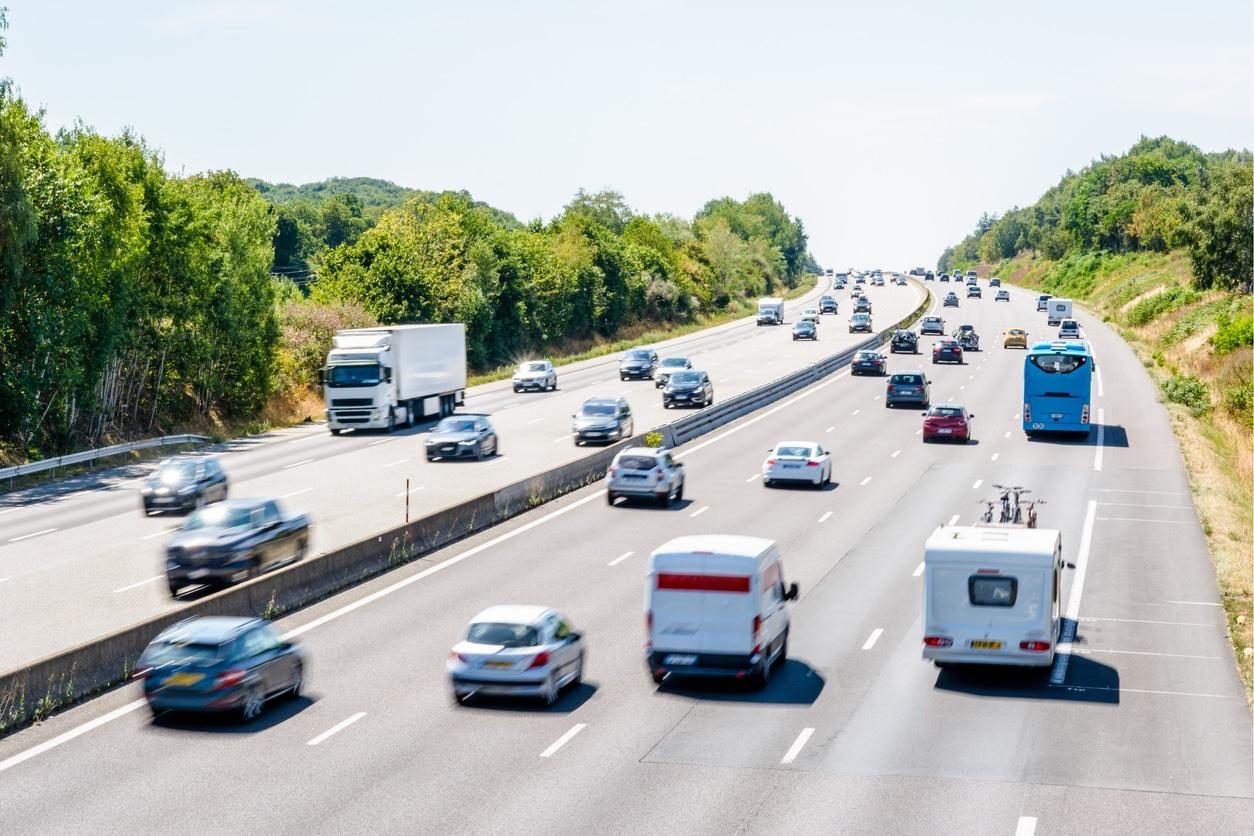
Drivers heading south are well acquainted with the motorway toll system (see the article "Tolls in France" on this topic). At toll booths, you sometimes have to wait a long time to take a ticket or pay for the distance travelled. This can sometimes cause a lot of delay and frustration if the vehicle ahead is blocking the lane.
Good news: in certain places in France, toll sections have been set up without gantries, and therefore without barriers.
How does this system work, and how do you pay? Our blogger Alain Dierckx explains.
How does a free-flow toll motorway work?
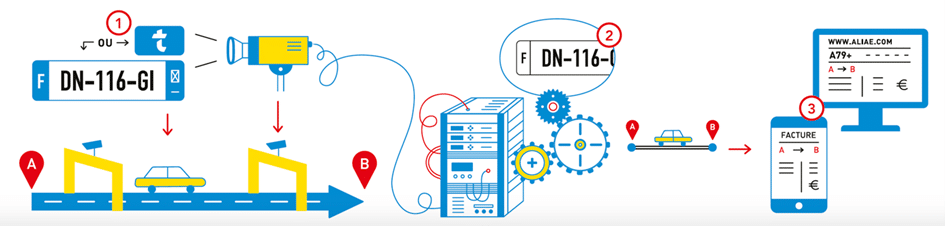
Cameras and sensors positioned above the motorway scan the number plates and toll badges (such as Bip&Go) of passing vehicles. As a result, barriers become unnecessary and no one has to stop. The distance travelled is calculated, and payment is no longer made in advance but at the end of the journey.
How do you recognise a free-flow toll motorway?
These toll roads are marked in France by signs along the motorway reading "Section à péage en flux libre" (free-flow toll section).
This type of toll is also used in other countries on certain sections. In time, it will almost certainly become widespread pretty much everywhere.
The advantages of a free-flow toll road
- Time saving: you save time because you don't have to stop to take a ticket or pay it.
- Eco-friendly: your fuel consumption is lower because you can keep driving, CO2 emissions are lower because vehicles no longer need to stop and start again, and since there are no more tickets, paper is saved too.
- No queues: queues during peak season or rush hour are a thing of the past.
- More safety: fewer queues means less risk of collisions.
Where are there free-flow toll motorways?
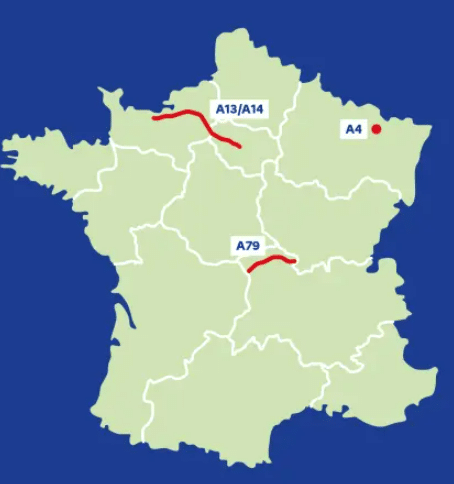 The number of free-flow toll sections is still limited at present, but they will gradually become more common.
- On the A79 motorway between the towns of Sazeret and Digoin, a motorway managed by the operator Aliae.
- On the A4 motorway, exit number 36 Boulay.
- On the A14 between Paris and Normandy (from mid-June 24) and on the A13 between Paris and Normandy (from mid-December 24), a motorway managed by the operator Sanef.
How do you pay the toll?
The toll can be paid in three different ways: in advance (only for the A79), afterwards, or using a badge.
How can you pay the toll in advance?
Only the A79 section allows for advance payment online. In that case, you must use the motorway within seven days of payment.
How does it work?
- Go to www.aliae.com and enter your number plate
- Indicate the type of vehicle
- Choose the route or routes you'll be taking
- Enter your bank details.
If you don't end up taking the prepaid route, the amount will automatically be refunded to your bank account. Any refunds will also be settled automatically if, for example, you leave the motorway earlier than planned.
It's also always possible to dispute an amount in case of a problem via the operator's website.
How do you pay afterwards?
Tolls on all "free-flow" motorways must be paid within 72 hours.
You have three payment options:
- online via the motorway operator (www.aliae.com or www.sanef.com) based on your number plate. Payment can be made manually per trip or by direct debit.
- at one of the motorway's automatic payment machines, in cash or by debit or credit card.
- at a NIRIO point of sale in France, based on your number plate.
How do you pay with a badge?
Paying with a badge is the simplest solution. The process is automatic (so you don't need to do anything), since all existing badges, whatever the issuer, are recognised by the sensors. You'll receive an invoice after a month.
It's important that the badge is clearly visible on the windscreen so the sensors can detect it.
What happens if you don't pay, or pay late?
In that case, a fine notice will be issued by the relevant operator and sent to the offender. You'll then have to pay a fine of 90 euros on top of the toll price. If you still haven't paid after 2 months, the fine can reach 365 euros!
As a foreign driver, don't think you can escape the fine. Current systems for recognition and data exchange between French and Belgian authorities also allow fines to be forwarded abroad. Read the article "Traffic offences committed abroad" on this topic.
Tip: provide your email address on the aforementioned websites so you're notified in time when a payment is due.
Note: The information above is provided based on what was in force at the time this article was published (June 2024). Prices are always subject to change, and the number of free-flow toll roads will undoubtedly increase over time.
For more information, you can visit the website https://www.ecologie.gouv.fr/peage-flux-libre
Also read the following article for more information on toll motorways in France and the procedure for requesting assistance in the event of a breakdown or your vehicle being immobilised: Tolls in France