At a glance
Every year (and especially every summer) thousands of Belgians head south towards France. Between the barriers, the queues and the electronic tags, it's easy to get confused... or to lose time. Before you go, it's best to understand how French tolls work, which payment methods to use, and how to react in the event of a breakdown.
This practical guide brings together everything you need to know for a stress-free trip: the right habits at the toll booth, tools for calculating your costs, and Redion's tips for avoiding unexpected hiccups on the road.
How do tolls work in France?
In France, a large number of motorways charge tolls: you pay based on the distance travelled.
At the motorway entrance, you receive a ticket. At the exit, you present it so the amount due can be calculated. This system covers the majority of the network managed by the concession-holding companies (ASF, APRR, Vinci, Sanef, etc.).
The different types of toll lanes
The classic toll
This is the most common: a barrier with booths where you pay for your passage in cash, by card, or via a tag.
Waiting times can be long on busy days in summer.
Electronic tolling (Liber-t / Bip&Go)
Thanks to a small device fixed to the windscreen, you pass through automatically: the barrier lifts as soon as you reach the gantry. The amount is later debited from your bank account.
The tag can be taken out on an annual basis or for just a few trips, and also works in Spain and Portugal.
"Free-flow" tolling
Increasingly common (A13, A79, etc.), this system no longer has a barrier. Gantries fitted with sensors identify your vehicle via its number plate.
Payment is then made online on the website shown on a sign after you've driven through.
The different payment methods
Several payment methods are accepted on French motorways. Which one you choose depends on your habits, but also on the time of year and traffic. Here are the main options, along with their pros and cons.
1. Paying in cash
This is the simplest method, still used by many tourists. You can pay at a staffed booth, or drop your coins into an automated basket.
Downside: during peak holiday departures, this option often creates the longest queues.
2. Paying by bank card
Lanes marked "CB" let you pay quickly with Visa, Mastercard or certain fuel cards.
No need to interact with an operator: simply insert your card and let the barrier lift.
Tip: this method is faster and works 24/7, including contactless on some lanes.
3. Using an electronic toll tag (Liber-t / Bip&Go)
The electronic toll tag, also known as Liber-t or Bip&Go, is a small device fixed to the windscreen that sends a signal to the gantry.
Payment is automatic, and you drive through without stopping.
There are two options:
- Annual subscription: ideal for regular trips (holidays, family, work).
- Pay-as-you-go plan: perfect for just a few trips a year.
Good to know: Bip&Go tags also work in Spain, Portugal and Italy, depending on the option chosen. Available online at https://www.bipandgo.com/
4. "Free-flow" tolls
More and more sections (such as the A79) use this barrier-free technology.
Gantries detect your number plate; you then pay online within 72 hours at autoroutes.fr.
Important: there's no booth on site at all. Make sure to pay online before or after your journey.
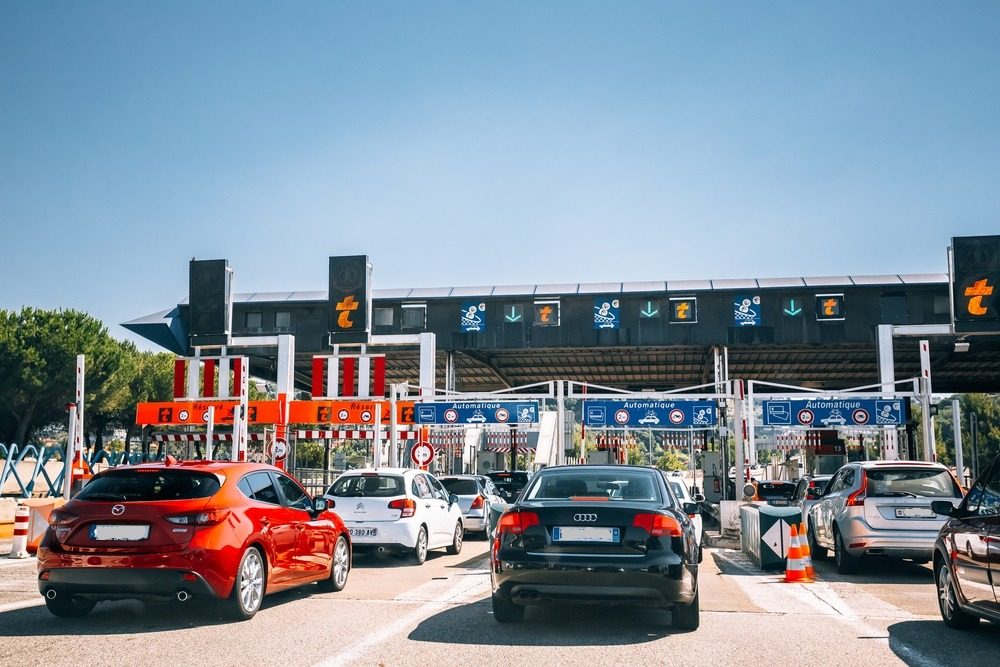
Which lane should you choose?
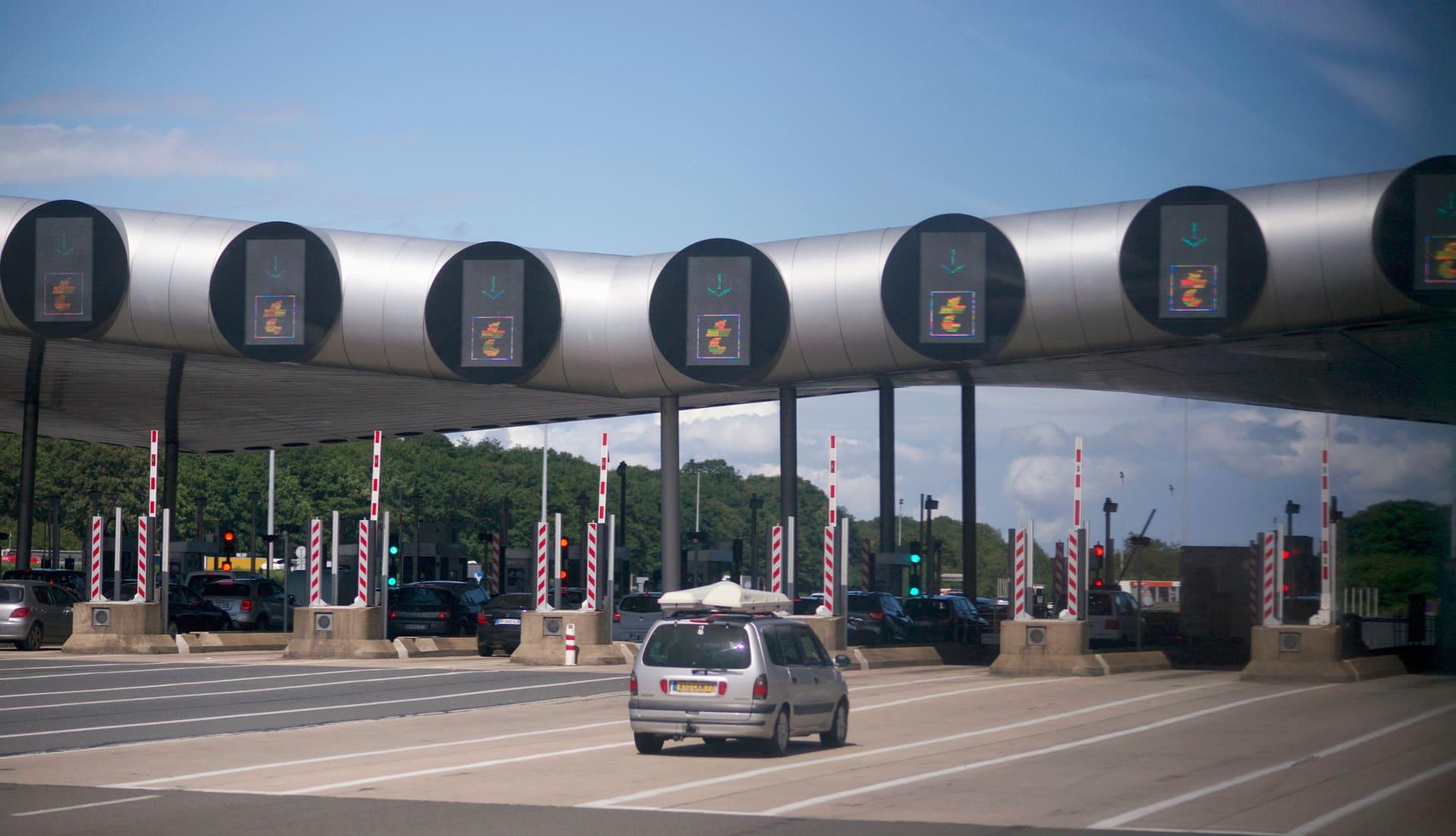 Faced with a row of lanes, it's easy to hesitate: which one should you take to avoid waiting or making a mistake?
Each lane is marked with a lit-up symbol: spotting them correctly will save you time... and a bit of stress.
For a full overview of the signs and symbols used at toll booths, check the official page: Toll signage on autoroutes.fr
Tip: if you don't have a tag, avoid the far-left lanes: they're often reserved for electronic tolling. Instead, stick to the middle or right, where you'll find mixed "card + cash" lanes.
What if you pick the wrong lane?
Never reverse, even if you see an empty lane next to you. This manoeuvre is strictly forbidden and dangerous. Simply press the call button: an operator will step in remotely and can sort out the situation.
Getting prepared, to avoid queues and accidents
Always keep your payment method within easy reach before you reach the gantry. Avoid digging through your wallet or bag while queuing: it's dangerous and often causes slowdowns.
How do you calculate the cost of a trip?
Before you set off, we recommend estimating the total cost of your trip: fuel, tolls and breaks included.
French motorways are among the most expensive in Europe, and rates vary depending on distance, vehicle type and the network used.
A few online tools for calculating the fare:
ViaMichelin: gives you the full cost of your trip (fuel + tolls) based on your vehicle and route. You can adjust your budget according to fuel type and average consumption.
Autoroutes.fr: this is the official website of the motorway companies. You'll find an updated fare simulator there, as well as the list of "free-flow" tolls. Ideal for planning a France–Belgium route without unpleasant surprises.
Mobile apps: apps like Waze or Google Maps sometimes estimate toll costs based on real-time traffic. Handy if you're torn between several routes.
Tip: rates can change every 1 February. If you're planning your holiday several months ahead, run the simulation again just before you leave.
How are the fares calculated?
The price of a toll depends on several factors:
- the distance travelled;
- the vehicle category (car, motorhome, trailer, etc.);
- the motorway company that manages the section;
- service-related costs (maintenance, safety, facilities).
Vehicle classes are displayed at every toll station. Most private cars fall into class 1.
In other countries
In Italy, there's a similar system for getting through tolls faster: the viacard and Telepass (sold at motoring clubs, border crossings, some petrol stations and restaurants along the motorways).
In Spain, it's called Via-T.
In Switzerland and Austria, you'll need to buy a vignette (sticker). These are sold at motoring clubs, border crossings and some petrol stations along the motorways.
Breakdown or accident on the motorway: what should you do?
A flat tyre, an engine failure, or a red warning light on the dashboard... These situations can happen at any time, including on a toll motorway.
So it's crucial to know the procedure to follow — and what Redion can (and can't) do for you.
1. Secure the area immediately
- Pull over onto the emergency lane, as far to the right as possible, and switch on your hazard lights.
- Put on your hi-vis vest before getting out of the vehicle.
- Move away from the roadway, behind the safety barrier. A warning triangle should not be placed out on a motorway in the event of a breakdown, as this manoeuvre is dangerous on a fast-moving road and risks being knocked over by the air displacement caused by passing vehicles.
Never leave the motorway on foot. Toll areas and hard shoulders are particularly dangerous.
2. Alert the emergency services or an approved breakdown service
On toll motorways, only the motorway companies can send out a breakdown vehicle.
To contact assistance:
- Use an emergency call point (roughly one every 2 km).
- Or call 112, the European emergency number.
- You can also use the free SOS Autoroutes app, which automatically locates you.
- At the entrance to toll sections, a sign usually shows the number to call in an emergency.
Once the breakdown has been reported, a breakdown service approved by the motorway company will come and tow you to the nearest exit.
3. Redion takes over
Redion can't intervene directly on toll motorways. Only approved breakdown services are authorised to do so. However, our teams take over as soon as you leave the motorway to arrange the repair, towing and the continuation of your journey.
4. What about in Belgium?
If you break down on a Flemish motorway, the FAST system steps in first to secure the area. Redion then takes over to organise the full recovery.
In Wallonia, the procedure is somewhat different. The police will use the SIABIS database to alert the appropriate breakdown service.
Check out our dedicated articles:
Frequently asked questions about tolls in France
Yes, most Belgian cards (Visa, Mastercard, Maestro) are accepted. However, some automated machines don't accept prepaid cards or cards requiring systematic authorisation. If your card doesn't work, use a staffed lane or pay in cash.
Cover photo: Grisha Bruev / Shutterstock.com
First published: 06/2016 - Updated: 11/2025