At a glance
Here are a few recommendations if you need to drive on a flooded road or in severe weather conditions.
We all remember the horrific images of the July 2021 floods.
Besides, every year violent storms or severe weather cause flooding on roads and in tunnels.
Our cars aren't designed to be (partially) submerged in water. If water gets into the engine (among other things via the exhaust pipe) or reaches the electrical circuits, the damage can be very significant.
Here are a few recommendations if you're suddenly faced with a torrential downpour, a flash flood or a flood while driving.
Prevention is better than cure
Don't set off if there's a risk of a severe storm or bad weather that could leave you stranded on the road. Anticipate the risk and try to put your vehicle somewhere sheltered in advance (a covered and/or raised location if there's a flood risk). Follow weather forecasts and local authority alerts closely. Don't lose sight of the fact that water levels can rise very quickly.
Wait until the bad weather has passed before setting off. It's better to stay safe than to get stuck on the road.
The emergency lane
As its name suggests, the emergency lane is only for emergencies (a medical emergency or a technical breakdown of the vehicle). Waiting out bad weather by pulling onto the emergency lane can be dangerous for you and for other road users (who would have trouble seeing you), and could obstruct the passage of emergency services. It's better to carry on carefully (if possible) and park in a car park where you can wait for the bad weather to pass.
Driving on a flooded road
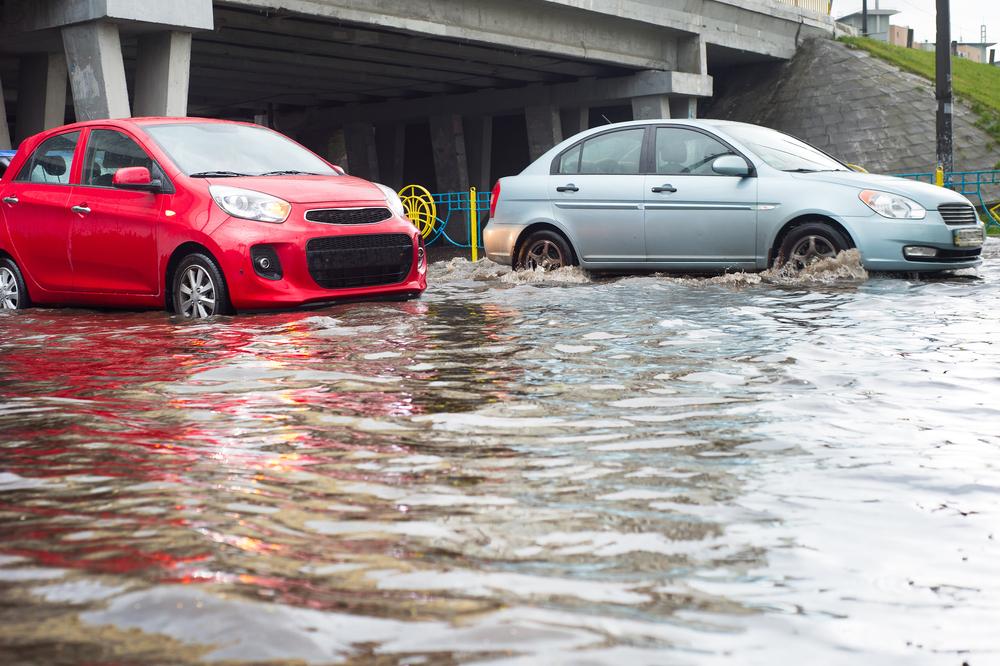
This isn't a good idea, unless you have a vehicle specifically designed for it. Not only do you have no visibility of the road surface (the state of the road, dips, a manhole cover that may have lifted, objects swept along by the water, etc.), but you also create waves that push water towards the edges of the road and cause turbulence.
What's more, your car risks stalling if water manages to get into your exhaust pipe and reach your engine. You'll then be stuck in the middle of the water. This kind of breakdown can require the engine to be replaced and cost several thousand euros.
Not to mention the electronic components of your car, which can be rendered unusable, and the damage to floor mats, seats, etc.
A water level of just 30 cm is sometimes enough to make a vehicle float (with its tyres no longer touching the ground), meaning you lose all control of it.
However, if you have no choice but to cross a flooded area, drive at reduced speed, stay if possible in the middle of the road (the water level there is usually lower) and keep a safe distance from the car in front of you.
Has your car been submerged while stationary?
Has the water reached the level of the exhaust pipe? In that case, don't start your vehicle while it's still in the water, but wait until the water has drained away.
If the submersion was more extensive with greater damage, notify your insurer and your assistance provider.
In other cases, you can try to start your vehicle, but if it fails, contact your assistance provider straight away.
Aquaplaning
Fortunately, severe weather doesn't often cause serious flooding. However, during heavy rain, the risk of aquaplaning is very high. To find out how to react, read our article "How to react in the event of aquaplaning".