At a glance
In very hot weather and/or during long stops in traffic jams, your engine may overheat. What should you do?
In very hot weather and/or during long stops in traffic jams, your engine may overheat.
What should you do?
The right habits to avoid engine overheating
Prevention
- As with any type of problem, prevention is better than cure. If you plan to drive many kilometres in hot weather (e.g. setting off on holiday) or risk being stuck in traffic jams under the same conditions, check or have checked (by your garage) the coolant level. While you're at it, also have the proper operation of your fan and thermostat checked, as well as the oil level.
- Do not set your air conditioning to maximum when it's very hot. Not only will this spare you a possible "thermal shock" when you leave the car, but it will also help avoid engine overheating. Simply set the vehicle's interior temperature a few degrees below the outside temperature (or ideally between 20 and 25°C) to feel cool. Keep in mind that using the air conditioning puts a lot of strain on your engine and makes you use more fuel.
- If your engine starts to heat up while driving: turn on your heater, blow hot air fully into the vehicle, and let the heat escape by opening the windows. This will help release some of the engine's high temperature through the car's interior.
Overheating while driving
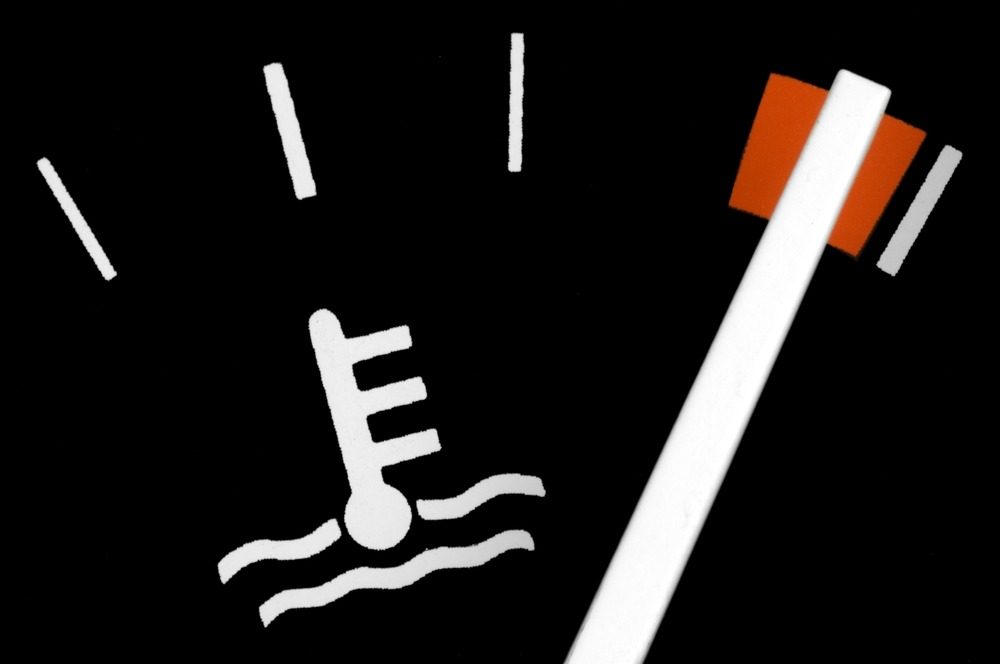 If you notice that the cooling system is no longer working properly and your engine shows signs of overheating (via the gauge on your dashboard):
- Pull over to the side of the road before the needle goes into the red and switch off the engine. Ignoring an overheating problem would only increase the risk of a major mechanical failure later on. Put on your fluorescent vest, set out your warning triangle to signal your presence, and open the bonnet.
- Wait for the engine to cool down (15 to 30 minutes!) before checking the coolant level. Warning: be very careful when checking. Only do so once your engine has had time to cool, as the cooling system is under pressure and you could be burned by the liquid escaping when you open it. Use a cloth to carefully unscrew the radiator cap and protect your arm (the pressure may cause a slight hissing sound when opening it).
- Fill the radiator with the appropriate coolant, run the engine for a few minutes, and check the level again.
- If the coolant level is very low, there may be a leak. Check or have checked (by your garage) the fittings and hoses, and replace them if necessary.
Does all this seem complicated? Remember that your assistance provider is also there to help you!
Also read: "Driving in extreme heat"
.
First published: 07/2015 - Updated: 07/2022