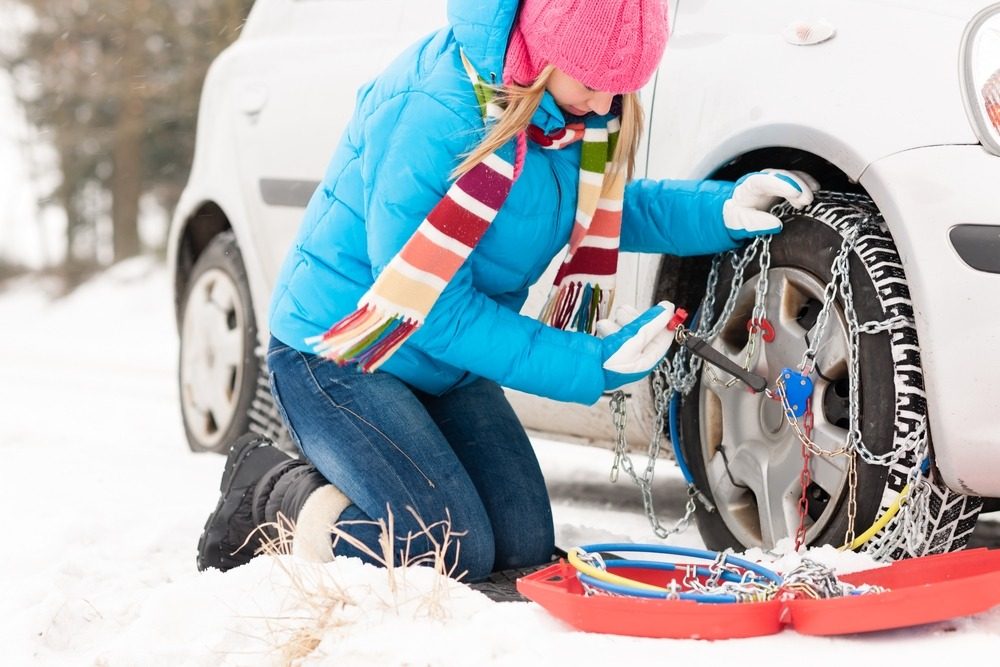
At a glance
Why fit snow chains to your vehicle?\ In which countries are they compulsory?\ What should you watch out for and how do you fit them?
Why fit snow chains to your vehicle?
In which countries are they compulsory?
How do you fit them and what should you watch out for?
Chains are sometimes compulsory
- In many countries, including typical winter sports destinations, using snow chains on certain roads (e.g. snow-covered mountain passes) is compulsory.
- The requirement is indicated by a specific road sign and applies to all types of vehicles, including 4x4s, motorhomes and lorries. In France, the requirement to carry this equipment during the winter period is indicated by specific road signs:
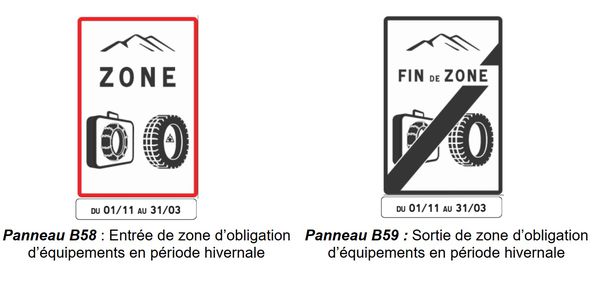
- Driving a vehicle fitted with winter tyres doesn't change the requirement to fit chains in any way. The rule applies to all types of vehicles.
Why chains?
- Snow chains let the vehicle grip the snow better. They're best fitted over winter tyres (in many countries, winter tyres are in fact compulsory for vehicles driving in winter conditions).
- The maximum speed for a car fitted with snow chains is 50 km/h. This maximum speed is usually stated on the snow chain packaging. It's therefore not permitted to drive faster than this. Watch out for roadside checks!
- Snow chains are not permitted in tunnels or where their use could damage the road surface.
A few tips and pieces of advice
- Snow chains are best fitted to the vehicle's drive wheels.
- Find out before you set off whether snow chains are required, so you're not caught out. Your ski resort's tourist office can tell you about the requirements for the area you're heading to. If you're not equipped, you may be forced to turn back and buy the necessary equipment at a car centre, garage or hardware shop further down the road.
- Be careful: if weather conditions let you reach your destination without needing to use chains, that might not be the case on your way back, and finding chains locally might not be easy!
- When buying or renting chains, make sure they're compatible with your type of tyres/car. Using chains on certain types of car can cause damage.
- Practise fitting the chains at home before you leave. That way, you'll be sure they fit your vehicle and you'll be able to fit them quickly and effectively as soon as it's compulsory to use them. Many drivers try fitting snow chains for the first time on the roadside, in often difficult conditions and with no experience whatsoever. You can imagine what happens next... Assistance call centres therefore receive dozens of calls every year from drivers stuck in the snow because they don't have chains or can't manage to fit them.
- Make sure the chains are within easy reach (for example, on top of your luggage), bring good (winter) work gloves and possibly work clothes. If necessary, use the driver's floor mat to kneel on while fitting them. A good torch (or head torch) will be essential if you're fitting them at dusk or in the dark.
- Remove the snow chains as soon as they're no longer needed. They could damage your tyres. Don't forget that they can't be used if they risk damaging the road surface.
- There are alternative systems, such as "snow socks". These give tyres better grip on a snowy road compared with driving on winter tyres alone, but they're not as effective as snow chains. Snow chains must therefore be fitted wherever they are compulsory.
In which countries are chains compulsory?
 The use of snow chains (whether compulsory or permitted) is indicated by a specific road sign (a blue sign showing a tyre fitted with a chain) placed along the road. The requirement can still apply outside the winter season depending on weather conditions!
 - The rule is in force, among other places, in the Alps (France, Switzerland, Italy, Austria), as well as in many other countries where driving on snow-covered roads can be dangerous or problematic, including Germany, the Czech Republic, Spain, Poland, etc.
- In Norway, Sweden and Finland, it's compulsory to carry snow chains in the vehicle so they can be fitted if road conditions require it.
- Failing to comply with the rule can expose the driver of the vehicle to (heavy) fines, or could make them liable in the event of an accident or collision.
- Note: In Belgium, the law allows snow chains on snowy or icy roads, but as in other countries, they cannot be used if they risk damaging the road surface. So there's no question of using chains in Belgium on roads where the snow is patchy or melting due to gritting or milder temperatures.
Also read the article: "Driving on a snowy road: a few tips"
You'll find several videos on YouTube explaining how to fit snow chains, including this one:
First published: 12.2014 - Updated: 01.2020