At a glance
How can you extend the life of your car battery and prevent breakdowns? Discover our tips for optimal maintenance.
Every motorist can sooner or later be faced with a flat car battery.
How can you avoid ending up with a "dead battery"?
A flat car battery: a common breakdown
Starting problems caused by a weak battery are among the most common car breakdowns, especially during the first cold spells of the year (temperatures around or below 0°C). They also very often occur after a weekend, a holiday period or a spell of inactivity during which the vehicle has been standing still or has driven very little.
Very high temperatures can also have a negative impact on your battery, speeding up its ageing. Driving during heatwaves can put a heavy strain on your battery's energy, for example due to the cooling system or air conditioning. It's therefore important to try to protect your car from extreme temperatures, with an average of around 20°C being ideal for long-term storage.
Symptoms of a weak battery
Knowing how to recognise the warning signs of a weak battery is essential in order to anticipate a possible breakdown and take preventive action. A battery showing signs of weakness won't supply your vehicle with the energy it needs to run properly. Here are some of the most common symptoms of a battery reaching the end of its life:
- Dimming headlights;
- Slow starting;
- No light on the dashboard;
- The battery warning light showing red on the dashboard;
- Various electrical issues (glitches, such as a radio switching off and back on, electric windows working more slowly than usual, or problems with other electrical equipment);
- Frequent need for recharging or a jump start;
- Swelling or leaking of the battery.
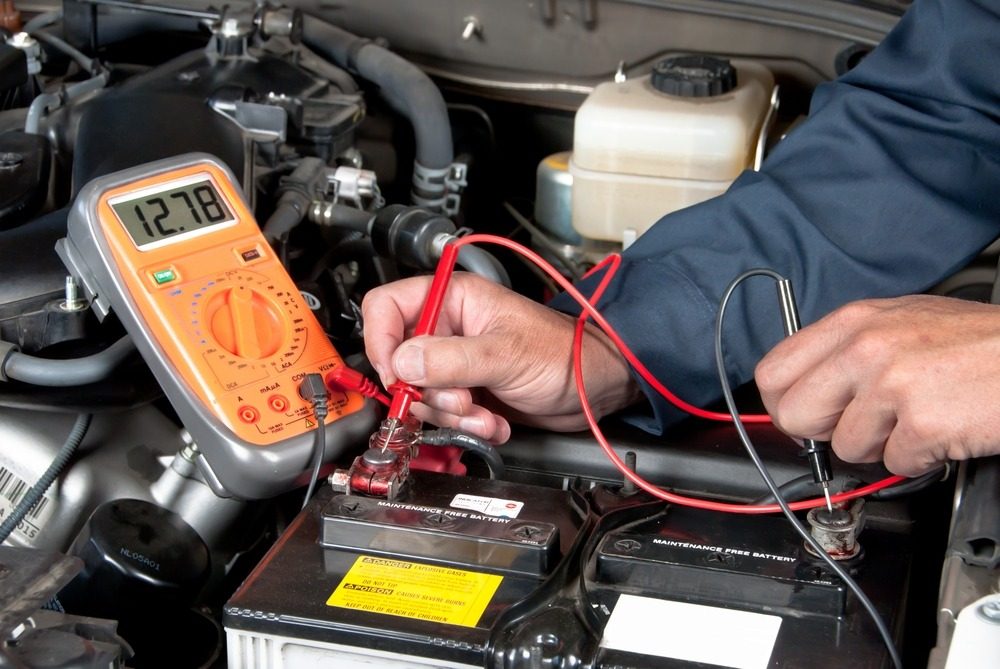
If you notice any of these symptoms, it's wise to take your vehicle to a professional to have the battery tested. Acting quickly can save you inconvenience and extra costs in the long run.
Our tips for avoiding a flat car battery
Here are a few tips to help you avoid a flat car battery:
Maintenance: a car battery has an average lifespan of 4 years (depending on the type and use of the vehicle). If it shows signs of weakness, it's best to have it checked and replaced in good time. It's always worth checking the battery (and the alternator) before the arrival of the coldest weather! Maintaining the battery terminals is also crucial for optimal conductivity and to prevent corrosion. A build-up of residue or corrosion on the terminals can hinder the battery's ability to supply electricity.
Driving distance: a battery can only recharge properly if the vehicle has been driven a sufficiently long distance (at least 25 km) without (too many) stops. Ideally, these kilometres should be covered on a motorway. Short trips of a few kilometres are not enough to properly recharge a car battery. Running the engine for a long time while stationary doesn't help recharge a battery weakened by the cold either, is bad for the environment, and can even result in a fine in some places!
Weather conditions: In winter, park the vehicle under cover if possible (in a garage) and shield it from the cold wind. If your vehicle is parked outside and temperatures are freezing, cover the bonnet with a blanket to protect it from the cold. An insulating floor covering (such as an insulation panel laid on the ground) will also limit the cold radiating up from frozen ground, or excessive heat in summer.
Checking the headlights: If they don't switch off automatically, make sure you turn off the headlights after parking the vehicle. The battery risks being completely flat after a long, cold night with the headlights left on.
Charging: overloading the battery through prolonged use of power-hungry components (air conditioning, games or electronic devices, etc.) can wear it out prematurely. Avoid using the air conditioning, radio or other electronic devices when the engine is off. Make sure the charger is compatible with your vehicle's battery type (lead-acid, AGM, lithium-ion, etc.).
The different types of car batteries
 Car batteries have evolved over time, meeting the growing needs of modern vehicles and environmental requirements. There are several types of battery, each with its own advantages and disadvantages:
- Lead-acid batteries: lead-acid batteries are among the oldest and most commonly used for cars. These batteries have proven themselves over time and are known for their reliability, particularly in standard road conditions.
- AGM (Absorbent Glass Mat) batteries: AGM batteries are an improved version of lead-acid batteries. They offer better resistance to vibration, a longer lifespan and the ability to withstand deep discharges without significant damage.
- Lithium-ion batteries: lithium-ion batteries are more recent to the automotive market and are mainly used for electric and hybrid vehicles. They are known for being lightweight and having a high energy capacity, allowing for greater range.
- 12v batteries: their main function is to provide the energy needed to start the engine and power the headlights, radio, air conditioning and other accessories when the engine is off.
- High-voltage batteries (EVs): these power the vehicle's electric motor, allowing the vehicle to move. They are designed to be charged and discharged regularly over a long period.
Understanding how a car battery works
In order to start without any problems, a combustion-engine vehicle generally needs a battery charged above 75%. Very low temperatures reduce the battery's power and prevent it from recharging properly. Older batteries that can no longer recharge properly are therefore the first to succumb to the onslaught of cold weather.
The alternator: guardian of the battery charge
The alternator plays a crucial role for the battery and the overall electrical system of a vehicle. After the engine has been restarted, the alternator takes over to supply electricity to the vehicle's various electrical systems (headlights, radio, air conditioning, etc.).
As well as powering the equipment, the alternator also recharges the battery to make up for the energy it used to start the engine and power the equipment while the engine was off.
If the alternator isn't working properly, the battery discharges quickly, as it has to power all the electrical systems on its own.
What should you do if your car struggles to start?
- If your vehicle's headlights don't switch on automatically: turn on your headlights for a few seconds before starting the engine to "wake up" the dormant battery. Remember to switch them off before turning the ignition.
- Switch off all power-hungry features when starting the vehicle (defrosting system, heating, ventilation, audio and video systems, etc.).
- Keep the clutch pedal pressed down and try to start the engine. Don't force your engine to start on the first attempt by holding it for a long time. It's better to make a few short, successive attempts.
- It's neither useful, nor even permitted for environmental reasons, to leave the engine running while stationary in order to "warm up" the car or recharge its battery. The best way to do that is to get moving.
Your car still refuses to start?
There are a few possible scenarios: either you manage to give your battery a boost of energy, or you'll need to have it replaced.
Warning: trying to start a vehicle with jump-start cables shouldn't be improvised! The electronic components of vehicle engines are increasingly sensitive and risk being damaged if the operation isn't carried out correctly or is done with unsuitable equipment!
So what should you do? Don't panic, especially if you have a breakdown assistance contract!
All you need to do is call your assistance provider (via their app or by phone), who will send a breakdown mechanic to you as quickly as possible. That way, you won't be left "waiting around in the cold" for long...
Also read:
- Starting your car in cold weather without any worries
- Breakdown assistance for electric cars
- The lifespan of electric bike and car batteries
- Dos and don'ts with an electric vehicle
First published: 11/2014 - Updated: 10/2023
Article written in collaboration with We are the words.