At a glance
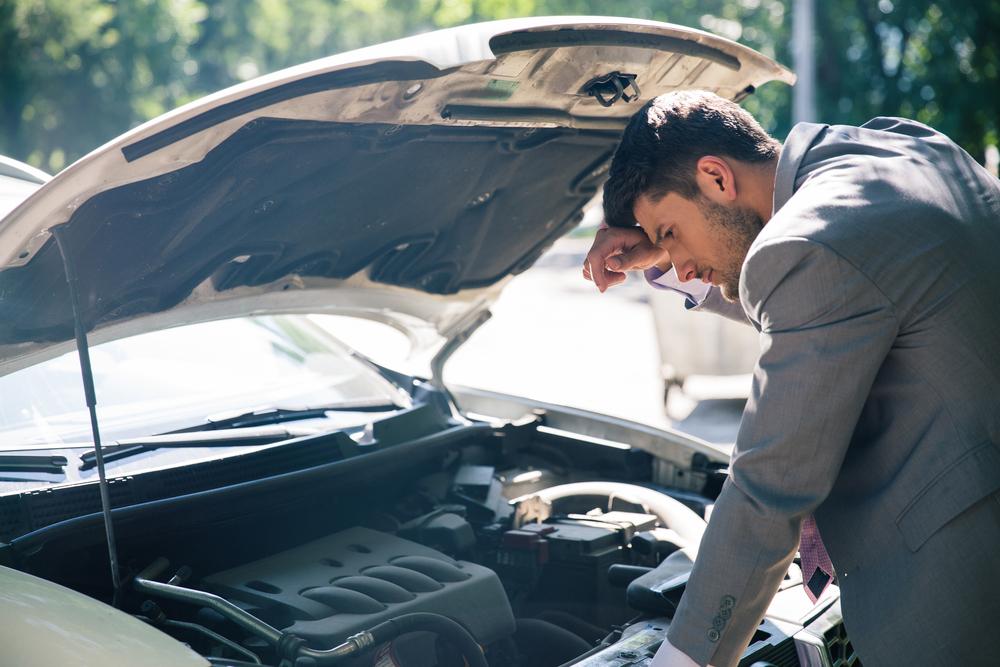
What are the most common car breakdowns? What tips can help you avoid them?
Every day, Redion steps in, in Belgium or abroad, to help customers deal with a breakdown that has left their vehicle stranded.
These assistance requests are more frequent during certain periods, such as holidays or when weather conditions are extreme (such as periods of frost or snow).
What are the most common car breakdowns? What tips can help you avoid them?
The top three car breakdowns
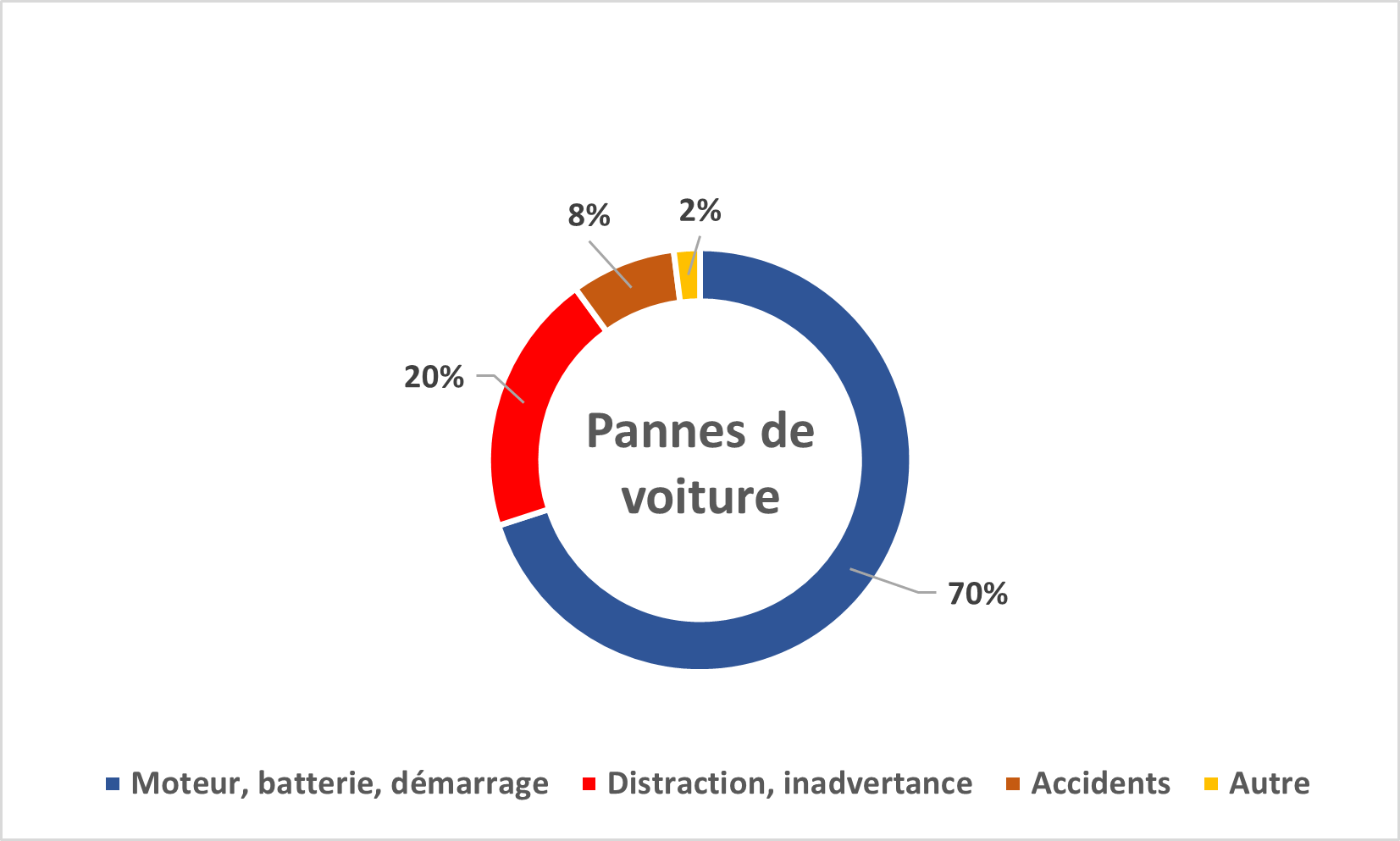
Statistics from Redion's assistance files consistently show the following top three causes requiring an assistance intervention:\
-
Engine, battery and starting problems: more than 70%.
-
Problems caused inadvertently, by distraction, a wrong manoeuvre, a chance event… (for example keys locked inside the vehicle, a fuel mix-up, a flat tyre): nearly 20%.
-
Road accidents: 8%.
A small percentage is also due to vandalism or another external cause.
Engine, starting or battery problems
Problems that leave a vehicle stranded most often involve the engine (a jammed or seized engine, an issue with the starter, spark plugs, carburettor, fuel supply, choke, etc.), as well as issues with the clutch, electrical circuits, fluids (coolant, oil level), and very often battery problems too.
Our tips:
- Regular maintenance of your vehicle is essential. Don't hesitate to have it done before setting off on a long journey too.
- Stop immediately if you notice your engine overheating.
The battery
Whether it's too old or too worn out, your battery can fail quickly. While frost is one of its biggest enemies, extreme heat can be too.
Our tips:
- Be especially careful with your battery. In many cases, a flat battery can be avoided. Read our tips here on avoiding a flat car battery.
- Remember to recharge your battery in good time if you're driving an electric vehicle.
Tyres: a frequent cause of breakdowns
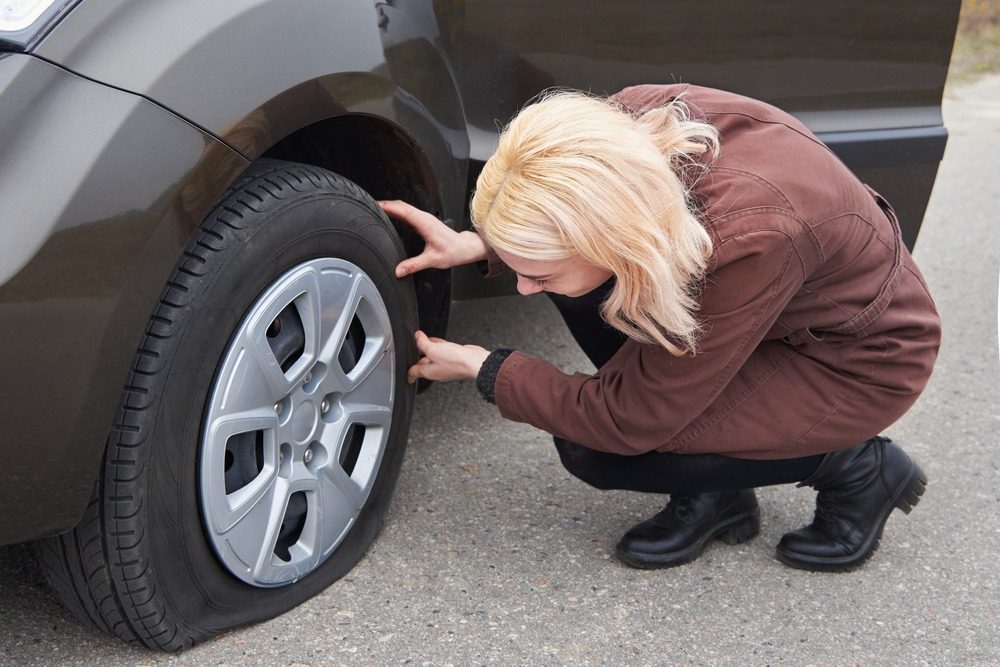 Many drivers tend to neglect checking their tyres. Yet tyres are essential for the vehicle's roadholding, and therefore for your safety and that of other road users.
Tyres must be properly inflated and must not be worn. Worn tyres combined with poor inflation can cause a tyre to burst or deflate when it hits an obstacle too hard (e.g. a kerb) or when the vehicle drives on a damaged road surface.
Also, don't forget that over long distances in high heat, tyres are prone to overheating.
Our tips:
- Regularly check the condition/wear of your tyres and their inflation.
- Also make sure to switch between summer and winter tyres at the right time.
- Don't hesitate to replace your tyres if they're too worn.
Fewer and fewer vehicles come with a spare wheel. Read our article on this topic: Do you have a spare wheel?
It isn't always easy to replace a tyre yourself (missing equipment, bolts that are too tight, etc.), but your assistance provider can quickly send a mechanic with the necessary tools and expertise.
Fuel
The following may seem surprising, but breakdowns caused by a fuel mix-up are fairly common, especially when travelling abroad. Such a mistake can quickly have disastrous consequences for your engine. It's therefore best to avoid it, and if it happens to you, to call your assistance provider.
Read more on this topic: Fuel mix-up: what should you do?.
A car you're not familiar with
Some problems are due to a moment of distraction, or to the fact that you're driving a vehicle you're not familiar with (a rental or lease car, a replacement car, a car borrowed from a friend or a third party, etc.).
Our tips:
Take the time to check the essential features and functions of a vehicle you're driving for the first time:
- What type of fuel does it use? How do you access the fuel tank?
- How do you operate the wipers, turn the headlights on and off, or open the boot or bonnet?
- Do the doors lock automatically?
- Where are the vehicle's documents kept?
- Where are the high-visibility vest(s), the warning triangle, the fire extinguisher, the first-aid kit, and so on?
- Are there any other technical particularities you need to know about the vehicle before setting off?
Accidents
Unfortunately, no one is immune to an accident. While most accidents are caused by chance circumstances, some causes can be avoided by following the rules in force (e.g. respecting traffic rules or speed limits, blood alcohol limits, etc.).
Know how to behave if you witness a road accident. You'll find our tips on this topic in the article A car accident: how should you react?
Another useful link: 12 questions to ask yourself before getting behind the wheel