At a glance
- Legal minimum age: 8 years old for a two-seater motorcycle, 3 years old for a moped or motorcycle under 125 cc equipped with a child restraint system;
- Mandatory equipment: an ECE-R22.05 approved helmet, gloves, a long jacket, trousers, and high-top shoes;
- Suitable seat: the child must be able to place their feet on the footrests and have access to handholds;
- Adapt your riding style (reduced speed, greater anticipation, frequent stops).
Do you dream of sharing a two-wheeled ride with your child, but you're not sure from what age it is allowed or what precautions to take? The question is legitimate: Belgian regulations strictly govern the transport of a minor passenger on a motorcycle to ensure both their safety and that of the rider.
The legal age for transporting a child on a motorcycle
The legal age for transporting a child on a motorcycle depends on the type of vehicle: 8 years old for a type-approved two-seater motorcycle, and 3 years old for a moped or motorcycle under 125 cc, subject to specific conditions.
What is the legal age for a child passenger on a motorcycle in Belgium?
Regulations for motorcycles over 125 cc
In Belgium, the Highway Code distinguishes between motorcycles over 125 cc and mopeds or lightweight motorcycles. Regarding motorcycles over 125 cc that are approved to carry a passenger, the minimum age is 8 full years old. The passenger must be able to reach the footrests and sit properly on the vehicle.
The rider must also hold the licence appropriate for the power of the motorcycle, and the motorcycle must be equipped with a passenger seat and footrests. If the motorcycle is not approved for two people, transporting a child is prohibited regardless of age.
Practical tip: before every ride, check that the footrests are at the correct height so that your child can rest their feet comfortably. This improves stability and reduces fatigue on long journeys.
Special case of mopeds and lightweight motorcycles (< 125 cc)
According to https://www.codedelaroute.be/fr/modifications-du-code-de-la-route, class="fai-ChatInputEntity__text ___6erqso0 fyind8e f1tx3yz7 f1deo86v f1eh06m1 f1iescvh">https://www.codedelaroute.be/fr/modifications-du-code-de-la-route), children aged 3 years and older may be transported on mopeds and motorcycles under 125 cc, provided that several conditions are met:
- The lightweight moped must be approved for two people. Without this approval, carrying a passenger remains prohibited regardless of age;
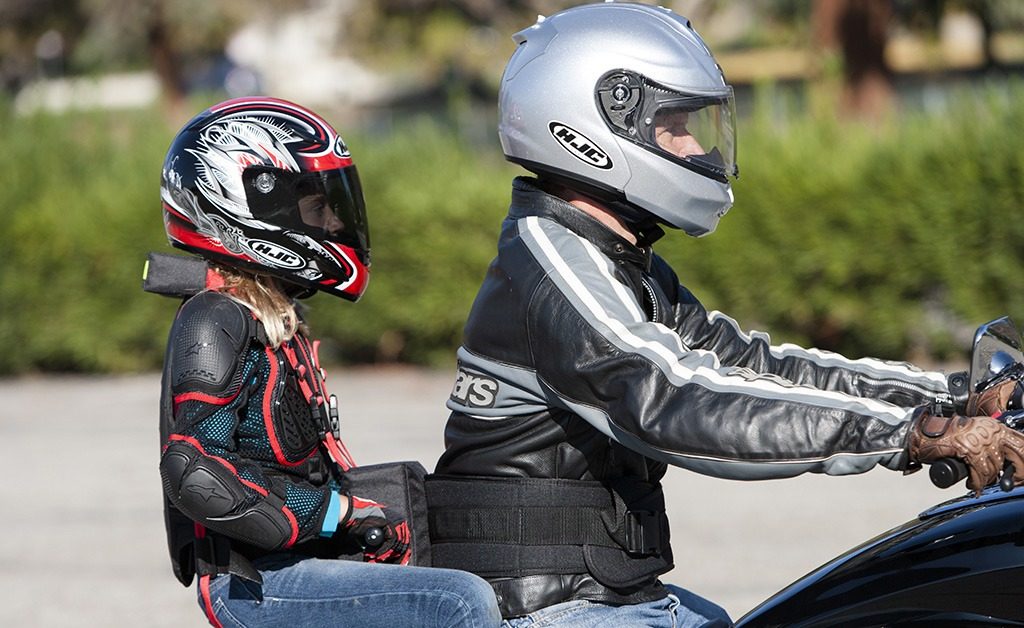
- The child must wear complete protective gear. This includes an approved helmet suitable for their size, gloves, a long-sleeved jacket, trousers, and ankle-covering footwear;
- A specific child seat must be installed. It allows the passenger to hold onto handles positioned at chest height and place their feet on suitable footrests.
In practice, many parents choose a special child motorcycle seat with a backrest, adjustable footrests, and large grab handles. Safety then depends on proper seating, an appropriate backrest, accessible handles, and the presence of an adult rider in front. However, it is strongly recommended to limit speed to 30 km/h in urban areas and avoid roads with heavy traffic.
Who can ride as a passenger, and on which vehicle?
- Under 3 years old: prohibited on both mopeds/motorcycles under 125 cc and motorcycles over 125 cc.
- 3 to 7 years old: permitted with an approved child seat and full protective equipment on mopeds and motorcycles under 125 cc; prohibited on motorcycles over 125 cc.
- 8 years old and above: permitted with full protective equipment on both mopeds and motorcycles under 125 cc and motorcycles over 125 cc.
What about sidecars?
The rules for transporting a child in a sidecar are identical to those described above. From the age of 8, the child must wear a seat belt. Before that age, they must be securely fastened using a suitable restraint system.
As a general rule, and despite the regulations in force, keep in mind that transporting a child on a motorcycle or moped always involves risks for the child.
Mandatory safety equipment for a child on a motorcycle
The helmet: essential protection
Wearing a helmet is not only a legal obligation; it is the primary protection against head injuries. In Belgium, the helmet must comply with the ECE-R22.05 standard (or ECE-R22.06 where applicable). It must fit the child's head circumference perfectly: neither too loose nor too tight, to avoid pressure points that could cause neck pain.
Tip: have your child try on the helmet before purchasing. A helmet that moves when they shake their head is unsuitable. Always favour models with adjustable internal padding.
Read our article /blog/bien-choisir-casque-moto/ for more advice.
Essential personal protective equipment
Beyond the helmet, personal protective equipment includes several essential items:
- Gloves. They protect the hands in the event of a slide and should be made of leather or abrasion-resistant synthetic material. Have your child try them on before purchase to ensure a good grip;
- Jacket. It should include a removable lining and protective inserts at the elbows and shoulders, preferably in high-resistance textile or leather. A downsized adult jacket does not provide the same guarantees: choose a certified children's model;
- Trousers. Similar in design to the jacket, with reinforcements at the knees and hips. They provide protection against abrasion in the event of a fall;
- Footwear. Boots or ankle-covering riding shoes are essential. They provide good grip on the footrests and protect the joints in case of impact.
Back protector: worth considering
A back protector is also strongly recommended, even though it is not legally required. It provides significant additional protection against impacts to the spine.
Seats and accessories: how to choose the right setup?
The choice of child seat directly affects the comfort and safety of the passenger. Whatever model you choose, always check several points before purchasing.
- The seat must be approved and compatible with your motorcycle frame;
- The handles should be positioned at the child's chest height so they can hold on firmly without fully extending their arms;
- The footrests should allow a slight bend in the knees (around 10 to 15°) to prevent premature fatigue on long rides.
When installing the seat, follow the manufacturer's instructions and check the strength of all mounting points before every departure.
Important reminder: never attach the child directly to the rider or motorcycle using a rope or strap. In the event of a fall, this type of restraint can cause serious injuries by trapping the passenger against the vehicle.
Practical tips for a smooth ride with your child
Preparing the child and the motorcycle before departure
Preparation begins well before starting the engine. Explain the basic rules to your child: stay calm, hold on to the handles, avoid sudden movements, and report any discomfort. A few minutes of discussion helps build mutual trust and reduce anxiety, especially during first rides.
Help the child become familiar with the motorcycle by starting with short trips in a calm, safe environment before moving on to longer rides in traffic.
Then check the condition of the motorcycle:
- tyre pressure (according to the manufacturer's recommendations);
- oil level;
- brake and lighting operation;
- seat and footrest mounting points.
Also prepare a lightweight emergency kit containing a first-aid kit, a charged mobile phone with the general emergency number (112), your motorcycle assistance number, and an emergency blanket in case of prolonged immobilisation.
Dress your child in layers: a thermal base layer if the weather is cool, followed by the protective jacket and trousers. Even on a pleasant day, the wind can quickly lower the perceived temperature, so always carry an extra layer in the motorcycle storage compartment.
The rider's driving style
When carrying a child passenger, adapting your riding style is essential. Reduce your average speed by 10 to 20% compared with solo riding, especially in cities and on winding roads. This margin allows you to anticipate the child's reactions, as they may lean or move unexpectedly.
Adopt a relaxed riding posture: elbows slightly bent, eyes looking far ahead, and hands relaxed on the handlebars. Tension is immediately transmitted to the passenger and increases their feeling of insecurity. In bends, favour a wide line and lean progressively. Avoid harsh braking by using engine braking combined with gentle pressure on the rear brake to stabilise the motorcycle.
When stopping, have your child dismount on the side opposite the traffic. If the stop is prolonged, take the opportunity to ensure that their helmet is still correctly positioned.
In summary: a safe motorcycle journey with a child depends as much on thorough preparation as on calm, careful riding and good communication.
Motorcycle insurance: what Belgian law says
Civil liability towards the passenger
Before any trip with a child, it is advisable to review your motorcycle insurance policy and check the guarantees included: passenger cover, breakdown or accident assistance, legal protection, and more. Coverage varies considerably between insurers.
The Motorbike formula from Europ Assistance includes breakdown assistance in the event of an accident or flat tyre, towing to the garage of your choice, physiotherapy after an accident, as well as legal and psychological support following an accident. Consult the general terms and conditions on europ-assistance.be to understand the exact scope of cover before subscribing.
Consequences of failing to comply with regulations
Failing to comply with age requirements, equipment obligations, or seat installation rules exposes the rider to penalties. Administratively, a fine may be imposed depending on the seriousness of the offence. In cases of repeated violations, suspension of the driving licence is possible. If an accident occurs resulting in serious injury or death, the rider's civil and criminal liability may be engaged, with potentially severe consequences.
Beyond legal sanctions, the human consequences can be irreversible: a child's head injury may lead to permanent cognitive or motor impairments, or even worse. Strict compliance with regulations is therefore not only a legal obligation but above all a duty to protect the most vulnerable.
FAQ about age requirements and transporting children on motorcycles in Belgium
In Belgium, a child may ride as a passenger on a two-seater motorcycle from 8 full years of age, provided that the motorcycle is approved for two people and that the child wears the mandatory protective equipment (approved helmet, gloves, long-sleeved jacket, trousers, and ankle-covering footwear). This rule stems from Article 35 of the Belgian Highway Code.
Before that age, transport is only permitted on a lightweight moped or motorcycle under 125 cc equipped with an appropriate child seat, from the age of 3.
Want to insure your motorcycle for worry-free adventures with your children?
Discover the Motorbike motorcycle insurance offer from Europ Assistance!
Note: the legal provisions referred to are those in force at the time of publication of this article, namely 10/09/2026.