At a glance
Fog causes hundreds of road accidents every year. How do you correctly use your vehicle's fog lights?
We're frequently faced with changing weather conditions that affect how we drive, such as heavy rain, storms, snow or even flooded roads. The same goes for fog, which can sometimes settle in insidiously and quickly on certain roads or in certain circumstances. These extreme weather conditions cause hundreds of accidents every year, some of them fatal.
So it's essential to use your vehicle's fog lights correctly.
What fog lights are for
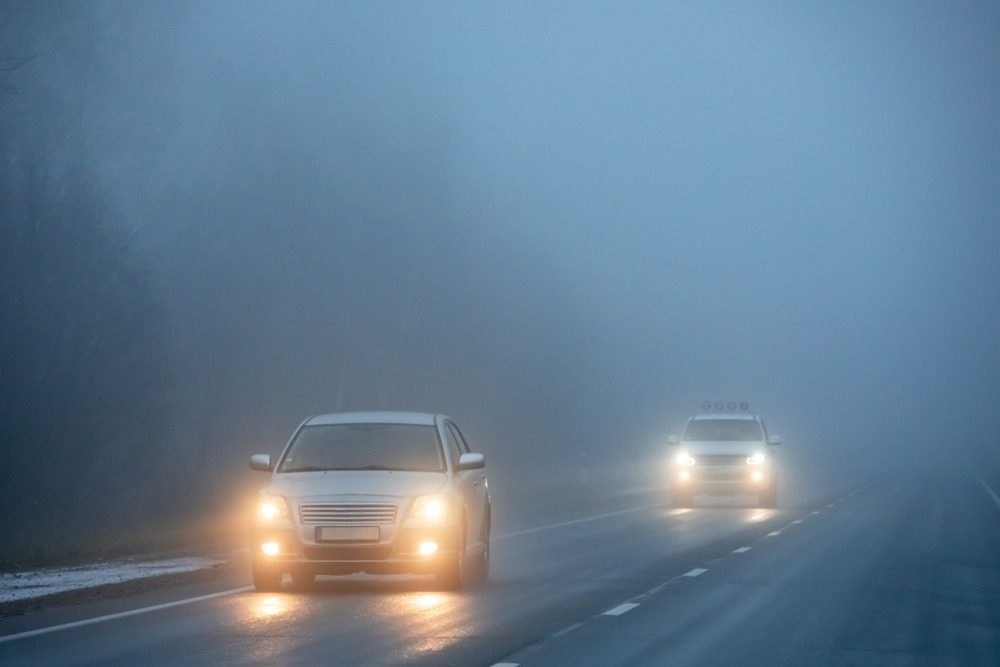
In thick fog, optical effects can reduce your visibility and affect how you drive. Fog lights (also called fog lamps) are designed to improve safety, helping you see better and be seen better by other road users.
Fog lights reduce the halo effect around light sources (such as other cars' headlights), reduce the veiling effect (where obstacles become blurry) and prevent the road and certain obstacles from "visually disappearing".
Using dipped headlights alone isn't enough to counter these optical effects.
Your vehicle's fog lights
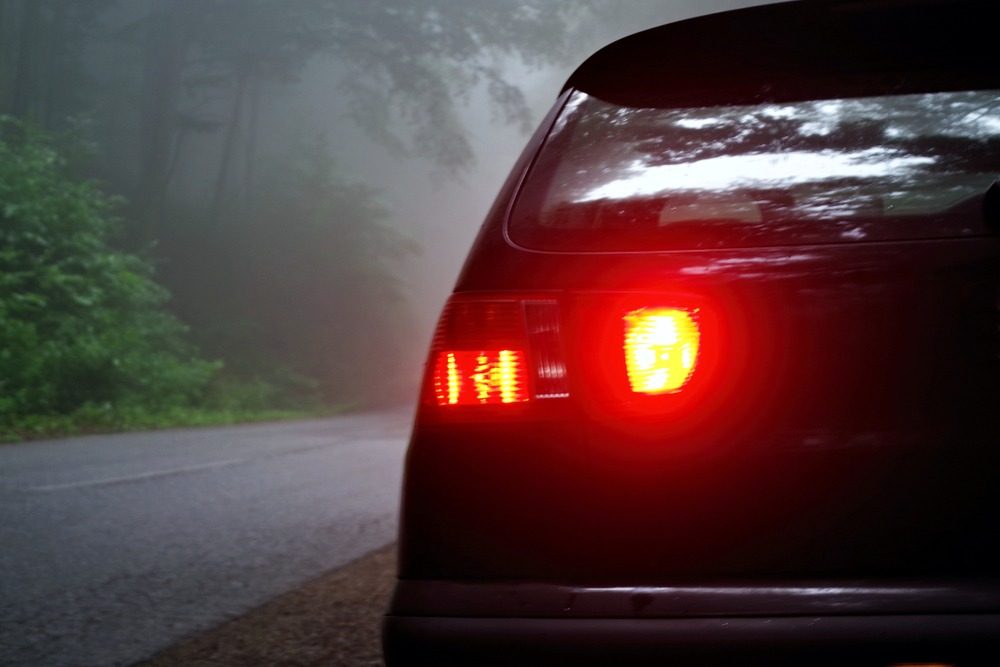 A vehicle must be fitted with 1 or 2 red fog lights at the rear. These lights must be fitted to every car, caravan, trailer, and so on.
More and more cars are also fitted with fog lights at the front. These, however, aren't mandatory.
Fog lights can replace dipped headlights or full headlights, or be switched on at the same time as these lights. The rules governing the use of fog lights are set out in article 30 of the Highway Code.
Which lights should you use in fog?
Dipped headlights: as soon as visibility is poor, you should switch on your dipped headlights. This is the case when there isn't enough light (as it starts to get dark), as well as in fog, rain or snow. In some countries, dipped headlights must be switched on at all times, regardless of the weather.
See the article "Should you drive with your dipped headlights on?" on this topic.
Fog lights: dipped headlights and fog lights must be switched on when visibility is very poor (less than 100m), such as in thick fog. Front fog lights help light up the edge and centre of the road better. Rear fog lights help you be seen by the drivers behind you.
Tip: on motorways, the 100m distance is the distance between two lighting posts; on secondary roads, it's the distance between 4 posts.
Once visibility improves again, you're required to switch off your fog lights so as not to dazzle other drivers.
If visibility drops below 50 metres, not only must you switch on your fog lights, but you must also adjust your speed (to a maximum of 50km/h) and increase your following distance. In this case, don't risk overtaking other road users. Dense fog hides obstacles, stops you from being seen, and distorts your sense of distance. Stay on your side of the road and follow the traffic ahead of you.
Be especially careful in places where dense fog can settle quickly (e.g. along country roads, wetlands or wooded areas).
Avoid setting off if you risk running into "pea soup" fog.
Also beware of freezing fog, which combines the dangers of fog with those of a slippery road! In this case, be especially careful and cautious.
What not to do
- Never switch on your full headlights ("main beam") in fog! They would create a "white wall" in front of you. Full headlights shine further and higher, while fog light beams are aimed at the road surface.
- Don't switch on your rear fog lights in heavy rain: they risk dazzling the cars behind you.
What about in snowfall?
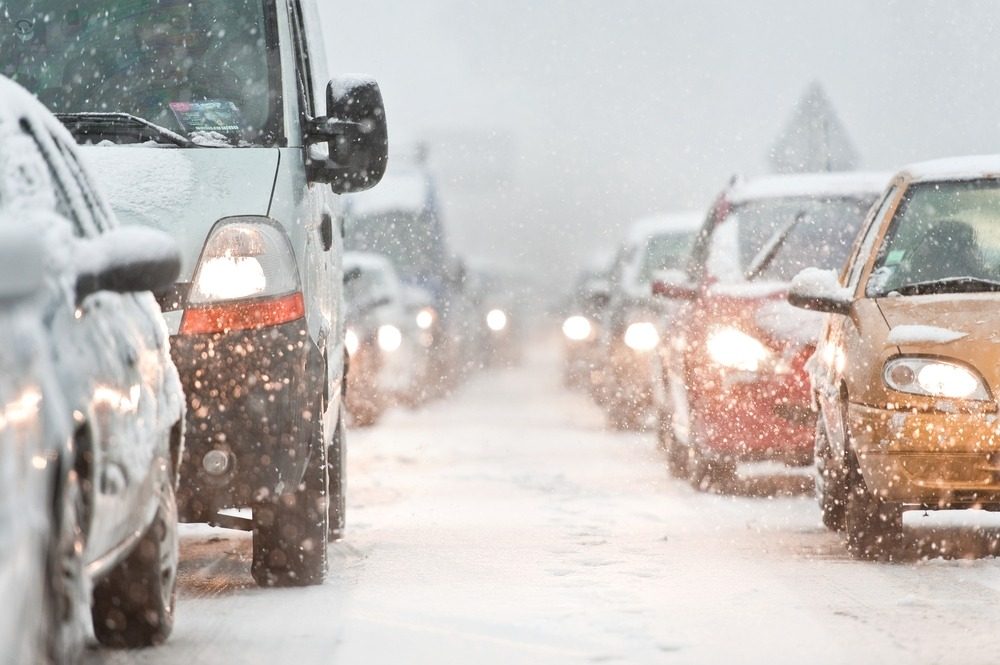
Heavy snowfall can create a kind of "curtain" or "veil" that greatly reduces your visibility. In this case, switch on your (front and) rear fog lights in addition to your dipped headlights so you can see better and be seen better by other road users.
One last tip: In unstable weather, check the weather forecast before setting off.