At a glance
How do you choose one? How should you load it? And how does a roof box affect your vehicle's handling?
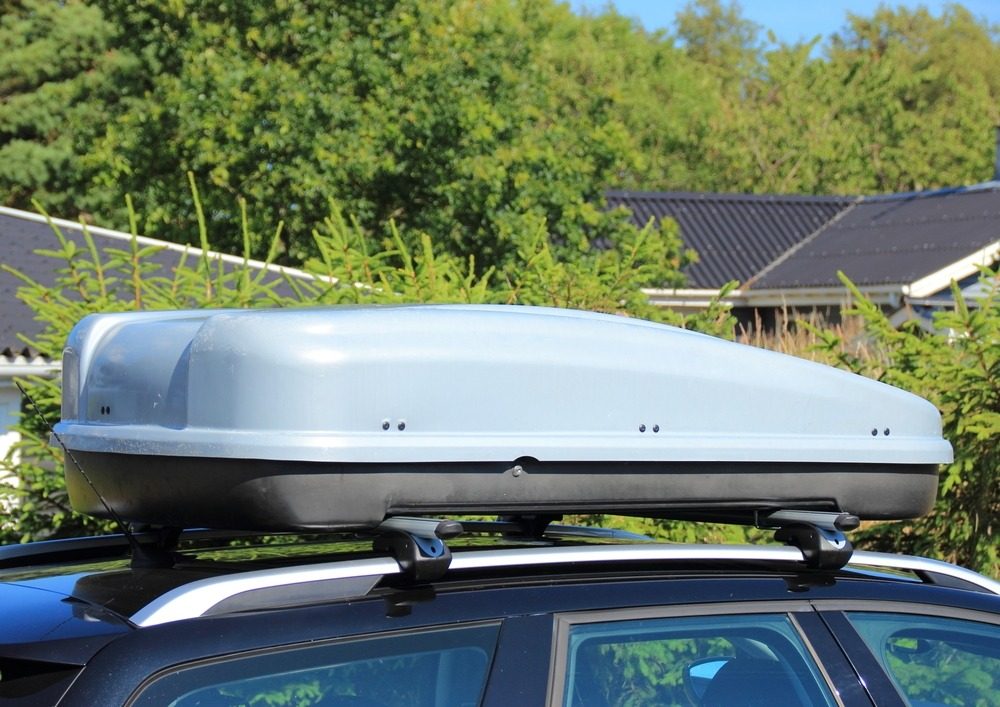
When you go on holiday by car and need to bring a lot of luggage or equipment (such as ski gear), a roof box offers a great solution.
Why use a roof box?
- It lets you carry luggage that takes up a lot of space and would quickly fill up the car's boot (e.g. ski equipment).
- The size of certain items of luggage means they don't fit easily in the car's boot, whereas they fit into a roof box without any trouble.
- A roof box can be multi-purpose and come in handy for winter sports holidays as much as for beach holidays, camping, etc.
Choosing a roof box
- Before buying a roof box, take into account the type of car it will be fitted to (check the technical details in the vehicle's manual if needed), both for its size and mounting, and for how it opens (side opening or rear opening).
- Make sure you buy a box that meets safety standards.
- Ask yourself how you plan to use it: is it for carrying ski equipment, specific items, camping gear, or for general use? Your answer will help you choose a short or long, soft or hard-shell model.
- Do you want to carry other items strapped to the roof or boot of your car (e.g. a windsurf board, bicycles, etc.)?
- What is the weight of the items you want to carry in your roof box? Check the instructions for the box you're buying to see the maximum weight it can hold (usually a maximum of 50 kg).
Loading it up
Be sure to load the box properly: your safety, and that of other road users, depends on it.
- The weight of the luggage should be evenly distributed.
- The luggage must not be able to slide or shift inside the box: it's therefore advisable to secure it well or wedge it in place with other items, clothing or towels.
- Only put lightweight items in the roof box, and keep heavier items for the car's boot, to keep your vehicle's centre of gravity as low as possible.
- Place the heaviest items you want to carry in the roof box as close as possible to the mounting brackets/bars.
- Make sure the box is properly secured and firmly closed.
- Wrap any items that could damage the inside of the box, and use waterproof plastic bags to protect items that must stay dry.
- During your stay: make sure you empty the box so you don't lose valuable items in case of theft.
Roof boxes and driving
- Don't forget that your car is raised by around 60 cm because of the roof box (watch out for low tunnels, underground car parks, toll booths, petrol stations, etc.)! Tip: stick a clearly visible label near your dashboard to remind you that you're driving with a roof box fitted.
- A roof box changes your vehicle's aerodynamics. It will react differently to (cross)winds, braking (which takes longer), corners... So stay cautious while driving and factor this in when planning your route (e.g. avoid small winding roads as much as possible). It's advisable not to drive faster than 130 km/h (provided local laws and road conditions allow it).
- Check your roof box whenever you stop for a break, and generally, every time you set off.
- A roof box will make you use more fuel. Remove it once you no longer need it.
- Also think about the other things that keep you safe on the road, such as preparing your vehicle, driving on snowy roads, (winter) tyres, using snow chains, mandatory equipment, weather conditions, etc.
Bringing bikes along? Then read our article "Choosing the best bike rack".
First published: 01/2015 - Updated: 01/2022