At a glance
How do you choose the bike rack best suited to your car and your cycling trips? What points should you pay attention to?
During lockdown periods, cycling became very popular. Why not bring your (electric) bikes along when travelling by car? But how do you transport them? And what's the best system for electric bikes?
In this article, our blogger Alain Dierckx gives an overview of the different transport options.
He also gives some practical tips for buying and using a bike rack.
How do you transport bikes by car?
If you're travelling by car and want to bring your bikes along, a bike rack is the ideal solution. There are four types of bike racks. Each has its advantages and disadvantages. If you want to buy one, you'll need to work out which is the best choice for you. Your choice will also depend on the type of car you have and whether or not it has a tow bar/ball. The price of a bike rack ranges from €40 to €500 depending on the solution chosen and any accessories.
1. A bike rack in the boot

Of course, you can simply fold down the back seats and put your bike in the boot. This isn't always recommended, as it can damage your bike (and your car) and reduce visibility.
Certain types of bike racks can also be fixed inside the boot. This is probably the least well-known system. It consists of a bar with fittings that are screwed to the floor of your boot. You attach your bike to it so that it doesn't slide around. Obviously, this system is only possible in vehicles with enough space in the boot. The obvious downside of this method is that the bar and bike(s) take up a lot of room in your boot, leaving less or no space for luggage (and passengers).
2. A tow bar bike rack
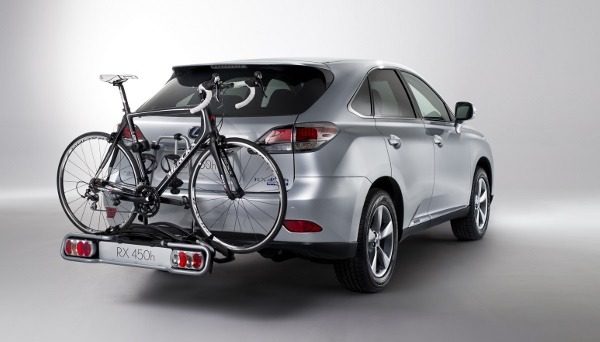
If your car is fitted with a tow ball or tow bar, you can choose to attach a bike rack to it. This system can be used on any type of car, since the bike rack isn't mounted on the car itself. The bikes are therefore located behind your vehicle. This does mean, however, that the total length of your vehicle increases considerably. Keep this in mind when parking or reversing.
This type of bike rack lets you carry one to four bikes. It's very important not to exceed the maximum load of your tow bar. This weight (in kilograms) is indicated on your tow bar. To work out the correct weight, you need to add up the weight of the bikes and the weight of the bike rack. Using a tow bar bike rack is a very practical solution, but it's also usually the most expensive.
3. A bike rack on the car's tailgate
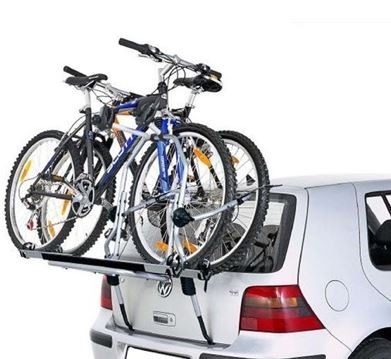
Another option is a bike rack that mounts on the back door of your car. The advantage is that you don't need a tow bar. It's also a cheaper and quicker solution to install. If you choose this type, keep in mind that you won't be able to open your boot.
There are also bike racks for motorhomes. They simply attach to the rear wall of the motorhome. Since electric bikes have become very popular nowadays and are heavier than regular bikes, manufacturers have reinforced this type of bike rack.
4. A roof-mounted bike rack
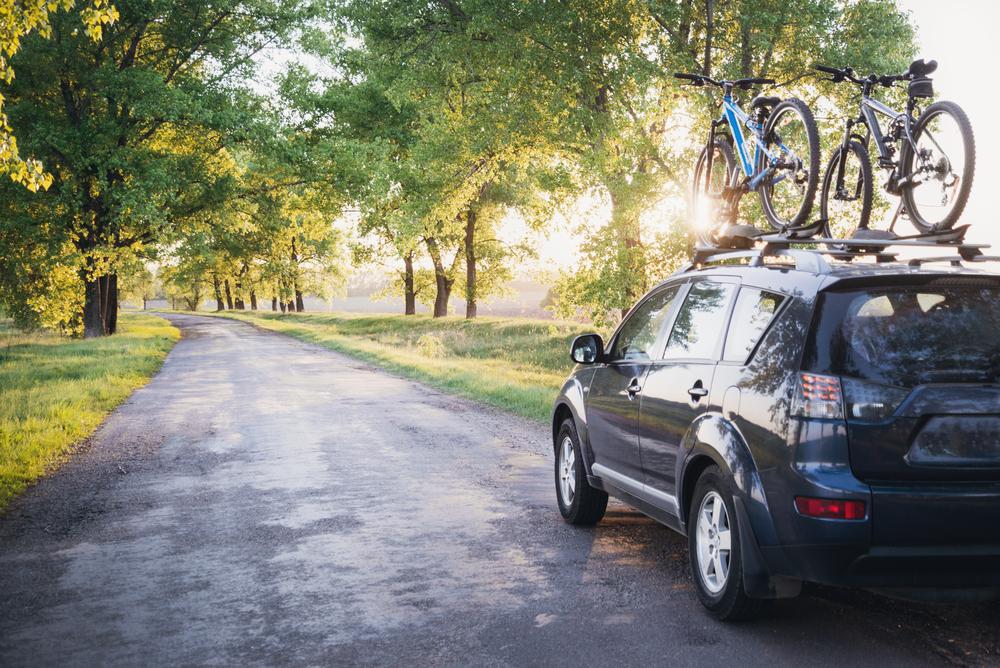
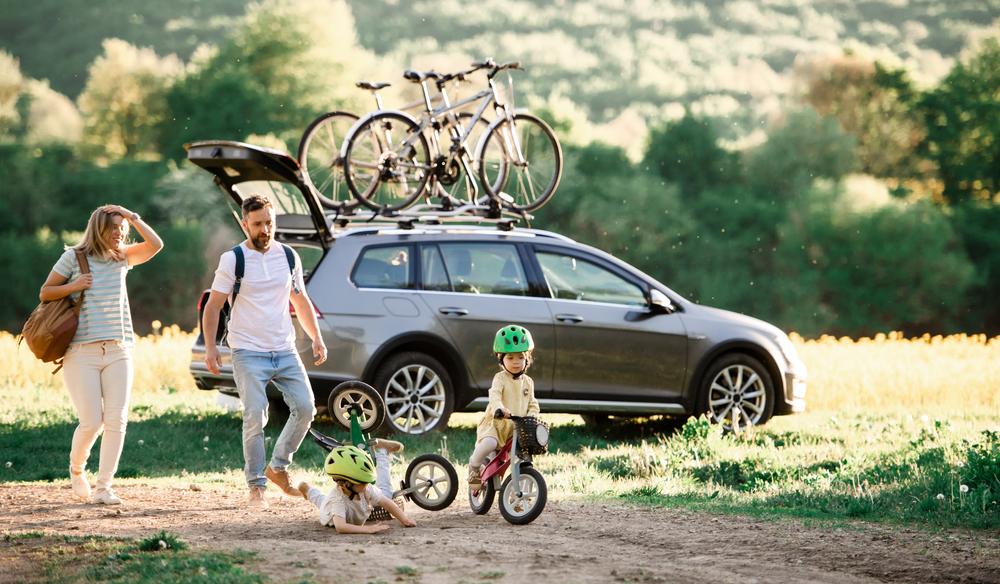
This type of bike rack, called a roof rack, is mounted on the car's roof rails. The advantage over tow bar or tailgate systems is that you have a better view of what's happening behind the vehicle. However, there are also drawbacks. Fuel consumption, for example, is higher due to the increased air resistance caused by the load on the roof. And of course, you have to lift the bikes up high to fix them to the roof.
Are the bike racks above suitable for all types of bicycles?
No, not really. Only a tow bar bike rack is recommended for electric bikes, because of their higher weight. For mountain bikes, road bikes and ordinary bikes, you can choose between the other systems.
Specific accessories are also available to make life easier. Some manufacturers provide ramps so you don't have to lift the bike. This is especially useful for electric bikes, as they are much heavier than an ordinary bike. For mountain bikes, there are bike racks on the market with extra-wide ramps designed for wider tyres.
What does the highway code say?
In the highway code, more specifically in articles 45 and 46, you'll find more information on the rules to follow when using bike racks. For example, it specifies that the maximum width of your car, including bikes and bike rack, is 2.55 metres.
The horizontal distance between the rear of the load and the rear of the vehicle must not exceed 1 metre. Finally, the bike rack must also be fitted with the necessary lighting if your car's lights aren't visible through the bikes and bike rack, which is usually the case.
10 tips for using a bike rack
- Choose a bike rack whose parts that touch your car are covered in rubber to avoid any damage.
- Opt for a bike rack model that can be folded away compactly.
- Choose a 13-pin connection so that not only indicators, tail lights and brake lights work, but also reversing lights and fog lights (with a 7-pin connection, these last two won't work).
- Test the loaded bike rack on a short trip. Remember that a load on your car can affect your vehicle's road handling, especially in strong wind.
- Before setting off, and along the way, make sure everything is properly secured and check that the indicators and lights are working.
- Remove child seats, panniers and, if necessary, the battery from the bikes to reduce weight.
- Invest in a protective cover to shield your bike(s) from the weather.
- Protect your bikes against theft by locking the bike rack and the bikes themselves.
- At the rear, the bike rack may stick out by a maximum of one metre.
- Check the clearance height at toll booths along your route, especially if you've chosen a roof rack. Do the same when entering a car park or garage.
Planning some cycling trips and looking for peace of mind?
Discover BIKE, Redion's bike and electric bike insurance.