At a glance
Here are the most effective tips for avoiding having your bike stolen and keeping it well protected at all times.
The coronavirus crisis had the positive effect of leading more and more people to choose cycling to get around, whether for leisure, school or work trips.
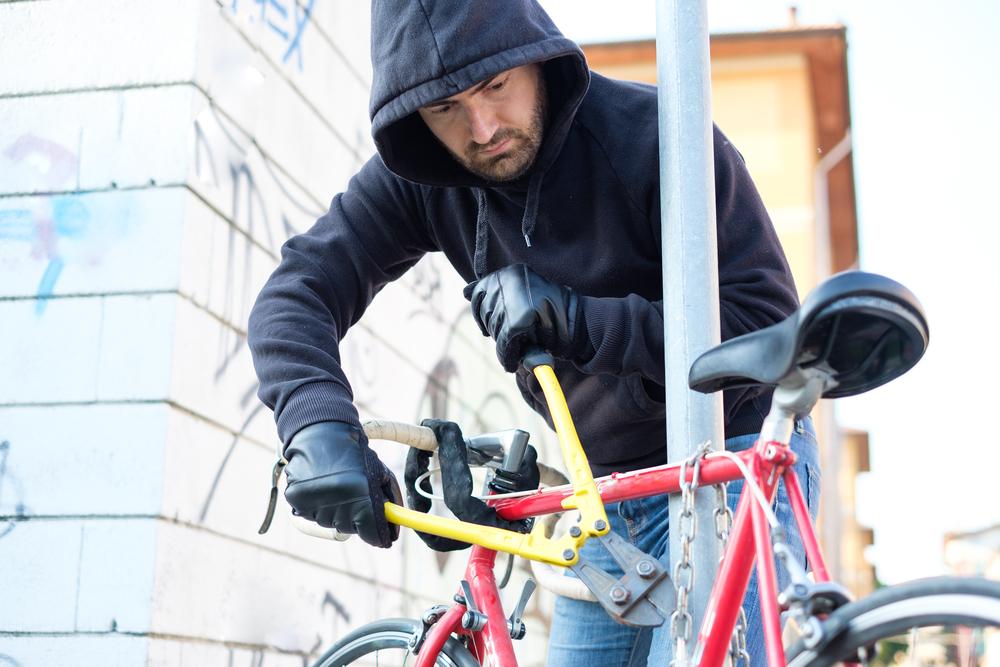
However, hundreds of bicycles are stolen every day in our country, and this number keeps rising, especially in cities. While a thief sometimes only uses the stolen bike temporarily, abandoning it a few kilometres further on, in 90% of cases the theft is permanent and the bike is never found.
(For information: from 2022, anyone caught stealing (or attempting to steal) a bike is liable to an immediate fine of €250.)
So what could be more unpleasant than discovering that your favourite means of getting around for short trips has disappeared? Not to mention the financial loss involved in buying a new bike…
However, it's possible to protect yourself as much as possible against bike theft, or theft of any other light means of transport (e.g. hoverboard, segway, electric scooter…), or to be able to track and identify it if it's found.
A few good tips
1- The right lock
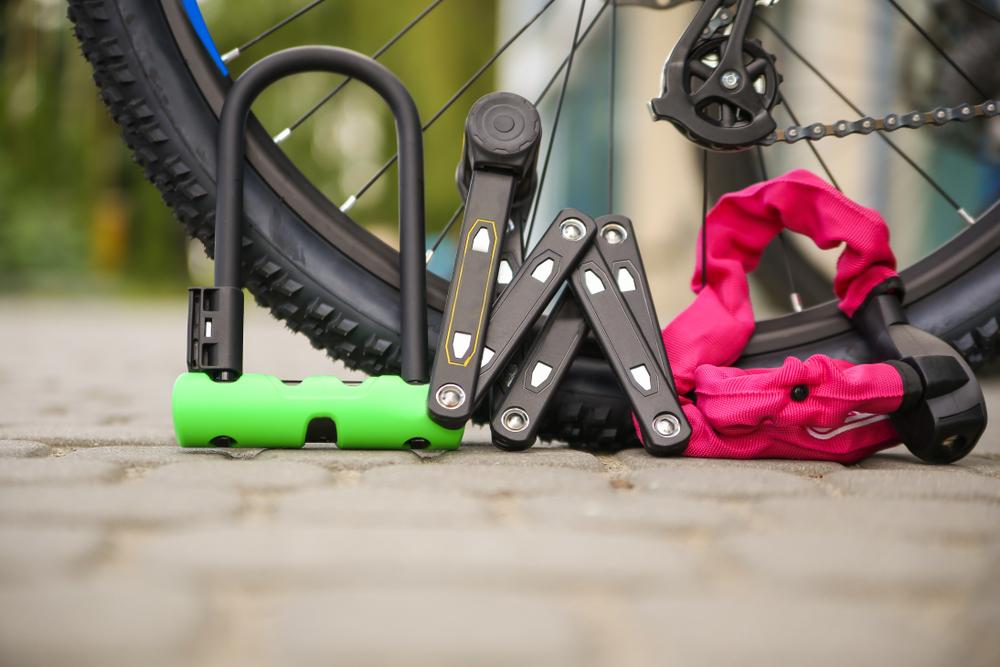 Use a good, sturdy lock to secure your bike whenever you leave it somewhere. Locks with a chain diameter of less than 10mm should be avoided, as a small pair of bolt cutters is enough to cut through them. It's better to invest in a solid U-shaped lock or a folding lock. The latter makes it easier to secure the frame to a fixed point. Favour certified locks (such as those meeting the ART or Sold standard).
Avoid locking only the wheel or the lower part of the bike — use the lock to secure the frame or a higher part of the bike.
It goes without saying that two locks will be more effective than one.
Always attach your bike to a fixed anchor point, not just to itself.
Take with you any accessories that could easily be stolen, and don't tempt thieves.
2- The right spot
If you lock your bike outside, do so somewhere with a lot of foot traffic (even though this tip offers no absolute guarantee). Avoid isolated spots where a thief could act unseen.
Lock your bike to the racks provided for that purpose, or in a bike parking area.
Using street furniture (e.g. a lamp post or street sign) or private furniture to secure your bike isn't always allowed. In that case, there's a real risk the police will fine you or have the bike removed. The same applies if your bike blocks the way (or makes it dangerous) or gets in the way of traffic. Regulations require keeping a clear passage of at least 1.5m for pedestrians in many places.
If you lock your bike indoors, do so somewhere sheltered — at home, in a (private) garage, a (private) entrance hall, a corridor… and choose a solid, immovable anchor point. Always make sure the passage remains clear and safe for anyone who needs to get through, e.g. with a load, a pram...
3- An identifiable, traceable bike
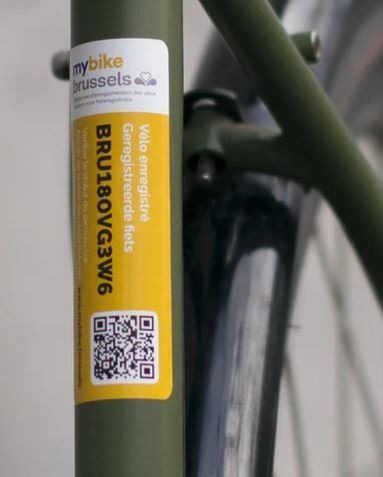
Many local councils or police departments offer to mark bikes. Ask your local council about this. Some manufacturers also offer this service.
© Mybike.brussels
Marking makes it easier to file a theft report and identify the bike if it's found. If you want to insure your bike against theft, marking it is sometimes also mandatory.
In Brussels, the organisation "My Bike" offers you a sticker with a QR code to mark your bike. Its website lets you register it and report it stolen or missing. You'll find all the information about this by clicking www.mybike.brussels.
There are also systems and apps that let you track your bike via GPS. In the event of theft, you'll then be able to locate it.
4- Opportunity makes the thief
Remember to always lock your bike, even for a short absence. Many thefts happen in situations where the owner was only away for a few minutes.
Most thefts happen during the day!
5- Insurance?
Some home insurance/theft insurance policies also cover bicycle theft. Check with your insurer to see whether this is the case and under what circumstances the theft of certain items is covered (sometimes it's only covered inside the home, not on public roads).
There are also standalone insurance policies.
What should you do in case of theft or vandalism?
If you want to make use of your insurance cover, it's advisable to keep the bike's purchase receipt, its identification numbers (serial number, marking number, key number, etc.). Also take a few photos of your bike and keep them handy (e.g. accessible in your email account).
File a theft report with the police as soon as possible and notify your insurer.
6- Assistance cover?
Redion's Bike assistance covers all bike trips (including electric bikes), speed pedelecs and other light means of transport such as hoverboards, segways or electric scooters, in Belgium and neighbouring countries (France, the Grand Duchy of Luxembourg, Germany, the Netherlands).
Among other things, it covers:
- roadside assistance, transporting the immobilised vehicle to the policyholder's home, to their destination or to a repair shop;
- taking care of stranded riders;
- a replacement bike or a mobility budget in case of immobilisation;
- covering medical expenses abroad, repatriation and bringing insured persons back home;
- an emergency return home if a loved one is hospitalised;
- a ride home if you're unable to ride;
- legal advice assistance
Find all the details of this assistance product by clicking here.