At a glance
When should you turn on your dipped headlights? What's the difference with full-beam or sidelights? And, above all, what are the legal requirements in the countries you travel through? This guide from Redion explains it all!
What are dipped headlights and what are they for?
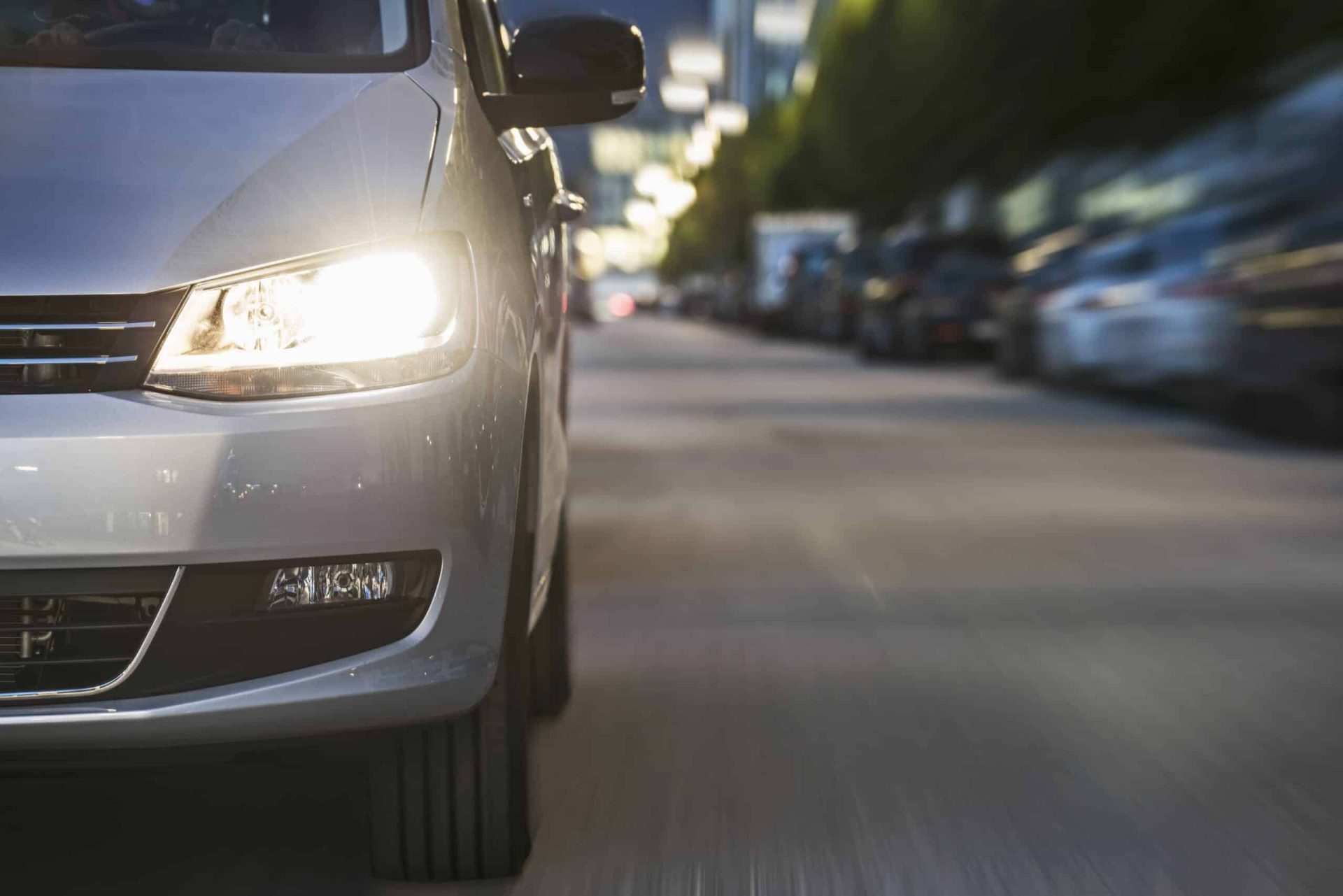
Dipped headlights, also known as "low beams", provide a vehicle's main lighting when visibility is reduced. Unlike sidelights, which are only there to signal your presence, dipped headlights actually light up the road ahead of you for around 30 metres. Thanks to a beam that's subtly angled downwards and slightly off to the side, you can be sure you won't dazzle other drivers.
Dipped headlights, full beam and sidelights
There are three types of front lighting on a vehicle, each with a specific purpose:
- Sidelights. These are small lights, whose only purpose is to signal your presence, without lighting up the road much. Their range extends just a few metres;
- Dipped headlights. These are the vehicle's main lighting, angled downwards so as not to dazzle, with a range of around 30 metres. This is the standard setting in built-up areas and in bad weather;
- Full beam. Also known as "main beam" or "high beam", these provide maximum lighting, with a range of at least 100 metres. You should only switch them on on a clear road with no oncoming traffic, since they're highly dazzling.
When should you use dipped headlights in Belgium?
In Belgium, the Highway Code requires the use of dipped headlights in several specific situations, particularly at night and when visibility is reduced.
Dipped headlights must be switched on:
- Between nightfall and sunrise, so throughout the entire night-time period;
- In the event of insufficient visibility, when you're unable to see clearly up to a distance of around 200 metres;
- In difficult weather conditions, whether that's fog, heavy rain or snowfall;
- In tunnels, including in broad daylight and even when they're lit.
Rear fog lights are also mandatory in fog, in snowfall reducing visibility to less than 100 metres, and in heavy rain.
Using dipped headlights when it rains
When it's raining or snowing and visibility drops below 200 metres, using dipped headlights becomes mandatory, even during the day. In bad weather or heavy rain, dipped headlights not only improve your own vision, but also help other road users spot you more easily.
Dipped headlights for motorbikes: specific requirements
For riders of motorbikes and two-wheeled mopeds, Belgian rules are even stricter. Dipped headlights are mandatory at all times, even in broad daylight and fine weather.
This measure aims to improve the visibility of motorised two-wheelers, which are particularly vulnerable in traffic. Modern motorbikes are, in fact, fitted with dipped headlights that switch on automatically when the engine starts.
Can you drive with your dipped headlights on all the time?
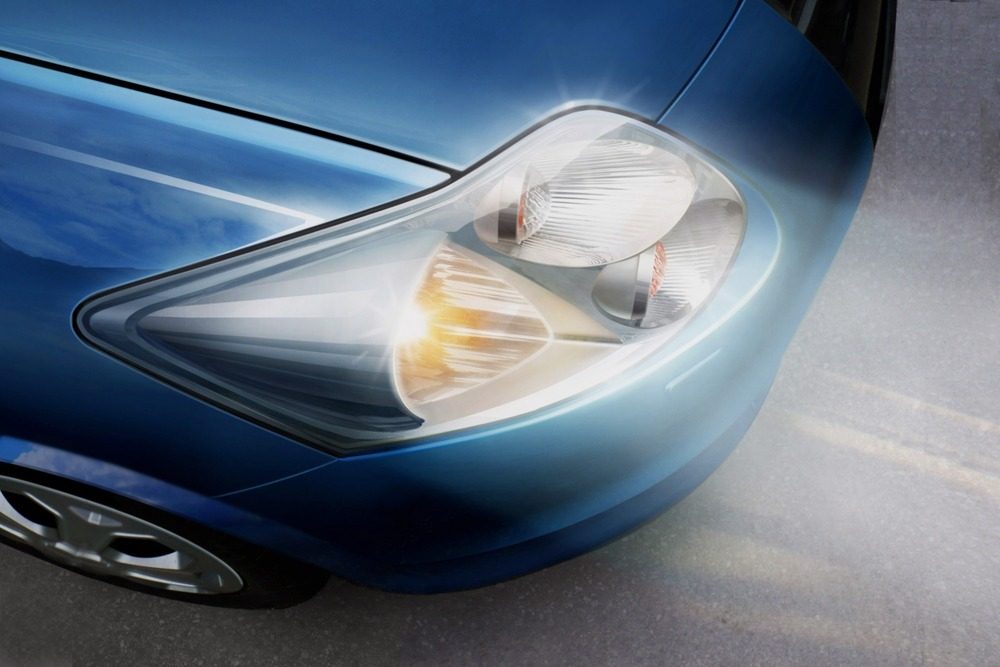 Yes! It's perfectly legal (and even recommended) to drive with your dipped headlights on at all times, including in broad daylight. Several European countries have, in fact, made this practice mandatory.
Since February 2011, all new vehicles sold in the European Union have been fitted with daytime running lights, which switch on automatically when the engine starts. These lights, less powerful than dipped headlights but brighter than sidelights, considerably improve a vehicle's daytime visibility without using too much energy.
Here are the benefits of driving with your headlights on at all times:
- Other road users can spot your vehicle more easily;
- Reduced risk of accidents, particularly at intersections;
- You're better prepared for sudden changes in light (entering a tunnel, shaded stretches of road);
- Automatic compliance with legal requirements.
Modern technology has considerably improved car lighting systems. Adaptive headlights, for instance, automatically detect light conditions and adjust your headlights accordingly, which is a real everyday convenience. Some high-end systems can even automatically switch between daytime running lights and full beam, by detecting surrounding vehicles.
Rules on the use of dipped headlights across Europe
European rules on the use of headlights vary widely.
In the Nordic countries (Norway, Sweden, Finland, Denmark, Iceland), turning on dipped headlights or daytime running lights is mandatory at all times, 24/7 and all year round.
This requirement also applies in several Eastern and Central European countries, such as Poland, Estonia, Latvia, Lithuania, the Czech Republic and Slovenia.
Italy requires the use of dipped headlights during the day on motorways and roads outside built-up areas.
On the other hand, in Belgium, France, Germany, the Netherlands and Austria, using dipped headlights during the day in good weather remains strongly recommended, though not mandatory. They only become mandatory when visibility is reduced (night, rain, fog, tunnels).
Under European Directive 2008/89/EC, since February 2011 all new light vehicles (passenger cars and small vans) sold in the European Union have had to be fitted with daytime running lights (DRL) that switch on automatically when the engine starts. This requirement was extended to trucks, buses and coaches in August 2012.
So before you set off on a trip, remember to check the requirements of your destination country. The European Union's Europa portal provides up-to-date information on the traffic rules in each member state.
Heading to the UK with your car? Then read our article on driving on the left and headlight rules in the UK by clicking here.
What penalties apply if you don't comply with these requirements?
In Belgium, driving without dipped headlights when they're mandatory is a third-degree offence. You risk an on-the-spot fine of €174.
Driving with a faulty or poorly adjusted light, meanwhile, is a first-degree offence, punishable by a fine of €58.
(These amounts were in force at the time this article was published)
A few practical tips
- Regularly check that your headlights are working properly
A faulty dipped headlight can go unnoticed, especially if the other one still works. So remember to regularly check the condition of your bulbs! Here are our tips:
- Check all your lights and indicators at least once a month (e.g. by parking facing a wall);
- Regularly clean your headlights for the best possible visibility;
- Replace bulbs in pairs to keep light intensity even;
- Have your headlight alignment checked during your annual service.
- Plan ahead for trips abroad
When you head abroad, take the time to find out about local driving specifics:
- Check the traffic rules of your destination country before you leave;
- If possible, keep a spare bulb kit in your vehicle.
A few frequently asked questions about using car lights
Dipped headlights light up the road for around 30 metres, with a beam angled downwards so as not to dazzle other drivers. Full beam, on the other hand, lights up much further (100 metres or more) with a horizontal beam, but should only be used on a clear road with no oncoming traffic.
Also read: Traffic rules abroad
First published: 03/2014 - Updated: 10/2025