At a glance
In this article, Redion explains in detail the risks of underinflated and overinflated tyres, how to spot them thanks to the tyre pressure warning light, and the steps to take to drive safely.
Improperly inflated tyres are a major road safety hazard. Whether it's an underinflated tyre or an overinflated tyre, the risks are significant: loss of vehicle control, sudden blowout, excess fuel consumption, premature tyre wear... It's better to anticipate such situations, whose consequences can be dramatic!
In Belgium, 1% of fatal accidents are directly linked to tyre problems, a large share of which involve improperly inflated tyres. Similarly, in Europe, more than 153,000 accidents a year are caused by worn or underinflated tyres.
Underinflated tyres: immediate consequences and dangers
An underinflated tyre is a tyre whose pressure is lower than that recommended by the manufacturer. This situation is one of the most common and most underestimated dangers on our roads.
What are the symptoms of an underinflated tyre?
Several signs can help you identify an underinflated tyre. These include:
- Visible deformation of the tyre's sidewall, which can look flattened (particularly when cornering sharply);
- Unusual vibrations in the steering wheel while driving;
- Impaired road handling, particularly in corners;
- Longer braking distance, especially on wet roads;
- The underinflated tyre warning light (TPMS) coming on on the dashboard;
- Excessive wear on the outer edges of the tread.
Underinflated tyres: what consequences and risks for your safety?
An underinflated tyre will have greater rolling resistance than tyres inflated to the manufacturer's recommended levels. Indeed, it tends to sag, and only the two edges of the tread continue to touch the road. This not only causes faster wear, but since the weight distribution on the ground is uneven, the tyre can also deform and overheat.
This deformation generates excessive heating of the rubber, which can lead to a sudden blowout, particularly dangerous at high speed on the motorway. The consequences of an underinflated tyre are numerous:
- Impaired road handling (the vehicle becomes less stable in corners);
- Dangerously extended braking distance;
- Multiplied risk of aquaplaning in wet weather;
- Excess fuel consumption of up to 10%;
- Premature tyre wear.
Can an underinflated tyre explode?
Yes, and it's one of the most serious dangers! An underinflated tyre carries a risk of blowout, particularly at high speed. The excessive deformation of the sidewall generates heat through friction, and during summer, when asphalt temperatures soar, this combination can cause a sudden blowout.
The risks of overinflated tyres
An overinflated tyre has a pressure higher than the manufacturer's recommendations. Although less common than underinflation, overinflation exposes the driver to specific dangers, including reduced grip and less effective braking.
Overinflated tyres: the consequences for your safety
When driving with an overinflated tyre, its contact area with the road is significantly reduced. Only the central part of the tread then touches the asphalt, reducing grip and lengthening braking distances. The tyre also becomes stiffer and more vulnerable to impacts, increasing the risk of a puncture or a break in the carcass.
Warning signs of an overinflated tyre
The symptoms of an overinflated tyre include:
- Excessive wear at the centre of the tread;
- Reduced driving comfort, with road irregularities felt more strongly;
- Excessive bouncing of the vehicle over road defects and increased sensitivity to impacts;
- Lengthened braking distance;
- Increased sensitivity to impacts (potholes, kerbs...).
When tyres are worn, underinflated or overinflated, sometimes all it takes is hitting a kerb to cause them to burst or puncture! Do you have a flat tyre and need to replace it?
Discover our article on spare wheels!
Underinflated or overinflated tyres: comparison table of risks
To better understand the differences between an underinflated tyre and an overinflated tyre, here is a comparison table of the main risks and consequences you can expect.
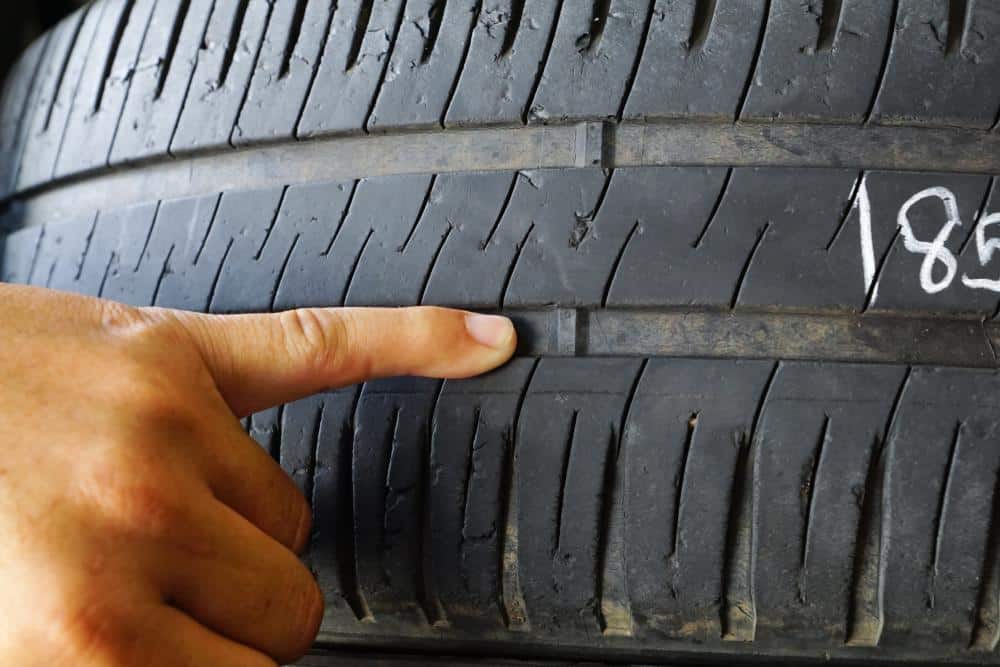 There are several ways to check the wear level of your tyres. Indeed, some tyres have a wear indicator (logo, number...): if this indicator is no longer visible, the tyre is too worn. There are also digital or manual gauges to measure tread depth.
In Belgium, according to the Rolling Wheel study carried out in summer 2025, 72% of cars checked had at least one tyre in poor condition, and 5% were driving with tyres worn below the legal limit of 1.6 mm.
- Check tyre pressure
When you check tyre pressure, do it when cold. So, if your vehicle has been stationary for at least 3 hours and you need to get to a checkpoint, don't drive more than 5 km.
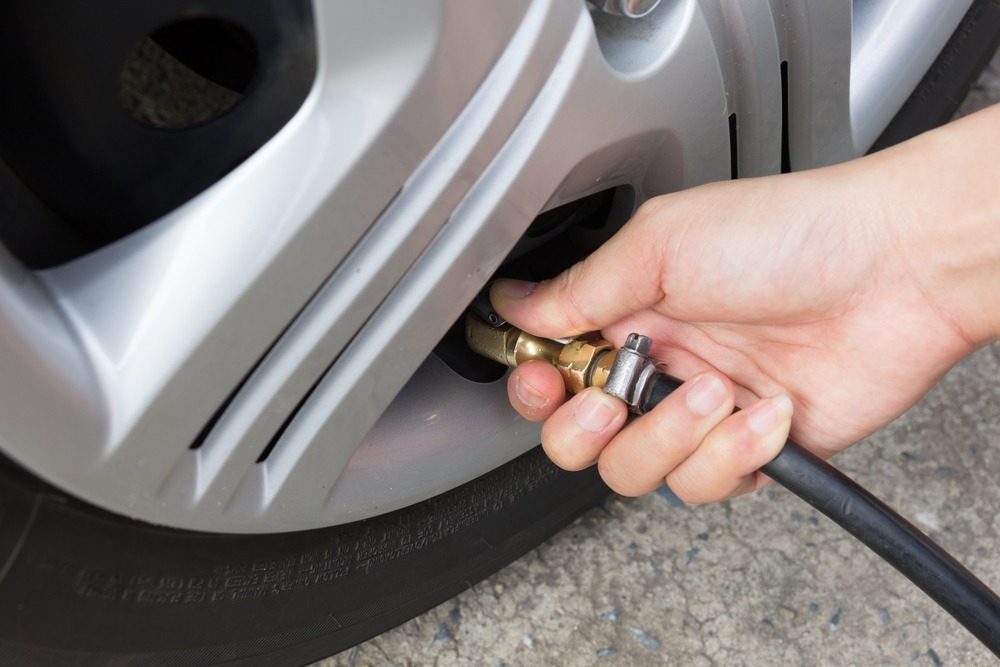
Check tyre pressure every month (a tyre can lose up to 0.1 bar/month) and before every long trip. To do this, you'll find an air compressor at every service station to measure and correct the pressure of each tyre. The recommended pressure is shown on a label inside the door or in the vehicle's manual.
Make sure your tyre pressure is the same on the left as on the right. Otherwise, you risk upsetting the balance and therefore the road handling of your car.
Tip: set yourself an automatic email reminder every month so you don't forget to check your tyre pressure!
What should you do if you have an underinflated or overinflated tyre?
If you notice that one of your tyres is improperly inflated, here's what to do immediately:
Immediate actions for an underinflated tyre
- Avoid driving at high speed if you suspect a severely underinflated tyre;
- Head quickly to a service station equipped with a pump or use a portable compressor;
- Adjust the pressure according to the manufacturer's recommendations (shown on the label in the door or in the vehicle's manual);
- Make sure the left and right tyres are properly inflated to preserve the vehicle's balance;
- Check all tyres, including the spare wheel if available;
- If the TPMS light stays on, this may indicate a slow puncture or a faulty sensor: have your tyre checked by a professional.
Actions for an overinflated tyre
- Slightly deflate the tyre until reaching the recommended pressure;
- Check the pressure of all tyres to ensure balanced inflation;
- Visually inspect the tyre for any damage or cracks;
- Adapt your driving until corrected, avoiding potholes and impacts.
In the event of a breakdown on the road or a puncture, you're never alone. Redion is with you 24/7 with its roadside assistance services!
Protect yourself from tyre problems with Redion!
At Redion, we understand the importance of driving safely... and with peace of mind! Our assistance plans protect you in the event of a breakdown related to your tyres, whether it's a puncture, a blowout or an inflation problem.
Enjoy fast, professional assistance, even far from home!
FAQ - Our answers to your questions about improperly inflated tyres
Yes: when pressure is too low, the tyre creates more rolling resistance, which requires more power from the engine and increases consumption. Tests show that underinflation can lead to excess consumption of up to 10%.
It's therefore essential to regularly check your tyre pressure, to reduce your consumption and drive safely.
Also read:
First published: 03/2016 - Updated: 03/2026