At a glance
What are a vehicle's driver assistance systems? What are they for? Can they be switched off? Are they a blessing?
Modern vehicles are increasingly equipped with driver assistance systems. European authorities are pushing hard on this front in order to reduce the number of road deaths. But are these systems always and everywhere a blessing, or rather a curse? Our blogger Alain Dierckx looks into the matter.
What are driver assistance systems for?
The number of road deaths is still very high: an average of 42 deaths per million inhabitants every year. European authorities therefore plan to drastically reduce the number of deaths caused by road accidents by 2050. One of the measures in this plan is the integration of driver assistance systems into vehicles. These systems are also known by the acronym ADAS (Advanced Driver Assistance Systems).
Which driver assistance systems exist?
 - ISA: intelligent speed assistant
ISA is software that can reduce the power of your vehicle's engine, preventing you from driving faster than the speed limit on public roads. We refer you to this separate article, where we explain this system in detail.
- The blind spot detector
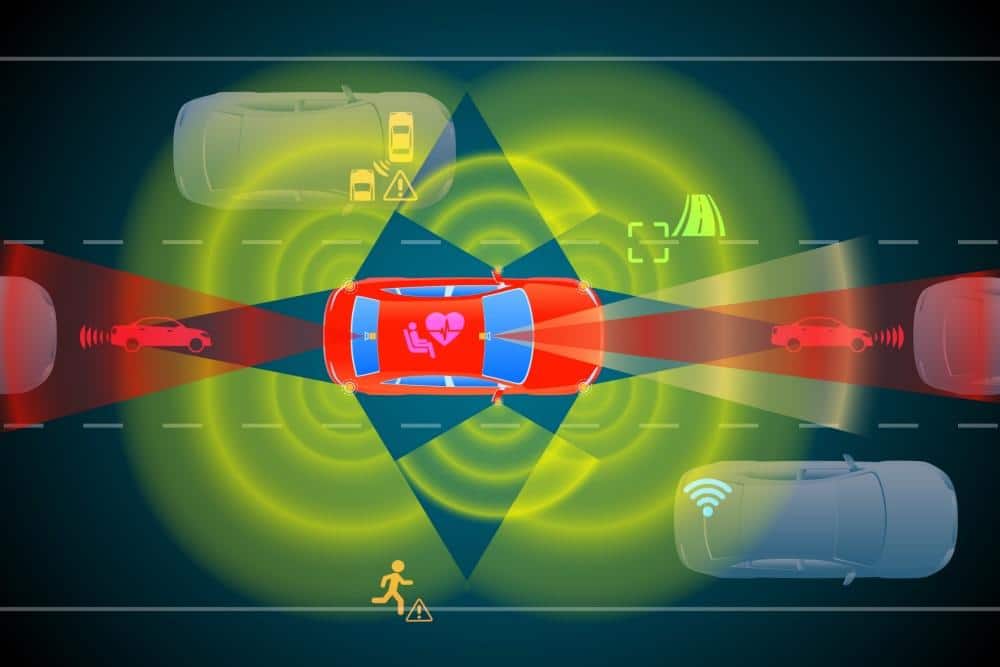
If a vehicle or road user is in your vehicle's blind spot, a light signal appears in your side mirror and/or on your dashboard.
A variant of this system is the "exit assistant", which warns you of the presence of a cyclist or a vehicle approaching from behind when you want to get out of the car.
- Automatic emergency braking
If a collision is imminent, the system warns the driver and carries out fully autonomous emergency braking if the driver does not intervene.
The same emergency stop can also be triggered by the pedestrian detection system.
- The lane change assistant
If you don't switch on your indicator and manoeuvre to change lanes, the driver is warned and/or the vehicle is steered back into the lane by the steering wheel.
- Adaptive cruise control
When activated, this intelligent cruise control automatically adjusts the distance between your vehicle and the one in front.
- Traffic sign recognition
This system detects road signs, recognises them and displays them on the dashboard.
- The parking assistant
Besides the parking sensors that help you avoid bumps or damage while parking, this assistant lets you park your vehicle completely autonomously. Some systems even search for a free parking space.
 - The attention assistant
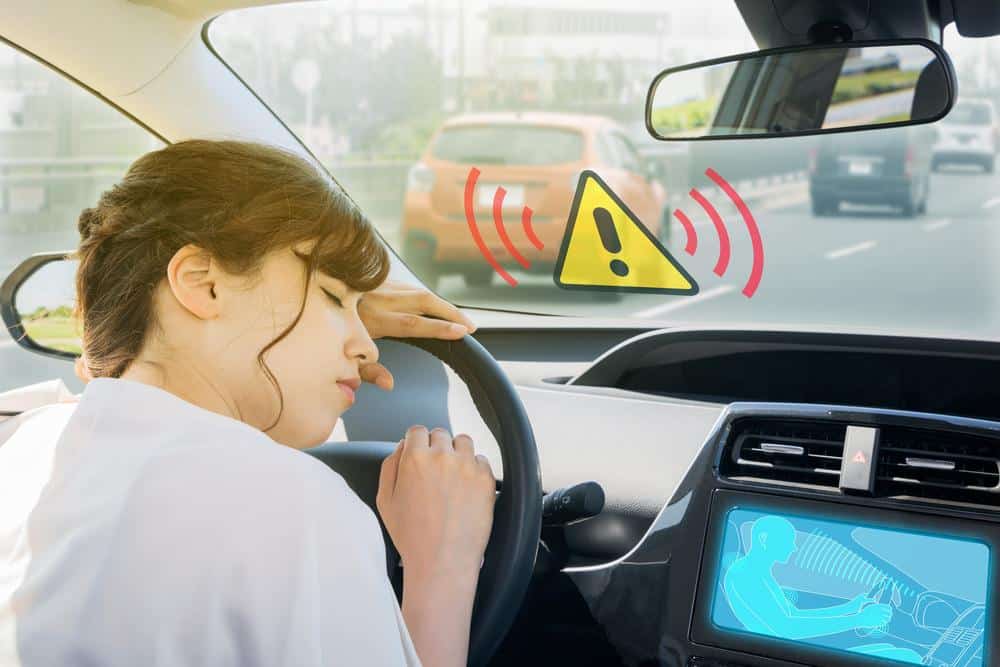
This system records, among other things, driving time, steering wheel movements and the direction the driver is looking in. Based on this data, it sends a visual or audible signal to alert the driver or let them know it's time for a break.
Which driver assistance systems are mandatory?
Since 2022, the systems below have been mandatory in new car models in Europe:
- a fatigue warning system or a system alerting to dangerous smartphone use;
- lane-keeping assistance;
- intelligent speed assistance;
- an emergency braking system;
- parking sensors.
Who is liable in the event of an accident?
Under the highway code, every driver must remain in control of their vehicle. As such, they can therefore be held liable in the event of an accident.
The event data recorder is a driver assistance system that can also help determine liability in the event of an accident. This "black box" records certain vehicle data (speed, brake pressure, steering angle...) for a few seconds before and after a collision.
Can driver assistance systems be switched off?
You can switch off a system such as ISA after starting the engine if you wish. But if you turn off the engine and start it again, ISA will switch back on automatically.
You can also switch off other driver assistance systems while driving. This will depend on the make of the vehicle. Some manufacturers allow the driver to customise their choices and switch off several driver assistance systems at once by pressing a button.
Are driver assistance systems a blessing?
Driver assistance systems can be a valuable help to drivers in several situations:
- When fatigue makes them less alert;
- When they are distracted by interactions with other occupants;
- When their attention is taken up by other devices such as a mobile phone, GPS or other in-vehicle consoles.
Driver assistance systems can alert drivers in these situations with a visual or audible signal, or by intervening abruptly. They can therefore genuinely contribute to road safety — provided, of course, that they work perfectly and are not switched off by the driver.
Almost all car insurance companies grant a premium discount if the vehicle is equipped with a selection of driver assistance systems. The discount and the conditions vary from one company to another.
Are driver assistance systems a curse?
If there are too many warning lights (indicators) and audible alerts competing for the driver's attention, the driver will be more distracted at the wheel, which is obviously not the intended goal.
Likewise, if the systems are not perfectly calibrated and the driver cannot use them optimally, they will not achieve their purpose. The emergency stop function is a good example. It is very intrusive and should therefore only be activated if traffic conditions are correctly assessed by the system. A speed bump, for example, should not be regarded as an obstacle.
Built-in sensors, such as radars or cameras, can also malfunction due to how clean the vehicle is, frost, or other factors that prevent them from working properly.
Lastly, weather conditions and roadworks also play a role. In heavy rain or snow, the systems sometimes struggle to correctly interpret the situation and draw incorrect conclusions. During roadworks, they are not always able to recognise road signs or temporary diversion lanes.