At a glance
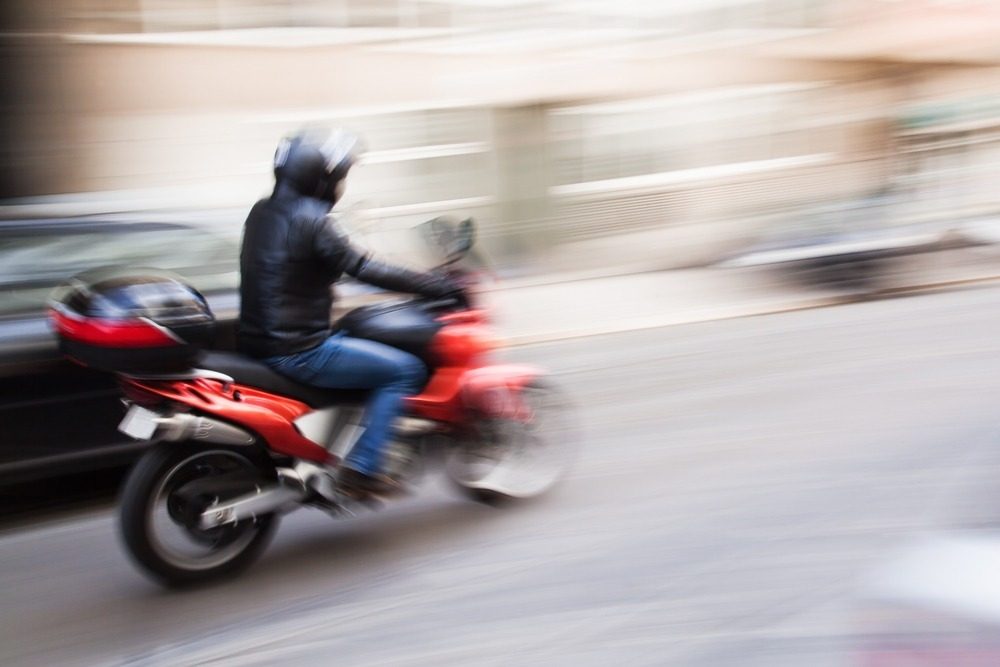
For a motorcyclist, defensive riding is a matter of safety. Serge, Redion's motorcyclist, shares a few practical tips.
For a motorcyclist, adopting "defensive" (or preventive) riding is a matter of safety.
Serge, Redion's motorcyclist and a motorcycle riding instructor himself, shares a few practical tips.
Defensive riding to stay safe
Riding a motorbike carries risks. Every year, too many motorcyclists are involved in accidents on our roads. In many accidents, the motorcyclists involved had followed the highway code and weren't at fault.
So it's important not to just behave strictly within the rules of the highway code, but to look further ahead and adopt preventive or defensive riding.
Here are 5 scenarios drawn from long experience:
1. Has the driver seen me?
- Even dressed in yellow and wearing a hi-vis helmet, a motorcyclist will always be less visible than a car or a lorry.
- It's harder for a driver to quickly judge how far away a motorcyclist is and how fast they're moving, especially in the dark or in bad weather.
- When approaching a junction, many drivers check whether a car is coming but don't always expect to see a motorbike coming. So they may react too late.
Tip: It's therefore very important to make sure, through eye contact, that the driver has seen you, even if you have priority.
2. Using the phone while driving: watch out for danger!
- I regularly come across drivers who are on the phone (without hands-free) while driving. Despite all the awareness campaigns, many of them still don't grasp the real danger of handling a phone at the wheel, even at very low speed in a traffic jam.
- The attention of any driver on the phone while driving, even the best of them, drops considerably or almost to zero. The same goes for those reading their newspaper, or checking their files or tablet while driving or crawling along in traffic!
Tip: When you see a driver who's weaving or driving at an unusual speed, adjust your own riding, because they probably won't change theirs!
A real-life example: Because of my work, I sometimes have to take calls while riding. I have a fully hands-free system, but even so, I always try to stop when I can. On some roads, like the motorway, I sometimes can't pull over. That's how, a few days ago, the driver behind me flashed their headlights, and I realised I was drifting too far to the left for no reason and had lost 40 km/h... while on the phone, of course...
3. When "right of way" doesn't rhyme with "safety"
- Approaching a green light or entering a junction with priority isn't always without danger. As a motorcyclist, it often happens that you set off on a green light only to have a vehicle cut across your path at speed.
- Many drivers speed up when they see the amber light, and some of them go through the junction even though the light has already turned green for the crossing lane.
Tip: You should always enter a junction only when you're certain you can cross it safely, even with a green light or right of way. It's thanks to my little glance left and right that I'm still alive today!
4. "I'm late, I'm late... I'm terribly late..."
Judging by the behaviour of some drivers, the White Rabbit from "Alice in Wonderland" isn't the only one who's always running late and wants to overtake everyone to get there on time...
A real-life example: I stick to speed limits. So it often happens that I'm followed by a driver who wants to overtake me and gets impatient because it takes me a while to pull back in. Some of them even end up 5 or 6 metres behind me, driving so fast that I don't dare touch my brakes for fear of being hit. In that case, I speed up a little and try to find a spot on the right between two vehicles, while still keeping a safe distance from the vehicle ahead of me (roughly half the speed in metres: 120 km/h = 60 metres) but also taking into account the vehicle behind me.
5. Defensive riding means looking in the right place
In every riding course, you'll be taught that observation is absolutely crucial when driving any vehicle. Good visual technique is the foundation of good riding. You should always look as far ahead as possible and avoid fixating on obstacles. Look at the solution, not the problem! Your motorbike will always go where you're looking. Many accidents or run-offs happen because of where the rider was looking.
Take care, everyone, and safe riding!
Serge
Discover our other tips in the "Motorcyclists" special report.\