At a glance
Is skiing "off-piste" near marked trails less dangerous than off-piste skiing far from the trails?
Skiers and snowboarders are often strongly tempted to practise their favourite sport just off the marked trails.
Others, more daring, decide to head well away from the ski areas to go off-piste further into the mountains.
What are the risks?
Skiing or snowboarding just off the marked trails
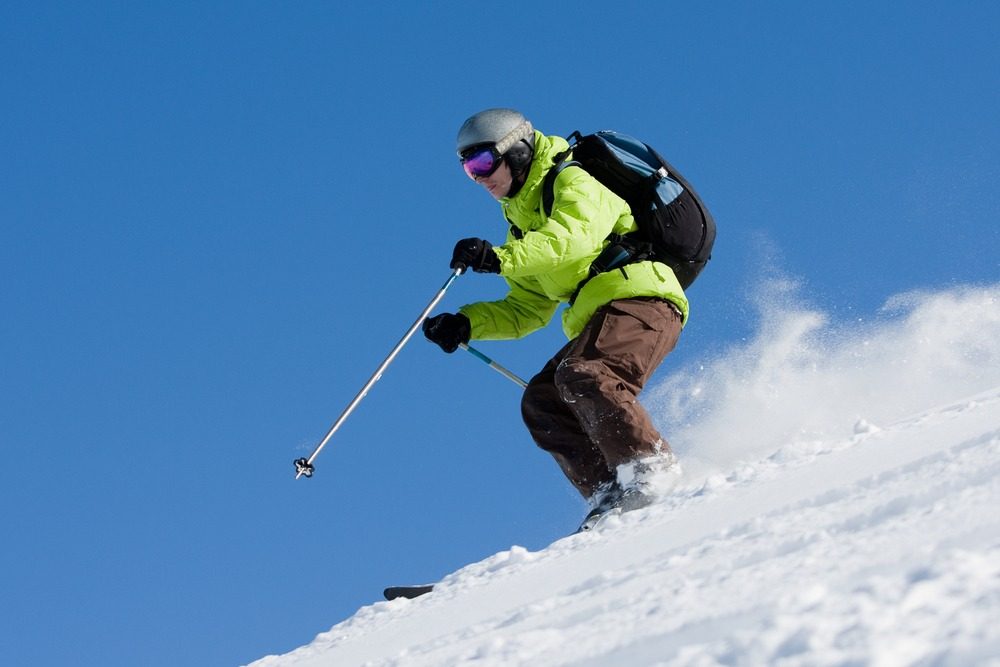
Skiing or snowboarding "just off the trail", i.e. close to the marked pistes, is seen by many experienced skiers as a fun challenge: skiing freely on powder where others haven't yet left their tracks.
Fewer risks than "real" off-piste skiing…
- since you're skiing within or close to the ski area, avalanche risk is generally under control;
- there are no crevasses, cliffs or dangerously steep terrain;
- you're not far from safe areas and therefore from rescue services.
...but there are still risks!
- you're not skiing on a groomed (packed) trail, which makes it harder or riskier;
- the area may be littered with (large) rocks, sometimes hidden, which can trip up the skier or cause a fall. The unfortunate case of Michael Schumacher is a well-known example.
- the trail is not monitored;
- in the event of an accident, rescue services will have a harder time reaching the spot;
- the tracks of someone who passed through before you are no guarantee that the area is safe or that nothing can happen to you;
- the fact that the snow there is "hard" or "holds well" is not a guarantee of safety.
Our advice: to limit as far as possible the risks involved in this practice, only venture out after getting fully informed by resort professionals about the dangers, the condition of the terrain and skiing conditions. Also equip yourself with the necessary gear to protect yourself in the event of a fall, and never go unaccompanied.
Off-piste skiing, snowboarding or freeriding
Off-piste skiing (freeriding) far from the ski area is dangerous. This is borne out by the countless, sometimes fatal, accidents that occur every year (several dozen deaths a year in the Alps!).
- Only consider off-piste skiing in an area you know.
- Get well informed in advance about where off-piste skiing is possible.
- Go with people (mountain guides or professional ski instructors) who know the risks of the areas visited inside out. Don't play "off-piste master" to impress those around you.
- Keep up to date with upcoming changes in weather conditions.
- Pay very close attention to the avalanche risk on the day you set off.
- Carefully plan your route with full knowledge of the facts, and let people staying at the starting point know about it.
- Make sure you have good ski equipment (suit, poles, skis, helmet).
- Bring a map on which you'll track and mark your progress, as well as a compass and an altimeter.
- Have the essential safety equipment (an avalanche victim detection system — transceiver — such as ARVA®, Pieps®, Mammut® or similar, a shovel, a probe, possibly an airbag pack…). Wear the transceiver on your body, not in a backpack, which you could lose in the avalanche.
- Know what to do and who to contact in the event of an accident.
- Bring a drink and an energy snack (e.g. cereal bars).
The tips above show that off-piste skiing is not something to improvise, and that it is reserved for experienced, seasoned skiers.
Insurance cover and off-piste skiing
Be aware that many insurers exclude from their cover accidents that occur while off-piste skiing when the victim is not accompanied by an instructor from an organisation approved to practise off-piste skiing. This is the case at Redion.
So be careful and check your cover before you leave.
Also read our feature "Winter sports"