At a glance
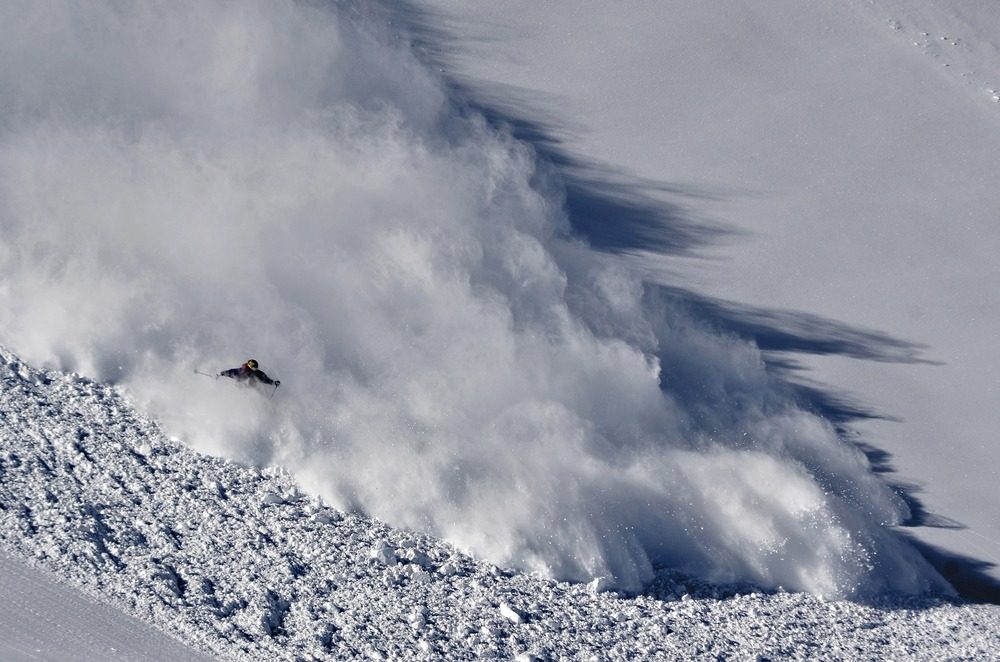
What can you do to avoid being caught in an avalanche? How should you react if one buries you? What are the risks of off-piste skiing?
Spending your holiday in the snowy mountains?
What can you do to avoid being caught in an avalanche?
How should you react if you're suddenly caught in one?
A basic rule
To minimise the risk, stay on secured slopes!
Even though zero risk doesn't exist on any type of slope, the best prevention is to stay on marked slopes within the ski area. These slopes are maintained and secured every day by specialists who, when needed, trigger preventive avalanches to remove the risk.
On site, ski resorts display the risk level (see below).
The risks of off-piste skiing
Practising winter sports off-piste isn't something you improvise, and it shouldn't be done on a whim just for the thrill of being the first to carve through fresh snow.
Not only is the avalanche risk greater there, but unsecured areas are the cause of a large number of accidents, the consequences of which are often very serious, or even fatal.
Keep in mind that after a snowfall, it's advisable to wait for the new layer to stabilise. This can easily take two to three days, or even longer depending on the condition and consistency of the layer beneath the new snow cover.
The risk of avalanche is greater when the new layer of snow falls on a layer of ice (melted snow that has refrozen).
Off-piste skiers therefore need to be aware of the risks, and should:
- get properly informed in advance;
- be accompanied by people (mountain guides or professional ski instructors) who know the risks of the areas being visited inside and out;
- keep a close eye on short-term weather developments (for example via www.meteoblue.com);
- carefully plan their route with full knowledge of the conditions, and let people staying at the starting point know the plan;
- have the essential safety equipment (an avalanche victim detection system (transceiver) of the ARVA®, Pieps®, Mammut® or similar type, a shovel, a probe, and possibly an avalanche airbag cushion or backpack...). Wear the transceiver on your body, not in a backpack, which you could lose in the avalanche.
Also read the article Skiing off the marked slopes.
Above all, never head out on your own!
What to do if you're caught in an avalanche
- Try to get out of the avalanche's path by moving towards the edge of the snow flow as quickly as possible.
- If you're swept up in the avalanche: try to get rid of your skis and ski poles and make "swimming movements" to try to stay on the surface as much as possible. Grab onto anything that could hold you in place (a tree, a rock...).
- Try to protect your face (mouth and nose) to avoid swallowing snow.
- As soon as the snow flow has stopped, curl up into a ball and try to create an air pocket around yourself.
- Stay calm: panic is a bad advisor. Breathe steadily and save your energy to try to free yourself.
The European avalanche risk scale
Avalanche risk is rated on a 5-level scale.
Click here to see the 5 avalanche risk levels.
If you're looking for more information, Météo France has published a very detailed practical guide on avalanches, their risks and prevention.
A few useful websites for more information
- Avalanche risk in France: http://www.meteofrance.com/previsions-meteo-montagne/bulletin-avalanches
- Avalanche risk in Switzerland: https://www.slf.ch/fr.html
- Avalanche risk in Austria: http://www.lawine.at/
- Avalanche risk in Italy: http://www.aineva.it/
First published: 01/2016 - Updated: 02/2022