At a glance
In March 2024, adventurer Tom de Dorlodot suffered a serious snowkite accident in Norway. Here is his account.
Adventurer and elite athlete Tom de Dorlodot, who regularly shares the story of his adventures on our blog, suffered a serious accident in Norway in March 2024 while preparing for an expedition to Greenland. A snowkite accident forced him to abandon the project and call on Redion for a medical repatriation.
In this article, he shares his account of what happened to him in Norway and the lessons he was able to draw from it.
My snowkite accident in Norway
An expedition to Greenland
In March 2024, I travelled to Norway for two weeks of training and preparation ahead of a major self-supported expedition to Greenland. Fellow adventurer Giles Denis and I planned to cross a large part of the ice sheet with our sledges, using kites to pull us along. We had been preparing this expedition for months and were highly motivated and hugely excited about this new project. We didn't want to leave anything to chance, so we decided to train and test our gear in conditions close to what awaited us in the far North.
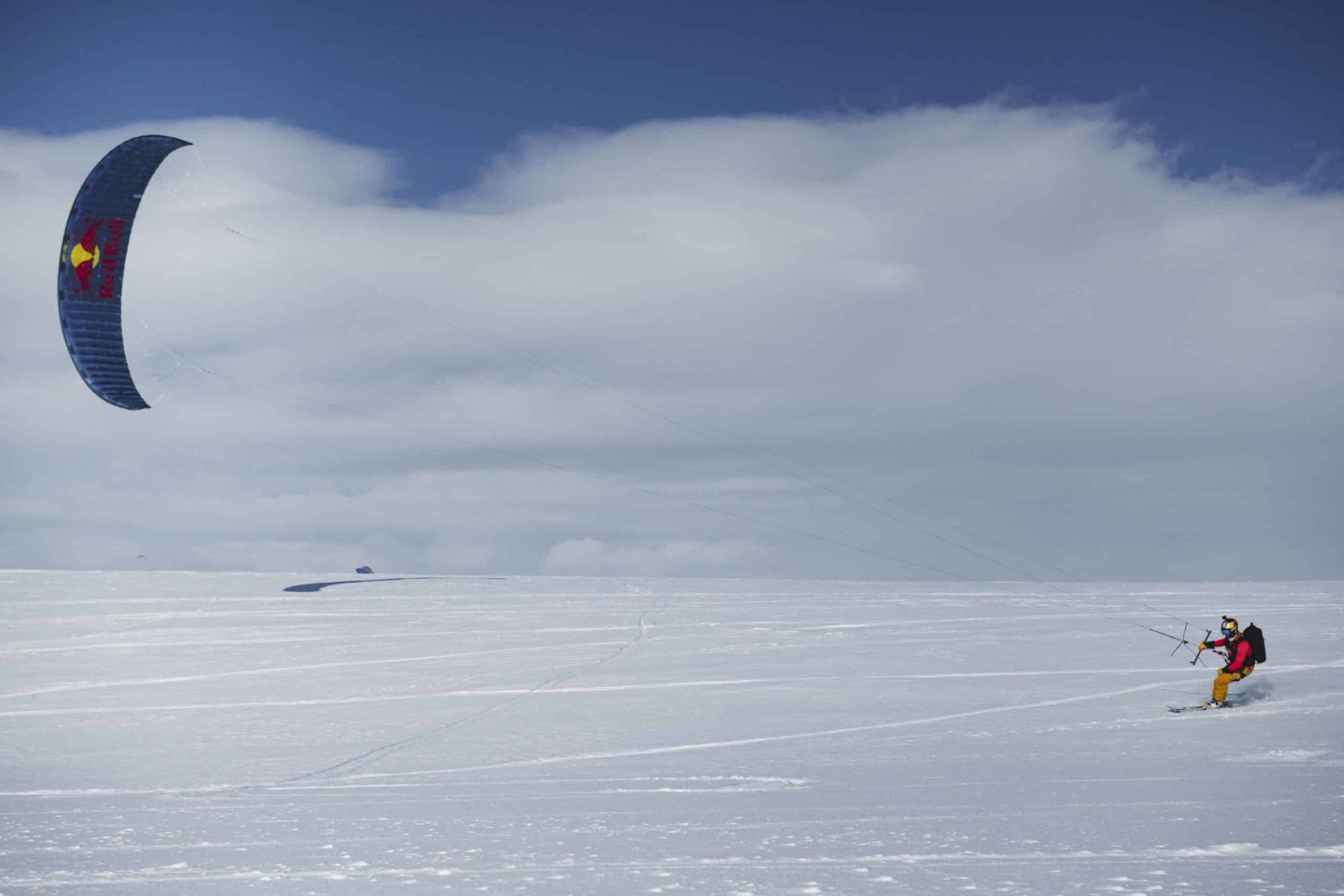
We had spent a few days in Norway without any problems. Snowkiting (being pulled along on skis by a kite) gives you a magical sense of gliding. The region was stunning, the plateau covered in snow. The place was very wild, and I was having a great time covering long distances with the help of the kite.
I've been kitesurfing for 10 years and have a good understanding of weather phenomena thanks to my experience in paragliding and sailing.
On the morning of the accident, the wind was strong, with sometimes violent gusts. We had left the hotel for a training session in a mountainous area that seemed fairly technical to me. The start of the day had gone well, but I could feel the wind picking up and that we were pushing the limits. I told the instructor who was there to supervise us about my concerns, but he tried to reassure me. My gut feeling, however, told me to be very cautious.
The snowkite accident
 After a few hours of practice, we decided to take a break and stop at a small refuge to eat a waffle, warm up and regain our strength. When we went back outside, the gusts of wind seemed even stronger: over 35 knots, with a temperature of -10 degrees.
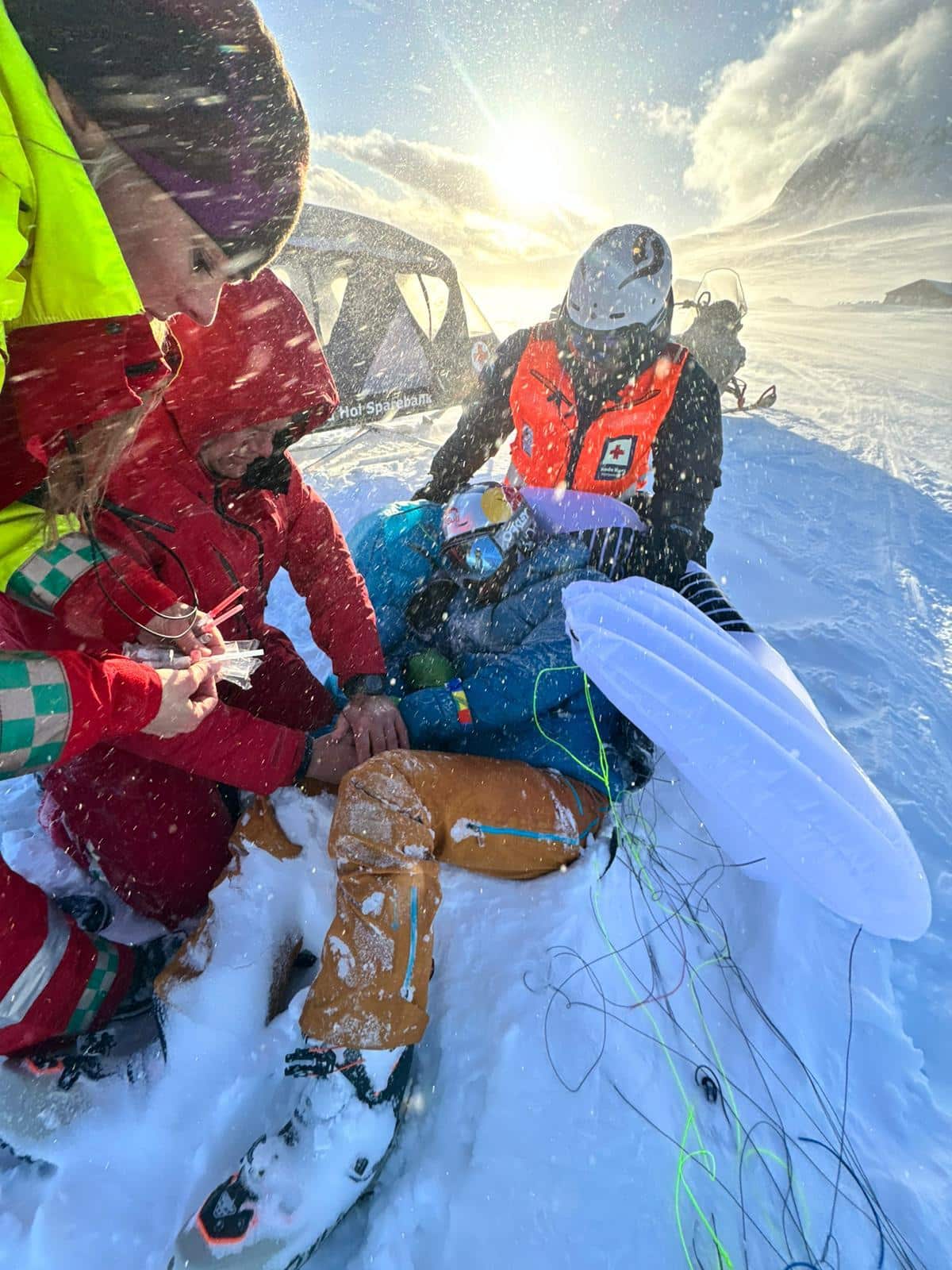
I urged the instructor to pack up the gear and continue on skis to the road. My guide told me the road was still far off, that everything would be fine, and that he would help me launch the kite. I trusted him. But as I was getting ready, I had a kind of doubt, an intuition. I tried to launch the kite but was immediately catapulted into the air. I lost control of my kite and found myself several metres off the ground at high speed... I landed extremely hard and felt my leg fracture. My ski hadn't released. The kite kept dragging me along the ground; it was very violent. I went through a series of drags and tumbles, lost my backpack, a ski... I hurt everywhere. Fortunately, I eventually regained my senses and managed to release the kite. I ended up lying in the snow, in the middle of the mountains, in a strong wind. I couldn't move, my leg was broken at the ski boot and bent double at a 35-degree angle... It was truly terrifying.
The rescue
The refuge keeper had left by snowmobile 30 minutes before the accident. We found ourselves alone, far from the road. Fortunately, I had my Garmin inReach beacon and was able to call for help and send a precise location. Despite the freezing wind and snow-laden gusts, I protected myself as best I could by wrapping myself in my kite. Luckily, I had suitable clothing and very good gloves.
Rescuers arrived quickly by snowmobile, braving the difficult weather conditions to reach me. They immediately gave me strong painkillers, partially easing the throbbing pain that gripped me. They placed me on a stretcher and carried me through the mountains to the nearest road, where an ambulance was waiting to rush me to the nearest hospital.
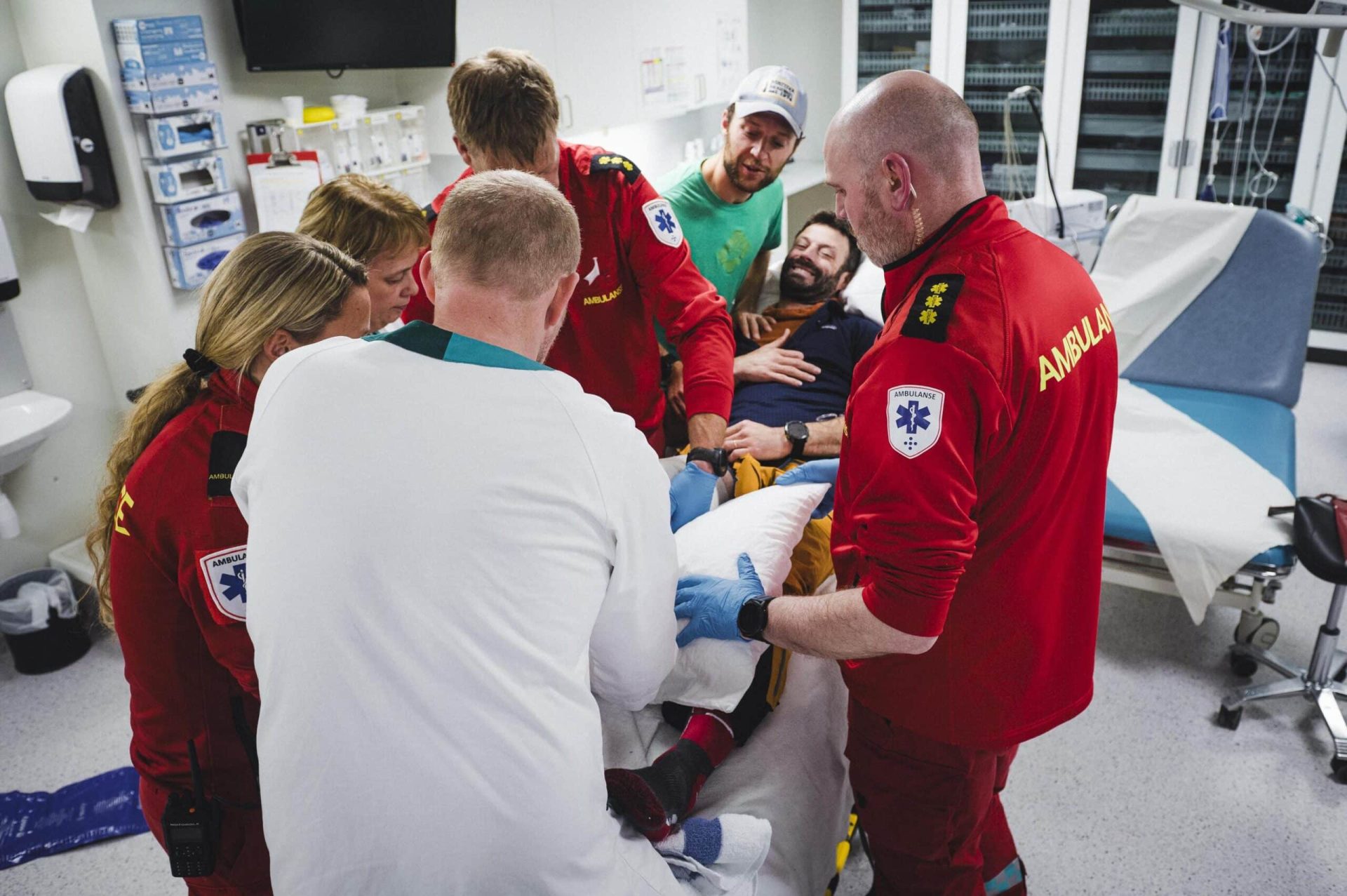 When I arrived, the medical team got to work around me, carefully removing my boot to assess the extent of the damage. Diagnosis: tibia and fibula fractured in several places. Surgery was inevitable.
As the pain became almost unbearable, the doctors worked to realign the bones, pulling forcefully to restore alignment. Every movement was torture.
Medical assistance
The next morning, as soon as I could, I contacted Redion to set the next steps in motion. The team responded with impressive speed, guiding me and organising repatriation to Belgium. A medical advisor took the time to explain each step to me in detail. Redion handled all the coordination, from booking the flight to liaising with the hospital in Norway.
The repatriation
The Norwegian doctors carried out an operation to fit pins and hold the fractures in place for the journey. The ambulance came to pick me up and take me to the airport, where I was taken by wheelchair right up to boarding the plane. The flight went by quickly, the painkillers finally taking effect.
Just three days after the accident, I was back in Belgium, welcomed by Dr Putineau's remarkable team. I didn't have to worry about a thing; everything went smoothly and efficiently.
This kind of assistance is priceless, and I want to express my deepest gratitude to the Redion teams for their invaluable support.
After the accident, the surgery and the rehabilitation
After several weeks of hospitalisation, rehabilitation and medical follow-up, I was back home.
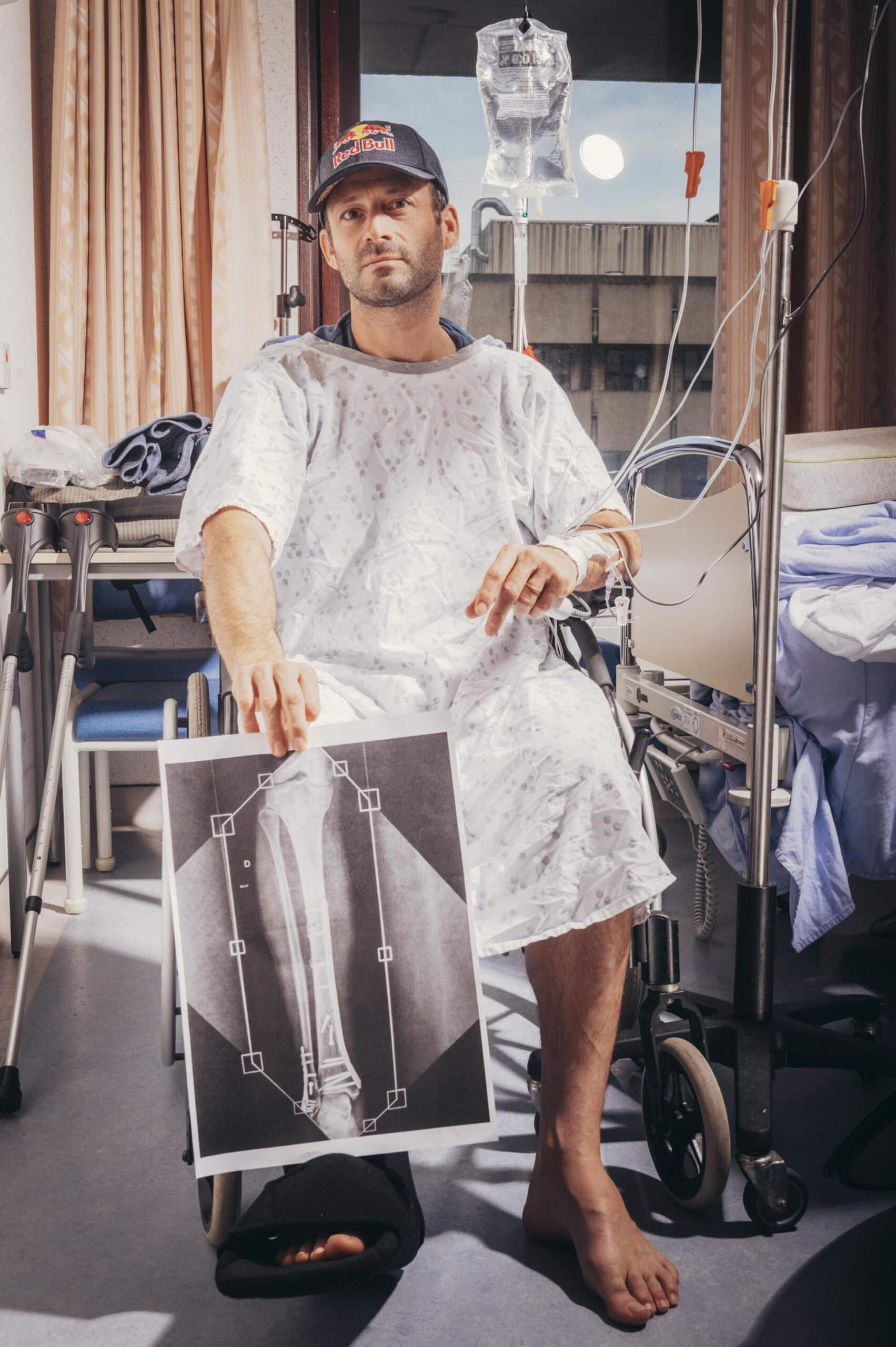 "This experience taught me a lot. First of all, the importance of respecting weather conditions and not taking unnecessary risks. Also, the importance of being well equipped and prepared in case of an emergency. It also made me realise just how valuable solidarity and the efficiency of medical and assistance teams can be in difficult moments. I'm grateful to everyone who helped and supported me throughout this ordeal.
This experience also gave me a new perspective on life and strengthened my determination to keep exploring the world, while staying aware of the risks and taking the necessary precautions. I'm now more humble, more grateful, and more determined than ever."
Do's and don'ts for snowkiting
Below, Tom shares some good advice for anyone wanting to take up kitesurfing.
Things to do:
- Take lessons with a qualified instructor to learn the basics of kiting before starting to learn snowkiting safely at a specialised school. There are some great schools in Belgium: www.kitefun.be. Choose a snowkite spot suited to your level, with steady wind and favourable weather conditions. For this, I recommend the Haugastøl plateau in Norway. https://www.haugastol.no/en/kite-course
- Equip yourself with the right gear, in particular a snowkite wing suited to your level and weight. The school will advise you. It's better to have a kite that's too small than one that's too big.
- Wear a helmet and check the release pressure on your ski bindings (so they release in the event of a fall).
- Learn the right-of-way and safety rules at the snowkite spot.
- Start with training sessions on flat terrain before venturing onto steeper slopes.
- Practise regularly to improve your technique and mastery of snowkiting.
Things not to do:
- Practise without enough experience and/or without the guidance of a professional or experienced instructor.
- Practise alone without having told someone your route and expected return time.
- Force your way through wind conditions that are too strong or unstable.
Discover Tom's other adventures and tips in the "Travel and adventures" section
Photos: © Tom de Dorlodot