At a glance
Are you travelling to a cold country? How do you protect yourself? What's the best way to dress?
Most travellers naturally opt for a warm and sunny destination. But others nevertheless prefer a much colder destination (the far north, the poles or high altitude, …) to go on long hikes and discover exceptional nature and scenery there.
What are the pitfalls of the cold, and how do you protect yourself?
1. Choosing your destination wisely
- Find out properly about the country or region you want to visit depending on the season: daytime and night-time temperatures, the weather, the hikes available, ....
- Pack your bag according to the type of trip: will you mostly stay in a city or somewhere sheltered from the cold? Or are you choosing natural areas exposed to sub-zero temperatures or snow? Don't forget that even in countries with a warm or temperate climate, a visit to high altitude (in the mountains) can expose you to very cold temperatures. Keep this in mind when packing.
2. Dressing properly
In cold countries, you need to protect yourself
- from the cold: to avoid hypothermia (*), frostbite, …
- from moisture: it increases discomfort and draws in the cold,
- from the sun: despite a very low temperature, the sun can dazzle and burn the skin,
- from the wind: combined with unsuitable clothing, it helps cool the body down quickly and speeds up the evaporation of sweat: the body dries out without you noticing.
The 3-layer rule
The solution for staying properly covered isn't to wear big, bulky warm clothes, but rather to wear several layers of light, warm clothing on top of each other (this keeps a small pocket of air between each layer).
First layer: Underwear. Cotton clothes tend to hold on to sweat. If you have to spend several hours in the cold, it's therefore better to wear synthetic fibre clothing.
Second layer: This provides and maintains warmth. This is the layer that will keep you warm while protecting you from the cold. Just like cotton clothes, wool jumpers can absorb sweat, eventually become heavier and lose their insulating quality. If you still opt for wool, go for merino wool clothing. Otherwise, fall back on light "fleece" clothing, which you'll find in specialist shops.
Third layer: Outer protection. This layer of clothing needs to be effective enough to protect you from rain and wind. Choose a lightweight garment that isn't too bulky.
What about trousers? Here too, it's better to choose lightweight trousers that will guarantee sufficient, lasting protection and thermal insulation. Avoid jeans in bad weather: they soak up moisture, become increasingly uncomfortable as a result and lose their insulating quality. On top of that, they dry very slowly.
Tip: Wear clothes that are loose enough. These will create a layer of air that will insulate you from the cold, and they won't restrict blood circulation.
Your head
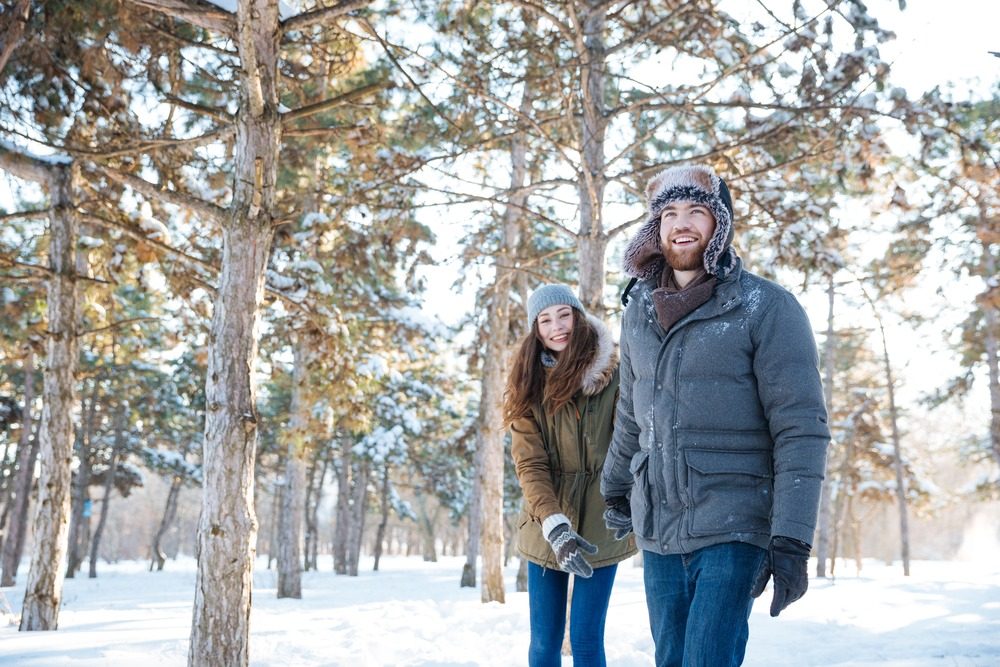
Did you know that most of the body's heat escapes through the head? So it's very important to properly cover your head and ears (a hat like a trapper hat is ideal).
Protect your eyes if you're out in a snowy area (sunglasses) and your nose and neck if there's a cold wind (a scarf or buff). Don't forget sunscreen and a lip balm.
Your hands and feet
Protect your hands with lined gloves. There are reusable hand warmers available in case your hands get too cold.
Choose sturdy but not too heavy boots that protect your feet from moisture. Wear a double pair of socks: one that keeps your feet comfortable and hygienic, and another that provides good thermal protection.
If you suffer from cold feet (or toes), use foot warmers or toe warmers. Heated insoles are also available commercially.
3. Gear
If you're going hiking, don't weigh yourself down with unnecessary gear. See our tips on this topic in the article "Going hiking: a few preliminary questions"
Tip: Do you have to spend the night in a tent in the cold? Try to find a natural material to place between the ground and your tent's groundsheet, such as foliage or pine needles: it will act as an insulating layer.
Place an insulating material between you and the ground, and choose a sleeping bag suited to spending the night in sub-zero temperatures. Don't forget that anything left exposed to the cold risks freezing overnight!
4. Eating well
Your body will use more energy in cold regions than in a temperate climate. Plan regular breaks to refuel with energising food (but not too heavy). Favour hot drinks (a thermos flask). Don't forget that cold drinks risk freezing. Avoid alcohol: its first effect will give you a "warm flush", but this will only be very temporary.
(*) Note: hypothermia occurs when body temperature drops below 35°C. It can be dangerous if it's severe and/or prolonged. In that case, immediately call emergency services.