At a glance
Discover the list of favourite apps of adventurer and paraglider Tom de Dorlodot, useful for any adventure trip.
Adventurer and paraglider Tom de Dorlodot reveals his list of favourite apps for any adventure trip.
No trip without a smartphone
© Tom de Dorlodot
Nowadays, the smartphone has become an inseparable tool in our daily lives. This really applies to every type of person: the student, the businessman, but also the sailor or the adventurer. In my day-to-day life, I'm regularly amazed by all the uses you can find for a smartphone, and of course also by the sheer number of apps that greatly simplify all sorts of procedures and are packed with valuable information. Especially when I'm at sea, in the air, or in the mountains…
WhatsApp, an essential
So I decided to go through the last few things I did on my smartphone, and take the opportunity to tip you off about a few favourite apps that are really useful in my way of life.
So, to start, let's dive into my photos. The last photo I took was when we came across a huge sperm whale out at sea… It was regaining its strength before diving back down for 20 minutes underwater. I managed to get a nice shot before it disappeared.
© Krystle Wright
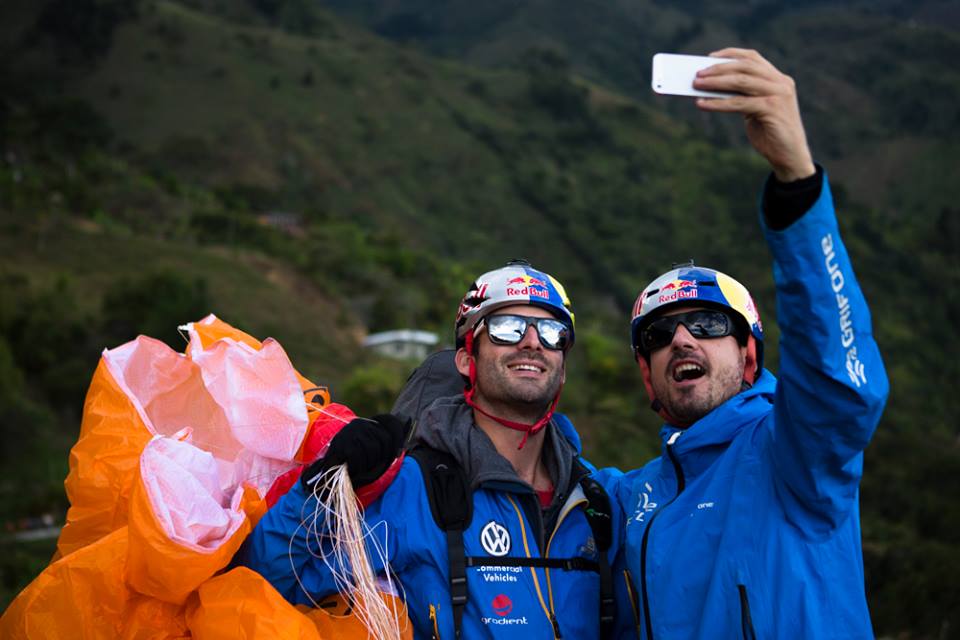
Like many of you, one of my favourite apps is WhatsApp. I use it constantly. Whether for personal chats with friends and family, or as part of my adventures. During an expedition, we always create a group between the different team members. Both for the athletes and the production team. It lets us pass on as much information as possible, but also photos, share our geographical position with each other, leave short voice messages for everyone instead of making that many calls. Right now, the latest WhatsApp group is the one we created with the production team for Ireland, where we've just arrived by boat. The place is stunning, and we've already been able to scout out quite a few spots for the footage we'd like to film later on. Whenever we spot a beautiful place, we take a photo of it and post it in the group.
And if I tell you about the last call I made, it was with Tim the technician about the desalinator (which makes drinking water from sea water) that we have on board. Don't worry, nothing serious, but of course we put all our equipment through its paces, and sometimes it's necessary to get some advice or tips along the way. It's really important to be constantly in touch with the right people who have the right information so we can keep moving forward in the best possible conditions. And here again, the smartphone plays its key role.
A few useful apps
© Tom de Dorlodot
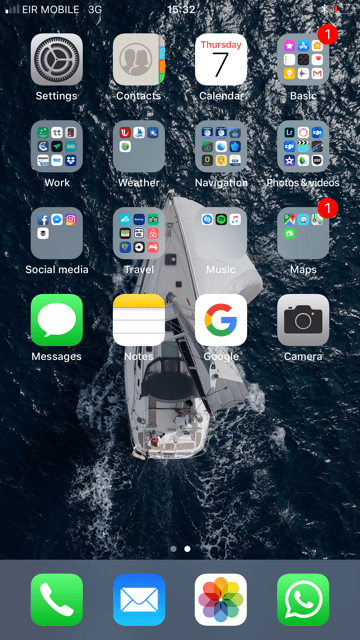
Of course, I have a huge number of apps installed on my phone. And like you, I sometimes realise I have far more than I actually use. I regularly try out quite a few things, but I also try to sort through them systematically so my phone stays nice and organised, like a desk where you want to be able to find a document easily.
Apps like Trip Advisor, Uber or Airbnb are essentials for me when I travel a lot. I really like Trip Advisor for its community aspect, and the photos immediately give you the feel of a place. That said, the Routard app is also great, as is Lonely Planet's, but they tend to send everyone to the same places.
In the event of a medical problem, the Redion app lets its members immediately open an assistance file with the travel insurer.
That said, I also wanted to share with you a few apps that are probably less well known, but that I still find very useful.
The adventurers' apps
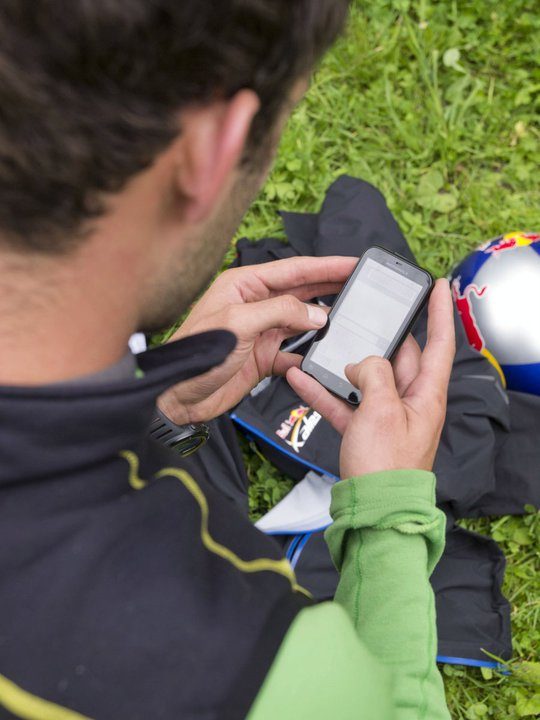
For example, SAS survival guide! Thankfully, I don't have to use it every day… This app explains how to light a fire with stones, filter water, send a message in Morse code or build an igloo to spend the night in… It was developed by a former British special forces soldier to give you good advice and help you survive out in the wild. I've not really had to rely on it in a critical situation yet, but I also enjoy browsing through it and imagining myself in one situation or another.
© Tom de Dorlodot
Along the same lines, First Aid is a great guide on what to do in the event of an accident, when you need to know the right steps to take. A burn, a small fracture, or someone who needs resuscitating? The app can walk you through what to do. But here too, it's worth going through it before such a situation actually happens.
On a different note, we always use Tricount during expeditions. When you're living as a group, it's not always easy to know who paid for what, and therefore who owes what to whom. The app lets you record all of a group's expenses and automatically works out the balance of who owes what to whom.
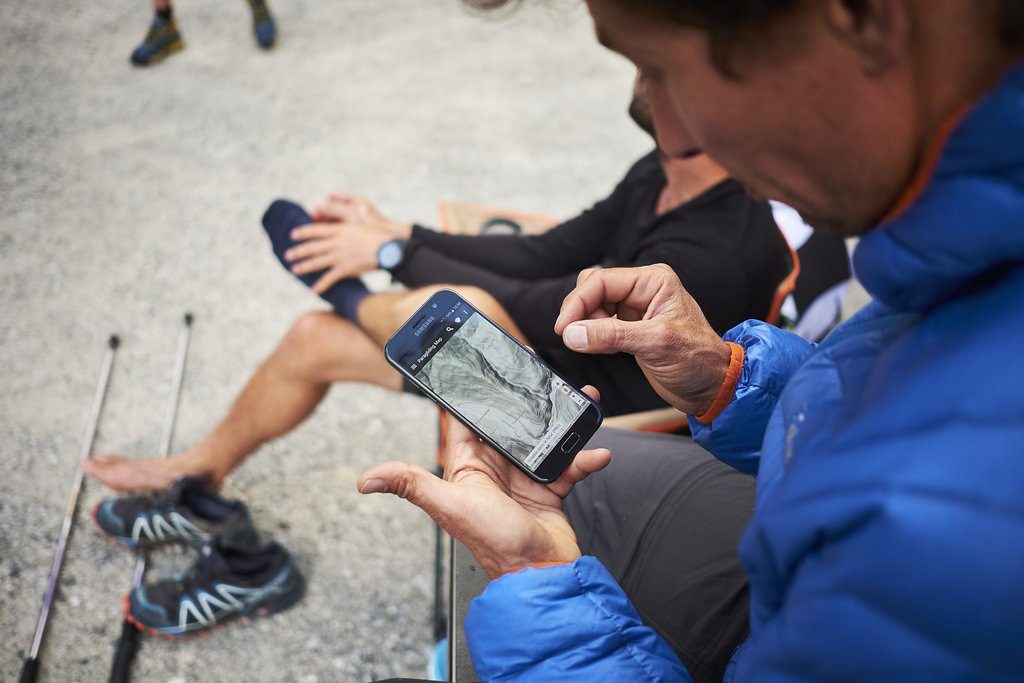
Still in the useful-apps department, I've also discovered Wifi Map. When you're travelling on the other side of the world, mobile networks aren't always the best option. So the app lets you find all the open networks, and sometimes even gives you the codes for certain closed hotspots! And being connected is often the basic requirement if you want to get the most out of all your other apps… ;)
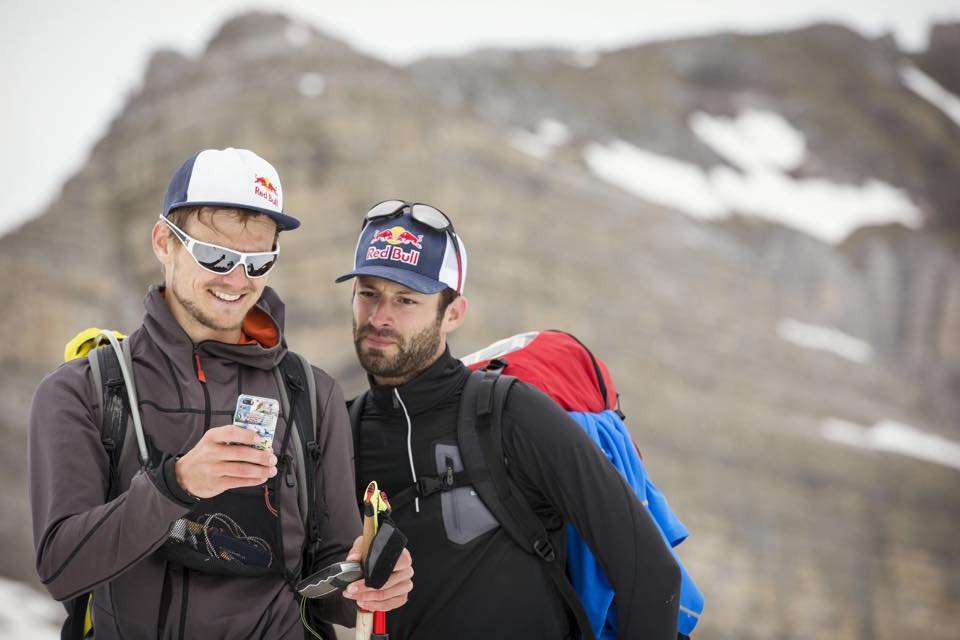
And I couldn't be complete without also mentioning the app I use to check the weather, and especially wind conditions, before going paragliding, wherever I am. I use Squid Mobile, Windy and Meteoblue. And then, of course, I also rely a lot on the apps developed by my partners, such as Garmin Connect or the Red Bull app. We have access to an app that lets us connect with other athletes right across the planet. When we arrive in a new country, it usually gives us an excellent starting point and reference for discovering the local area…
From the virtual world to the real world
© John Stapels
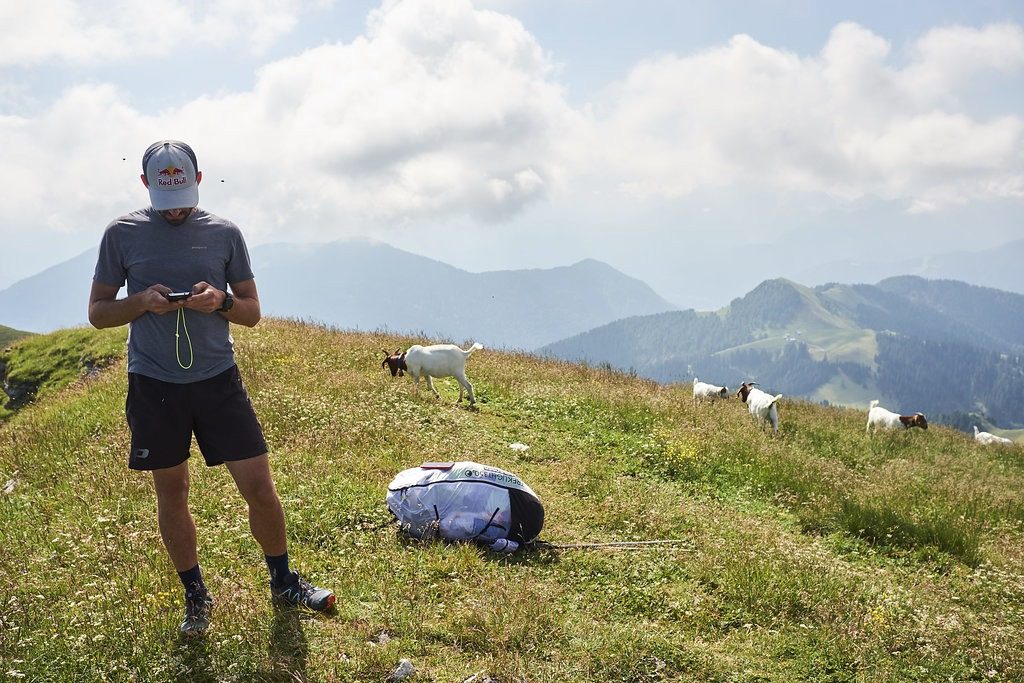
In conclusion: let's not shut ourselves off in our smartphone, let's not live through it. But let's not deny ourselves the pleasure either, when we see all the concentrated technology and resources it can offer in so many situations. Because in the end, it's like everything else: you have to know how to find the right balance and moderate yourself :)
With that, keep being curious, keep exploring, and see you again soon!
Tom.
A few questions put to Tom:
1 - What do you do when you have no network? Can you afford to head off on an adventure without a device that allows satellite communication? Is it expensive?
"If you know you'll be cut off from the world, it's best to let someone know your exact route and plans. If you're setting off on an adventure project (involving risks), I think it's essential to have a reliable means of communication. A SAT phone (Thuraya or Iridium) works well. Personally, I find the Garmin inReach fantastic. Besides being a GPS that helps you find your way, it's an emergency beacon in case of a problem (which contacts a crisis management centre). It can be used to send and receive texts and to share your position at all times. The new inReach mini is really small. It's my new favourite.
Life has no price. For the cost of a GPS and a very reasonable annual subscription, you can stay in touch with the world, even in the most remote places."
2 - Can you travel everywhere with a smartphone (e.g. in China, there must be restrictions and apps don't work there)?
"Indeed, countries like China block certain apps (Facebook, etc). You need to find out beforehand to avoid surprises."
© John Stapels
3 - Can you rely 100% on apps, or should you have a backup plan (e.g. topographic maps, compass, etc.)
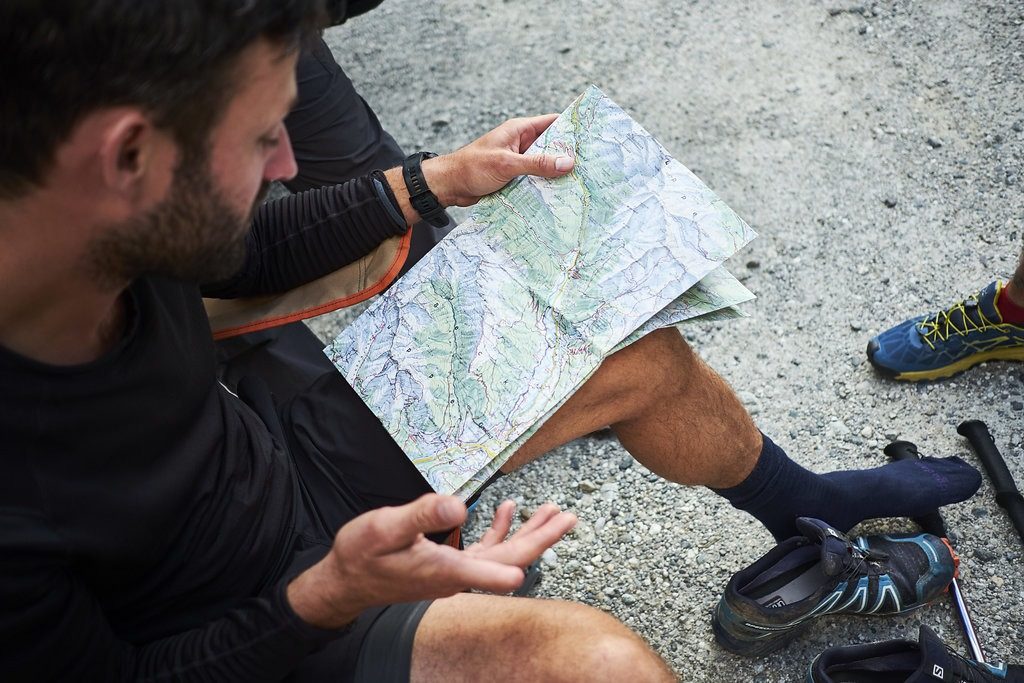
"Nothing will ever replace a good paper map (provided you know how to read it) and a compass. ;-) It's always a good precaution to have all of that in your bag so you don't have to worry about your smartphone battery."
Cover photo: © John Stapels