At a glance
Tom de Dorlodot cycled from Brussels to Chamonix to paraglide down from the summit of Mont Blanc. He shares his tips for anyone who'd like to try the adventure too.
Our blogger and adventurer Tom de Dorlodot set himself an impressive challenge: cycle from Brussels to Chamonix and then take on the ascent of the highest mountain in Europe in order to fly back down from the summit by paraglider.
He did this to raise funds for the Kick Cancer association. On his return, he tells us how this magnificent adventure went and what he learned along the way.
The project
© Tom de Dorlodot
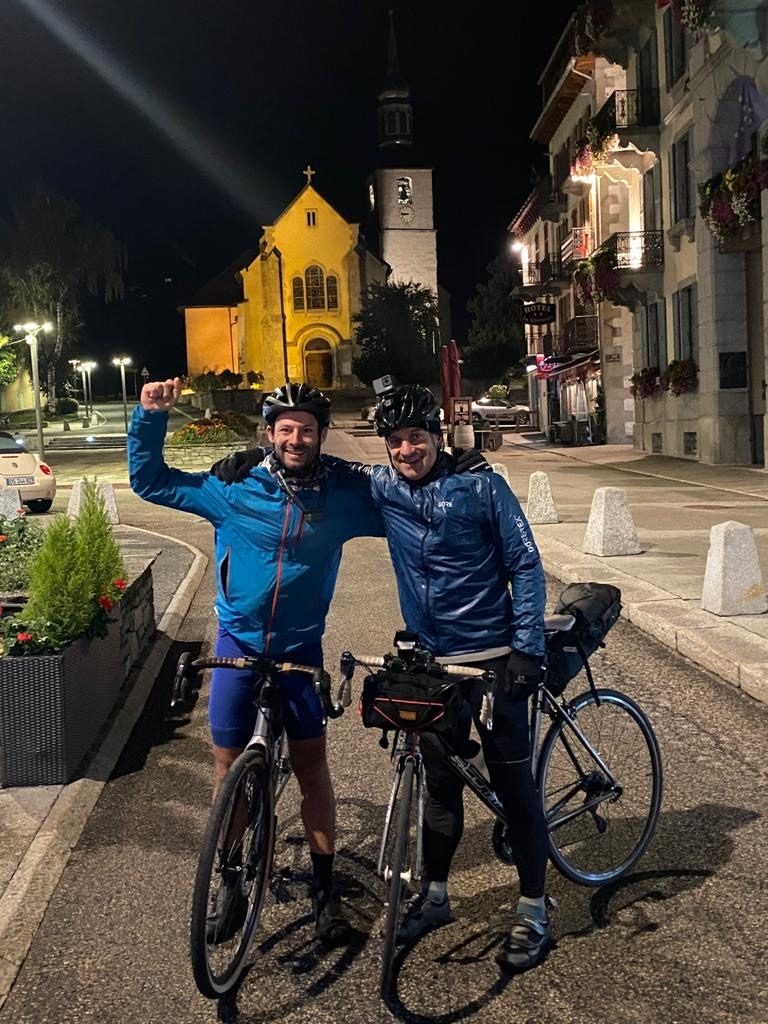
Three weeks ago, on a whim, my friend Luc suggested we cycle to the Alps in September to climb Mont Blanc and fly back down by paraglider. Once again, I couldn't resist the call of adventure.
Choosing the right bike
We had to get organised quickly. I was lucky enough to be able to count on the team at ORBEA to prepare a new carbon Gravel bike for me. Gravel is a great choice for this type of trip. The tyres are wider than on a road bike, which makes it more comfortable over long distances. This bike is better suited to less well-surfaced tracks, and small dirt or gravel paths. I prefer them to major roads because they're safer. I also fitted bags to the frame so I could take the bare minimum with me.
The gear
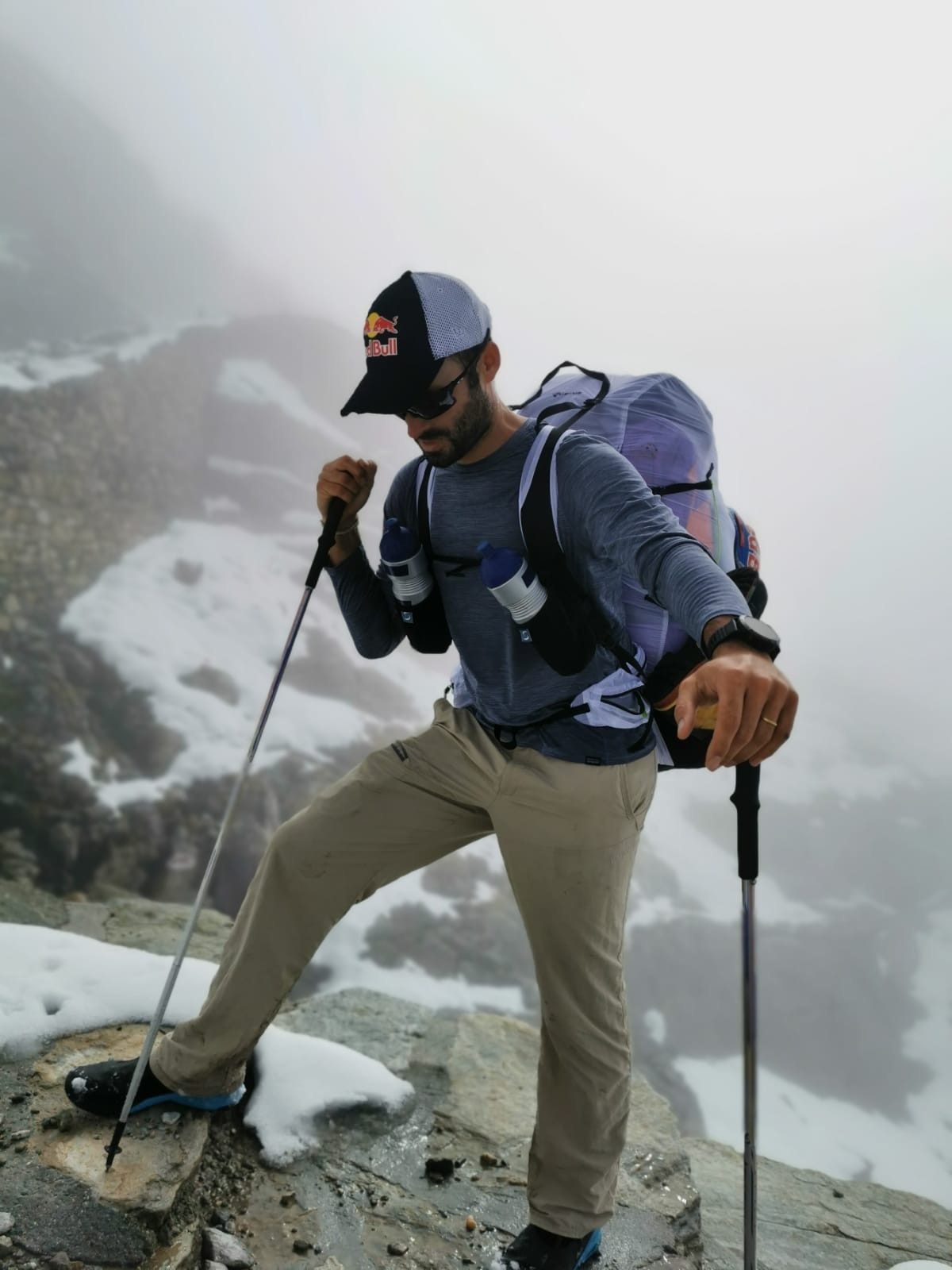
Here's a complete list of the gear I took with me:
© Tom de Dorlodot
- An Orbea Terra bike
- A helmet
- Geosmina bags (fixed to the bike frame)
- A spare inner tube and a few tools (a small pump)
- A Garmin Varia rear radar
- A Garmin EDGE GPS
- An iPhone
- A GoPro with an SD card
- Two t-shirts (one short-sleeved, one long-sleeved)
- A cycling jersey
- A pair of gloves
- A pair of sunglasses
- Socks and underwear
- A waterproof jacket
- Sun cream
- A first-aid kit
- A pair of cycling shoes
- A warm jumper
- Lightweight trousers
- A pair of lightweight sandals
- Two water bottles
- A bank card
- My Redion Sport assistance card
- A buff
- A Garmin InReach Mini tracker
- Cereal bars, honey waffles and chocolate
- A toothbrush and toothpaste.
Looking back, I realise I travelled too light. I should have brought warmer clothes. I got really cold in the mountains.
The right weather app
For the weather, I use the Meteoblue app and I always check with the Chamonix mountain guides' office to find out about snow conditions in the mountains. If you don't have much experience, I strongly recommend hiring a guide. The Explore & Share platform is great for getting in touch with professional guides.
An unforgettable adventure
It was only when I planned the route with Luc and we entered the final destination into my GPS that I realised this wasn't going to be easy…
We set off from Brussels' Grand Place on a Wednesday morning and covered nearly 800 kilometres in four days, crossing various passes in the Jura and the Alps. We spent more than ten hours a day on the bikes. We rode through a beautiful part of France — it was magical. In the evenings, we stopped at small guesthouses along the way to recover our strength and sleep somewhere dry. For safety, we avoided riding at night, and I had fitted a Varia radar to my bike. It's great: oncoming cars are detected by the radar and my GPS shows them on the screen. Plus, my rear light flashes brightly whenever a vehicle approaches. Being clearly visible is essential. We also wore reflective clothing.
© Tom de Dorlodot
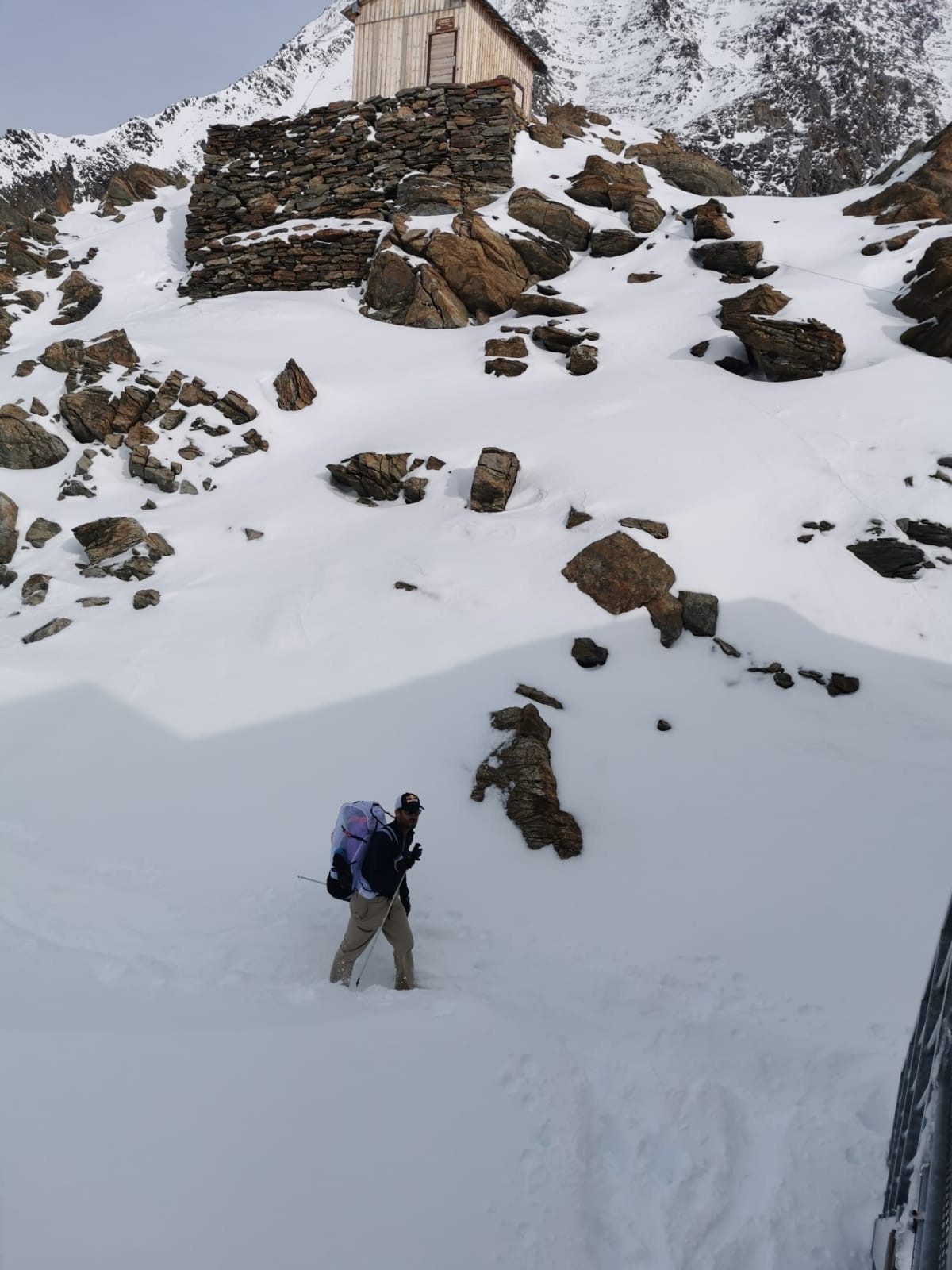
On the last day, it snowed on the passes and we hadn't packed warm enough clothes. Arriving in Chamonix was genuinely tough. We were soaked and it was very cold — we were frozen to the bone. It was 2 degrees.
Once we arrived, we went to enjoy a good fondue to get our strength back. We were burning through more than 6,000 calories a day, just like the Tour de France cyclists. It's a great excuse for some culinary tourism. No need to hold back…
A friend drove down from Belgium with my California van to meet us in Chamonix. He brought my tandem paraglider and our high-mountain gear so we could climb Mont Blanc. The weather forecast really wasn't promising. It had snowed a lot and the mountain huts were about to close for the end of the season. A metre of fresh snow had fallen at altitude. Winter had already arrived. There was no time to lose.
A weather window opened up and we decided to give it a go. We set off on foot in the late morning from the valley floor towards the first hut. There were 2,000 metres of elevation gain to climb. It was tough after already having cycled 800 kilometres. Once at the hut, we slept for a few hours and set off again around three in the morning to get through the Goûter corridor in good conditions. When it's really cold, the footing is better and there are fewer rockfalls. There was a lot of snow, and this trickier section took us more than two and a half hours.
© Tom de Dorlodot
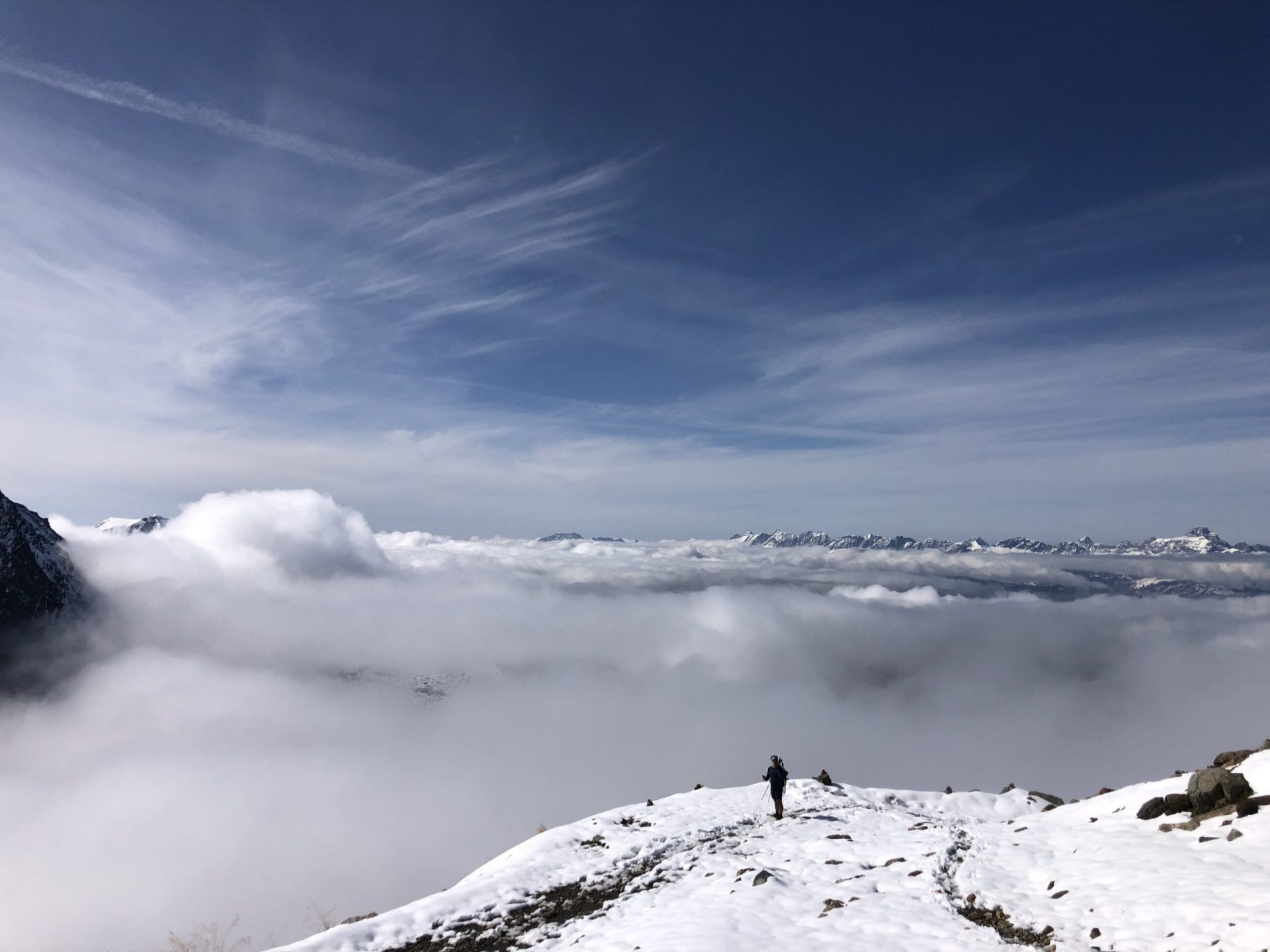
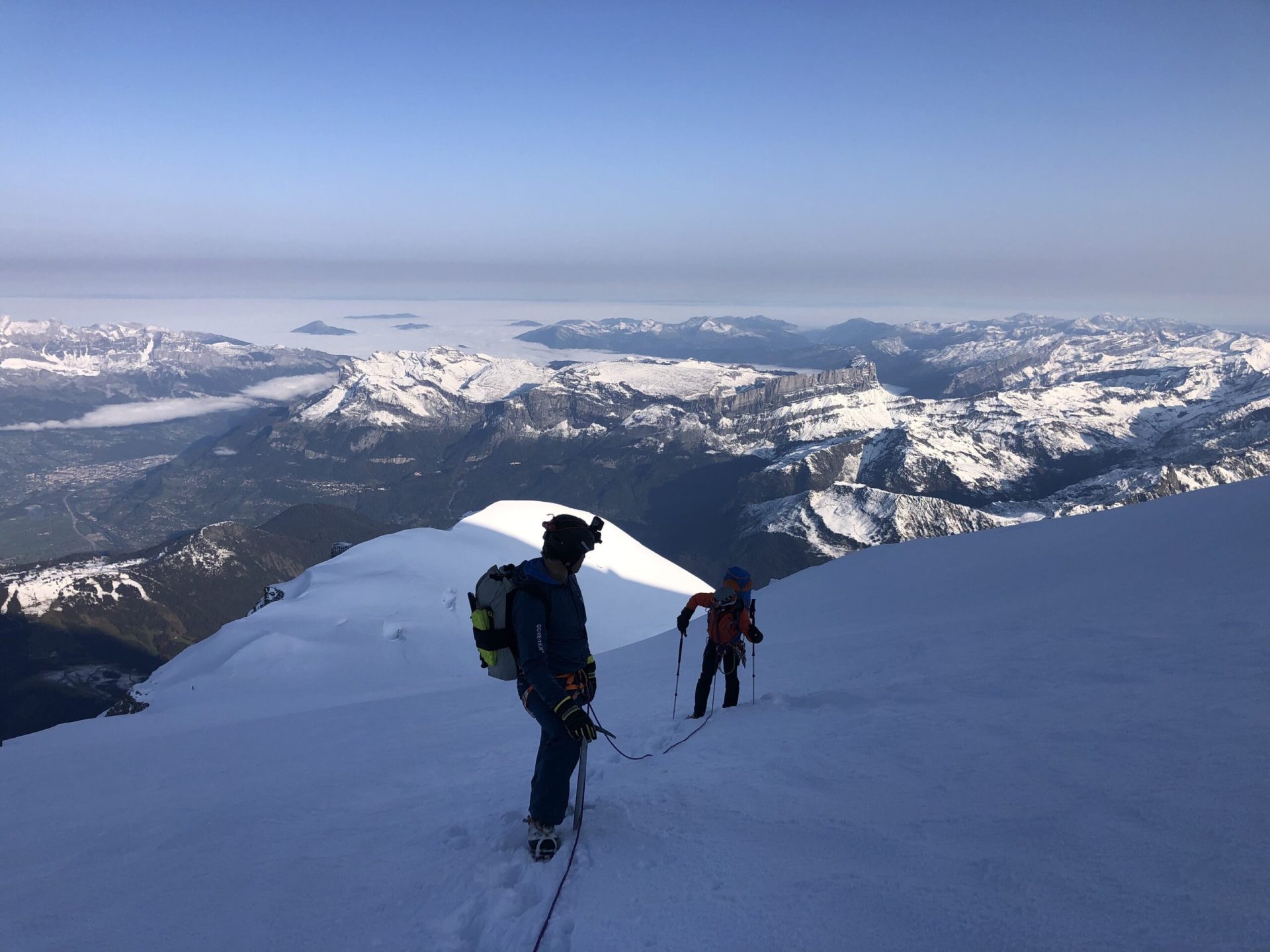
The sun rose around 7am and we found a mountain blanketed in fresh, almost pristine snow. Our feet sank into the deep snow, and it was really physically demanding. Little by little, we gained altitude. There were a few technical sections over wind-blown snow or unstable ice. We decided to leave the paraglider at the Dôme du Goûter, at 4,300 metres, because the wind was too strong to fly and the 18-kilogram bag was slowing us down quite a bit.
We reached the summit around 2pm. The view was breathtaking. We could see the whole of Valais, the Bauges, the Belledonne massif and even the Écrins. We quickly headed back down to collect the paraglider at the Dôme du Goûter. Once there, the wind was still strong, but we managed to take off on the tandem and fly all the way to Chamonix. We reached the valley in under 40 minutes. Lucky, too — on foot it would have taken a whole day's walk!
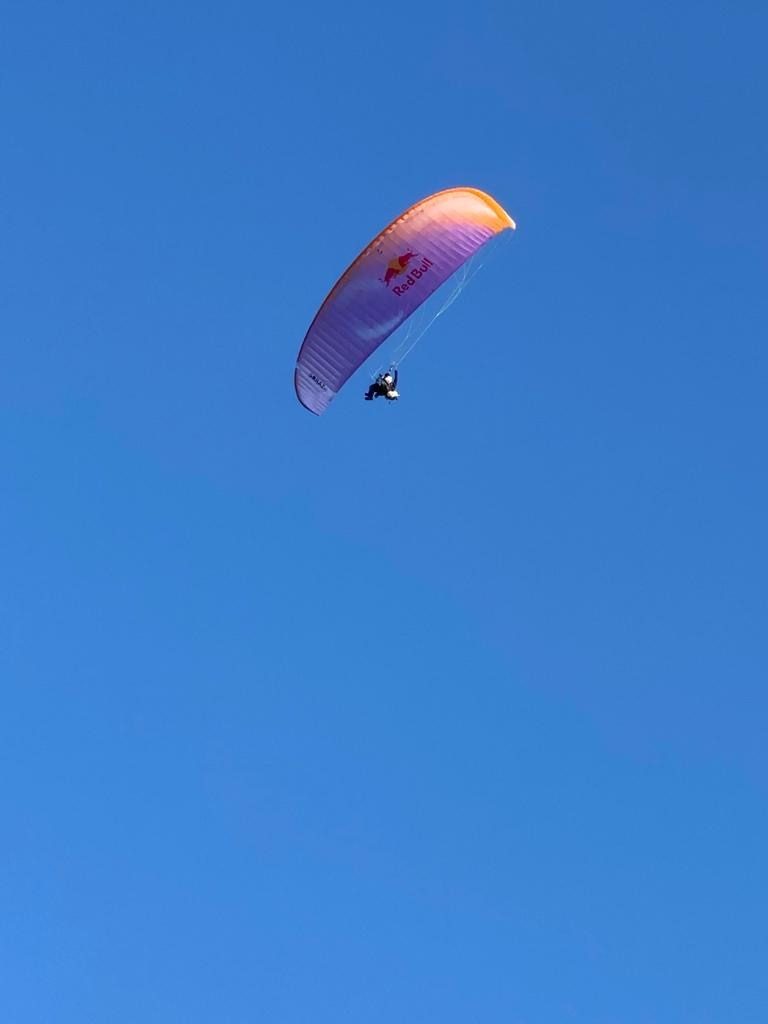
© Tom de Dorlodot
It was truly a wonderful adventure!
I can't wait for the next trip already.
Tom
One last tip:
Head off well covered
Do you also want to head off on a cycling adventure in Belgium or in neighbouring countries? Don't forget to take out good travel assistance cover to protect you in case of health issues or an accident.
If you're looking for specific cover for your bike, go for Redion Belgium's Bike assistance.
Follow Tom and Sofia's adventures and find their tips in our "Travel and adventures" feature
Photos © Tom de Dorlodot