At a glance
Want to pause your studies and spend a gap year abroad? Check out our checklist so you don't forget anything.
It's decided: you're leaving Belgium for a gap year abroad, and putting your studies or career on hold for a while.
But do you have everything you need before you go? Check out our checklist.
According to a survey conducted for Tempo-Team, 4 out of 10 Belgians would like to take a career break to travel, look after their children, or simply take a break. Among 18-34 year-olds, a gap year abroad is the top motivation: 68% want to go on a long trip.
That said, taking a gap year abroad isn't just for students or workers. Anyone can take a year for themselves, to leave everything behind or simply to recharge. Either way, it's important to plan this trip in advance.
Gap year abroad: 11 essential questions
1. What kind of trip is it?
Defining the purpose of your gap year abroad is essential. Why? Because in many countries, it's important to be able to explain the purpose of your trip when you arrive at your destination (tourism, work, studies, etc.).
2. Where am I going?
Before you leave, be sure to find out about the political and health situation, as well as the climate, safety, local laws, customs and traditions (both civil and religious) and social attitudes.
3. Where will I stay?
Sort out your accommodation well in advance (hotel, rental, homestay, camping...) along with the costs involved.
If you're planning to stay in the same city for a few months, here are a few tips from an article in Courrier International:
- Set a budget for accommodation.
- Look into the neighbourhoods and their "vibe": some are quieter, others livelier, and some are best avoided.
- Plan ahead: finding accommodation takes time!
More of an adventurer? Check the national and local rules on camping. In some places, pitching a tent or wild camping is banned or strongly discouraged!
4. How will I get around?
If you're planning to travel actively (a moving itinerary), make a list of the transport options available. Plane, train, bus, boat, car rental... Map out your routes.
Don't hesitate to bring real paper maps of the regions you'll be visiting, and mark different resources on them (a train station, a bus station, a petrol station...).
Do your research well in advance on hiking trips, hitchhiking tips, scams... or pickpockets!
5. How do I book my trip?
If your trip takes you around the world, keep the following tips in mind:
- Avoid peak periods.
- Watch the number of stopovers: the more stops, the more expensive it gets.
- Choose the busiest hub airports for your stopovers.
- Limit the number of airlines you use and favour alliances.
- Stick to major air routes.
6. Do I have all the necessary ID documents?
The Belgian ID card - eID - is valid in around fifty countries. This document shows you which countries accept the eID and under what conditions.
Check the travel documents required by destination. Watch out for your passport's validity: if it's expired, you won't be able to travel. The same applies if it expires during your trip. Some destinations require a validity period longer than your return date!
If you want to rent and drive a vehicle outside the European Union, you'll most likely need an international driving licence.
7. Am I in good health?
It's worth paying a quick visit to your doctor and dentist before setting off on your adventure.
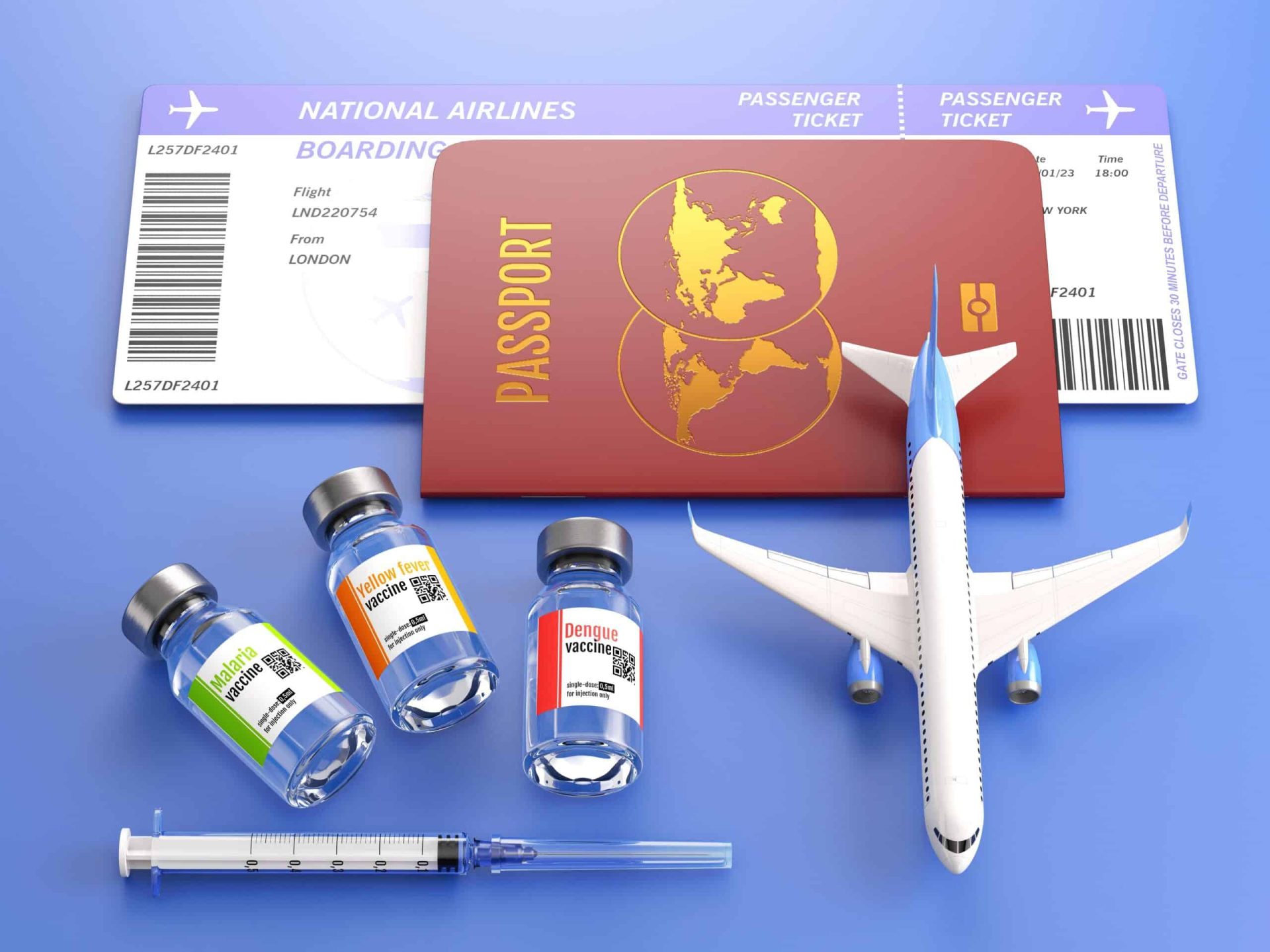
Some countries, especially tropical ones, require you to have been vaccinated against certain diseases before you arrive.
If you have a condition that requires daily treatment, stock up on medication. But be careful: ask your doctor to draw up a detailed list of what you're bringing, ideally in English.
Be aware of any restrictions and health rules (pandemic-related).
8. Have I set my budget?
Find out about the cost of living on site, how much a meal, a taxi, or accommodation costs... Secure this financial aspect as much as possible. Don't hesitate to plan generously and check guidebooks for good deals.
9. How will I pay while I'm there?
Check with your bank on two main points:
- Can you use your bank card, debit or credit, at your various travel destinations? What are the costs of using it?
- What is the lead time to order foreign currency for your destination countries?
Also ask your bank for their emergency numbers in case of loss or theft of cash or your bank card. Also, save the number for Card Stop right away.
Don't bring large amounts of cash on your trip. Bring small denominations, ideally for paying for a taxi, a tip...
10. How will I stay in touch while I'm there?
A mobile phone is a valuable ally in case of trouble or an emergency. If you really want to keep its role to a minimum, opt for an "old-fashioned" phone, which holds its charge longer than power-hungry smartphones.
Contact your phone provider and make sure you have the right options activated (roaming, international) on your phone. Save the emergency numbers for your destinations in your phone in advance.
In your luggage, always carry a universal adapter and a spare charging cable, in case the first one wears out. You can find this kind of adapter in any supermarket or at the airport.
Check whether you'll be able to use your iPad or laptop.
11. Am I sufficiently insured?
Get in touch with your insurer to find out about their cover for a gap year abroad. At Redion, the Long Trip Travel Insurance covers trips lasting 3 to 12 months, with the following main benefits:
- repatriation of the injured or sick person and any insured travel companions;
- medical expenses paid abroad up to €750,000 (Europe) and €1,250,000 (worldwide);
- an early return in the event of hospitalisation or death of a family member in Belgium, and your return to the place where your trip was interrupted;
- €5,000 for search and rescue costs.
Useful links for a gap year abroad
- The travel documents required by destination. Outside the European Union, it's almost always mandatory to carry a visa to travel. This visa must be applied for from the authorities in advance and must strictly match your intentions.
- The procedure for an urgent passport request.
- The Consulate or Embassy at your destination. Consular services can tell you everything you need to know about the region where you'll be spending your gap year.
- Travellers Online, which lets you register with the Belgian authorities and get assistance if you run into trouble on site (natural disaster, attacks, political instability...).
- Destination-specific advice compiled by the Federal Ministry of Foreign Affairs, covering security, health, transport, and customs and traditions.
- Florence Tornincasa's tips in our article: "5 tips for women travelling alone."
- This section of the Routard guide, which gives an overview of "gay travel". This article notes that 73 countries still consider homosexuality a criminal offence, and 13 countries impose the death penalty for it.
- The Wanda.be platform lets you find out about the health side of your gap year abroad.
- Our tips for stocking your travel medicine kit.
- Our tips on paying by card and in cash abroad and best practices for cash from the Federal Ministry of Foreign Affairs.
- Our 10 tips for a budget-friendly holiday.
- Information on phone plans abroad from Orange, Base, Proximus and VOO.
Documents to always carry with you during a gap year abroad
- The list of your medications.
- The numbers of your contacts in Belgium and on site.
- Your travel assistance card and procedure.
- The address of the Belgian consulate at your destinations.
- Your bank card, and Card Stop's contact details.
- Your ID documents.
- Your travel tickets.
And don't forget to keep copies of your ID and travel documents in a safe place in case of any problems.
Article written in collaboration with We are the Words.