At a glance
Discover the most common traps, scams and fraud when traveling abroad, and how to avoid them.
Traveling to a country you don't know (well) can expose you to one form of scam or fraud or another. Our blogger Alain Dierckx joins us to give you a wealth of tips to help you avoid the most classic traps.
In this guide, we give you tips to prevent fraud or scams in the following situations:
- booking with a tour operator
- booking accommodation online
- using roaming and public Wi-Fi
- getting around by taxi or public transport
- common scams on the street
- how and when to negotiate and haggle
- using foreign currency
- renting a vehicle
- keeping your personal documents safe
- using social media
- points of attention after you get back
Booking with an Approved Tour Operator
- In Belgium, these are travel organizers affiliated with ABTO (Association of Belgian Travel Advisors). In France, this is SETO (Syndicat des Entreprises du Tour Operating). In the Netherlands, it's ANVR (Algemeen Nederlands Verbond van Reisondernemingen) and SGR (Stichting Garantiefonds Reisgelden). Check the travel agency's website to see whether the corresponding official body is mentioned there.
Analyzing the Travel Agency's Website
- Check that there are no spelling mistakes or suspicious domain extensions. Look for a customer service department with a landline phone number. Read reviews published on well-known review platforms such as TrustPilot or Google. If necessary, call them and ask specific questions.
Booking Accommodation Online
- Online, you'll find a multitude of websites, specialized or not, professional or not, allowing you to search for or book accommodation. Be careful, though: some sites are unreliable and are designed to get money out of you.
- Be wary of vacation rental offers with prices that are too attractive. If the price seems too good compared to the market rate, there may be a problem. So carefully check that your accommodation matches the description and photos on the site, that it actually exists, and that the landlord is acting in good faith.
- Do your research: check the landlord's contact details (phone number, address, email), search for your accommodation on Google Maps to make sure it really exists. Would-be scammers use genuine listings or dress up photos using AI. So it's important to check everything. With Google Lens, you can also check whether the photos come from another website.
- Check whether the hotel appears on an official booking site such as Booking.com.
- Call the hotel, verify the information you've found with them, and ask specific questions.
- Don't pay or sign anything before you've received a rental agreement.
- Don't pay a deposit higher than 30% of the total amount.
- Don't pay via companies specialized in money transfers (such as Western Union), by postal order, or with cryptocurrency. Use recognized booking and payment platforms.
- Consumer reviews aren't always genuine. Overly positive ratings can therefore be fake.
- Don't let yourself be pressured into making a quick decision. This is a well-known trick: a countdown that expires in a very short time, or WhatsApp messages urging you to book before the offer expires. Don't act on them. Booking a trip or a stay should be done calmly, to avoid any mistakes.
- Pay attention to the protection of your personal data: to make a booking, you need to provide some personal information. You can't avoid it, but keep the amount of data to the strict minimum. If you have to create a password, choose a strong one and enable two-step verification (password plus SMS or email).
- Tip: looking for a hotel? Read the article: "Hotel booking sites: what you need to know"
Roaming and Public Wi-Fi
- To avoid high bills due to roaming charges abroad, check with your telecom operator beforehand to find a solution. This could be a plan valid for the duration of your vacation, or a digital SIM card allowing you to use mobile data and call minutes at your usual rates.
- Free Wi-Fi while traveling is convenient, but beware: a public Wi-Fi network is generally not secure, or only very slightly. So avoid online banking and don't make any payments on unsecured networks. Use a different password from the one you use for your usual apps. If you do need to carry out a confidential transaction, use your mobile data instead.
Taxis and Transport
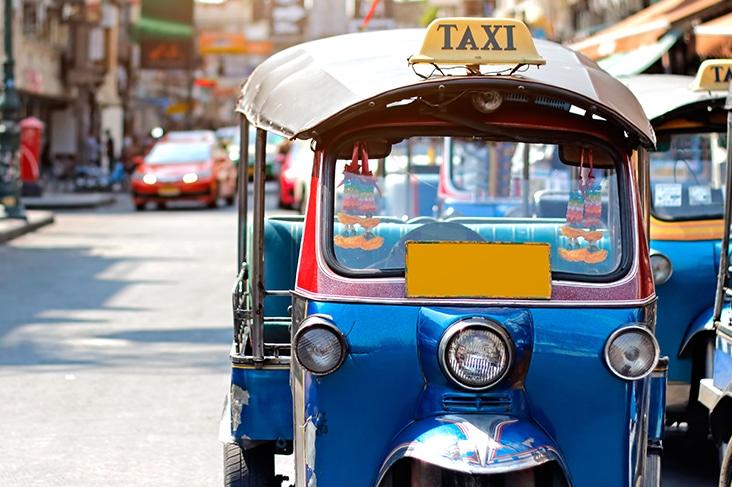 Before you leave, check online for the official rates for certain routes to your vacation destination. You can do this on various forums or on taxi company websites. This will give you an idea of the rates and let you agree on a price with the taxi driver.
- Check the distance and travel time between the airport and your hotel. When getting into the taxi, ask how long the ride will take. This will help you avoid being driven around the city before reaching your hotel.
- Always take a taxi from an official taxi stand, or book via a well-known taxi app such as Uber or Lyft.
- Check that you're given the correct change, with the right notes and coins.
- Check that the taxi meter works properly and doesn't run up too fast, and that the correct category (e.g., in-town/out-of-town rate) is selected.
- Using the Uber app (if available in your destination country) will give you a quote upfront and can be an alternative to a regular taxi ride.
Street Scams
- Don't buy tickets for events or anything else from people on the street. There's a good chance it's a scam. Book your excursions directly with the organizer, not through resellers.
- Don't accept free items on the street, as they can suddenly become "not free" after all. Refuse bracelets or other objects offered to you, as you'll then be asked for money in return.
- Don't hand your smartphone to anyone to take a photo, as you risk losing it or having to pay for the photo.
- Don't let a local resident lead you around under the pretext of, say, wanting to "practice their English". There's a good chance you'll have to pay a significant sum for "services rendered", or that the tour will end up at shops or restaurants that have an "arrangement" with the guide.
- Don't take part in games such as the cup-and-ball trick. What's more, pickpockets are always very active around these games.
Negotiating and Haggling
- Find out beforehand whether negotiating is customary in the country.
- Don't buy from the first seller you come across — compare the price of the item you want (or a similar item) across several shops. This will give you a better idea of the going rate. You can also ask other tourists how much they paid.
- Always negotiate in the local currency; the price in euros will always be higher, since the seller uses the exchange rate to their own advantage.
- Always check the change you're given. "Counting errors" are sometimes made deliberately. Also check the condition of the notes.
Foreign Currency
- Generally speaking, it's more advantageous to use your debit card or credit card abroad to withdraw cash or make payments. – Within the eurozone, payments are free with both types of card, and cash withdrawals are usually cheaper with your debit card. – Outside the eurozone, you can choose to pay with either your debit card or your credit card. Cash withdrawals there are usually cheaper with your debit card, provided your Maestro card is accepted. In addition, using your card is safer than exchanging cash.
- If your credit card is lost or stolen: block it immediately and contact Card Stop at 00.32.78.170.170 (https://cardstop.be/fr-be/home)
 If you're bringing cash to exchange on site: – Don't exchange your money at the airport, as exchange rates there are usually very high. – Always exchange your money at an official currency exchange office or at a bank. Keep all documents as proof.
- In exceptional cases, an ATM may have been tampered with by criminals to copy your card data and PIN. So always make sure to cover your PIN and use an ATM located inside a bank.
- Always keep your payment card safe and within reach. When making a payment with a merchant, never let your card out of sight. Check your banking app regularly and, if necessary, enable notifications for every transaction made with your credit card and every transaction on your bank account, so you're always informed immediately. If you have several payment methods, keep them in different places.
Renting a Vehicle
- Before renting a car or motorbike, read our tips in the article "Renting a car abroad: 6 points to consider"
Personal Documents
- When traveling, it's recommended to bring a digital copy of your important documents. It's best to keep the original documents in a safe place (for example, in a pouch under your clothes).
- Before you leave on a trip, make a copy of your important documents (ID, travel documents, booking confirmations, travel insurance, etc.) and keep them in digital format in your mailbox. In an emergency, you'll be able to access your email from abroad via an internet connection and download your documents.
Social Media
- If you share photos or videos on social media during your vacation, you're effectively signaling to burglars that you're not home. This makes it easy for them to act. It's therefore better to share your photos after your trip, or to restrict who can see them on social media.
When You Get Back
- Payments: When you get back, it's recommended to check all the transactions made with your credit card and on your bank account during the trip. To do this, refer to the receipts you kept and to your credit card statements. Report any suspicious transaction as soon as possible to your bank, your credit card company, your tour operator, your insurer, or the police. Don't overlook small unfamiliar amounts, as they can be part of a criminal scheme aimed at taking larger sums from you later on.
- Rental cars: after your vacation, your credit card may be debited remotely for damage caused to a car you rented, or for a traffic fine. If this charge is unjustified, dispute it with your credit card issuer and provide as much evidence as possible, such as photos of the car at pick-up and drop-off, and any other relevant documents.
- Hotel charges: a hotel may also bill you after the fact or withhold a deposit, for example for cleaning fees or damages. To avoid this, it's best to take photos of the room when you check out and always ask for a final invoice when you leave. If charges were billed unfairly, dispute them with your credit card issuer and/or ask the hotel for concrete evidence and a cancellation of the charges.
Fraud and Personal Behavior
Fraud can therefore take all sorts of forms. Always stay on your guard and, above all, don't give scammers a reason to target you…
- by showing that you're carrying a lot of (visible) money,
- by acting too hesitant or anxious,
- by not paying enough attention to your belongings.
Click here to find out how to outsmart pickpockets.
Also read:
Don't forget to take out travel insurance to cover you during your stay and enjoy your vacation with complete peace of mind.