
At a glance
Hay fever can be dangerous behind the wheel and cause car accidents. Here's how to limit its effects.
A scourge of sunny days, hay fever can not only ruin a lovely spring or summer day, but can also be a potential source of danger behind the wheel.
Here are a few tips to limit its effects.
Does hay fever cause road accidents?
Every year, a large number of drivers suffering from hay fever are involved in road accidents. According to a study by Maastricht University, hay fever has the same effect behind the wheel as 3 glasses of alcohol. The symptoms of the allergy, or the effects of its treatment, can significantly hinder or disrupt driving.
How to limit the effects of hay fever while driving?
Before setting off
- If you're in the middle of an allergy flare-up, ask yourself whether you really need to drive: if you suffer from hay fever, it's best to limit driving as much as possible during your allergy period;
- Find out about the side effects of your treatment (by reading the leaflet or asking your doctor), as some medications can cause attention problems or drowsiness;
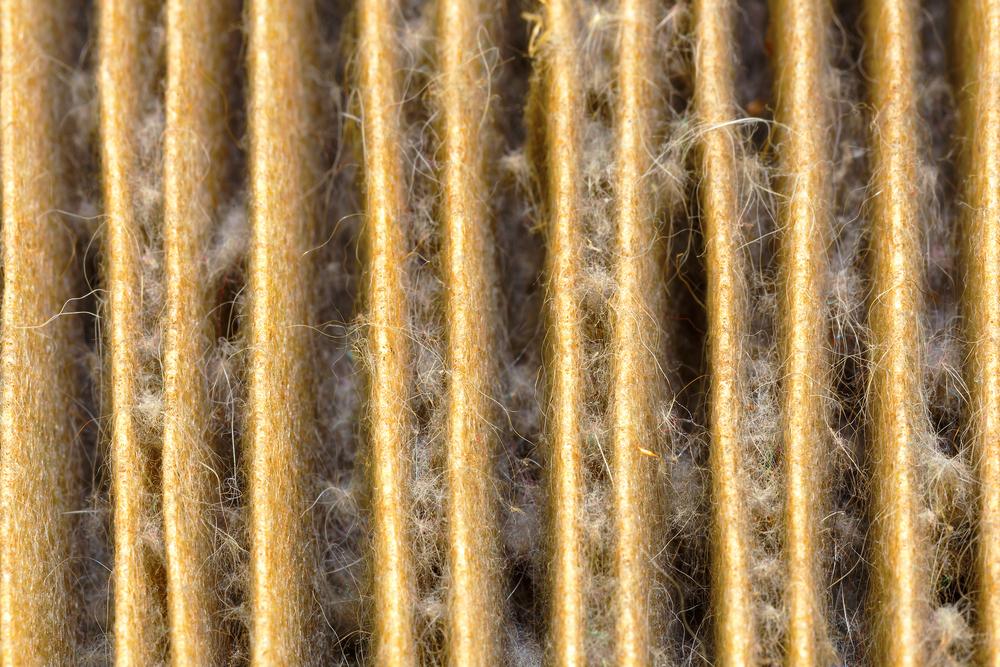
A saturated pollen filter
- Choose a route that avoids "high-risk" areas as much as possible (such as wooded areas, meadows, roadsides with tall grass, etc.);
- Have the pollen or air filter changed after 15,000 kilometres;
- During vehicle servicing, ask the garage to disinfect the air conditioning and ventilation system of the cabin.
On the road
- Keep the windows closed and switch the ventilation to recirculation mode when driving through a "high-risk area";
- Avoid parking spots with a high concentration of pollen (e.g. under trees);
- Protect your eyes with sunglasses.
How to avoid worsening hay fever symptoms?
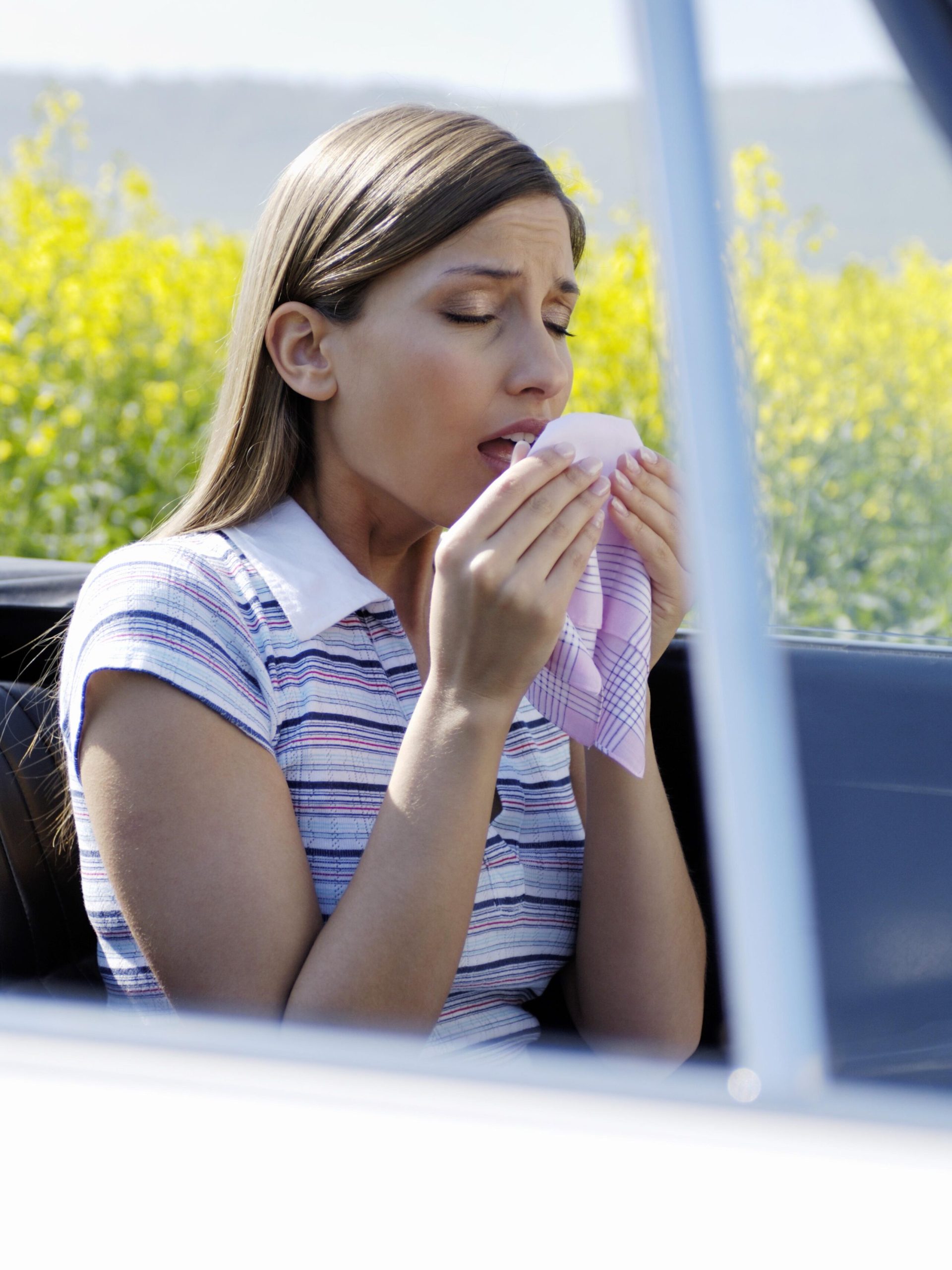 Certain factors can worsen hay fever, such as dust mites and animal hair, which are also causes of allergies. Chemicals and pollution should also be taken into account, as they can increase sensitivity to allergens. To reduce the effects of these various factors, it's best to:
- Air out your vehicle for a few minutes every day (except in areas with concentrated pollen) and every time the cabin is cleaned with chemical products;
- Regularly vacuum the cabin's seats;
- Avoid air fresheners;
- Keep the windows closed and cut off outside air intake in tunnels, traffic jams or behind a polluting vehicle (truck, tractor, etc.);
- Don't smoke in the car.
What is hay fever?
Hay fever, also known as allergic rhinitis, is caused by an allergy to grass, plant or tree pollen, or even to certain moulds. It's estimated to affect nearly one person in five in industrialised countries. Those most affected are mainly in the 15-40 age group. Hay fever can occur over a period ranging from March to October, depending on the allergies involved. From March to June, it's mainly allergies to pollen from trees, while from May to October, allergies to grasses tend to take over.
The symptoms are:
- An itchy nose (with sneezing fits), a runny or blocked nose;
- Itchy, watery or burning eyes;
- A dry or scratchy throat, a dry cough;
- A heavy head;
- Fatigue accompanied by fever;
- Itchy skin.
Some of these symptoms can sometimes resemble those of a viral infection or the flu, even though the cause is completely different. See your doctor if in doubt.
For more information
https://www.euforea.eu/sites/default/files/2018-08/2010-ARIA-Report.pdf
Also read
[How to avoid falling asleep at the wheel?](/en/blog/how-to-avoid-falling-asleep-at-the-wheel)Travelling with medication[](/en/blog/traveling-with-medication)Travelling with an allergy: not always easy
First published: 07/2017 - Updated: 06/2021