At a glance
In this article, we give you essential information for travelling to Japan: emergency numbers, formalities, health, driving rules, activities by season, and of course the must-try dishes and useful expressions.
Between age-old traditions and futuristic modernity, Japan fascinates through its contrasts. From the neon buzz of Tokyo to the Zen temples of Kyoto, by way of the snow-capped peaks of Hokkaido and the beaches of Okinawa, the archipelago offers a unique experience, marked by refinement and serenity.
Emergency numbers: who to call in the event of a major problem?
- Police: 110
- Fire brigade / Ambulance: 119
- Belgian Embassy in Tokyo: +81 (0)3-3262-0191
- Card Stop (lost or stolen credit cards): +32 78 170 170
- Doc Stop (lost or stolen Belgian ID card or passport): +32 2 488 21 23
Assistance: Redion (Belgium)
In the event of an emergency, contact local emergency services first!
– Want to reach Redion for a medical or technical problem (e.g. car breakdown)? Do so via the Redion app (downloadable from the Apple Store or Google Play)
– Want to reach Redion for an administrative request or a contract change? Do so via the Customer Area of the website: https://www.redion.be
How can you travel through Japan with peace of mind?
Japan is a very safe, well-organised country, but one where the unexpected can be costly or complicated to deal with because of the language barrier. Planning ahead for formalities (often digital) and having health cover are essential. Careful preparation will let you make the most of your stay.\
What travel documents do you need to visit Japan?
To enter Japan from Belgium, you will need:
- A valid passport covering the length of your stay (ideally valid for 6 months as a precaution).
- Belgian travellers are exempt from a visa for a tourist stay of less than 90 days.
It's strongly recommended to use the official Visit Japan Web service before you leave to pre-register your immigration and customs information, which greatly speeds up arrival at the airport.
Before you leave, register your trip on the Travellers Online website of the Federal Foreign Affairs Department, which can then keep you informed and provide support in the event of a major problem.
What is healthcare like in Japan?
The Japanese healthcare system is of excellent quality, with state-of-the-art equipment. However, care is very expensive. Most hospitals and clinics require immediate, full payment of fees, and don't always accept foreign credit cards. What's more, few doctors are fluent in English outside major international centres.
Redion recommends taking out travel insurance covering medical costs and repatriation to avoid having to pay large sums upfront.
How safe is Japan?
Japan is considered one of the safest countries in the world. The crime rate is extremely low. You can walk around without worry, day or night, in most areas. The main risk is natural (earthquakes, typhoons). The country is very well prepared for these events.
A few simple tips:
- In the event of an earthquake, stay calm and follow the instructions of locals or your hotel staff.
- Download an alert app (such as "Safety tips" from the Japan Tourism Agency).
- Strictly respect restricted areas around active volcanoes.
For up-to-date safety advice, check the Federal Foreign Affairs Department's website: https://diplomatie.belgium.be
A few simple precautions:
- Keep your valuables out of sight and prefer paying by card.
- Always make copies of your official documents.
- When driving, stay alert to traffic.
What are the driving rules in Japan?
Driving in Japan is an unusual but entirely manageable experience. Courtesy is the golden rule on the road. The network is in excellent condition, although roads can be narrow in rural and mountainous areas.
Driving licence and assistance cover
Please note: the Belgian international driving permit (1968 model) is NOT recognised in Japan. To drive, you must have your original Belgian licence along with an official Japanese translation (issued by the JAF - Japan Automobile Federation). Driving is on the left, as in the United Kingdom. The vehicle's controls are mirrored (gear lever on the left, handbrake on the left), but the pedals remain the same. Allow yourself some time to adjust before hitting the road.
Speed limits
Limits are lower than in Europe and strictly enforced:
- In town: 30 to 50 km/h
- On roads outside built-up areas: 60 km/h
- On motorways: 80 to 100 km/h
Practical tips
- Alcohol: Zero tolerance (0.0 g/l). Penalties are severe, including for passengers of a drunk driver.
- Traffic lights: They're often located on the other side of the intersection, so don't stop in the middle of it!
- Tolls: Motorways are expensive. Rental cars are often fitted with an ETC (electronic toll collection) box; you settle the total amount with the rental company at the end.
What can you see in Japan depending on the season?
The Japanese archipelago stretches across a wide range of latitudes, offering four very distinct seasons. Each period radically transforms the landscape, from cherry blossoms to red maple leaves.
Spring (March to May)
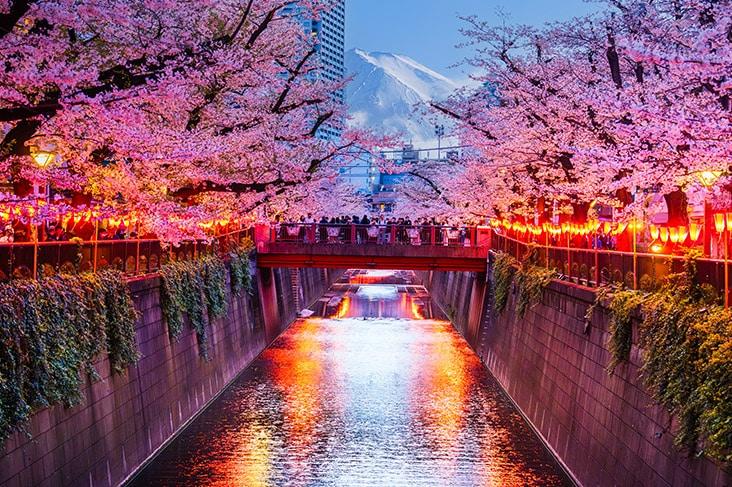
This is the most iconic season, famous for hanami (cherry blossom viewing). The climate is mild and pleasant for visiting Tokyo, Kyoto and Hiroshima. It's also the busiest period: book your accommodation well in advance.
Summer (June to August)
Summer is hot and very humid, marked by the rainy season in June (tsuyu). It's the ideal time to attend the many traditional festivals (matsuri) and fireworks displays, or to go hiking in Hokkaido (in the north), where the air is cooler.
Autumn (September to November)
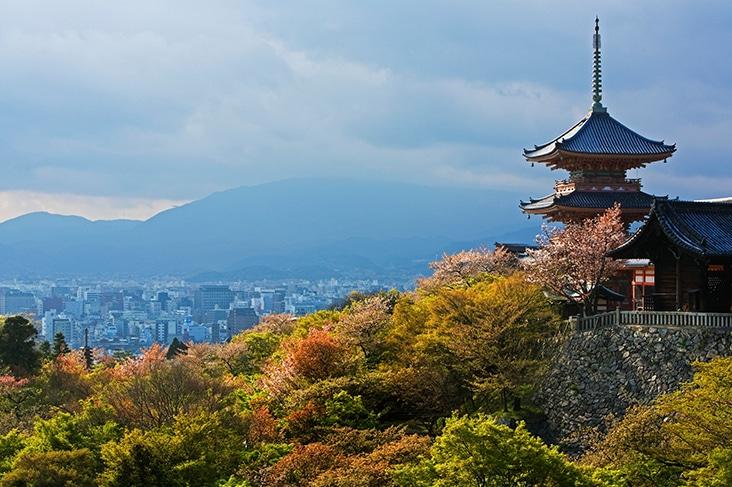
Often considered the best season alongside spring. The weather is dry and mild, and the landscape is covered in spectacular colours (koyo), particularly in Kyoto's temples and the national parks.
Winter (December to February)
The sky is often bright blue on the Pacific coast (Tokyo), offering superb views of Mount Fuji. It's ski season in the Japanese Alps and Hokkaido (world-renowned powder snow), and the best time to enjoy hot springs (onsen).
Did you know?
Nippon (日本) or Nihon is an official, native Japanese name for Japan. The English word "Japan" reached the West via early trade routes. The Mandarin or perhaps Wu Chinese word for Japan was transcribed by Marco Polo as Cipangu. Nippon and Nihon literally mean "origin of the sun", or "where the sun rises", and are therefore often translated as "the land of the rising sun". This name comes from correspondence between the Japanese Empire and China's Sui dynasty and refers to Japan's geographical position east of China.
Other practical information about Japan
- Capital: Tokyo
- Official language: Japanese
- Currency: Yen (JPY) – 100 JPY ≈ €0.60 (variable rate). Japan is a country where cash remains king, although cards are increasingly accepted. Always plan to carry some yen for small restaurants, temples and transport. In Japan, tipping does not exist. Leaving extra money can even cause embarrassment or be seen as a mistake that the server will try to correct by giving you change. Excellent service is considered the standard and doesn't require a financial reward. A simple "Arigatô gozaimasu" (thank you very much) is more than enough.
- Area: 377,975 km²
- Population: Around 124 million inhabitants
- Something to note: Electrical outlets are type A (flat pins, as in the USA) and the voltage is 100V. An adapter is essential.
- Time zone: UTC +9 (+7h in summer / +8h in winter compared to Belgium).
- Tourist office: japan.travel/fr
- Belgian Embassy in Japan: japan.diplomatie.belgium.be
What are Japan's culinary specialities?
Japanese cuisine ("Washoku") is listed as UNESCO Intangible Cultural Heritage. It goes well beyond sushi and stands out for the freshness of its ingredients and the aesthetics of its presentation.
The must-tries
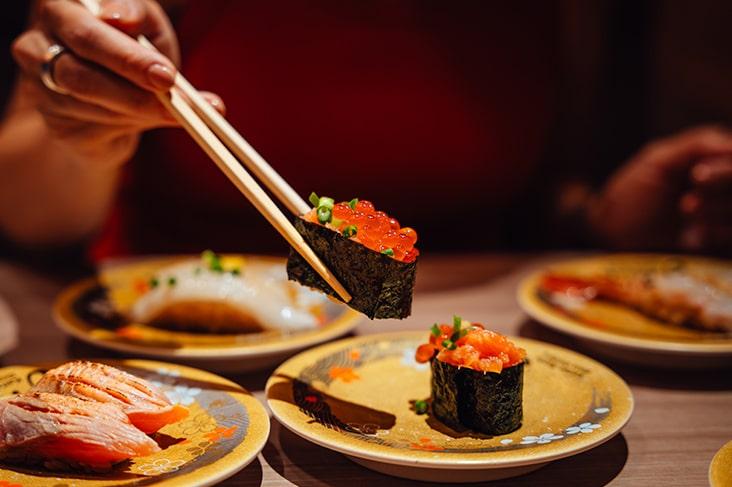
- Sushi and Sashimi: The art of raw fish, served on vinegared rice or on its own, of impeccable freshness.
- Ramen: The ultimate popular dish. A large bowl of broth (soy, miso, pork) with noodles, meat and vegetables.
- Tempura: Light, airy battered shrimp, fish or seasonal vegetables.
- Okonomiyaki: Often described as "Japanese pizza" or a savoury pancake (cabbage, pork, seafood), cooked on a hot plate in front of you.
- Yakitori: Chicken skewers grilled over charcoal, a classic at "Izakaya" (Japanese pubs).
- Tonkatsu: Crispy breaded pork cutlet, served with shredded cabbage and a thick brown sauce.
Typical drinks
- Sake (Nihonshu): Fermented rice wine, enjoyed either warm or cold depending on its quality.
- Matcha: Powdered green tea with a unique flavour, served during the tea ceremony or used in pastries.
- Umeshu: Plum liqueur, sweet and fruity, often drunk with ice ("on the rocks").
Some basic words and expressions
Politeness is at the heart of Japanese society. Making the effort to say a few words in the local language is always greatly appreciated and will make your interactions easier, even though English is understood in tourist areas.
- Konnichiwa: Hello (during the day)
- Konbanwa: Good evening
- Arigatô gozaimasu: Thank you very much
- Sumimasen: Excuse me / Sorry (the magic word for calling a waiter or apologising)
- Hai / Iie: Yes / No
- Oishii: It's delicious
- Eigo ga hanasemasu ka?: Do you speak English?
- Toire wa doko desu ka?: Where is the toilet?
- Ikura desu ka?: How much does it cost?
- Sayônara: Goodbye
Learning these few expressions will open many doors and smiles during your trip to the Land of the Rising Sun.
Travel to Japan well insured