At a glance
Serge, Redion's motorcyclist, comments below on the rules of conduct for motorcyclists filtering through traffic.
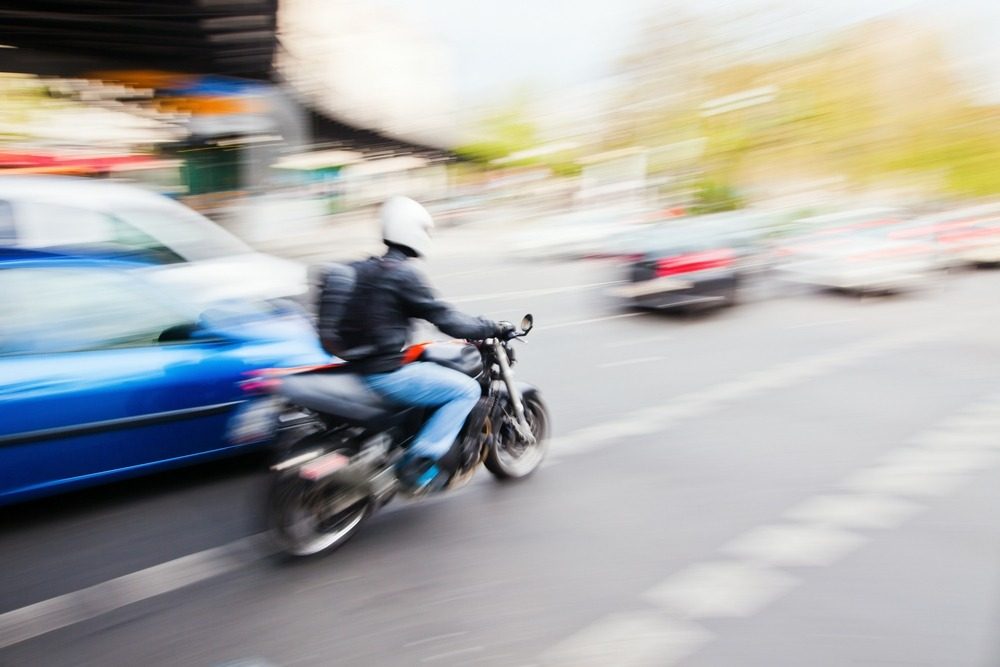
Many drivers notice motorcyclists overtaking them by filtering between lanes of traffic — a manoeuvre for which specific rules exist to guarantee the safety of all road users.
Serge, motorcycle instructor and Redion motorcyclist comments below on the rules of conduct for motorcyclists.
Filtering between lanes of cars
To clarify riding in heavy traffic, guidelines exist that take into account the vulnerability of motorcyclists. The highway code sets out the following provisions in Article 16.2:
- Motorcyclists may ride between two traffic lanes when the vehicles there are stopped or moving slowly.
- A motorcyclist filtering along a line of cars between two lanes may not ride at more than 50 km/h.
- The speed difference between the cars in the lanes and the motorcyclist overtaking them may not exceed 20 km/h.
- The highway code states that this type of overtaking may only be done on the left, unless the driver has signalled their intention to turn left (Article 16.3).
Serge the Redion motorcyclist's experience and tips
Serge, Redion's Traffic Info Motorcyclist, rode daily through the capital's traffic jams on working days. His mission was to collect and provide accurate information on urban and suburban traffic to RTBF and the Perex Centre, thereby contributing to better traffic management and informing road users.
Overtaking at a limited speed
Serge has regularly had to interrupt his filtering between lanes and been forced to pull into one of them because of one or more other motorcyclists arriving "flat out". Such reckless riding often leads to accidents between drivers and motorcyclists.
The speed limit when overtaking between two lanes of traffic allows the motorcyclist to react when a vehicle suddenly changes lane, often without warning. Moreover, if an impact does occur despite everything, its consequences will be far less severe than at a higher speed.
Riding in the left-hand lanes
If the motorcyclist is riding on a motorway or a road for motor vehicles, filtering between lanes may only be done between the 2 left-hand lanes. A perfectly logical rule: imagine you're driving your car and you see a motorcyclist approaching in your left-hand mirror. To make it easier for them to pass, you shift slightly to the right — that's kind, but not compulsory. If, at that moment, another motorcyclist overtakes you on the right, one of these two motorcyclists will necessarily be at risk. It is therefore the one on the right who has put themselves in a dangerous position!
Riding in bus/taxi lanes
Motorcyclists are allowed to ride in bus lanes, but only if a sign showing a motorcycle has been added. Unfortunately, these signs are often rare, or even non-existent. That's a shame, because this useful change, designed to help ease road congestion by allowing motorcyclists through, cannot therefore be applied! As a result, motorcyclists who ride in bus lanes anyway are often fined.
Advice for drivers and motorcyclists
The majority of accidents involving motorcyclists are due to the inattention of other road users, particularly when turning left or merging into traffic without noticing motorcyclists. The motorcyclist's speed is often an aggravating factor, as also noted by the Vias Road Safety Institute. Greater vigilance from all road users is therefore needed to prevent these accidents.
-
Note to drivers: drivers share part of the responsibility. Many of them weave from one lane to another to try to overtake a few cars. These manoeuvres rarely save any time. On the contrary, they slow down the flow of traffic and can be dangerous for motorcyclists and other drivers when carried out abruptly and without sufficient prior checking for motorcyclists filtering between two lanes. To allow motorcyclists to ride safely, check your mirrors before changing lanes, especially in heavy traffic. Use your indicators for every manoeuvre to warn other road users.
-
Advice for motorcyclists: If you catch up with a line of cars and plan to overtake by filtering between two lanes, slow down gradually as you approach the line and draw the attention of drivers by using your hazard lights (or brake light). Also make sure you are clearly visible: use reflective gear and clothing. Watch out for the blind spots of cars, trucks and buses!
More generally, adopt defensive riding. This involves constant vigilance, anticipating the actions of other drivers, and proactively adapting to road conditions. Specific training courses are available for motorcyclists wishing to improve their defensive riding skills and better react to particular riding conditions, such as rain, fog or temperature changes, all of which can significantly affect road grip and visibility.
Parking on the pavement: did you know?
Good to know: motorcyclists may park their motorcycle on the pavement, provided they do not obstruct or endanger others. From 2025, the highway code will require parking on the road to be done parallel rather than at a right angle. Parking on the pavement will only be allowed if local authorities permit it and if a passage of at least 1.5 metres is left free for pedestrians.
Conclusion
Respecting traffic rules and mutual consideration between road users promote smoother traffic flow and reduce accidents and frustration. Such a collaborative approach is the key to better road safety.
Also read our "Motorcyclists" feature
First published: 09/2014 - Updated: 02/2024