At a glance
The emergency lane is not an overtaking lane or a parking spot. Here are a few rules and tips.
The emergency lane is increasingly being misused by certain drivers.
Some see it as a way to overtake queues of traffic so they can move further ahead into an exit or a lane change. Others stop there to answer phone calls.
Is this allowed? How should you use the emergency lane in a real emergency?
The unlawful use of the emergency lane
Every future driver who studies the highway code for their driving test knows:
the emergency lane may only be used in the event of a breakdown, an accident (or a collision) or a driver feeling unwell.
In any other case, using the emergency lane is unlawful and exposes the driver to a first-degree offence (a fine of €55 if paid immediately). Since 1 July 2019, this has become a third-degree offence (a fine of €174 if paid immediately). This offence can lead to a bigger fine or a severe penalty if the police consider that the driver endangered the safety of other road users.
Apart from the cases described above, the emergency lane must allow emergency services to reach the scene of an accident quickly and without obstruction.
What should you do in a real emergency?
- Only use the emergency lane if it's genuinely necessary. It's better to try (if possible) to leave the motorway at the next exit, or to stop at a rest area or a car park. You'll be safer there than along the road.
- Avoid stopping near a narrowing of the emergency lane or a bridge pillar. Too short a distance will stop you from building up enough speed to merge back into the flow of traffic.
- Bring your vehicle to a stop as close as possible to the safety barrier or the side of the road.
- Put on your high-visibility vest before getting out of the vehicle (it should always be within reach of the driver).
- Be very careful when getting out of your vehicle and having to move on the traffic side: many accidents are caused by the loss of balance triggered by the airflow generated by passing traffic!
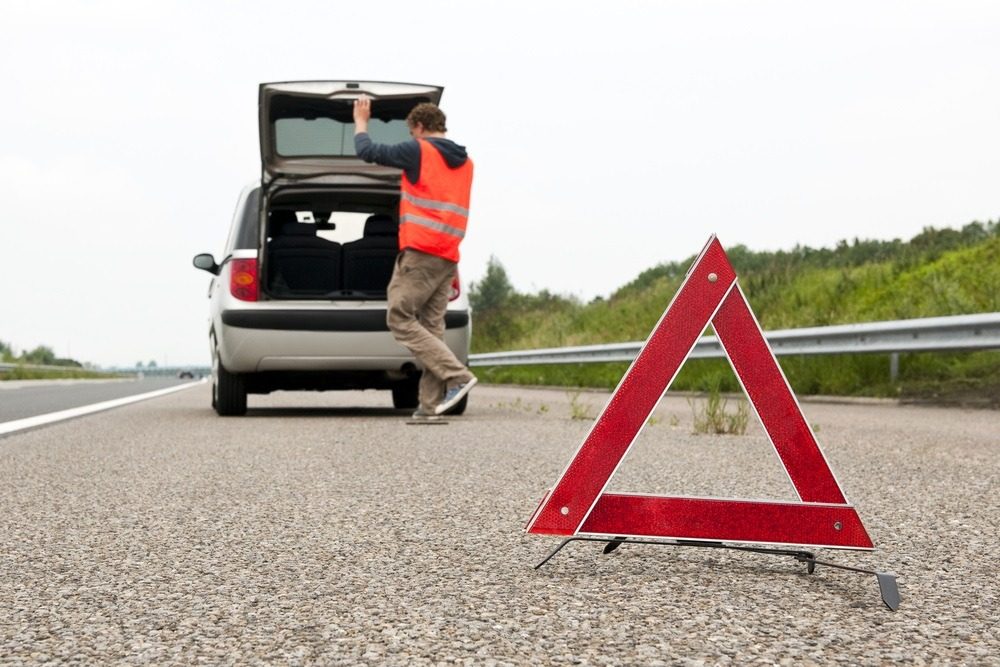
- Mark the presence of your vehicle (warning triangle and hazard lights).
- Avoid going back to your vehicle as much as possible while waiting for the breakdown service.
- Never cross the motorway.
- Never change a flat tyre on the 'traffic side'. Instead, call a breakdown service. They'll be better able than you to signal the presence of the broken-down vehicle and will do what's needed to help you.
- Never leave anyone inside the vehicle. Move occupants to safety behind the safety barrier (even if it's cold, raining or dark!) and have them put on their high-visibility vests.
- In an emergency: use the emergency call posts if possible to alert help, as these are connected to an emergency call centre that will locate you immediately. If there's no call post nearby, dial the emergency number (112).
- A car stopped on the emergency lane can only stay there for a limited time (max. 24 hours).
- When you set off again, make sure you build up enough speed before merging back into traffic, clearly signal your intention (indicators) and only merge when traffic allows you to do so safely.
Also read: "FAST: in the event of a breakdown on a motorway in Flanders"