At a glance
Everything you need to know about paying in the USA: cards, fees, tips and tricks to avoid nasty surprises on your trip.
“Money, money, money...”
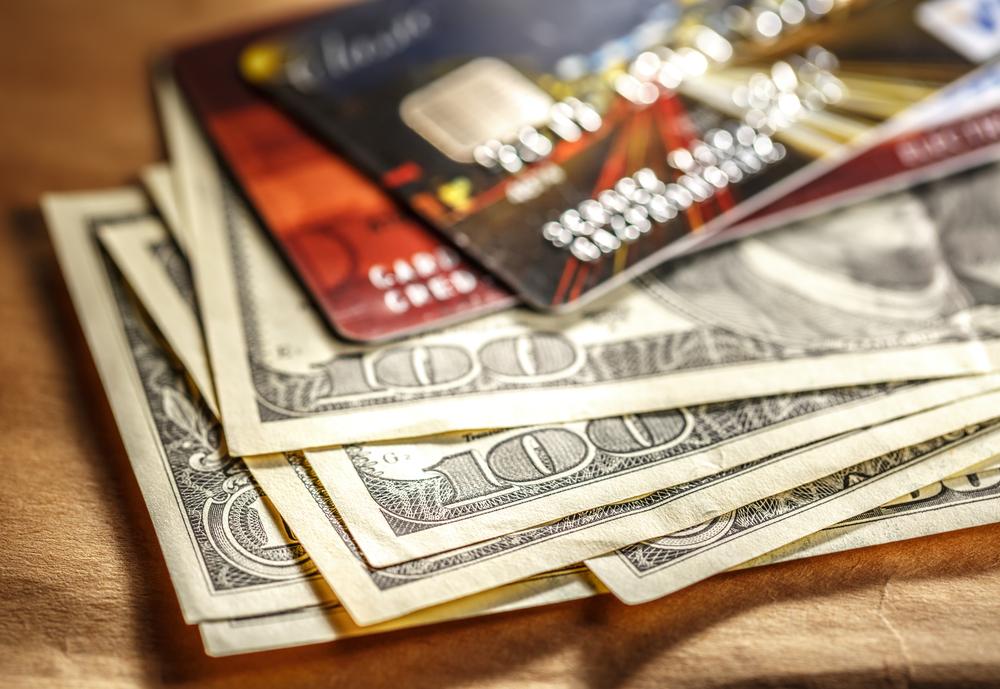
"Plastic money" reigns supreme in the United States. Credit cards are extremely common there and widely used. However, having cash on hand remains unavoidable.
Laureen De Bres is editor-in-chief of Noordernieuws and knows the United States very well.
Below, she gives us an overview of the most common payment methods.
Cash or credit card?
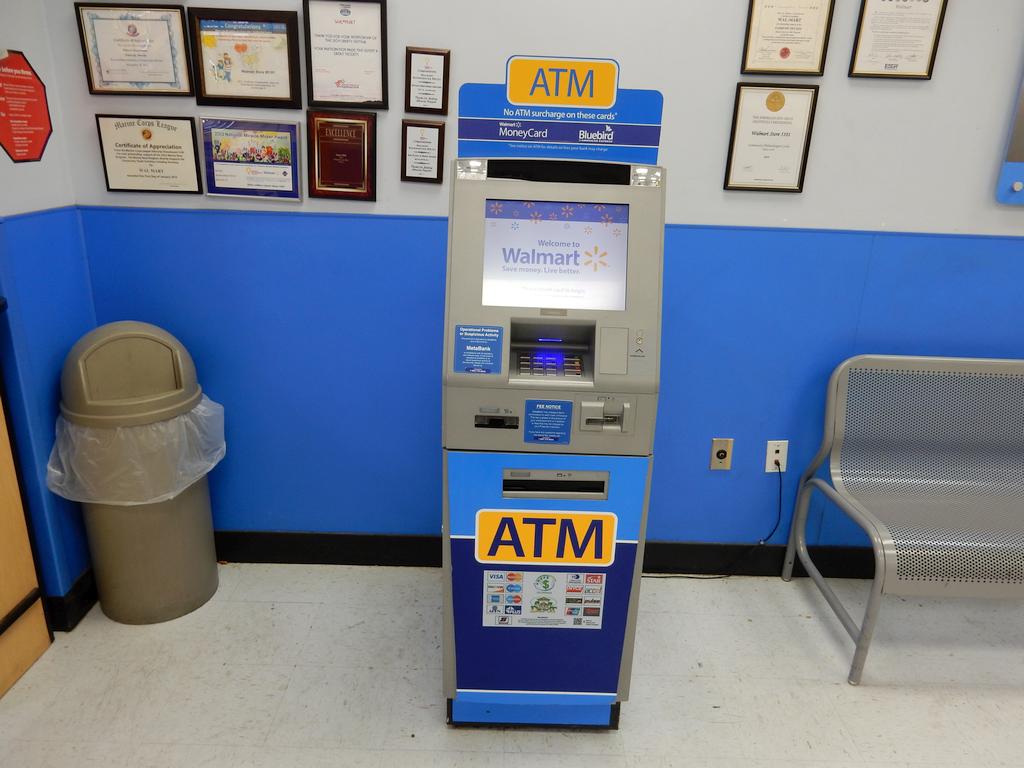 Withdrawing cash in the USA
Making a payment? Easy!
Paying in the United States does indeed seem quite simple, but be careful, because depending on the circumstances, the best payment method can vary. While having a credit card is of course a "must", also make sure to bring your "normal" bank card (debit card) and make sure it's activated so it can be used worldwide. Sometimes, activation in a foreign country only happens after using it in a local shop rather than at a cash machine. Also don't forget your PIN code (security code).
Aside from being used for direct payments, bank cards are also useful for withdrawing cash from a cash machine (ATM or Automatic Teller Machine). You'll find ATMs almost everywhere in the United States: at petrol stations, supermarkets, cafés, of course on the streets, and even sometimes at drive-ins at car height, so drivers don't have to leave their vehicle to withdraw cash. As they say: combining business with pleasure.
Paying to withdraw money
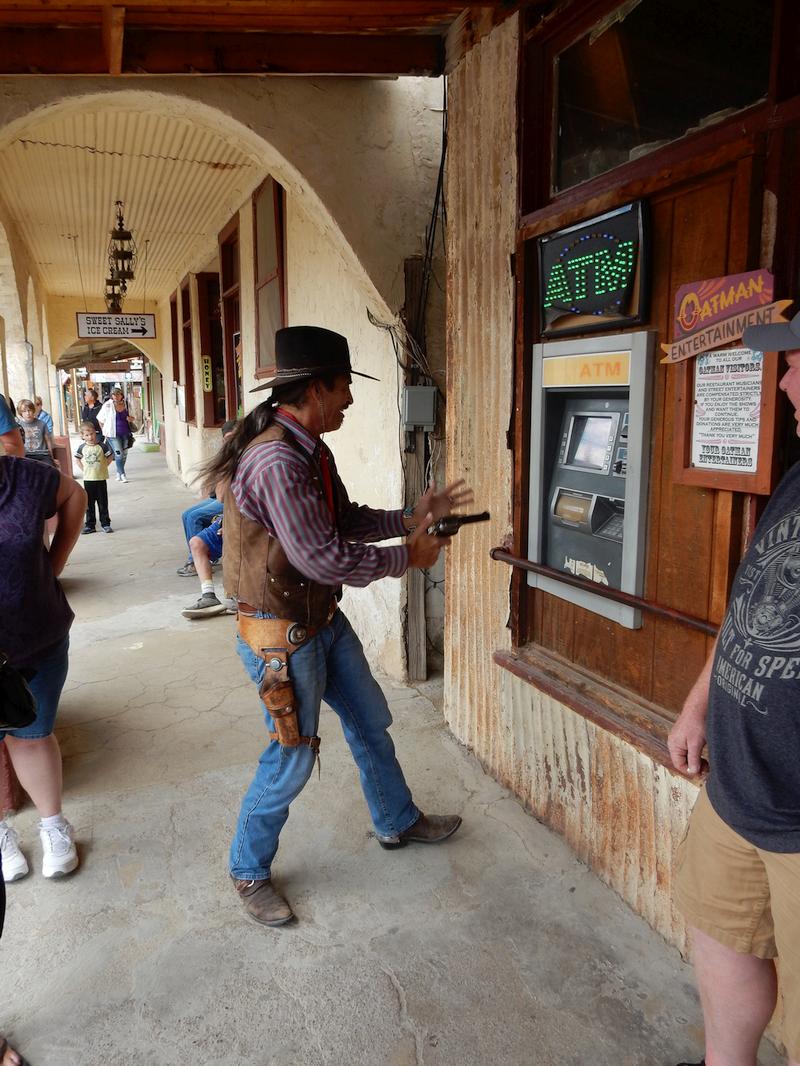
Withdrawing cash from an ATM with a credit card can be expensive, since the bank charges you for the transaction. It's therefore better to use your bank card/debit card (like a Maestro card) activated for use abroad. The ATM lets you either check your balance (though since it's a foreign card, this may not work), or withdraw cash (the "fast cash" or immediate withdrawal option). Choose the latter, then select "savings".
It's common for fees to be charged, although not always. These fees can be $1.50 or $3 per transaction. Wells Fargo ATMs charge much more. If you want to withdraw cash as soon as you arrive at the airport, you'll often come across a Wells Fargo ATM and therefore high costs! Sometimes these fees amount to $6 per withdrawal, which may come as a shock! Plan ahead and bring cash with you. If you take a taxi to your hotel, for example, you'll need to pay in cash. For your information: you can bring in up to $10,000 without having to declare it to customs.
If you withdraw cash from an ATM, your bank will also charge you fees. A good way to withdraw cash without extra fees is to ask for extra cash on top of your purchase (i.e. "cash back") in shops. This is possible at Walmart, a large chain of stores found all over the United States. When you pay, mention that you'd like "cash back". Often this option is already offered on the terminal screen when you confirm your payment by entering your PIN code. At Walmart, you can withdraw a maximum of $100, regardless of the amount of your purchase, even if you've only bought a one-dollar pack of chewing gum or less. Note that this withdrawal option doesn't work if you pay with a credit card, but does with a regular bank card (debit card).
Credit card declined: left without a way to pay!
Having experienced it several times myself, something that can happen to you without warning is that your credit card or debit card is declined. Not by the creditor (the shop, the restaurant...), but by the machine itself.
For example, you've just finished a nice meal and the message "declined" appears when you try to pay. Not funny at all, since there usually isn't a cash machine in the immediate vicinity. That's another good reason to carry cash on you.
 Tips
Tips
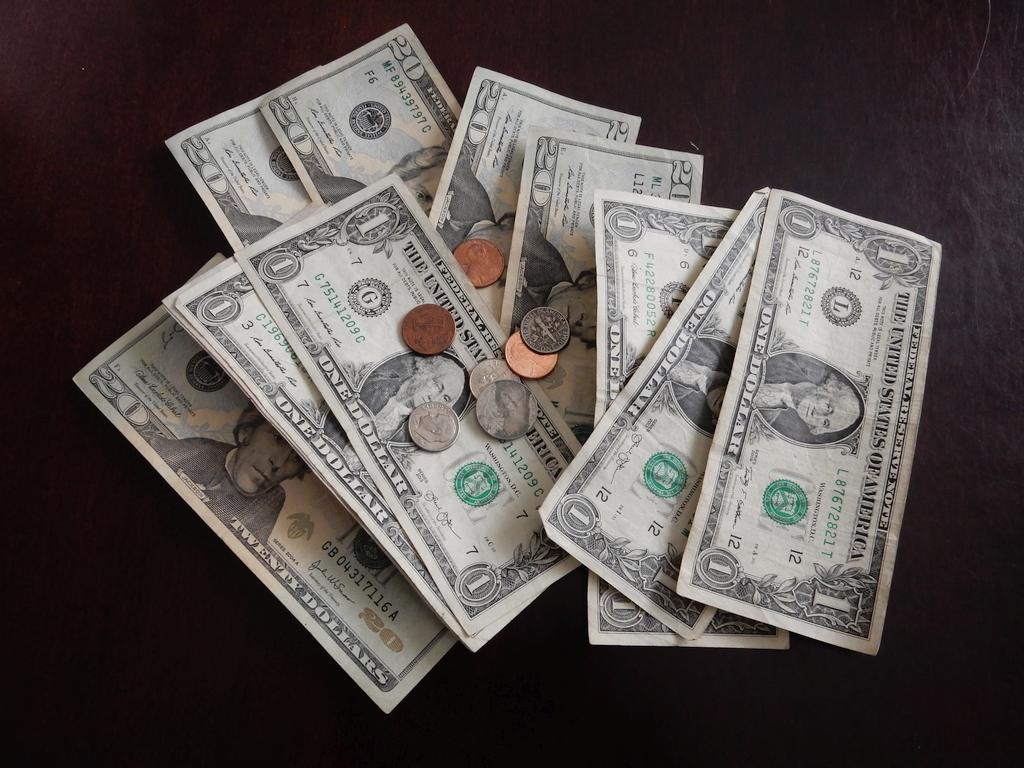
Let's linger for a moment on restaurants: in the USA, it's completely normal to leave a tip on the table after the meal. You can also add an amount to the total bill when paying by credit or debit card.
Restaurant staff wages aren't very high. Many therefore need to top up their monthly income with tips. So it really is a common and completely normal practice. If you leave money on the table, it won't be stolen by other customers or staff. So make sure you always have some $1 bills on you to take care of this.
.
Traveller's cheques
You can order traveller's cheques from your bank or from certain credit card issuers such as American Express. They can also be used as a means of payment on the spot or exchanged for cash at local banks. Their advantage is that they can't be cashed until they've been (counter)signed by the user (so no one can use them if they're stolen or lost). The downside is that you have to pay an ordering fee, and because of the popularity of credit cards, they're being used or accepted less and less. Ask your bank for advice.
Rental cars, motorhomes and hotels
Paying a deposit for a rental car or motorhome
If you rent a motorhome (RV) or a car, an amount will be held on your credit card as a security deposit. For a motorhome, this amount can be $1,000. If no fees need to be charged to you, and if there's no damage or loss to settle, this deposit will be cancelled when you return the vehicle.
This rule also applies to hotels you've booked in advance. In this case, the deposit might be $100, which the hotelier can use to reimburse certain costs (such as phone charges, drinks or other) and perhaps even to cover any theft or damage to hotel property. When you check out, you'll find out straight away if anything needs to be settled, and you'll receive proof or a receipt showing that the amount charged against the deposit is $0. The deposit amount will then be released after a few days.
The "Road Safety Program Fee" for renting a motorhome
If you rent a motorhome or RV in Colorado (capital Denver), you'll have to pay a special tax: the "Road Safety Program Fee". This amounts to $2 per night for the entire rental period of the motorhome. Even if you don't stay in Colorado and head to neighbouring states, the length of the trip will automatically be added to that of your motorhome rental.
Campsite pitch fees
A trip around the United States can be done in different ways. Travelling by motorhome or RV (a "Recreation Vehicle") is very popular. If, after your wanderings and sightseeing, you arrive at the campsite a bit late, reception may already be closed. If that's the case and you haven't booked in advance, it's often possible to leave an envelope stating the number of nights you'd like to stay, the number of adults, children and/or pets, and the number of the pitch you've chosen. You put the envelope in the appropriate letterbox along with the required amount. In this case, a bank card isn't necessary. There are also many campsites where you can only pay in cash.
You can also pay the next morning, but sometimes reception isn't open every day. This is often the case at less busy campsites. Careful: at some campsites, there are checks in the evening or early morning during which vehicle number plates are recorded. If payment is in order, the driver won't have any issues.
Spending the night and leaving at dawn without paying, before reception opens, is therefore not really an option!
Filling up and prepaying
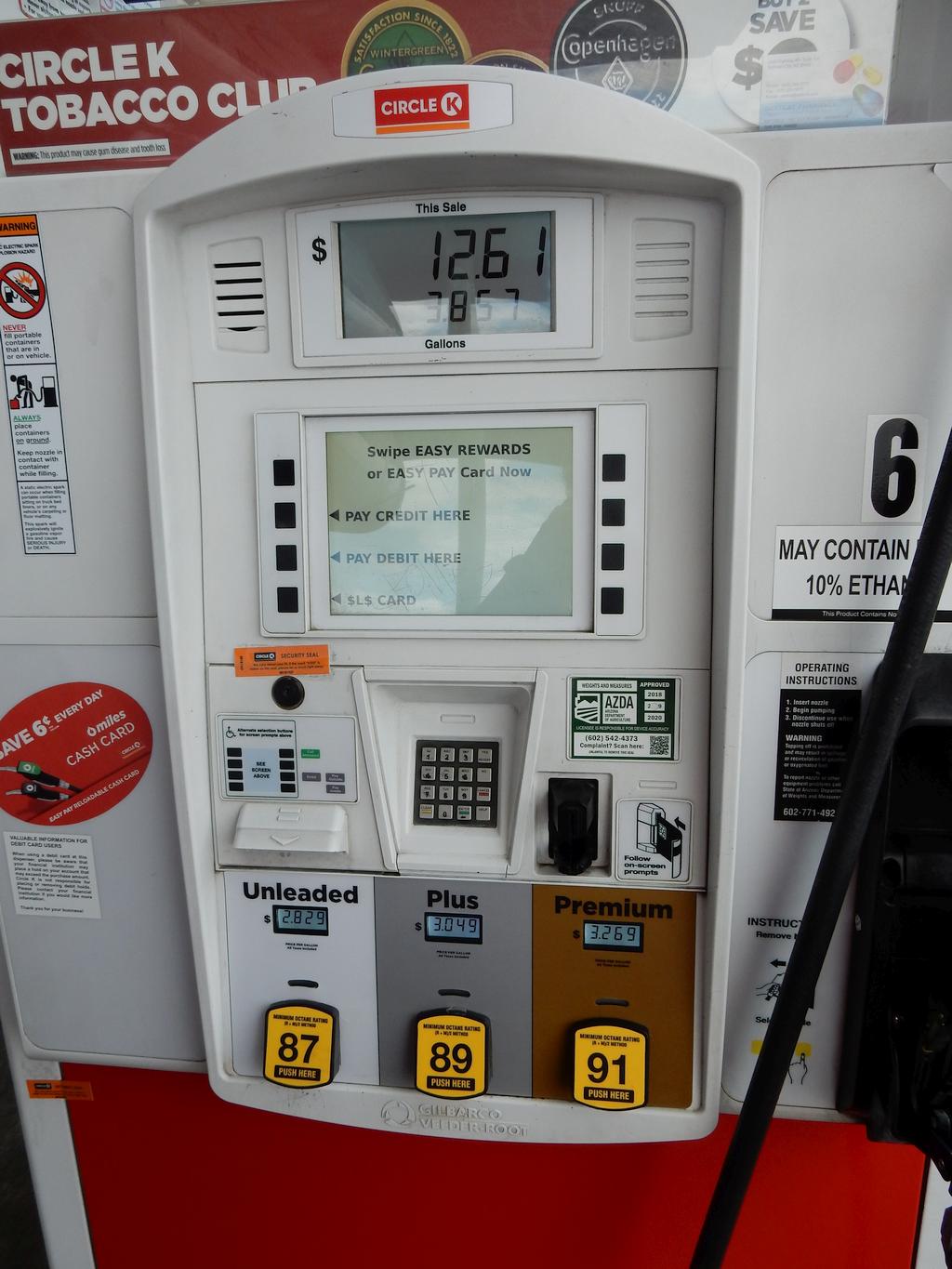 At petrol stations, you have to pay for fuel before filling up. You can of course use your credit card, but you'll often be asked for your postal code. The simplest way is to hand your credit or debit card to the attendant and tell them your pump number. You'll often need to show photo ID.
They'll first ask you how much you'd like to fill up for. This amount is registered at the till. Let's say you want to fill up for $80. This amount is registered and you sign your receipt issued by your credit card. The signed copy is for the petrol station and the unsigned copy is for you. Let's say your fill-up only costs $65. In that case, the remaining amount will be refunded to your credit card. As a safety measure, you can always ask for a new receipt at the till with the exact amount.
Bars
Paying for drinks in bars
In the United States, there are fewer bars than back home. But let's say you're having a drink in a nice bar: it's completely normal to put a bill (say, 20 dollars) on the table. The waitress will bring your drinks and ask you: "Out of twenty?" She'll take your bill and put your change on the table.
Of course, you can also pay for your drinks straight away or, in some cases, ask for them to be added to a tab and pay later, but that's not really the custom. Many people leave money on their table or on the bar. When the amount is spent, they either add more money or head home.
Dollars everywhere in bars and restaurants
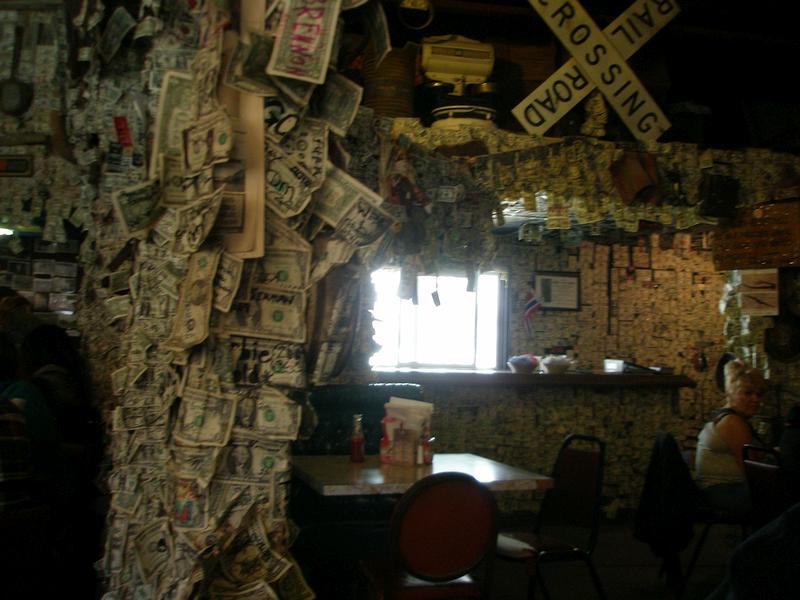
In tourist towns, you might see dozens or hundreds of dollar bills pinned to the wall in restaurants or bars. Often with names and a message praising the atmosphere of the bar or the quality of the menu. This practice dates back a long way, to when miners would go to the saloon for a beer after a day's work. Each week, they'd leave a dollar there. If something bad happened to them, at least the bill was already paid. Nowadays, a dollar is no longer enough to cover a bill, but the custom has survived, even though most people probably don't know where it comes from.
Good to know
Everything "tax excluded"
Something you should definitely bear in mind is that all prices, wherever you are, are always shown excluding "VAT" (Added Value Taxes or sales tax). Sales tax varies from state to state. In Florida, for example, it's 6%, in California 7.25%, and in Nevada 6.85%. When tax is included, it's specifically stated. This is the case, for example, at petrol stations and national parks.
Have a great trip in Uncle Sam's country!
Also read:\
- A trip to the USA: practical information\
- Preparing well for your trip to the USA\
- Driving in the United States: some practical tips\
- Medical costs in the United States
Photos: © Shutterstock & Laureen de Bres