At a glance
The article below guides you through all the essential steps for making your sailing adventure a reality: from choosing and renovating your boat to planning your route and managing your budget. You'll find practical advice from experts such as Tom de Dorlodot, particularly on training, safety, technology on board, insurance and administrative formalities.
Families will also find useful information on life on board, schooling and health during a long voyage. In short: everything you need to know to set off well prepared and sail around the world!
Sailing around the world: a unique experience
Sailing around the world is the ultimate maritime adventure. Preparing for such an adventure takes time, experience, discipline and a good dose of determination. From buying the boat to nautical training, not forgetting the administrative formalities and essential insurance, every step deserves careful attention.
Sailing around the world: Tom de Dorlodot's experience
Adventurer and paraglider Tom de Dorlodot set off on this experience with his partner Sofia in 2017, as part of "Search Projects". Their goal: to renovate a boat and sail around the world. An adventure that took no less than 3 years of preparation, and one he's now sharing all the secrets of with us.
Below, Tom explains how he prepared and what he had to think about.
Tom de Dorlodot's sail around the world
After my addiction to "sailing with my paraglider", during an expedition around the Marquesas Islands in French Polynesia three years ago, I caught a new "bug": still sailing, but this time on the water! Ever since, I'd promised myself I'd dig deeper into the subject and one day set off to sail around the world. For me, a boat, even more than any other means of travel, symbolises freedom, discovery and adventure, while respecting nature and the environment.
Gaining knowledge and getting trained
It all started with picking up sailing skills. We took our first steps at sea alongside friends who were skippers, lent a hand on their boat's refit, then went on several courses at Les Glénans. Little by little, we built up experience and passed the necessary exams, until we got our skipper's licence and our ICC (International Certificate for Operators of Pleasure Craft).
The website of the Fédération Francophone de Yachting Belge is the right place to find all the information on this: http://www.ffyb.be/ (www.vpf.be for Flanders).
Finding a sailboat to head around the world
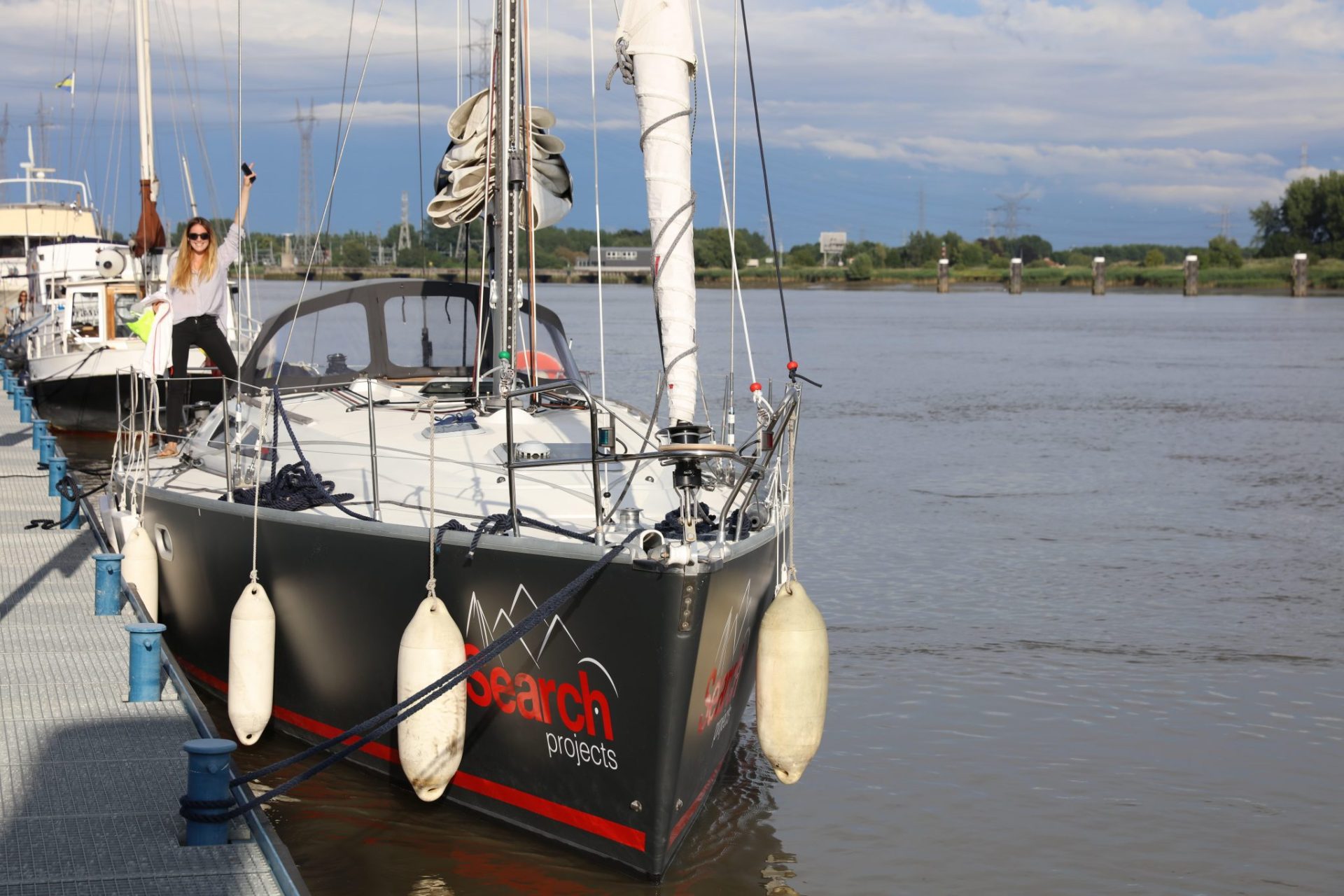
Throughout our training, Sofia and I never lost sight of our goal: buying "our" boat.
But, just like buying a house, that can take time. And, again just like a house, buying it sometimes calls for major renovation!
While we thought we'd find what we were after somewhere in Brittany, it was actually in the Port of Brussels that our future "home" was waiting. "Les Trois Mousquetaires", a 40-foot Jeanneau SUN FAST renamed "SEARCH PROJECTS", had been in dry dock there for several years, and its owner had just one wish: for it to get back out to sea.
So we bought this 12-metre sailboat, before spending no less than 4 full months on renovation. At the end of June 2017, we were finally able to officially launch the sailboat in the presence of our friends and the partners who'd helped us make our dream come true.
Two of us on the same boat
Both literally and figuratively! Unlike most of the expeditions I'd organised up to that point, our adventure was also a couple's adventure. Even though I had no doubt about our tandem's success, it was nonetheless a new variable in the equation.
My partner Sofia is a globetrotter at heart. A citizen of the world, she's lived in turn in Argentina, Paraguay, Morocco and Belgium. Holder of a bachelor's degree in communications, she has extensive experience in the media world and speaks several languages fluently.
Our itinerary and our first legs
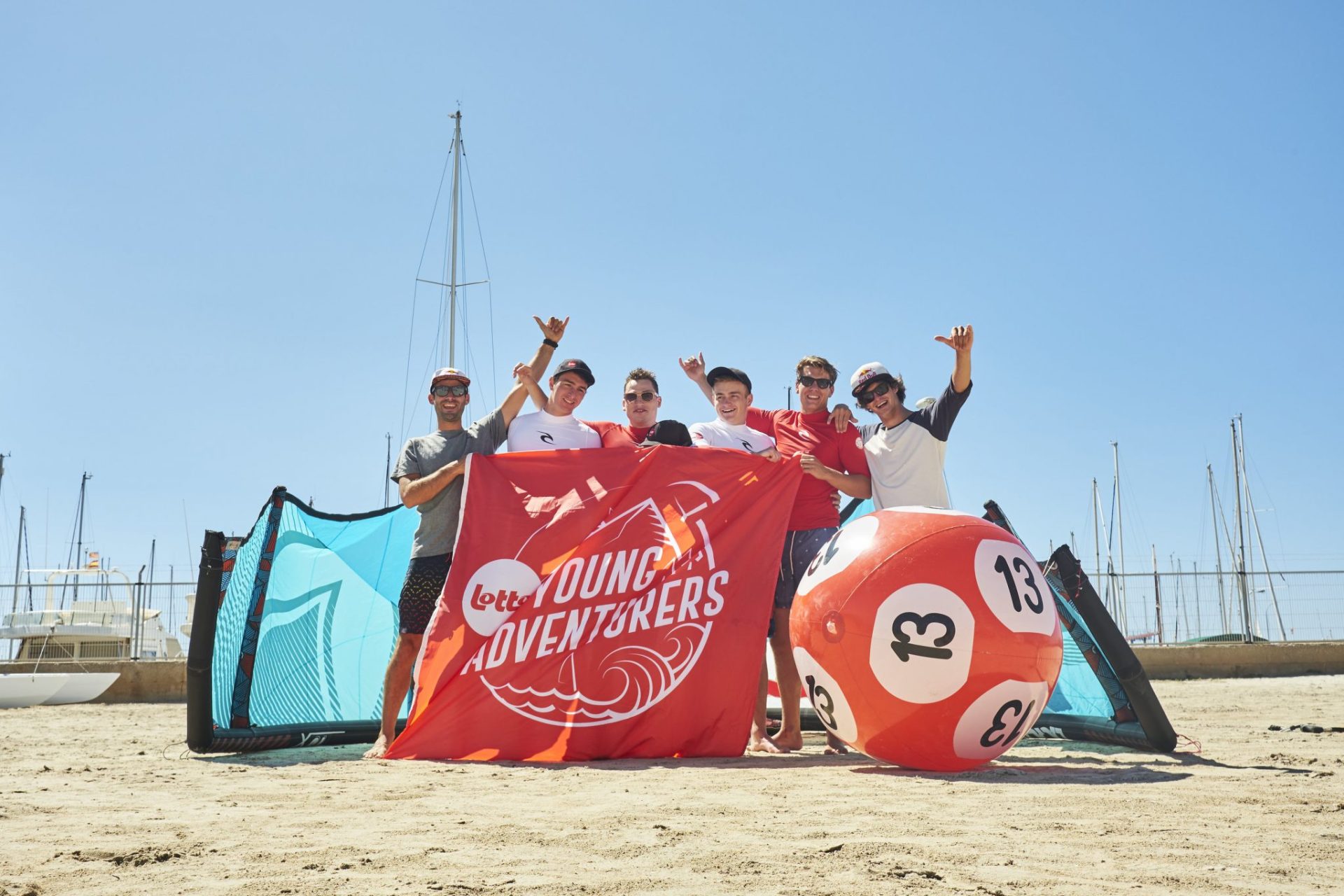
I'd barely got back from the Red Bull X-Alps when we finished the last preparations on the boat, before leaving the Port of Brussels on Friday 28 July 2017. Our first goal was simple: get our sailboat to the Balearic Islands, to Majorca, to welcome the young adventurers we were mentoring as part of the "Lotto Young Adventurers" project.
A few tips from Tom de Dorlodot
Below, Tom answers a few basic questions that will help people who, like him, want to set off on a sailing trip around the world.
How do you find a boat?
The second-hand market is full of good deals and less good ones. So it's essential to clearly define your plans and needs before starting to browse listing sites.
A few key questions to ask yourself:
- How many people will be travelling on board?
- Which regions of the world do you plan to sail through (cold, hot)?
- What type and size of sailboat would suit you best?
- Do you want a fast, light boat, or a sturdier one (in steel or aluminium), but heavier and therefore slower?
- What's your budget for buying it, and for getting it seaworthy?
All these are questions you'll need to answer before you start looking for the right one. Then, ideally, work with professionals and get advice from knowledgeable, well-meaning people who know the field well. Above all, don't be in too much of a hurry. Be wary of boats that have been for sale for a very long time, or "too good deals" that could hold unpleasant surprises.
How do you assess a sailboat's condition?
Before buying, it's best to have the sailboat you want to sail around the world in surveyed by an expert. The surveyor will quickly put together a list of things to repair or change, and will also confirm the boat's value at the same time. Little escapes their professional eye, so even though this service costs a bit, it's really worth it!
It's the only way to avoid major surprises later on. Ideally, get the boat's full history and take the time to get to know the previous owner, to avoid any disappointment.
What technology should you have on board?
Among the basic equipment, it's important to have a good VHF radio, a GPS, navigation lights and standard electronics on board (anemometer, wind vane, depth sounder, etc.). Radar is also a useful tool, and AIS (which works like a transponder) will let you see other boats and cargo ships also fitted with the system on your GPS screen.
I always keep a portable GPS on board as a backup. The Garmin inReach Explorer can even send a distress message if needed.
Warning: as amazing as electronics are, it's still essential to have paper charts on board, along with a hand-bearing compass... and to know how to use them. Charts never break down!
What budget should you set aside for your sailboat?
There's something for every budget. I have friends who bought a sailboat for €15,000 and have been travelling on it for 3 years. For a second-hand 35-to-40-foot sailboat in good condition, I'd say you should budget between €60,000 and €150,000. But again, that depends on a lot of factors.
As for repairs, the bill can quickly add up. Generally speaking, a sailboat is said to cost around 10% of its value in annual costs. Mooring fees, insurance and some maintenance work can quickly reach €10,000. Handy do-it-yourselfers will get by for much less and won't be as dependent on boatyards.
Can the work on the sailboat take a lot of time?
That really depends on the boat's condition when you buy it. Ideally, you test it by sailing, then make the changes afterwards. For SEARCH Projects, we worked "non-stop" for four months. But our boat was in fairly poor condition to begin with, and we restored it from top to bottom.
What basic administrative formalities should you keep in mind?
You absolutely need your VHF licence to legally use the radio. A one-day practical course and a passed theory exam will do the trick. Take this step seriously: the radio is an essential tool for calling for help and communicating with authorities, especially in the event of a serious problem.
I strongly recommend getting properly trained at a good sailing school and taking the ICC (or Yachtmaster) certificate. Nothing can replace experience and practice. You need to spend time on the water before diving into a big project such as sailing around the world. As soon as you feel ready, start by renting a sailboat to get the hang of it.
How do you plan the route and stopovers for the adventure?
I'd say the weather makes that decision. You need to play it safe and know how to be patient and humble if conditions aren't favourable.
Is it advisable to go solo?
As for the number of sailors, be aware that it's not advisable to set off solo on such a project without extensive sailing experience. Managing fatigue can be very difficult when you're alone, as can problems on board, which are simpler to solve with more people. Read the article "How to sail solo?" on this topic.\
What's the best season?
Seasons change around the world, and summer is the best (and most comfortable!) time to start off warm and sunny. You don't necessarily need to go far to discover superb places: Europe is full of magnificent regions to explore by sail!
"Fair winds & following seas"...
Tom.
_________________________________________________________________________________
How do you sail around the world as a family?
Sailing around the world as a family is a unique experience that will no doubt strengthen family bonds, while creating memorable memories. In this context, various families complete their circumnavigation with children of all ages, some just a few weeks old when they set off.
Prepare your family for the big departure!
Before weighing anchor, it's essential to involve the whole family in the project. With teenagers, the conversation needs to be open and honest: talk about the constraints, the stages of the journey and what they can get out of it. For younger children, curiosity and enthusiasm often take over, but it's still important to help them understand this change in their lives.
Good psychological preparation will therefore help the group get along, which is why it shouldn't be underestimated. Everyone needs to feel they belong and understand the role they'll play on board, creating a calmer family dynamic from the very first days at sea.
Learn to live well together on board the sailboat
Life on board calls for clear organisation and a good team spirit. Days are indeed shaped by watches, the weather and everyone's needs, and parents have to juggle sailing, logistics and family downtime.
A few important points to watch out for:
- Share out tasks according to the children's abilities and age;
- Keep a balance between learning, rest and play;
- Follow safety rules (wearing a harness, suitable life jackets, supervised movement on deck, etc.).
Managing health and schooling while travelling
Educational continuity is a major concern for families on a long voyage. In this context, many choose solutions such as distance-learning platforms, so children can keep up with their studies while maintaining some flexibility in their schedule.
On the health side, preparation is just as important:
- Put together a complete medical kit suited to life at sea (dressings, disinfectants, basic medication, sun cream, insect repellent, specific treatments if needed) for the entire duration of your trip around the world;
- Keep health records and prescriptions on board, along with digital copies;
- Find out about medical facilities accessible at your stopovers, and note down the contact details of these hospitals or clinics in case you need to go there;
- Get a full medical check-up before you leave;
- Get trained in first aid, and ideally in managing emergencies at sea;
- Arrange for an emergency communication method (VHF, satellite, emergency phone) to contact a doctor remotely if needed.
A few basic questions about sailing around the world
Budgets vary enormously. Here are a few indicative figures.
For buying a second-hand 35-to-40-foot sailboat, budget between €60,000 and €150,000. Some sailors find cheaper boats (€15,000 to €30,000), but these require more work. Annual costs represent around 10% of the boat's value (mooring, insurance, maintenance), i.e. around €10,000 a year.