At a glance
Redion presents its second Mobility Barometer: the transition to sustainable mobility will be very gradual
Redion presents its second Mobility Barometer
"For many Belgians, the transition to soft and sustainable mobility will only happen under certain conditions."
In March 2022, Redion Belgium launched its first "Mobility Barometer". The goal: to gauge how Belgians perceive sustainable mobility and how willing they are to embrace the shift towards alternative modes of transport. Over the past year, the war in Ukraine, the energy crisis and the resulting surge in inflation have shaken up a market that was already changing fast. So have Belgians changed their perceptions and thinking?
Where do Belgians stand on sustainable mobility?
A few results in brief
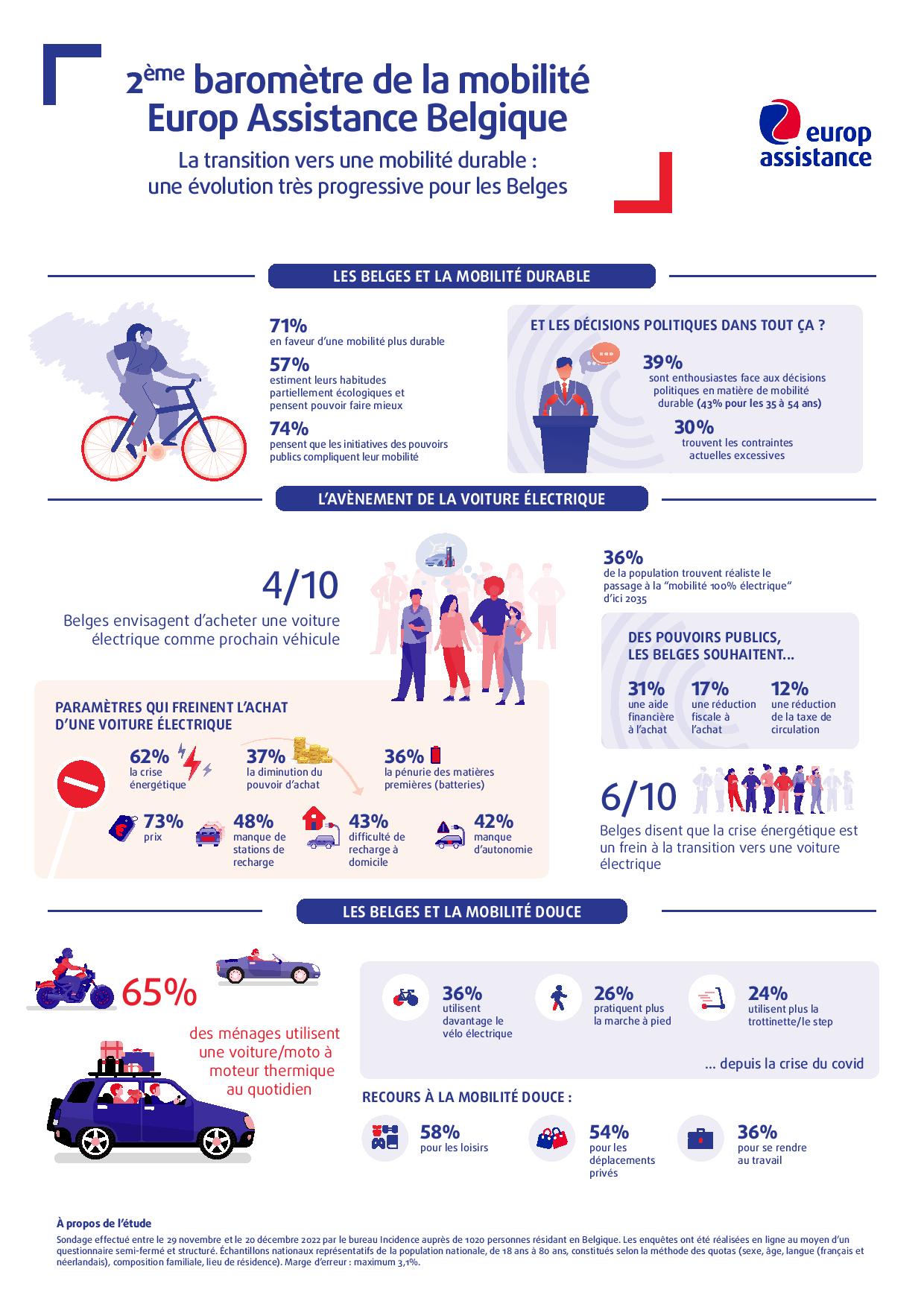
- 6 out of 10 Belgians say that the energy crisis is holding back the majority of the Belgian population from switching to an electric car.
- Only 36% of the population think it's realistic to move to "100% electric mobility" by 2035. 41% of Belgians say their next vehicle will be electric. Living without a car for all daily trips only seems like a realistic option for 14% of Belgians.
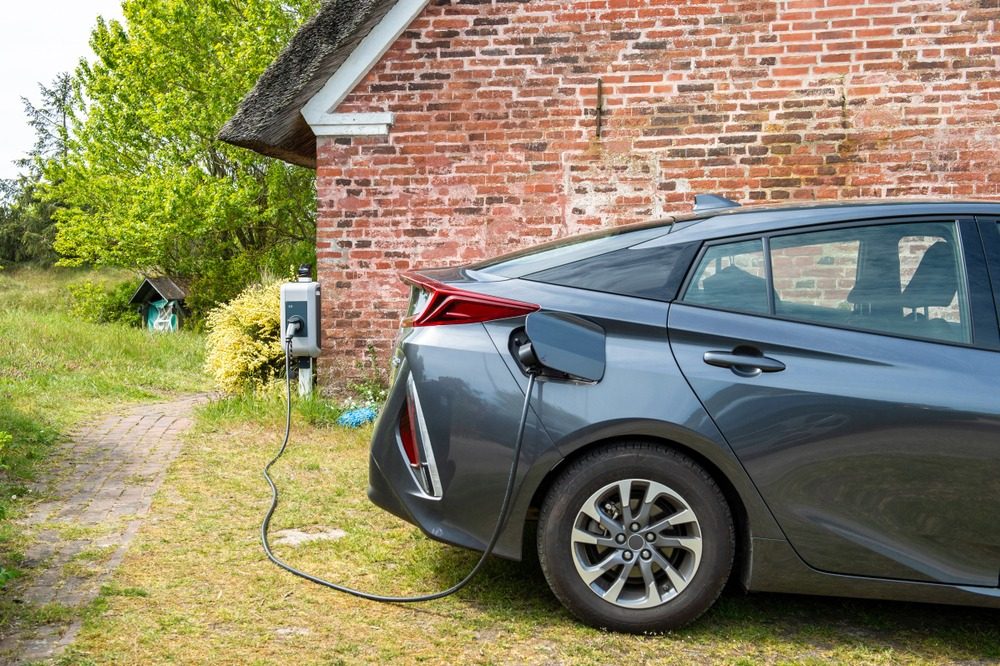
- About 4 out of 10 Belgians are considering buying an electric car as their next vehicle. What would push them to take the plunge would be lower prices for hybrid/electric cars, and better road infrastructure, such as electric charging points.
- 62% of Belgians feel that public authorities aren't doing enough to fund the shift to soft mobility. The financial support most desired is purchase subsidies (31%), a tax reduction (17%) and/or a reduction in the road tax (12%).
- What's standing in the way of Belgian users making the switch to an electric vehicle? The energy crisis (62%), reduced purchasing power (37%) and the shortage of raw materials used in manufacturing batteries for electric cars (36%).
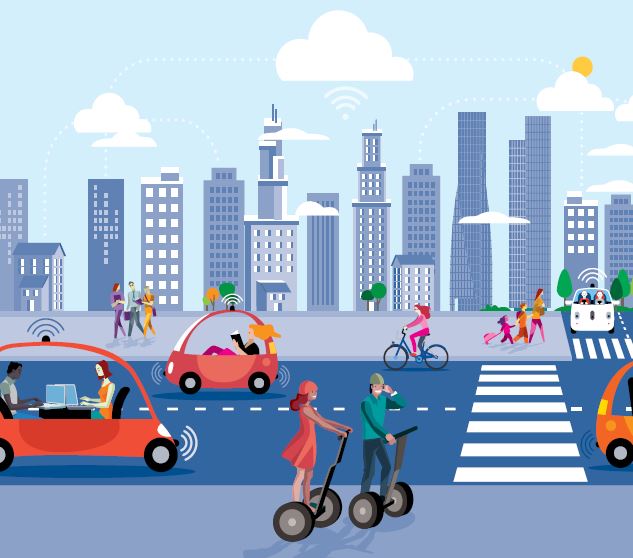
- The growing number of soft-mobility vehicles in cities is raising fears of more road accidents and is making some users more nervous, especially those who are used to driving in town.
- The use of bicycles, walking and the use of scooters/kick-scooters has become more frequent since the Covid crisis.
Buying an electric car? Yes, but not at any price.
The main incentive to take the step towards buying an electric car is a lower purchase price. That's what 36% of Belgians tell us, particularly people living further away from urban centres. They would be more inclined to buy an electric car if there were financial support from the government and better road infrastructure, including charging points. One of the main drivers behind growing interest in this type of vehicle remains environmental conviction (20%), particularly among young people.
By far the main obstacle to buying an electric car remains its price (73%), followed by the lack of charging stations (48%) — even though this obstacle is less pronounced than last year (-6 points) — and the difficulty of charging the car at home (43%).
It's worth noting that 35% of those surveyed are not convinced of the environmental benefits of electric cars, particularly older respondents (45%).
Other obstacles linked to economic and industrial factors are also making consumers hesitate to "transition" to an electric car, such as the energy crisis we're currently facing (62%), reduced purchasing power (37%) and fears of shortages of raw materials used in manufacturing electric car batteries (36%).
Is 100% electric mobility by 2035 realistic?
Despite recent decisions by European bodies, only 36% of Belgians consider it realistic to move to electric mobility for new vehicles by 2035 (30% of French speakers and 40% of Dutch speakers). So for only 41% of Belgians, their next car will be electric.
Belgians remain highly dependent on their cars: only 14% of the population who own a car say they could do without one if necessary. And 47% don't (yet) consider making a long trip (such as for holidays) in an electric vehicle.
Given the current economic crisis, users are changing their behaviour. 68% of them say they are reducing their driving speed, 54% are making more use of alternative transport, 32% are postponing urgent trips and 15% are considering car-sharing to boost their income.
About the study
Survey conducted between 29 November and 20 December 2022 by the Incidence research firm among 1,020 people residing in Belgium. The surveys were carried out online using a semi-closed, structured questionnaire. National samples representative of the national population, aged 18 to 80, built using the quota method (gender, age, language (French and Dutch), household composition, place of residence). Margin of error: maximum 3.1%
This barometer also takes into account certain results from the "Mobility Barometer 2023 among Europeans" survey, conducted by Ipsos for the Redion Group among 6,001 people, including 1,001 in Belgium and 1,000 each in France, Germany, Italy, Spain and Portugal, from 29 November to 9 December 2022.
The full press release and presentation are available on request.